
Todd Blanche: From Trump’s Defense Lawyer to the Man Running the Justice Department
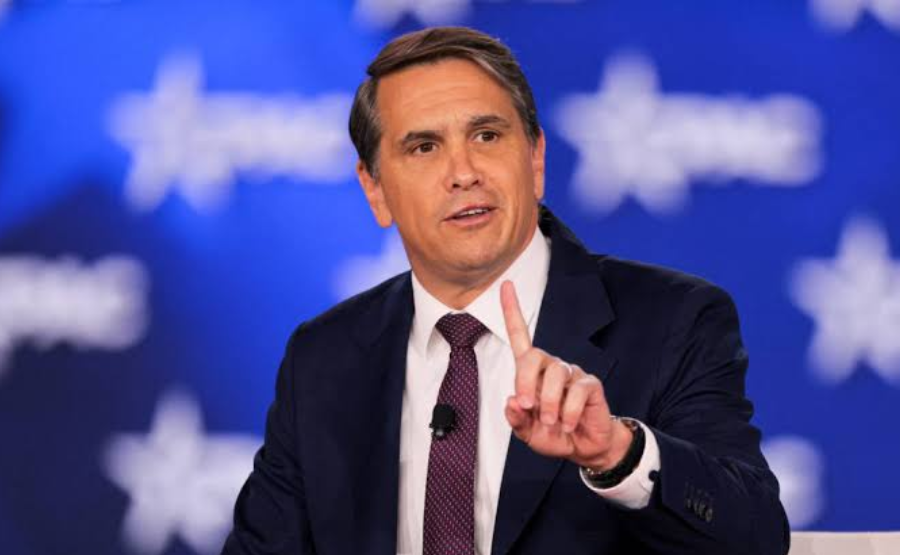
Here’s the thing that keeps getting lost in every Todd Blanche news cycle: he was actually good at his job. Not the Trump job. The first job. The one before all of this. He spent almost a decade at the Southern District of New York — the most feared prosecutor’s office in America — running cases involving killings, kidnappings, and organized crime. He rose to co-chief of the Violent Crimes Unit. He clerked for two federal judges. He went to law school at night while working as a paralegal during the day. That’s not a lazy man’s résumé. That’s someone who built something, brick by brick, over twenty years.
And then, in a single phone call in April 2023, he set it on fire. And hasn’t looked back once.
Quick Bio
| Detail | Information |
| Full name | Todd Wallace Blanche |
| Born | August 6, 1974, Denver, Colorado |
| Education | American University (undergrad); Brooklyn Law School (JD, cum laude — attended at night while working as a paralegal) |
| Clerkships | Judge Denny Chin; Judge Joseph Bianco (both now 2nd Circuit) |
| SDNY tenure | ~9 years as AUSA; rose to co-chief, Violent Crimes Unit |
| Private firms | WilmerHale (2014); Cadwalader, Wickersham & Taft (2017, partner); Blanche Law PLLC (2023, founder) |
| Major defense clients | Paul Manafort (NY state charges dismissed), Donald Trump (hush money, classified docs, federal election interference) |
| Party registration | Democrat (through 2023) → Republican (January 2024, Palm Beach County, FL) |
| Blanche Law value | Partnership share valued at $2.16 million; draws over $2M the year before government role |
| Government role | 40th U.S. Deputy Attorney General (sworn March 6, 2025); Acting Attorney General (April 2, 2026–present) |
| Controversies | In-person interview of Ghislaine Maxwell in prison (July 2025); Maxwell’s subsequent transfer to lower-security facility |
The Email That Changed Everything
April 2023. At Cadwalader, Wickersham & Taft, Todd Blanche is a partner. One of the oldest law firms in the country. Good salary, good clients, good reputation. And then Trump’s first criminal indictment drops — the Manhattan DA case about hush money payments to Stormy Daniels.
According to reporting from the time, Blanche’s firm’s ethics committee said no. They didn’t want it. The conflict risks were real, the political exposure enormous, and plenty of white-collar defense shops were watching to see which firm would touch this. Cadwalader passed.
Blanche resigned. According to reports, he emailed coworkers, saying, “I have been asked to represent Trump in the recently charged DA case, and after much thought/consideration, I have decided it is the best thing for me to do and an opportunity I should not pass up.”
He then started Blanche Law PLLC — a firm that, for all practical purposes, existed to service one client. That’s not an overstatement. A 2025 financial disclosure valued his partnership share at $2.16 million, with draws exceeding $2 million the previous year. Reporting has since traced the client list back: Trump, Boris Epshteyn (Trump’s personal political attorney), Shein (the Chinese fast-fashion giant), HongShan Capital Group (Chinese venture capital managing $55 billion, backing both Shein and Alibaba), and CLS Global, a cryptocurrency firm.
That’s the client list of the man who now runs the Justice Department.
See also “The Man Nobody Could Actually Kill: Baker Mayfield and the Lie We Told About Him“
Denver Kid Makes Good
Before all of this, the story was actually admirable. And let me be honest — it doesn’t get told properly because it’s inconvenient for both sides. The Trump loyalists don’t love the part where he spent two decades as a registered Democrat. The Trump critics don’t love the part where he was clearly a skilled and respected prosecutor.
He grew up in the Denver suburbs. Went to American University for his undergraduate degree. And here’s the part that gets glossed over constantly: he didn’t go straight to law school. He was hired by the U.S. Attorney’s Office for the Southern District of New York as a paralegal in the criminal division. He went to Brooklyn Law School at nite while working there.
Think about that. Night school while clerking. The SDNY while literally not yet having a law degree. That takes a level of grinding that most people writing about him have never come close to experiencing.
He graduated cum laude from Brooklyn Law. Clerked for Judge Denny Chin and Judge Joseph Bianco — both later elevated to the Second Circuit Court of Appeals. Returned as an AUSA to the SDNY. Spent eight years there. Eventually co-led the Violent Crimes Unit, overseeing about two dozen prosecutors on cases involving murders, kidnappings, and organized crime.
This is the resume of someone the legal world had actual respect for. When he finally went into private practice in 2014, the peers he left behind weren’t rolling their eyes. They were saying goodbye to someone who’d earned his place.
The Manafort Job That Opened the Door
After WilmerHale and then Cadwalader, Blanche’s white-collar defense career delivered a genuinely impressive win that caught Trump’s attention. He represented Paul Manafort — Trump’s former campaign chairman who’d been convicted federally on financial crimes — in a New York state mortgage fraud case. And Blanche got it dismissed. His argument: double jeopardy. The state charges were too similar to what Manafort had already been convicted on federally, so they couldn’t stand.
That’s a real legal victory. Not a technicality, not a paperwork error — a substantial constitutional argument that worked. The legal world noticed. The Trump world definitely noticed.
It was Manafort and Boris Epshteyn who reportedly referred Trump to Blanche when he needed a criminal defense lawyer for the Manhattan indictment. And so the door opened. The door Blanche walked straight through, leaving his firm’s ethics committee standing behind him.
The Trial Itself: Messier Than People Remember
You’ve probably seen the highlight reel by now. In May 2024, Trump was found guilty of 34 felonies. Blanche’s performance, depending on who was writing, ranged from “strategic” to “a mess.”
The honest assessment is somewhere between the two. His initial cross-examination of Michael Cohen drew immediate criticism — legal observers including former prosecutors on CNN and MSNBC noted it felt scattered, jumping between topics without connecting them. Former U.S. Attorney Barbara McQuade called out what she described as “rookie mistakes.” CNN analyst Elie Honig said he found it “confusing.” One expert described Blanche as failing to land the kind of “devastating blows” you’d expect when cross-examining the prosecution’s most vulnerable witness.
But Blanche recovered. His closing argument was memorable in its own bombastic way — calling Cohen “the GLOAT,” the Greatest Liar of All Time. He hammered the jury with 10 reasons not to convict. He threw sports metaphors at a jury of Manhattan residents who maybe didn’t all love sports metaphors. Judge Juan Merchan scolded him for improperly invoking the threat of prison time near the end of his summation.
Trump lost. And then, remarkably, expressed satisfaction with Blanche’s work anyway. He watched Blanche get scolded by a judge and thought: that’s my guy. And maybe that’s not as crazy as it sounds. Trump’s real audience for every legal performance was never the jury. It was the American public, and specifically, the MAGA base watching on TV. On that screen, Blanche looked like a fighter.
Trump was sentenced to no punishment ten days before he returned to the White House. He and Blanche sat together on video from Mar-a-Lago. The whole thing had the feeling of a victory lap, which — given the outcome — wasn’t entirely wrong.
The Democrat Who Registered Republican Near Mar-a-Lago
Here’s something that deserves more attention than it gets. As late as 2023, Todd Blanche was a registered Democrat in New York. In 2024, he purchased a home in Palm Beach County, Florida. He registered as a Republican in January 2024. His registered voting address was listed as Palm Beach Gardens — the community next door to Trump’s Mar-a-Lago estate.
He’d spent two decades as a Democrat. He switched parties while actively defending Trump in multiple criminal cases, while living in a community adjacent to Trump’s home, while building a law firm whose primary client was Trump.
Is this cynical? You tell me. I’m not saying it disqualifies him from anything. Lots of people change their political affiliation. But the combination of when he switched, where he switched, and whose orbit he was in when he switched — that’s a data point worth sitting with.
The New York Times first reported on the change in voter registration. It didn’t generate enormous coverage, probably because by then there were seventeen other things to cover about Trump’s legal team.

From Defense Counsel to Deputy AG
When Trump won in November 2024, he announced he was nominating Todd Blanche as Deputy Attorney General. Second-in-command at the Department of Justice. The office is responsible for the day-to-day management of the entire federal law enforcement apparatus — the FBI, the DEA, the U.S. Marshals, the ATF, all 93 U.S. attorney’s offices.
Let’s be precise about the conflict this represented. Blanche had personally defended Trump in the hush money case, the classified documents case in Florida, and the federal election interference case in Washington. He now held a position in the government where, in theory, those cases would flow through his chain of command. The classified documents case and the election interference case were both subsequently abandoned by the special counsel — which happened, the government acknowledged, because a sitting president cannot be indicted. But Blanche had spent months arguing strategy in both.
He was confirmed. On March 6, 2025, he took the oath of office. And then, less than thirteen months later, he got promoted again.
The Epstein Files, Maxwell, and What “Oversight” Actually Looks Like
April 2, 2026. Trump fires Pam Bondi as Attorney General. He announces that Todd Blanche — his former personal criminal defense lawyer — will serve as Acting Attorney General.
The stated reason for Bondi’s firing was her handling of the Jeffrey Epstein files, which had generated months of controversy. And here’s where the story gets genuinely strange.
Blanche, as Deputy AG, had personally overseen the Epstein files review. He’d declared it complete. And back in July 2025, he had personally traveled to Tallahassee, Florida, to conduct an in-person interview with Ghislaine Maxwell — Epstein’s convicted accomplice, serving a 20-year sentence for sex trafficking.
Not someone from his staff. Not an investigator. Him. Todd Blanche. Personally. The man who had been Trump’s personal lawyer. Who was now the second-ranking official at the Department of Justice. Went to a federal prison to interview the most famous living associate of Jeffrey Epstein.
Maxwell was sent to a prison with less security shortly after the interview.
Senate Minority Leader Chuck Schumer didn’t mince words: “Trump sending his personal lawyer, Todd Blanche, to meet with Ghislaine Maxwell stinks of high corruption and conflict of interest.”
Senator Jack Reed grilled Blanche directly about it at a hearing. The exchange got heated. Reed made clear he believed Trump was pulling the strings — that the visit wasn’t about seeking truth so much as feeling out what Maxwell might say.
Former defense lawyer and ex-federal prosecutor Duncan Levin was blunter: “If Todd Blanche is personally meeting with Ghislaine Maxwell in prison, it suggests something far outside the norm.”
Blanche’s public position was that he was committed to transparency. That everyone is subject to the law. That no lead is off limits. He posted exactly that on X. Meanwhile, House Democrats demanded answers. Mother Jones sued the Bureau of Prisons for Maxwell-related records. Congressional investigators pressed for Blanche himself to testify.
“What the Hell Happened to Todd?”
That’s an actual quote. The Daily Beast dug up former colleagues and prosecutors who had known Blanche at SDNY. The piece is titled, with admirable bluntness: “How Trump’s Night School Lawyer Todd Blanche Became America’s Most Dangerous Man.”
The question one former prosecutor asked: “What the hell happened to Todd?”
It’s a fair question. And the honest answer is that the same ambition and willingness to bet on himself that drove him to attend law school at night while working as a paralegal — that exact quality, applied in a different direction — is what got him here. He saw an opportunity. He took it. He said, in his own words, it was “an opportunity I should not pass up.” And now he runs the Justice Department.
Whether that’s a tragedy or a logical conclusion is probably a matter of where you stand politically. What’s not really debatable is the arc: from prosecuting murderers and kidnappers in Manhattan, to defending the man who called the justice system weaponized, to running that system himself.
Final Words
The press keeps framing Todd Blanche as either a loyalty story or a sell-out story. Both feel too simple. The sell-out angle ignores that he was a genuinely skilled prosecutor who built his career the hard way. The loyalty story ignores that he was a registered Democrat who switched parties at a moment that was extremely convenient for his career.
What I actually think is this: Blanche is what happens when a certain kind of ambition, the kind that takes you from paralegal to co-chief of SDNY’s Violent Crimes Unit, turns outward rather than inward. For twenty years, that ambition built something recognizable as a good career in public service. Then a door opened that most lawyers would never get near, and he walked through it, knowing full well what was on the other side.
The man who now controls the federal prosecution machinery used to be on the other side of that machinery, keeping it honest. Now he goes to federal prisons to interview convicted sex traffickers and reports to the man he previously represented in criminal court. The first job and the second job don’t belong in the same biography. And yet here we are.
His former colleagues are asking what happened to him. I think nothing happened to him. I think this is the same guy the whole time. The opportunity was the only thing that altered.
FAQs
1. Who is Todd Blanche?
He was once Trump’s personal defense lawyer and is currently the Acting U.S. Attorney General. Before all of that, he was a career federal prosecutor at SDNY for nearly a decade, eventually co-leading the Violent Crimes Unit. He now runs the entire federal law enforcement apparatus after being elevated from Deputy AG when Trump fired Pam Bondi in April 2026.
2. How did Todd Blanche get into law?
The old-fashioned grinding way. He got a job as a paralegal in the SDNY criminal division, then attended Brooklyn Law School at night while working full-time. He graduated cum laude. After clerking for two federal judges, he joined the SDNY as an Assistant U.S. Attorney and spent about eight or nine years there before moving into private practice in 2014.
3. Was Todd Blanche a Democrat?
Yes. As recently as 2023, he was a registered Democrat in New York. In early 2024, he bought a home in Palm Beach County, Florida — adjacent to Trump’s Mar-a-Lago — and registered as a Republican. He switched while actively defending Trump in multiple criminal cases.
4. Why did Blanche leave Cadwalader?
When Trump’s first indictment dropped in April 2023, Blanche wanted to take the case. The firm’s ethics committee reportedly said no. He resigned and immediately started his own firm, Blanche Law PLLC, which was essentially built around representing Trump.
5. Did Blanche “lose” the Trump hush money trial?
Trump was convicted on 34 felony counts in May 2024. So yes, in the most basic sense. Blanche’s performance drew mixed reviews — some observers called the cross-examination of star witness Michael Cohen scattered and ineffective; others argued he was strategic. What nobody disputes is that Trump ended up convicted. He was sentenced to no punishment, which was always the more likely outcome than prison regardless.
6. How did Blanche end up at the Justice Department?
Trump nominated him as Deputy Attorney General in November 2024, immediately after winning the election. On March 6, 2025, Blanche was sworn in and confirmed. When Trump fired Attorney General Pam Bondi on April 2, 2026, Blanche stepped up to Acting AG.
7. What happened to Ghislaine Maxwell?
In July 2025, Blanche personally traveled to Tallahassee, Florida, to conduct two in-person interviews with Maxwell, who is serving a 20-year sentence for sex trafficking. Shortly after, Maxwell was transferred to a lower-security prison. Critics — including Senate Democrats — accused Blanche of a conflict of interest, arguing that Trump’s former personal lawyer had no business conducting sensitive interviews related to Epstein, given Trump’s own past relationship with Epstein. Blanche denied any wrongdoing and said he was seeking the truth.
8. What is Blanche Law?
The firm Todd Blanche founded in 2023 to represent Trump. It also took on other clients including Shein, HongShan Capital Group (a Chinese VC firm managing $55 billion with investments in Shein and Alibaba), and CLS Global, a cryptocurrency company. A financial disclosure valued Blanche’s partnership share at $2.16 million. He dissolved his involvement when he joined the government.
9. What is a “conflict of interest” in Blanche’s current role?
The core problem: Blanche personally represented Trump in three criminal cases. As Deputy AG and now Acting AG, he oversees federal law enforcement and prosecution decisions — including decisions that could affect Trump personally, his associates, and his political opponents. Some legal experts argued that someone who was Trump’s personal criminal defense lawyer should not be running the institution that might oversee Trump-related investigations. Blanche’s supporters argued he recused appropriately from matters where conflicts existed.
10. What happened to the federal cases against Trump — classified documents and election interference?
Both were abandoned after Trump won the election, with the special counsel acknowledging longstanding DOJ policy that a sitting president cannot be indicted or prosecuted while in office. Blanche had represented Trump in both cases before joining the government. As Deputy AG, those abandoned prosecutions were within his chain of command.
11. What is Blanche doing as Acting AG in 2026?
Managing the Department of Justice until a permanent nominee is being sought. He has appeared before congressional committees, defended the administration’s legal decisions on various fronts, and become one of the most visible faces of the DOJ. Trump subsequently formally nominated him as Attorney General, though his confirmation prospects among some wary Republican senators remained unclear at the time of writing.
Beyond the headlines, discover what’s worth knowing — TheTrendist.
One Comment