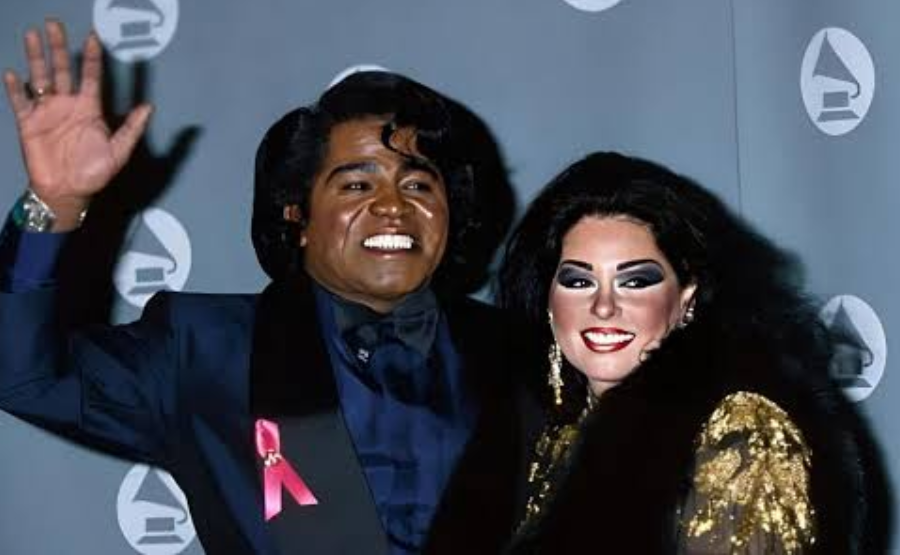
Rodriguez Adrienne: The Untold Story of James Brown’s Third Wife, Her Career, Troubled Marriage, and Mysterious Death
She called 911 twelve times between 1984 and 1988. Twelve. And every time, the charges against James Brown either disappeared or got bargained down. That’s the actual story of Adrienne Rodriguez — not the one about a hairstylist who married a legend and died mysteriously, which is how most pieces frame her. It’s a story about a woman who kept reaching for help and kept being handed back to the same situation. Everything else — the music, the marriage, the PCP, the cosmetic surgery, the death — flows from that number.
Quick Bio
| Detail | Information |
| Full name | Adrienne Lois Rodriguez (later Adrienne Lois Brown) |
| Born | March 9, 1950 (birthplace disputed: Mexico per some sources, U.S. per others) |
| Died | January 6, 1996, Century City Hospital, Los Angeles, CA, age 45 |
| Official cause of death | Congestive heart failure |
| Coroner’s full findings | Heart disease + PCP intoxication + therapeutic levels of prescription painkillers |
| Met James Brown | 1981, on the set of Solid Gold |
| Married James Brown | 1984 (third wife) |
| Career | Professional hairstylist; singer and composer; television work |
| 911 calls for domestic violence | Twelve documented calls between 1984 and 1988 alone |
| Filed for divorce | March 1988 — later reconciled |
| Separated | April 1994 |
| Last assault before death | Halloween night, 1995 — approximately two months before she died |
| Buried | Augusta, Georgia, January 16, 1996 |
Solid Gold, 1981
Here’s where it starts.
The TV show Solid Gold was one of those very specific products of the early 1980s — syndicated, flashy, all sequins and backup dancers lip-syncing to hits. Adrienne Rodriguez worked there as a hair stylist. James Brown appeared as a performer. That’s the meeting: a working professional on a television set and one of the most famous musicians alive.
She was thirty-one. He was forty-eight. The relationship moved slowly for three years before they married in 1984.
Most bios describe this as a love story. It may have been. But it’s worth pausing on the professional dimension here. Adrienne Rodriguez was employed, skilled, building a career in the entertainment industry. The story of how she became publicly known as James Brown’s wife is partly a story about how her own professional identity got eclipsed by proximity to a bigger name. She didn’t wander into his orbit from nowhere. She was at work.
The Marriage Nobody Fully Recounts
The first years of the marriage were, by all evidence, also the years things fell apart fastest. 1984. 1985. Three times in 1985. Once in 1987. And then at least seven times in 1988 alone, Adrienne Rodriguez picked up the phone and dialed 911.
That’s according to R.J. Smith’s biography The One, which is about as sourced and careful a James Brown biography as exists. The Village Voice, which ran extensive reporting on the period, confirms the pattern. It’s not contested in any serious source.
The PCP complicates this — not because it makes the abuse more acceptable, but because it changes the picture of both people involved. Sources indicate that by the mid-1980s, James Brown was using PCP regularly. Some accounts describe Adrienne as using it alongside him. The drug does specific things to people: it heightens aggression, it distorts perception, it makes hours feel like minutes. For anyone trying to understand how a marriage can spiral this badly this quickly while remaining technically intact, PCP is part of the explanation. Not an excuse. The explanation.
What Smith writes in The One, drawing on research into those years: “For James and Adrienne, at any rate, events were rocketing forward, and the drugs created a whole new kind of rhythm in their lives, oscillating between crazy rage and operatic displays of affection.” That rhythm is what trap critics and biographers fall into if they’re not careful — the affection parts read as love story, the rage parts read as tabloid fodder, and the in-between — the actual daily reality of living inside that — gets lost.

The Village Voice Article You Should Actually Read
In 1988, the Village Voice published a detailed timeline of James Brown’s legal troubles. It’s not recent, so I’ll summarize carefully rather than lean on it too hard.
March 1988: Adrienne files for divorce, citing years of “cruel treatment.” She showed a National Enquirer photographer bruises on her face and bullet holes in their Beech Island bedroom. That’s not ambiguous. That’s physical evidence documented at the time.
April 1988: Adrienne Rodriguez is arrested at Augusta’s small airport carrying PCP. Her position: it was planted by men working for her husband to pressure her into dropping the divorce. Whether or not you believe that, the arrest happened immediately after she filed, which is at minimum a strange coincidence.
Days later, Adrienne calls police again to report that Brown was beating her. Brown is captured during a high-speed chase that began at his driveway. PCP is found in his bloodstream. Brown, characteristically, claims his wife planted it.
A week after his arrest, he appeared on CNN’s Sonya Live in L.A. to tell his side of things. He was famously erratic in that interview — if you’ve seen the clip you know what I mean. He’d just paid $24,000 in bail. He went from paying bail to television appearance in what seemed like hours.
None of that stopped the charges from being consistently reduced or dropped. The state eventually convicted Brown on weapons and assault charges from a later incident and he served approximately three years. But the domestic violence charges against Adrienne specifically? The pattern of twelve 911 calls and four felony assault charges against Brown during the marriage is documented. The pattern of those charges going away is also documented.
The Gaps in the Standard Story
Let me be direct about what most sources get wrong or simply choose not to address.
First: the children question. Sources disagree on whether Adrienne and Brown had children together. Some list Terry, Teddy, and Larry as “their” children; others describe them as Brown’s children from previous relationships or Adrienne’s children from before. The US Prime Magazine piece says clearly: “She and Brown, one of the most famous musicians in the country, had no children together.” That’s the more carefully reported position. I’m treating it as likely accurate but flagging the contradiction.
Second: the birthplace. Most sources say the United States. Some sources say Mexico, that she immigrated as a child. The Mexico origin story is in enough separate sources that it’s plausible, but it’s not confirmed anywhere authoritative. If true, it adds another dimension to her story — an immigrant woman trying to build a career in the entertainment industry who ended up trapped in an abusive marriage with a man whose fame made legal accountability nearly impossible to achieve.
Third: her musical career. Here’s where I have to be honest about what we don’t know. Multiple sources describe Adrienne as a “singer and composer” with a “genuine passion for music.” Some say she was a “gifted musician.” But there are no verified released albums, no documented recording sessions, no concert appearances on the public record. What she was, most reliably documented, was a professional hair stylist who had musical interests. It’s possible she made music privately. It’s also possible that “singer and composer” is biographical inflation applied by later writers who wanted to give her more identity than “wife of.” I genuinely cannot tell which, and I think that uncertainty is itself worth naming.
Halloween 1995, and What Came After
Here’s what tends to get glossed over. After the 1988 spiral and Brown’s prison time, they reconciled. They stayed married through the early 1990s. They separated in April 1994.
And then, Halloween night 1995 — roughly two months before she died — James Brown assaulted Adrienne again.
A domestic violence advocate named Kay Mixon in Aiken County, South Carolina, met Adrienne in the emergency room after that assault. That’s on the record. Mixon spoke to reporters after Adrienne’s death.
Also on record: Adrienne told her lawyer she was afraid for her life in the period before her death. Not vaguely worried. Afraid for her life. Those are specific words reported by people who were present.
Then January 4, 1996. Adrienne Rodriguez underwent cosmetic surgery at a Beverly Hills health facility — liposuction, a tummy tuck, cheek implants, and additional procedures. She was recovering at an aftercare facility in Beverly Hills called the Hidden Garden. Two days later, January 6th, she collapsed. She was rushed to Century City Hospital and pronounced dead.
The official cause listed on her death certificate was congestive heart failure. But the coroner’s fuller findings include something that most simple summaries of her death omit: heart disease and PCP intoxication, alongside therapeutic levels of prescription painkillers. PCP. At the aftercare facility. After cosmetic surgery.
James Brown later told his fourth wife, Tomi Rae Hynie, that he believed Adrienne’s death was suspicious — that he’d been told she came through surgery fine and then someone had visited the facility before she collapsed. Whether that’s accurate or the rationalizing of a man who didn’t want to accept the natural consequences of years of trauma on her body, we can’t know for certain. What we do know is that PCP was found in her system in a context where it had no logical reason to be there.
She was buried in Augusta, Georgia, ten days after she died. She was forty-five years old.
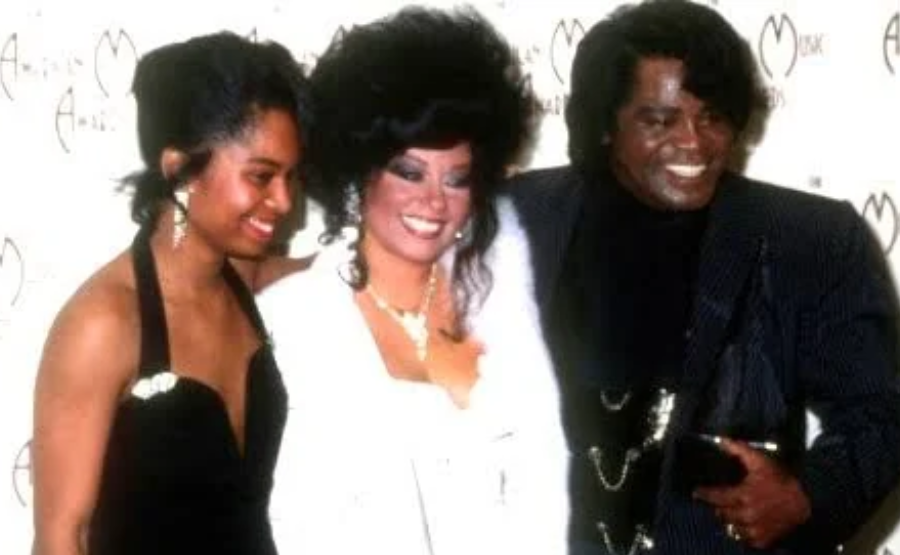
What She Tried to Be
I want to spend a paragraph on this because I think it matters and because it keeps getting buried.
Adrienne Rodriguez was a working professional before James Brown. She built a career in a competitive industry — the entertainment world of Los Angeles in the late 1970s and early 1980s — and she was good enough at it to be working on the set of a nationally syndicated TV program. That’s not nothing. The hairstyling work is real, documented, and deserves credit as a foundation she built herself.
The music is harder to verify. But the people who knew her describe a woman who loved music genuinely, who expressed herself through it, and who didn’t get the chance to make it a public career in part because the marriage consumed everything that was hers. There’s something deeply unfair about the way that biography gets written: her genuine artistic interests become “she was also a musician!” in the hands of writers trying to redeem her from the “wife of” label, while the specific, earned professional life she actually had gets underweighted.
She was a woman who was good at her job, who met someone famous, and who spent twelve years trying to survive a situation that the legal and cultural systems around her were not equipped or willing to end.
Final Words
I’ll say this plainly. The story of Adrienne Rodriguez is primarily a story about institutional failure. Twelve 911 calls. Four felony assault charges. A divorce filing with physical evidence. And yet she stayed legally married to James Brown until she died — not because she didn’t try to leave but because the system kept failing to hold him accountable, and because leaving a man that famous and that dangerous is not simple, especially when you’ve been isolated, when your own relationship with controlled substances has become part of the story, when the legal proceedings repeatedly collapse.
The music doesn’t matter that much, honestly. The hair styling matters more because it was real. What matters most is that she tried to get help repeatedly and repeatedly did not get it in a form that actually helped.
Her death is wrapped in enough unanswered questions that it probably always will be. PCP in the coroner’s findings during recovery from elective surgery is a question that never got answered to anyone’s satisfaction. The timing — two months after a Halloween assault she’d reported, days after she’d told her lawyer she was afraid — doesn’t have a clean resolution.
What you’re left with is a woman who got famous for the wrong reasons, who spent her last decade in documented danger, and who died at forty-five in a Beverly Hills aftercare facility in circumstances that remain murky. She deserves more than a footnote in someone else’s biography. This is the best I can do.
FAQs
1. Who was Adrienne Rodriguez?
She was a Mexican-American professional hairstylist, singer, and musician who became publicly known as the third wife of James Brown, the “Godfather of Soul.” She married Brown in 1984 and died in 1996. Her own professional career in the entertainment industry preceded and existed alongside the marriage, though it was largely eclipsed by it.
2. How did Adrienne Rodriguez die?
She died on January 6, 1996, at Century City Hospital in Los Angeles. She had undergone cosmetic surgery — liposuction, a tummy tuck, cheek implants — at a Beverly Hills facility on January 4th and was recovering at an aftercare facility called Hidden Garden when she collapsed. The official cause was congestive heart failure, but the coroner’s full findings include heart disease combined with PCP intoxication and therapeutic levels of prescription painkillers.
3. How many times did James Brown assault Adrienne Rodriguez?
Adrienne Rodriguez made twelve documented 911 calls reporting domestic violence between 1984 and 1988 alone. Brown was charged with felony assault against her at least four times during the marriage. Charges were repeatedly dropped or reduced. The last documented assault was Halloween night 1995, roughly two months before her death.
4. Did James Brown and Adrienne Rodriguez have kids together?
Sources disagree. Some list three children — Terry, Teddy, and Larry — as “their” children. Other, more carefully sourced pieces state clearly that they had no biological children together. The more credible reporting supports the latter. She may have been a stepmother to children from Brown’s previous relationships.
5. Was Adrienne Rodriguez a singer?
She had genuine musical interests and is described as a singer and composer by people who knew her, but no commercially released recordings or documented public performances have surfaced in the historical record. Her verified, documented professional identity before the marriage was as a hair stylist working in Hollywood television production.
6. How did Adrienne meet James Brown?
In 1981, on the set of Solid Gold, the nationally syndicated TV music show. She was working as a hair stylist on the production. Brown was appearing as a performer. They didn’t marry until 1984 — about three years after meeting.
7. Why did Adrienne Rodriguez file for divorce?
She filed in March 1988, citing years of “cruel treatment.” She showed physical evidence — bruises and bullet holes in their bedroom — to a photographer at the time. She later reconciled with Brown after he went to prison on other charges, and the divorce was not finalized.
8. What is PCP and why does it keep coming up in this story?
PCP is a dissociative drug that can cause extreme aggression, paranoia, and altered time perception. Multiple accounts indicate that both James Brown and Adrienne Rodriguez used PCP during their marriage, which is documented as contributing to the escalating violence. It was also found in Adrienne’s system by the coroner at the time of her death in January 1996, which remains unexplained given that she was supposedly recovering from elective cosmetic surgery.
9. What happened to James Brown after Adrienne died?
He married a fourth time, to Tomi Rae Hynie, in 2001. He continued performing until shortly before his death from congestive heart failure on Christmas Day, 2006. His fourth marriage and his death were also surrounded by significant controversy and legal battles among survivors.
10. Did anyone investigate the circumstances of Adrienne’s death?
The coroner’s office released findings that included PCP in her system, which raised questions given that she was in a post-surgery recovery facility. Those questions were never publicly resolved. James Brown himself told his fourth wife that he believed the death was suspicious. Domestic violence advocates who had contact with Adrienne in her final months spoke publicly about her fear for her life, but no criminal investigation followed.
11. Where is Adrienne Rodriguez buried?
She was buried in Augusta, Georgia, on January 16, 1996 — ten days after her death. Augusta was the city most closely associated with James Brown’s professional life and home base.
Beyond the headlines, discover what’s worth knowing — TheTrendist.





2 Comments