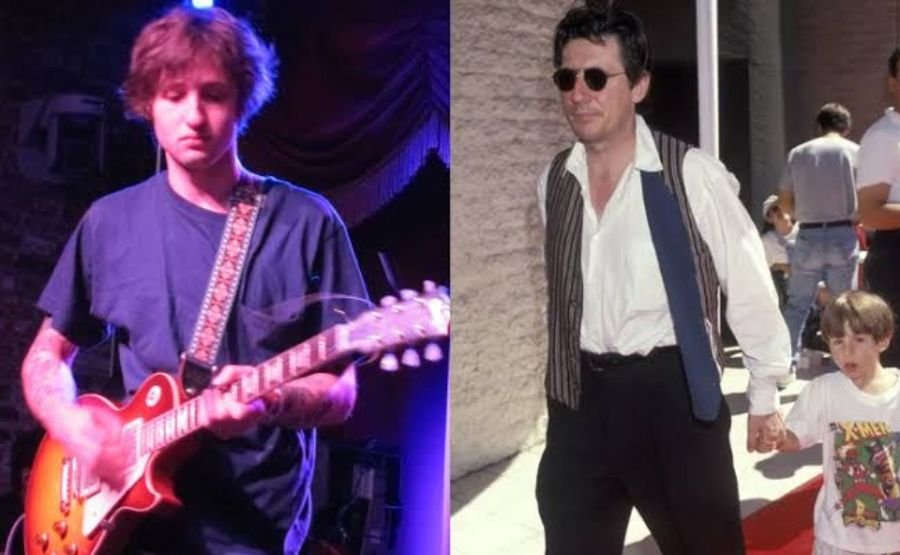
Jack Daniel Byrne: His Biography, Age, Family, and Life Story
Search “Jack Daniel Byrne” right now and you’ll find dozens of AI-generated PDFs — hosted on legitimate-looking educational and news domains — confidently describing a man born in the early 1980s in Nashville, Tennessee, who became a musician, a social activist, a digital entrepreneur, and someone whose biography is “a testament to the power of dedication, continuous learning, and giving back.”
That person does not exist.
He is a hallucination. A content-farm character assembled from search-term keywords and celebrity-biography templates, wearing a name close enough to a real footballer’s to fool an algorithm and irritate anyone who actually knows Irish football.
The real person is Jack Dylan Byrne. Born April 24, 1996, in Dublin. Central midfielder. Former Manchester City academy player. The #FreeJackByrne movement was an attempt by Oldham Athletic supporters to free the man. Two-time PFAI Player of the Year. The 500th senior Republic of Ireland international. Currently at Shamrock Rovers, doing things with a ball that people in the League of Ireland still talk about in terms usually reserved for someone playing three divisions higher.
The gap between those two stories — the fictional Nashville entrepreneur and the real Dublin footballer — is not just a search engine anomaly. It’s a pretty accurate representation of how thoroughly the internet has failed to document one of the most quietly compelling career arcs in recent Irish football.
Let’s fix that.
Quick Bio
| Info | Detail |
| Full name | Jack Dylan Byrne |
| Born | April 24, 1996 — Dublin, Ireland |
| Position | Central midfielder |
| Current club | Shamrock Rovers F.C. (League of Ireland Premier Division) |
| Youth career | Manchester City academy, 2012–2015 (from age 16) |
| Youth coach at Man City | Patrick Vieira |
| Youth highlight | 6 goals in 8 UEFA Youth League games for Man City U-19s, 2014-15 |
| Senior career clubs | Cambuur (loan), Blackburn (loan), Wigan, Oldham, Kilmarnock, Shamrock Rovers (×2), APOEL Nicosia |
| International caps | 4 for Republic of Ireland, 2019–2020 |
| Debut moment | Ireland’s 500th senior international; came off bench vs Bulgaria, Sept 10, 2019; immediately set up a goal |
| Honours | FAI President’s Cup 2022, 2024; League of Ireland Premier Division 2020, 2022, 2023; PFAI Player of the Year 2019, 2020; FAI Cup 2019 |
| Low point | Released by Oldham Aug 2018 (fan campaign to reinstate him); “the lowest I’ve ever felt in my time in football” |
| The name confusion | “Jack Daniel Byrne” creates completely made-up AI biographies; Dylan is his middle name. |
The Manchester City Problem
Here’s the thing about being a fourteen-year-old kid from Dublin who Manchester City want: it sounds like the beginning of a success story, and it’s actually much more complicated than that.
City signed Jack Byrne at 14. Let that sit for a second. You’re in secondary school, you’ve shown enough ability that one of the richest football clubs on earth noticed, and now you’re leaving Dublin to train in Manchester. Patrick Vieira — the Patrick Vieira, World Cup winner, one of the great midfielders of his generation — is coaching your age group.
Vieira said publicly about a teenage Byrne: “What I like about Jack is his personality.” He compared him to Paul Scholes, though he was careful to distinguish the styles. In 2014–15, the under-19 team scored six goals in eight UEFA Youth League games. These are real numbers against serious competition.
The problem — and it’s the problem that defines everything that comes after — is that making it through a Manchester City youth system in the 2010s and into that first team is a challenge of almost mythological difficulty. The pathways are narrow and crowded with talent from across the world. Being excellent at youth level doesn’t mean you make it. You don’t make it just because you’re better than great. You need circumstances, timing, the right manager, and a kind of luck that has nothing to do with ability.
Byrne left City in January 2017 without making a senior appearance. That’s not a failure of talent. That’s just elite academies’ harsh math.
See also “Charles Donald Fegert: The Man Who Married Barbara Eden and Vanished from the Spotlight“
What Transpired at Wigan (And Why It’s Most Important That the Manager Was Fired)
When Warren Joyce signed Byrne for Wigan Athletic in January 2017 on a three-and-a-half-year deal, it was a real vote of confidence. If you think a young player who recently left Man City is mediocre, you don’t give him a multi-year contract. You do it because you think you’ve found something.
Warren Joyce was sacked a month later.
That’s the kind of football cruelty that doesn’t make the motivational speeches. One month. The manager who believed in you, who structured a contract around his vision for how you’d fit into the team, was gone before you’d barely trained with the first-team squad. His replacement, Paul Cook, had his own preferences, his own players, his own system. Byrne was suddenly a legacy signing from a previous regime, which is one of the worst positions a young footballer can be in.
He played for Wigan in the league twice.
He was genuinely good while on loan at Oldham in League One. Really good. He showed enough that Oldham made the loan permanent in January 2018. And then came the thing that nobody — not him, not the club, not any journalist at the time — has ever fully explained.
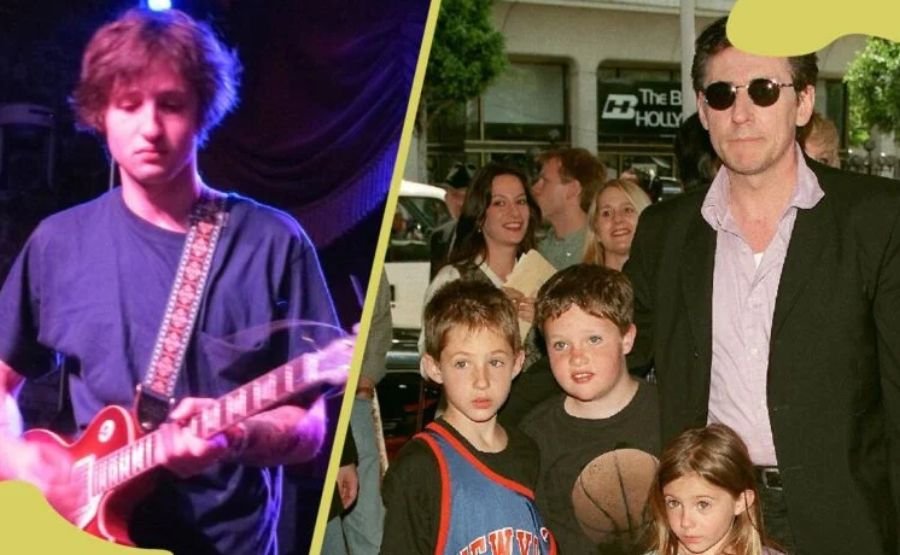
The #FreeJackByrne Summer and the Wikipedia Arrest That Never Happened
In the summer of 2018, Jack Byrne stopped playing for Oldham Athletic. No injury. No official statement. Just: absent from the squad.
Fans lost their minds. Not because they were outraged about a transfer — because he was still at the club, apparently training as normal, just not playing. There was an “undisclosed off-field incident.” The Wigan Today report calls it that. The42.ie reports it the same way. Nobody named it. Nobody confirmed it. Oldham didn’t say anything coherent.
Fans started the #FreeJackByrne hashtag. Someone edited his Wikipedia page to read that he had “recently been put under house arrest and is unavailable for selection,” which is either the most absurd moment in football Wikipedia history or completely appropriate dark humor for the situation. A fan somehow got the Oldham council to put up a “#FreeJackByrne” poster somewhere near the ground.
He was released on August 31, 2018, despite protest. Oldham kept saying nothing substantive. Byrne himself said, afterward: “I can’t really say anything on the matter. The club doesn’t want me to. But my conscience is clear, 100 per cent.”
Think about what that sentence is doing. It is the most precise declaration of innocence that a person may make while being prohibited by law from going into further detail. He’s telling you everything he can without saying anything. His conscience is clear. One hundred per cent.
Regardless of what transpired at Oldham, he ultimately left against the wishes of the spectators who had witnessed him perform. And then it kept being cited in every subsequent piece about him as this unexplained shadow over his career.
Kilmarnock: The False Floor
After Oldham, Kilmarnock in the Scottish Premiership was supposed to be the thing that started a rebuild. Five sub appearances. Five. In the middle of a Scottish winter, underselling himself game by game, nothing clicking, the back starting to cause problems that would surface again later.
He left Kilmarnock mid-season.
Here’s a man who had been compared to Paul Scholes, who had scored six goals in eight UEFA Youth League games, who had genuinely impressed people in League One football — now leaving a mid-table Scottish Premiership club after five sub appearances. He was 22 years old.
He later said, in what became the key quote from the entire dark period: “I was so unhappy and it’s the lowest I’ve ever felt in my time in football.”
That’s not a retrospective dramatization. That was a functional description of where he was in December 2018. The career he’d been promised — that Man City had implied, that the Wigan deal had suggested — had turned into a grind through lower-league football in England and Scotland, one bad manager transition after another, an undisclosed incident at Oldham that still doesn’t have a public explanation, and a loan spell in Scotland where he barely played.
And then he came home.
Shamrock Rovers and the Specific Gift of Having Nowhere Else to Go
This is the part that deserves more emphasis than it usually gets.
Jack Byrne signed for Shamrock Rovers in December 2018 not as a homecoming celebration but essentially because the alternatives were exhausted. Let’s be honest about what the League of Ireland Premier Division means in the context of a career that started at Manchester City: it is not where ambitious English football expects a former Premier League academy player to land. It is, in the professional football hierarchy, a significant step down from where he was supposed to be.
And it was the greatest thing he had ever experienced.
Stephen Bradley’s Shamrock Rovers gave him something he hadn’t had since that first season at Cambuur in the Netherlands: a manager who actively wanted him to play, who built around his technical qualities, who told him he could be good rather than reminding him he wasn’t performing to expectations.
The results were almost immediate and then just kept escalating. In 2019, he helped Rovers win their first FAI Cup in thirty-two years. He won back-to-back PFAI Players’ Player of the Year awards — the first person since Jason Byrne in 2004 to do it back-to-back. He won the League of Ireland Premier Division title in 2020. He earned his senior Republic of Ireland cap — became the 500th senior Ireland international — came off the bench against Bulgaria and immediately set up a goal.
He went from “I was so unhappy and it’s the lowest I’ve ever felt” to back-to-back player of the year, an Ireland debut, and two major trophies. In roughly eighteen months.
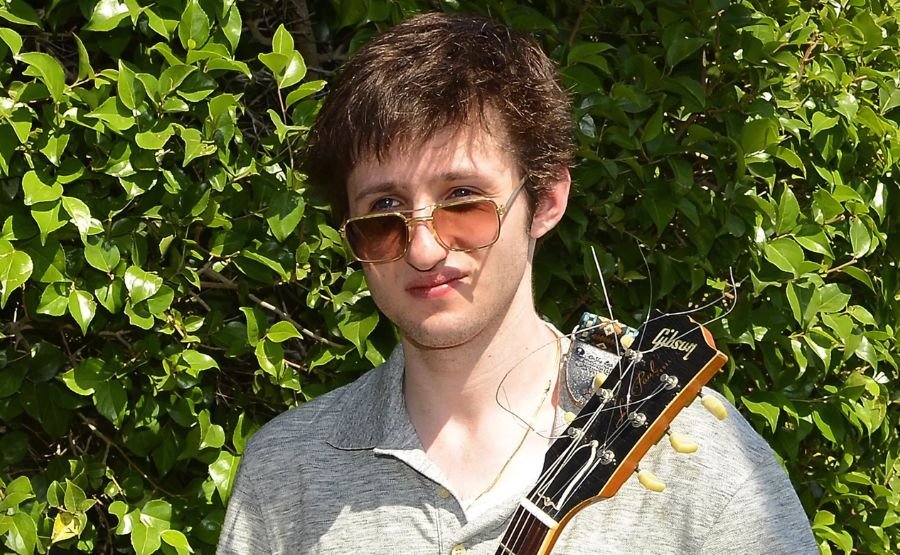
The APOEL Detour and the Back Injury
In January 2021, Shamrock Rovers offered him a new contract. He turned it down to join APOEL Nicosia in Cyprus, where Mick McCarthy — who had given him his Ireland debut — was managing.
This decision gets less scrutiny than it probably deserves. He was leaving a place that had literally changed his life, where he’d gone from the worst period of his career to the best, to play in Cyprus under a manager he trusted. The loyalty calculation is interesting. He chose the person who believed in him internationally over the club that had rebuilt him domestically.
APOEL was a disaster. Back injury. Five appearances. Mutual consent exit in September 2021. The back problem that had been lurking since Kilmarnock had caught up with him.
He returned to Shamrock Rovers in 2022. Won the league title that year. Won it again in 2023. Still there. Still the player that makes the Tallaght Stadium crowd tense with expectation when he’s on the ball.
The Name That Isn’t His and Why It Matters
Here’s the thing about the “Jack Daniel Byrne” search term that generated a fictional Nashville entrepreneur. His middle name isn’t Daniel. It’s Dylan.
Jack Dylan Byrne. Which, if you know anything about late 1990s Dublin naming patterns and Irish cultural touchstones, is not an accident. Bob Dylan was an enormous presence in Irish folk and rock culture in the period when his parents were having children. The name Dylan runs through a generation of Irish kids born around that time.
The AI-generated content that flooded the search results with a fake “Jack Daniel Byrne” is, accidentally, doing something revealing. It demonstrates how little is known about the genuine Jack Dylan Byrne’s documented career and how infrequently it is discussed in-depth outside of Irish football circles. In fact, when you run the name through a content creation algorithm, it finds very nothing and creates a fiction instead.
Let me be direct about this. The internet’s automated biography system created a Nashville musician and social activist in response to the name of the man who won consecutive PFAI Player of the Year awards, became Ireland’s 500th senior international, and had one of the most genuinely fascinating career narratives in League of Ireland history.
That’s not a failure of Jack Byrne’s career. That’s a failure of sports coverage.
Final Words
Jack Dylan Byrne is currently at Shamrock Rovers, 29 years old, still central to one of the most consistently excellent club projects in Irish football under Stephen Bradley. Six trophies across two stints with the club. A European record that’s improving. And he plays the kind of football — technical, quick, with a spatial intelligence that makes him look like he’s reading a game three moves ahead — that is flat-out unusual in the League of Ireland context.
The conventional football narrative would say his career was a story of wasted potential. That the Manchester City connection, the Vieira praise, the youth team goals, should have led somewhere bigger. And maybe that’s true. Maybe if he’d landed at the right Championship club with the right manager at 22, we’re talking about Premier League appearances.
But here’s my actual take: the story of a footballer who went through the lowest point of his career, came home to a league he wasn’t supposed to end up in, and transformed it into the most successful period of his professional life is a better story than Premier League appearances. It’s more complicated and more honest about how football actually works.
The #FreeJackByrne summer. No one has ever provided a complete explanation for the enigmatic Oldham exclusion. The Kilmarnock winter where nothing clicked. And then Tallaght Stadium, the cup, the title, the Ireland debut, the player of the year trophies.
That is unmatched by the fictional Nashville businessman.
FAQs
1. Who is Jack Daniel Byrne?
The name “Jack Daniel Byrne” generates a swamp of AI-fabricated content about a fictional Nashville musician and entrepreneur. The real person you’re almost certainly looking for is Jack Dylan Byrne, born April 24, 1996, in Dublin, Ireland — an Irish professional footballer and central midfielder currently at Shamrock Rovers. Two-time PFAI Player of the Year. The 500th Republic of Ireland senior international. Former Manchester City academy player.
2. What clubs has Jack Byrne played for?
Kilmarnock (2018), Shamrock Rovers (2019–2021 and 2022–present), Manchester City Academy (2012–2017), SC Cambuur on loan (2015–16), Blackburn Rovers on loan (2016–17), Wigan Athletic (2017), Oldham Athletic – loan then permanent (2017–18), and APOEL Nicosia (2021). In his two stints at Rovers, he won six titles.
3. Why did Jack Byrne leave Manchester City?
He left in January 2017 without making a senior first-team appearance. This is typical at academies of that caliber; regardless of skill, many gifted young players never make it to the first squad due to the intense competition. He had been exceptional at youth level, including six goals in eight UEFA Youth League games for the under-19s.
4. What happened at Oldham Athletic?
In the summer of 2018, Byrne was excluded from Oldham’s first-team squad for reasons that were never publicly explained beyond “an undisclosed off-field incident.” Fans launched a #FreeJackByrne campaign, his Wikipedia page was edited to claim he was under house arrest (he wasn’t), and he was released on August 31, 2018, despite fan protests. Byrne said he couldn’t discuss the matter publicly but that his “conscience is clear, 100 per cent.”
5. When did Jack Byrne debut for the Republic of Ireland?
September 10, 2019, coming off the bench in a 3–1 friendly win over Bulgaria at the Aviva Stadium. He also became Ireland’s 500th senior international in that match. He created an assist for Kevin Long’s goal shortly after coming on. He has four senior caps in total, all earned in 2019–2020.
6. What did Jack Byrne win at Shamrock Rovers?
FAI Cup 2019, League of Ireland Premier Division 2020, 2022, and 2023, FAI President’s Cup 2022 and 2024. He also won back-to-back PFAI Players’ Player of the Year awards in 2019 and 2020, becoming the first player since Jason Byrne in 2004 to win the award in consecutive seasons.
7. What did Jack Byrne say about his difficult period?
On Instagram, after leaving Shamrock Rovers in 2021 to join APOEL, he reflected on what the club had meant during his darkest period: “I was so unhappy and it’s the lowest I’ve ever felt in my time in football.” He credited the Rovers staff for making him “fitter, stronger and a much better footballer” who believed he could “compete with any player at any level.”
8. Why did Jack Byrne leave Shamrock Rovers in 2021?
He was offered a new contract but chose to join APOEL Nicosia in Cyprus, where he’d be working under Mick McCarthy — the manager who had given him his senior Ireland debut. The APOEL spell was unsuccessful due to a back injury; he made five appearances and left by mutual consent in September 2021, returning to Rovers in 2022.
9. Is Jack Byrne still playing?
Yes. As of 2025–26, he’s still at Shamrock Rovers in the League of Ireland Premier Division, age 29. He was loaned out temporarily in August 2025 per Wikipedia’s records, but has remained associated with Rovers.
10. How is Jack Byrne described as a player?
A central midfielder with exceptional passing range, positional understanding, and technical skill. Patrick Vieira compared him to Paul Scholes as a teenager, while noting the styles differ. Throughout his career, especially during the challenging times in England, he was praised for his ability to control tempo and produce in confined spaces, which made him dominating in the League of Ireland.
11. Where was Jack Byrne born and what is his full name?
Jack Dylan Byrne, born April 24, 1996, in Dublin, Ireland. His middle name is Dylan, not Daniel — the “Jack Daniel Byrne” search term generates entirely fabricated AI content about a fictional person; the real footballer’s name is Jack Dylan Byrne.
Beyond the headlines, discover what’s worth knowing — TheTrendist.



One Comment