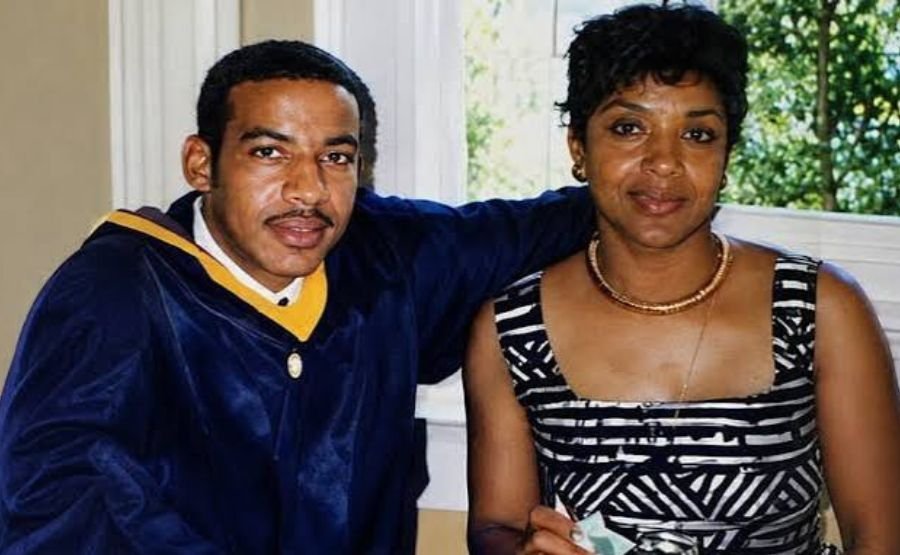
William Lancelot Bowles Jr.: The Untold Story of Phylicia Rashad’s First Husband
Here is the honest truth about William Lancelot Bowles Jr.: everything you think you know about him probably came from a website that invented it. Not exaggerating. Not interpreted it loosely. Actually made it up and published it as fact.
One article describes him as “a potential codebreaker.” Another says he “contributed meaningfully to his community” — a sentence that means nothing and cites nothing. A third describes his “lasting legacy” based on the existence of one son. These are not insights drawn from interviews or records. They are words generated to fill space around four verifiable facts: born 1944, worked as a dentist, married Phylicia Rashad in 1972, divorced in 1975.
That’s it. That’s all we actually have.
Quick Bio
| Detail | Information |
| Full Name | William Lancelot Bowles Jr. |
| Born | 1944 |
| Profession | Dentist |
| Marriage | Phylicia Rashad (then Phylicia Ayers-Allen), May 1972 |
| Divorce | 1975 |
| Son | William Lancelot Bowles III (“Billy”), born 1973 |
| Public footprint | Essentially zero — no verified interviews, statements, or documented career details |
| Current status | Believed retired; whereabouts unknown |
| Content-farm fiction | “Potential codebreaker” claim — entirely fabricated; “community contributions” — no source |
| Notable omission | Zero known reason for the divorce, ever stated by either party |
The Marriage That Barely Left a Mark — And Why That’s the Story
In 1970, Phylicia Rashad received her degree from Howard University. She married William Lancelot Bowles Jr. in May 1972. She was twenty-three. He was twenty-eight. He was either enrolled in or finished with dental school. She was at the very beginning of whatever was going to happen next.
Two years later they had a son. A year after that they divorced.
The marriage lasted three years. The relationship might have lasted longer — we don’t know when they started dating. But the legal union: three years. No documented reason, no published account, no interview from either side in fifty years. Phylicia has talked about many things in many interviews over decades of awards and recognition. The marriage to William Bowles Jr. from 1972 to 1975 does not seem to be one of them.
That absence is the most interesting thing here. You’d think someone would have asked. You’d think some profile of Phylicia — and there have been hundreds, covering her Cosby Show years, her Tony Awards, her Howard University presidency appointment in 2021, her quick resignation from Howard after Bill Cosby’s conviction — would have touched on the first marriage. What went wrong. What was happening with her career at the time.
The silence is almost total.
See also “Peter Halsey Cook: The Christie Brinkley Divorce, $300,000 Affair Scandal, and His Life Today“
What We Know About What He Did
He was a dentist. Every credible source agrees on this. Dentistry is a profession that requires a specific educational path — four years of dental school after an undergraduate degree — so if Bowles was born in 1944 and was practicing by the early 1970s, his educational timeline holds up. His age would have been ideal.
Beyond “dentist” and “born in 1944,” the documented professional record runs dry. Where he practiced. What specialty, if any. Whether he remained in practice for decades or left the field at some point. Whether he stayed in the same city where he and Phylicia married or relocated. None of this is in any source I’ve found that can point to an actual document or interview.
The “codebreaker” claim deserves a paragraph of its own because it is so specifically bizarre. One article says Bowles may have been “a potential codebreaker.” This phrase appears in one article, sources nothing, and has no connecting tissue to any documented aspect of his life. Dentists are not typically seconded into cryptographic work. There is no military record, intelligence connection, or related fact that would make this plausible. It reads like an AI system that was trying to add interest to a biography with nothing left to add.
The Three-Name Succession Problem
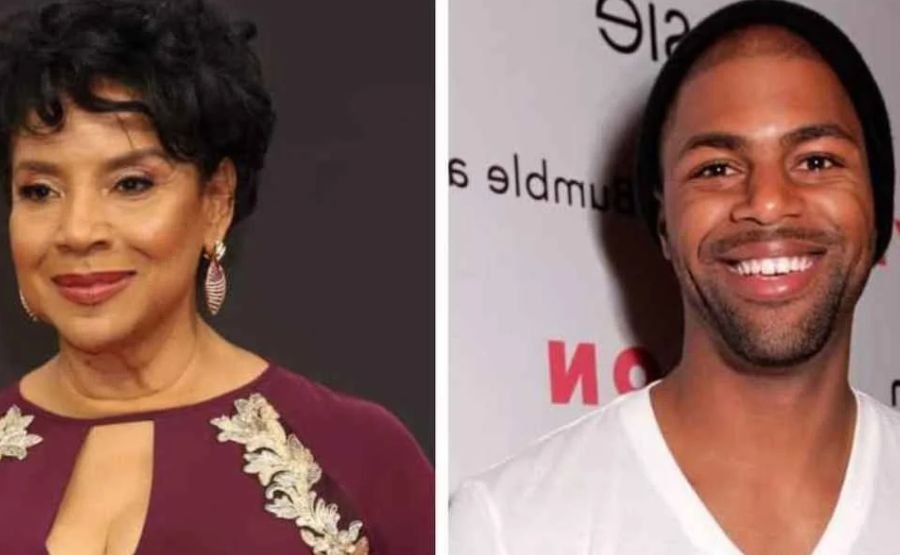
William Lancelot Bowles Jr. His son is William Lancelot Bowles III. That son goes by “Billy.”
This naming convention — the formal progression of Jr. and III — suggests a family tradition of the name that predates the marriage to Phylicia. There’s a William Lancelot Bowles Sr. out there somewhere, presumably, who started this chain. Who he was, what he did, where the family came from — not documented anywhere in the available public record.
What we know about William Lancelot Bowles III is similarly thin. He was born in 1973, called Billy growing up, and chose not to enter the entertainment world despite having a mother who became one of the most recognized actresses in American television history. He’s in his early fifties now. He maintains essentially no public profile.
Two generations of Williams, both of them private, both of them existing in the record primarily as footnotes to Phylicia Rashad’s extraordinary career.
Phylicia, Before She Was Phylicia Rashad
The portion that really tells you something is this one. When Phylicia Ayers-Allen married William Lancelot Bowles Jr. in 1972, she had been out of Howard University for two years. She was building a career in theater. She hadn’t been on Broadway yet. The Cosby Show was twelve years in the future. Ahmad Rashad — whose last name she would eventually take and keep — was nowhere in the picture.
The woman William Bowles married was not Clair Huxtable. She was a young performer from Houston who had studied drama at Howard, who was figuring out what her life was going to look like, and who had fallen in love with a dentist.
That person — early-twenties Phylicia before the career fully arrived — is who William Bowles actually knew. The one whose name he doesn’t carry, whose last name became “Rashad” after the third marriage and stayed that way even after the divorce from Ahmad. The Phylicia that America knows was built after the marriage to William Bowles ended.
Think about that inversion. He knew the version that came before everything. The version that became famous came after.
The Content Farm Anatomy
Let me walk you through what happens when you Google William Lancelot Bowles Jr., because it’s instructive.
You get a cascade of articles from domains like “newswiki.it.com,” “nestivomagazine.co.uk,” “neworldsmagazine.co.uk,” and similar sites. They all contain the same four verified facts. They create paragraphs that sound like biographies but are actually created prose around those facts. “Bowles Jr. established ideals that influenced his personal and professional life while growing up in a loving home.How are they aware of this? They don’t. “He lived a life mostly hidden from the public while making a significant contribution to his community.Which community? Which contributions? No reference.
Here’s the thing that makes this worth pointing out: it corrupts the actual search for information. When you search for something genuine about a person and every result is created filler, you end up believing you have read about the person when, in reality, you have read about the AI’s perception of the person.
The one source that introduces the “codebreaker” angle does it in the context of hedging — “whether as a dentist, potential codebreaker, or devoted parent” — as if keeping the claim vague makes it less irresponsible. It doesn’t. The term “potential codebreaker” does not apply to a dentist whose only verifiable personal information is a marriage certificate and a year of birth.
The Divorce That Nobody Explained
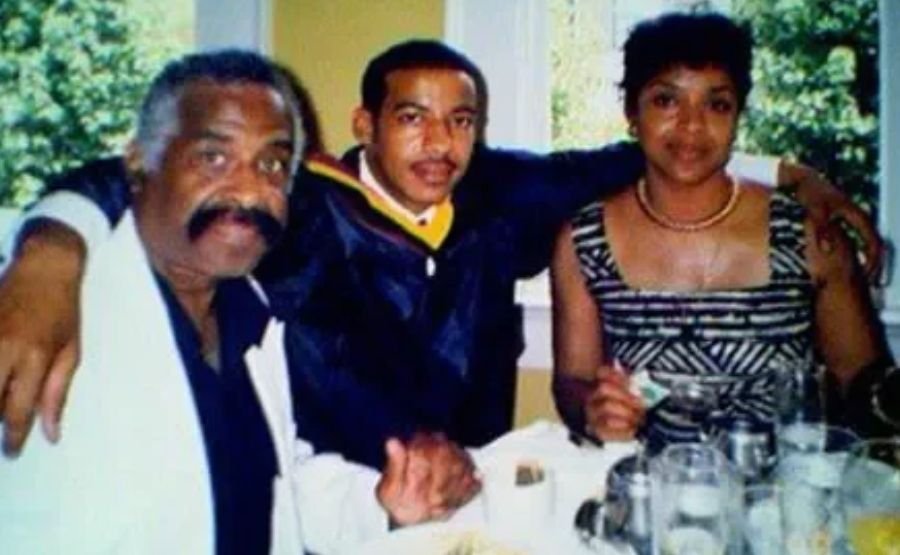
May 1972 to some point in 1975. The marriage ended and nobody said why.
Phylicia has given dozens of interviews over fifty years of public life. She’s talked about Broadway and the Cosby Show and the aftermath of Cosby’s conviction and her complicated feelings about it and her marriages to Victor Willis and Ahmad Rashad and the public nature of her personal life. The first marriage doesn’t appear in any of it in any meaningful way.
William Bowles Jr. has given zero interviews. Full stop.
Their son Billy has given zero interviews.
Let’s be honest: this might simply be a short marriage that didn’t work out between two young people in the early 1970s that neither party feels particularly compelled to discuss fifty years later. Marriages fail. Reasons are private. That’s a normal human situation.
What’s unusual is how thoroughly a man who married someone extraordinarily famous has managed to leave essentially no trace of his own existence. No Yelp reviews for a dental practice. No alumni record. No photographs from the marriage. No court documents beyond the basic filing. Not even a recognizable but incorrect anecdote from someone claiming to know them.
The privacy is total in a way that feels less like a deliberate strategy and more like a person who simply lived his life without considering that anyone would ever try to find him.
Final Words
William Lancelot Bowles Jr. is not a symbol of anything. He’s not “a refreshing example of choosing stability over fame.” He’s not a codebreaker. He’s not a community pillar whose contributions echo through time. He’s a man who was a dentist, married someone in 1972 who later became very famous, had a son with her, divorced her in 1975, and then continued to live his life in complete privacy.
That’s fine. That’s allowed. The majority of people genuinely live their lives without creating a public record that may be searched.
The problem isn’t William Bowles Jr. The problem is the internet’s refusal to say “we only know four things about this person” and instead generating paragraph after paragraph of characterization and attribution that has no source and no basis. He deserves the accurate version. Even if the accurate version is: we don’t know much. His son Billy deserves the accurate version. Even if the accurate version is: he chose privacy and it worked.
The invented biography of William Lancelot Bowles Jr. is not a tribute to him. It’s a content industry filling space where research should have been.
FAQs
1. Who is William Lancelot Bowles Jr.?
He’s an American dentist born in 1944, primarily known publicly as Phylicia Rashad’s first husband. They married in May 1972 and divorced in 1975. He has one son, William Lancelot Bowles III (nicknamed Billy), born in 1973.
2. Why did William Lancelot Bowles Jr. and Phylicia Rashad divorce?
Neither party has ever made a public explanation. In fifty years of interviews, Phylicia Rashad has not discussed the marriage in any documented public source. Bowles has given no interviews.
3. Was William Lancelot Bowles Jr. really a “codebreaker”?
No. There is only one article that makes this claim, and it has nothing to do with anything that can be verified regarding his life. He was a dentist. The codebreaker characterization is AI-generated fiction.
4. What is William Lancelot Bowles III doing now?
He was born in 1973, goes by “Billy,” and maintains essentially no public presence. He did not pursue an entertainment career. There is no public record of his whereabouts or present occupation.
5. How long were Phylicia Rashad and William Lancelot Bowles Jr. married?
Approximately three years — from May 1972 to 1975. It was the first of Phylicia’s four marriages.
6. Who did Phylicia Rashad marry after William Bowles?
Second husband: Victor Willis, the original lead singer of the Village People (married 1978, divorced 1982). Third husband: NFL sportscaster Ahmad Rashad (married 1985, divorced 2001), whose last name she kept. Fourth husband: attorney Richard Judson Bernstein (married 2024).
7. How old is William Lancelot Bowles Jr.?
Born in 1944, he would be approximately 81 years old in 2026. Some content-farm articles cite his age inconsistently as 79 or 81 in the same year.
8. Is William Lancelot Bowles Jr. still alive?
No public record of his death exists as of 2026, and he’s believed to be alive. But no public records of any kind — health, location, activity — are available.
9. Where did William Bowles and Phylicia Rashad first meet?
No credible public source contains this information. They met maybe during or soon after Phylicia’s stay at Howard University, where she graduated in 1970, according to one popular theory. No specific meeting story has been confirmed.
10. What happened to his dental practice?
Unknown. The city, practice name, specialty, and duration of his career are not documented in any public source. Whether he retired, when, and where he practiced are genuinely unknown.
11. Why do we know so little about William Lancelot Bowles Jr.?
Because he has generated none. He’s a private professional who had a brief marriage to someone who later became famous, and he has not spoken about it publicly, maintained a traceable professional profile, or appeared in any documented record beyond the marriage and birth certificates. The internet’s response has been to invent information rather than acknowledge the limit.
Beyond the headlines, discover what’s worth knowing — TheTrendist.
One Comment