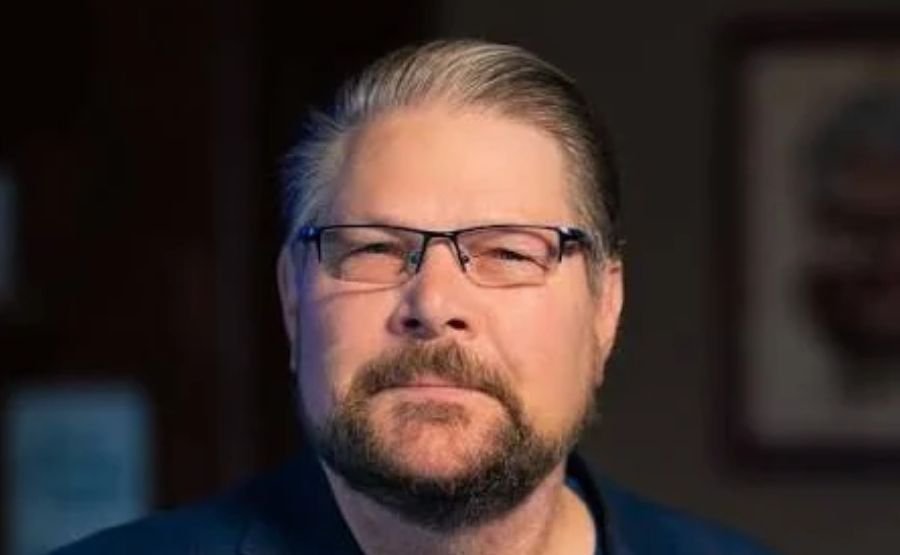
David Frecka: The Man Who Made Millions Selling Plastic Film and Built a $60 Million Car Collection
The internet has decided David Frecka is a “visionary filmmaker.” There are entire articles — published, indexed, floating out there with confidence — describing his “groundbreaking work” in cinema and his “passion for storytelling.” None of it is true. He’s never made a film in his life.
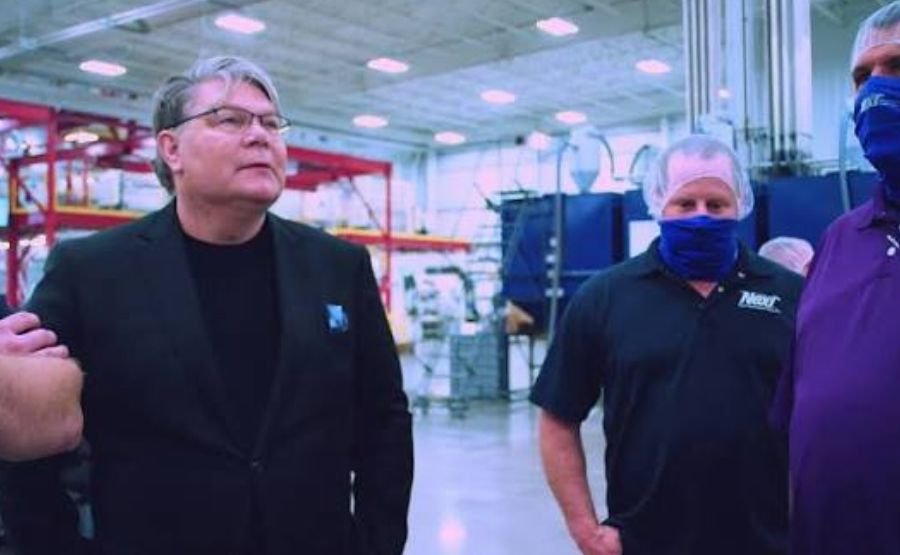
What he actually did was spend thirty-four years making plastic packaging. Trash bags. Food wrap. Courier film. The kind of stuff you tear open and throw away without a second thought. Invisible industry. Unglamorous product. And somewhere inside that relentlessly unsexy business, he built a company worth nine figures, nearly lost it all when his health failed, clawed it back one supplier phone call at a time, sold it to private equity in 2019, and then — already past sixty — walked out the other side and started collecting a Bugatti Chiron, a Pagani Huayra BC, and a Ferrari LaFerrari with his two sons.
You’ve probably never heard of him. Which is exactly the point.
Quick Bio
| Detail | Info |
| Full Name | David Allison Frecka |
| Nickname | “Big Daddy Dave” (BDD) |
| Born | June 16, 1953, Ripley, Ohio |
| Education | Central Michigan University — Bachelor’s in Business |
| Wife | Brenda Frecka (married 40+ years; born September 20, 1956) |
| Children | Jason (“The Landscrapper”), Jordan (“The Ringleader”), Jennifer, Kathryn |
| Business | Founded/purchased Next Generation Films (Lexington, Ohio) — plastic specialty film manufacturer |
| Founded/Purchased | 1985 (per 2002 Smart Business profile, the most direct primary source) |
| Formal incorporation | 1994 (date appearing in official company records — likely a re-formation event) |
| 2019 sale | Merged with Charter NEX Films (Leonard Green & Partners + Oak Hill Capital); became Charter Next Generation |
| Post-sale venture | Triple F Collection — family hypercar collection, YouTube channel (376K+ subscribers) |
| Car collection value | ~$60-62 million (as of 2022-2025 estimates) |
| Philanthropy | $10M+ donated; Make-A-Wish, Nationwide Children’s, House Freedom |
| Home | 22,873 sq ft, Delaware County, Ohio — largest in the county, third largest in Central Ohio |
| Net worth | Estimated $60-62 million (unverified; no public disclosure) |
The Newspaper Ad Nobody Wrote About
Here’s the origin story that’s buried in every bio site and never given the space it deserves.
David Frecka — Ohio-born, Central Michigan University business degree, working-class Ripley roots — didn’t start out thinking about specialty films or flexible packaging or food-grade polymer structures. He saw an ad in a newspaper. About making trash bags. That’s it. That’s the whole founding myth.
Something in it clicked. He didn’t go to a startup incubator. He didn’t pitch VCs. He didn’t do an MBA. He learned the industry, apparently the old-fashioned way — by being in it — and then in 1985, he bought into or acquired a business that would eventually become Next Generation Films.
Here’s where the records get complicated, and I want to be straight with you about it. The Smart Business profile from 2002 — the only direct interview with Frecka on record — says clearly that he “purchased Next Generation in 1985.” But official company documents, used in the 2019 merger announcement, say the company was “founded in 1994.” Multiple corporate databases echo 1994.
The most likely explanation? He started in the business in some form in 1985 — buying an existing small operation, running it informally — and then formally incorporated or reorganized as Next Generation Films, Inc. in 1994. These things happen. Companies get reconstituted. Tax structures change. A 1994 incorporation doesn’t mean you weren’t making films in 1989.
What matters more is the actual story of what he built, and the near-miss that almost ended it before anyone outside Lexington, Ohio knew his name.
See also “Kristin Batalucco Age: The Truth Behind the Woman the Internet Keeps Getting Wrong“
“Resin Can Go Up and Down 100 Percent in Six to Seven Months”
Let’s talk about what this business actually is, because the industry context explains everything about both the risk and the resilience.
Specialty film manufacturing is built on polyethylene resin. You buy the resin, extrude it, layer it, apply coatings, and sell it in rolls to food companies, logistics operators, automotive suppliers, the people who make your bubble wrap and your Amazon mailers and the film on your supermarket produce. The finished product is cheap. The margins are tight. And the raw material — resin — fluctuates violently.
“The plastic industry is so volatile that it’s easy to lose money,” Frecka told Smart Business in 2002. “Resin can go up and down 100 percent in six to seven months. It’s all demand-based and sometimes it’s a scary place to be.”
Think about what that means operationally. You’re running a company where your primary input cost can double or halve in the time it takes to fill a large customer order. Where the profitability of a contract you signed in March can be completely destroyed by what happens to oil prices in August. This isn’t a software business with 80% gross margins. This is a grinding manufacturing company.
And Frecka spent over three decades inside that grind. He invested heavily in technology — state-of-the-art extrusion lines, advanced blown film equipment, the kind of capital expenditure that most family-owned manufacturers in Ohio avoided because the payback period was terrifying. He bet on tech instead of lean margins and won.
Until he got sick.
The Near-Death of a Business Nobody Was Watching
The article in Smart Business doesn’t specify what exactly put Frecka out of commission. “A series of health issues,” it states. That’s all we get. And I’m not going to speculate about what it was or moralize about it. The point is that he stepped away, and when you’re the founder-operator of a manufacturing business and you step away, things can go sideways fast.
They did.
“I hired some ‘professional managers,’ some industry guys, and in a year, they almost had me out of business,” he stated. “They were ignorant of cash flow. The company was going out of business and we had large stocks.”
That quote is worth parking on. He hired people with industry credentials — the conventional wisdom when a founder needs to step back — and it nearly killed the company. Not because they were incompetent, exactly, but because they didn’t understand the specific cash flow dynamics of this specific business. Big inventories + volatile resin prices + a business where margins are always tight = a company that can bleed out fast if you’re not watching daily.
Frecka returned early. Before he was medically ready, by most reads of that quote. And he did something that actually takes real character: he called his suppliers, told them exactly how bad things were, and gave them weekly updates.
That’s not normal. Most business owners in a near-bankruptcy situation stall, minimize, hope it turns around. They don’t proactively brief their creditors on the scale of the problem. Frecka apparently decided that transparency was his only currency at that point. “That gave them the foundation to wait,” he said.
He was right. They waited. He pulled it through.
The Contradiction That Nobody Resolves
Let me flag the founding date issue one more time, because it’s genuinely strange how much confusion exists and how confidently wrong sources have gotten it.
The “founded in 1994” date is everywhere. Official press releases. Merger documents. Growjo. Competitor databases. Charter Next Generation’s own history pages. All say 1994.
The 2002 Smart Business interview — a direct conversation with Frecka, in which he uses the past tense about the company’s early years — says he “purchased Next Generation in 1985.” This is not a throwaway line. The article is specifically about his entrepreneurial history.
My best reconstruction: He entered the plastic film business in 1985, possibly by acquiring a smaller operation or taking over a struggling film manufacturer. At some point, likely in the early 1990s, he reorganized, relaunched, or formally incorporated the company under the name “Next Generation Films, Inc.” with 1994 as the legal founding date. His two sons later joined — Jason eventually serving as Director of Operations for fifteen years; Jordan dropping out of college at nineteen to run one of the plants.
This is a family business story, is what it is. Dad builds it by hand. Sons grow up inside it. They all sell it together in 2019.
The Billion-Dollar Exit Nobody Celebrated in the Press
Here’s the thing about the 2019 Charter NEX deal: it happened in April of that year, got covered in trade publications like Refrigerated and Frozen Food, Packaging Strategies, and NS Packaging, and received essentially zero mainstream business press attention.
The combined entity was described as involving a “definitive agreement” between Leonard Green & Partners, Oak Hill Capital, and Frecka. Multiple sources later suggested the total enterprise value of the deal — combining both companies — was in the range of $1 billion. If that’s accurate, and Frecka held majority equity in Next Generation, his personal payout would have been substantial.
But we don’t actually know. The price of the sale was never made public. No press release cited a number. Every “net worth” figure you’ll find online for Frecka — $50 million, $60 million, $62 million — is speculation dressed up as research. Nobody knows.
What we do know is that after the deal, Frecka remained CEO of the Next Generation Films division under the combined Charter Next Generation structure. He’s described as a “major shareholder” in the merged company. He didn’t simply cash out and vanish. He stayed inside the business he built.
And then in 2020, with his two sons, he started buying Bugattis.
The Triple F Collection and the Question of What Legacy Actually Looks Like
Jordan and Jason Frecka’s YouTube channel has over 376,000 subscribers. They have documented the acquisition of a first-edition Bugatti Chiron (which Jordan has said is the car that can never be sold), a custom Pagani Huayra BC, McLaren Speedtails, Ferrari LaFerraris, and dozens more cars at a compound in Ohio that functions like a private automotive museum with a drag strip.
The father — “Big Daddy Dave” — appears on camera occasionally. He’s not the face of the channel. The sons are. But the source of the capital, and the inspiration for the collection, traces back to him.
What’s interesting to me about the Triple F Collection isn’t the cars. It’s the charity angle. They use the cars — events, Cleveland Auto Show appearances, Make-A-Wish fundraisers — to raise money. They’d raised approximately $500,000 as of early 2022. The family has reportedly given over $10 million to various foundations in total, across their career.
That’s not a PR strategy. Or maybe it is — I’m a little skeptical of any business that makes charity central to its public image. But the scale of the donations (if the $10 million figure is accurate) exceeds what you’d do just for brand positioning. There’s something genuine there, even if I can’t verify every dollar.
The 22,873-square-foot house in Delaware County that David and Brenda Frecka built in 2018 — largest in the county, third largest in Central Ohio — is a different kind of statement. Seven bedrooms. Thirteen bathrooms. An elevator. A gift-wrapping room. These are the choices of a man who spent forty years making packaging film in Lexington, Ohio and decided that when the exit came, he was going to actually enjoy it.
I don’t begrudge him that. He almost lost everything when he got sick. He came back anyway. He built something worth selling. He’s entitled to the house.
The Problem With How the Internet Covers Him
Let me be direct about the information landscape around David Frecka, because it’s a mess that actively obscures a genuinely interesting story.
There are at least a dozen websites that call him a “filmmaker” or “film producer” — confusing the word “film” in Next Generation Films with the movie industry. This isn’t minor. These articles describe his “creative vision,” his “passion for cinema,” his “partnerships with renowned directors.” Every word of it is fabricated. He makes plastic film for packaging food. He has never made a movie.
Then there’s the net worth content. Multiple sites publish an exact figure ($50 million, or $60 million, or $62 million) with the confidence of a Wikipedia citation. None of it is sourced. The deal terms were never disclosed. His equity stake was never disclosed. His take from the merger was never disclosed. The “net worth” figures are estimates that have been copied between sites until they started to look like facts.
The founding date contradiction (1985 vs. 1994) has never been addressed by any mainstream source. Every site just picks one and runs with it.
What gets lost in all this noise is the actual story — which is: a guy from Ripley, Ohio, read a newspaper ad about trash bags, spent thirty-four years in one of the most volatile and unglamorous corners of American manufacturing, nearly went bankrupt during a health crisis, rebuilt by being radically honest with his suppliers, built the company up to $35M+ in annual revenue, brought his two sons inside it, and sold it in a nine-figure deal to PE firms from Los Angeles and New York.
That’s a full American business story. It doesn’t need the fictional filmmaker overlay.
Final Words
David Frecka is not famous. He’s not trying to be. “Big Daddy Dave” is not a personal brand he created for content; rather, it is a moniker his family gave him.
What he actually is — if you strip away the AI-generated garbage, the inflated net worth estimates, and the bizarre “film director” mischaracterization — is a specific kind of Ohio industrialist who understood his business at a molecular level, survived a near-catastrophic crisis by doing the unfashionable thing (total honesty with creditors), and built something real and valuable over multiple decades.
The Triple F Collection YouTube channel is fun. The charity work appears genuine. The house is enormous. None of those things are what make him interesting.
What makes him interesting is the 2002 quote: “My success is built more on failures than success — you can’t shoot 100 percent all the time. You try to gain more than you lose.”
That’s not a Silicon Valley inspirational poster. That’s someone who got close enough to losing everything to understand the actual arithmetic of business.
He gained more than he lost. By most accounts, considerably more. And he did it by making things that wrap your groceries and line your wastebaskets and nobody ever thinks about it.
That’s the story. “Visionary filmmaker” is a title I’d gladly adopt.
FAQs
1. What does David Frecka do for a living?
He’s the founder and former sole owner of Next Generation Films, a plastic specialty film manufacturer based in Lexington, Ohio. His company made flexible packaging films for food, automotive, courier, and manufactured housing industries. In 2019 he merged the company with Charter NEX Films (backed by Leonard Green & Partners and Oak Hill Capital), creating Charter Next Generation. He’s now also the patriarch of the Triple F Collection — a family hypercar collecting venture with his sons Jason and Jordan.
2. Is David Frecka a filmmaker?
No. This is a widespread error caused by people confusing the word “films” in his company’s name with the movie industry. Next Generation Films makes plastic packaging film, not movies. He has no documented involvement in the entertainment industry.
3. What is the Triple F Collection?
A family-run hypercar collection founded in 2020 by David (“Big Daddy Dave”), Jason (“The Landscrapper”), and Jordan (“The Ringleader”) Frecka. They have a YouTube channel with 376,000+ subscribers, documenting the purchase, configuration, and driving of cars like a Bugatti Chiron, Pagani Huayra BC, Ferrari LaFerrari, and multiple McLarens. The collection is valued at roughly $60-62 million. They also use it for charity events.
4. How did David Frecka make his money?
Through Next Generation Films. He entered the plastic film business around 1985 (or formally incorporated in 1994 — the dates conflict in sources). He built the company over 25-34 years through heavy investment in manufacturing technology, survived a near-bankruptcy during a health crisis, and sold/merged the company in 2019 in a deal reportedly worth around $1 billion total enterprise value. He kept an equity stake in the combined company.
5. When did David Frecka sell Next Generation Films?
April 2019. The definitive agreement was announced on April 26, 2019. Next Generation Films and Charter NEX Films, which is owned by Oak Hill Capital and Leonard Green & Partners, amalgamated. Frecka became a major shareholder in the combined entity and remained as CEO of the Next Generation division. The two companies later rebranded under a single name: Charter Next Generation.
6. What is David Frecka’s net worth?
Unknown precisely — never publicly disclosed. Estimates range from $50 million to $62 million across various websites, but none cite a primary source. The merger deal terms were never released publicly, so all net worth figures are educated guesses based on company revenue and deal size estimates.
7. Where does David Frecka live?
He and his wife Brenda live in Delaware County, Ohio, in a 22,873-square-foot home they built in 2018 — reportedly the largest residential property in the county and the third largest in Central Ohio. The home includes seven bedrooms, thirteen bathrooms, six car garages, a home theatre, elevator, wine cellar, exercise room, and a gift-wrapping room. He also reportedly lives part-time in Tierra Verde, Florida.
8. Who are Jason and Jordan Frecka?
David’s two sons. Jason Frecka (“The Landscrapper”), born July 1979, is the older son. He’s an Ohio State grad with a finance degree, worked as Director of Operations at Next Generation Films for fifteen years alongside his father, and now runs the Triple F Collection business side. He’s married with six children. Jordan Frecka (“The Ringleader”), born September 1987, dropped out of college at 19 to run one of his father’s plants and now leads the Triple F Collection content and acquisition strategy. He’s married with four sons.
9. How did David Frecka nearly go bankrupt?
During an unspecified health crisis (the 2002 Smart Business article references “a series of health issues” without further detail), he was forced to step away from running Next Generation Films. He handed management to “professional managers” — industry veterans. Within about a year, they had nearly destroyed the company through poor cash flow management and excess inventory. Frecka returned to work early, called all his suppliers, told them the full extent of the problem, and provided weekly updates until the company stabilized. This transparency strategy saved the business.
10. What charities does David Frecka support?
The Frecka family has stated they’ve donated over $10 million to various foundations. Documented recipients include Make-A-Wish Foundation, Nationwide Children’s Hospital, and House Freedom. They use Triple F Collection events — bringing hypercars to car shows and charity auctions — to raise additional funds, reportedly raising around $500,000 specifically through those events as of early 2022.
11. Where did David Frecka grow up?
Ripley, Ohio — a small river town on the Ohio River in Brown County. His father, John A. Frecka, was a lawyer who worked in the steel industry; his mother, Lois Joann Frecka, was born in Portsmouth, Ohio. He attended private school in Ohio and then Central Michigan University for his business degree. He had a brother (John Drew) and two sisters (Deborah Allan and Mary Anne Myers).
Beyond the headlines, discover what’s worth knowing — TheTrendist.

2 Comments