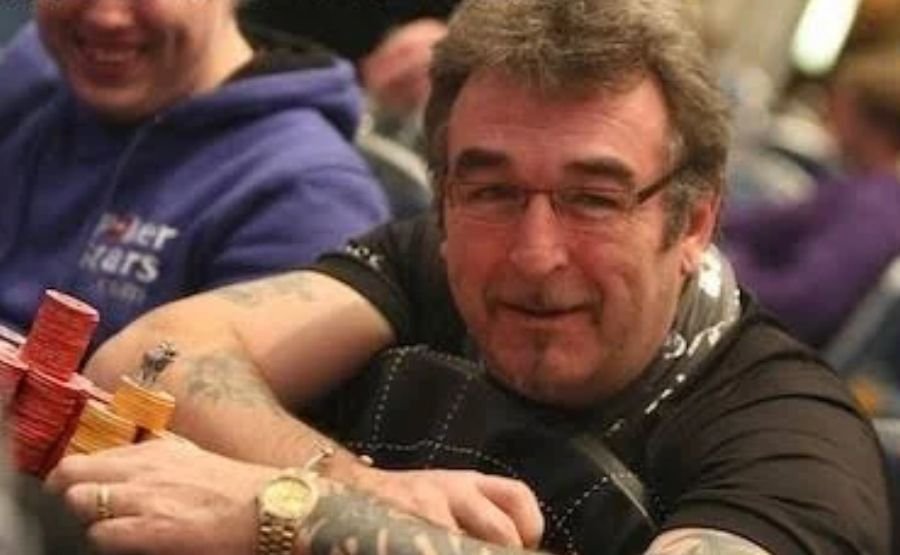
Paul Marrow: The Poker Player Who Lost €43,000 but Gave Away €7,000
Paul Marrow is not famous. Let’s just get that out there immediately so nobody feels cheated.
He’s not a WSOP bracelet winner. He’s not on a Netflix series. He doesn’t have a catchphrase or a signature hat or a line of energy drinks. His Hendon Mob profile has exactly three recorded live cashes, and his most recent one was in 2012. If you type his name into Google right now, the first few results are for a poker player page and a ResearchGate profile for an entirely different Paul Marrow who studies particle swarms at Liverpool John Moores University.
Which is almost poetic, really, given that the Paul Marrow we’re interested in came from Liverpool too.
Here’s something about Paul Marrow that no one has ever written about: he sat down at the final table of the inaugural UK & Ireland Poker Tour main event in Galway in December 2009, led the entire table in chips going into that final day, lost to Padraig Parkinson in heads-up play, walked away with €82,000 — and then immediately agreed to donate €7,000 of it to a charity that feeds homeless Dublin residents.
The same day he lost the biggest match of his poker career, the man donated money he hadn’t even had time to count yet.
That’s the story. That’s the whole story, really. The rest is texture.
Quick Bio
| Info | Detail |
| Name | Paul Marrow |
| Nationality | British (Liverpool, UK) |
| Profession | Businessman and semi-professional poker player |
| Recorded live earnings | $143,133 across 3 confirmed cashes (Card Player database) |
| Tournament win | 2008 Ladbrokes Irish Poker Festival, Event 3 NL Hold’em — 1st place, $19,221 |
| Biggest result | UKIPT Galway, December 2009 — 2nd place, €82,000 (approx. $120,723) |
| Chip leader into final table | Yes — held 1,000,500 chips, largest of 9 finalists |
| Lost to | Padraig Parkinson, Irish poker legend, in heads-up |
| Charity gesture | Agreed with Parkinson to donate €7,000 combined to Poker for the Homeless (Capuchin Day Centre, Dublin) |
| Business background | Ran a UK service company; suffered devastating business loss in 2010 due to what he described as government-backed monopoly action (under court gagging order) |
| Lost his father | Henry “Harry” Marrow — died 2010, described by Paul as “the greatest man I have ever met” |
| Special skill | Pot-Limit Omaha — praised by Humberto Brenes at WSOP as “the best Omaha” Brenes had ever seen |
| Personality nomination | Irish Poker Personality of the Year — despite not being Irish |
The Final Table Nobody Wrote a Feature About
December 2009. Galway, Ireland. The Radisson SAS Hotel. The first stop on the brand-new PokerStars UK & Ireland Poker Tour, which would go on to become one of the most popular regional poker tours worldwide. Two hundred and fifty-nine players entered at €2,000 a head. The final table was set.
Paul Marrow sat down with 1,000,500 chips. The next closest was Ben Lefrew from Harvard with 928,500. Third was Padraig Parkinson, the grizzled Irish poker veteran and Card Player columnist, with 693,500. The chip counts tell you who the favorite was going in. They tell you who has played the best poker over four gruelling days.
That person was Paul Marrow from Liverpool.
And he lost.
Parkinson — who had turned down a television appearance on Late Night Poker years earlier because he didn’t want his cards shown to the audience, a story that captures everything about his particular brand of poker stubbornness — navigated his way through the table and beat Paul heads-up for the €125,000 top prize. Paul got €82,000. Still a life-changing number. Still second place.
Here’s what Card Player Europe reported the following month: “A special mention should also go to runner-up Paul Marrow from the UK who agreed with Parkinson that the pair would donate €7,000 of their winnings to the Poker for the Homeless charity. Parkinson drove to Dublin a couple of days later and promptly handed the cash over to Brother Kevin Crowley at the Capuchin Day Centre which feeds the homeless and deprived daily.”
“Good work, gentlemen,” the article concluded.
That’s it. That’s all the ink that ever got spilled on this detail. One paragraph. A nod and they moved on.
But think about what it actually took to make that gesture. Paul had just lost the biggest poker tournament he’d ever come close to winning. He came in with the most chips and left without the top prize. In that specific emotional landscape — the runner-up finish, the near-miss, the slight sting of almost — he turned around and said, let’s give some of this away. Immediately. Without fanfare.
That’s not a PR move. There were no cameras waiting. He’s not a sponsored player with a brand image to protect. That was just what the man did.
See also “How Tall Is BigXthaPlug? His Height, Age, and Career“
Who He Actually Is Off the Felt
Paul Marrow is a businessman. That’s his actual career. Poker is the hobby that got extremely serious somewhere along the way — the kind of hobby that takes you from Liverpool to Galway to Dublin to Vegas and then back to a courtroom in England.
He mentioned the courtroom in the Card Player interview from December 2010, in the flattest possible way. Asked how his year had gone, he said: “As far as business was concerned it has probably been the worst year of my life, government bodies being used by powerful companies to create yet another monopoly, sorry I can’t name names in this but I am under a court gagging order, but to say they have taken over 300 jobs and 10 years of bloody hard work away is putting it mildly.”
Three hundred jobs. Ten years. A gagging order.
Let me just pause on that for a second. He built something real over a decade, it employed three hundred people, and it was apparently dismantled through what he describes as regulatory capture by a larger competitor. He can’t name who. He can’t explain publicly. He only needs to sit with it.
And that same year, his father died. Henry “Harry” Marrow — who Paul called “the greatest man I have ever met” and “a true gentleman” in the same interview where he’d just described his business getting crushed. He stated it frankly and without pity: “The world is a sadder place without him.”
So that was 2010 for Paul Marrow. Business gone. Father gone. Sitting at poker tables trying to maintain concentration levels while, as he put it, listening to strangers’ problems at the table when his own were stacked higher than his chip count had been in Galway.
The Hendon Mob Entry and Its Three Cashes
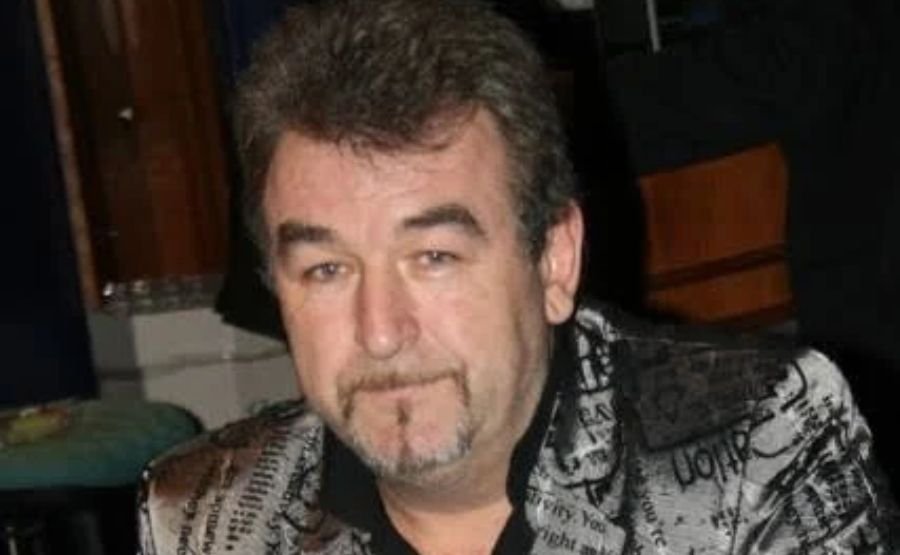
There are three recorded live tournament cashes for Paul Marrow in the official databases.
The first: 2008 Ladbrokes Irish Poker Festival, Event 3, NL Hold’em. First place. $19,221. His only recorded tournament win.
The second: 2009 PaddyPower Poker Irish Open, Charity Event, Event 5. Fourth place. $3,189.
The third: 2009 PokerStars UKIPT Irish Poker Championship. Second place. $120,723.
That’s it. That’s the public career record.
Some people see three cashes and think: limited player, occasional circuit dabbler. But look at those specific events. Two Irish Open affiliated events in 2009 — he was clearly a regular fixture on the Irish and European circuit, not some satellite qualifier who stumbled through. And the charity event cash in 2009 is interesting — the Poker for the Homeless charity event at the Irish Open, where he finished fourth, is probably where he first got embedded in that particular poker community. The same charity he’d donate to six months later after the UKIPT.
He also has unrecorded online results. The Hendon Mob bio says he plays cash games online and lives a couple of times a week. The recorded earnings are almost certainly a fraction of his actual tournament activity, because European poker in the 2008–2012 era was still substantially underreported in the major databases.
Three cashes doesn’t mean three trips to a casino. It means three trips that got reported.
The Self-Described Lunatic
The Hendon Mob published a brief player bio on him at some point that contained a sentence worth examining. It said: “Chipleader Paul Marrow has been playing poker for around 4 years and is a man with a point to prove. ‘I’m known as a bit of a lunatic player and I’m always getting friends like Neil Channing telling me to just play poker and stop being stupid.'”
A few things here.
Neil Channing — 2008 Irish Open winner, one of the most respected tournament players in British poker — was apparently a friend and casual advisor. The Channing connection places Marrow in legitimate circles, not the recreational orbit.
“A bit of a lunatic player” is the kind of self-assessment that either means he plays loose and aggressive to the point of recklessness, or it means he makes unexpected moves that rattle more conservative opponents. Given that he chip-led the inaugural UKIPT final table, I’m inclined to think it’s the second kind. The genuinely reckless don’t usually accumulate a million chips out of 259 opponents without something real underneath.
Card Player’s profile of him from that same tournament period describes his style as “entertaining to watch” and notes “his style — both the fashion and poker kind.” He apparently dressed distinctively. He apparently made an impression. He was nominated for Irish Poker Personality of the Year despite the considerable handicap of being from Liverpool rather than Ireland.
That nomination is almost the funniest fact in his whole story. The Irish poker community loved this Scouser enough to put him on the personality shortlist. That doesn’t happen by accident.
The Vegas PLO Hand and Humberto Brenes
In the Christmas 2010 Card Player interview, the best moment Paul Marrow could identify from his year was not a tournament win or a big score. It was Humberto Brenes — the famous Costa Rican pro, known for carrying a toy shark to tables and one of the most recognizable players in international poker — walking up to him after Day 1 of the Omaha World Championship in Las Vegas.
“Humberto Brenes walked up to me at the end of day 1 of the Omaha World Championship in Las Vegas saying to me that he has never ever seen, in all his years, anyone play better Omaha than I did that day — I have to say, he made my day.”
He described a specific hand from the event: a PLO spot where he flat-called Brenes with A-K-5-5 double-suited, flopped top set on a Q-5-x board, check-called two streets, then led the river for a smaller amount when the king hit to pair the board. Brenes tanked, asked if Paul had kings full, Paul said no, Brenes called. Paul showed fives full of queens. Brenes had queens full and was devastated.
The hand is elegant. The flop-call with a concealed set, check-calling twice to disguise the strength, then choosing an amount on the river that looked like a bluff-catch value bet rather than a nut-hand trap — that’s not luck, that’s a thought-out construction of a hand. Brenes didn’t see it coming. And Brenes has seen everything.
“Just a pity the next day was one of my days when I just wanted to not be there,” Paul commented.
Which is such a precisely honest thing to say. Day 1 of the Omaha World Championship: best poker of his life, according to a legend. Day 2: couldn’t be there mentally. That split — between the days when someone is fully locked in and the days when personal weight makes concentration impossible — is the thing professional players spend years trying to solve and most amateur-to-semi-pro players never fully crack.
Paul knew he had it. He just also knew when it was gone.
The Business Grievance, the Gagging Order, and the Euro Predictions
The Card Player Christmas interview is the richest primary source on Paul Marrow because it’s the only real interview he ever gave, and it’s wonderfully unguarded in the way that people are when they’re tired and they trust a poker-community publication isn’t going to weaponize their candor.
The business section lands hard. Three hundred jobs, ten years, a gagging order. The rebuilding is “mainly personal to stick it back at the bureaucrats and bullies that have caused so many honest people so many problems,” he adds, adding that his goal is to “re-build my new business into one of the best service providers in the UK.”
You can feel the anger underneath that very measured sentence.
His pledges: “I will just carry on trying to do what I do every year, try and help as many people as I can by being honest and considerate at all times.” Not winning a WPT title. Not building a bankroll. Be truthful and considerate, and assist as many people as you can. The man who just lost his business and his father in the same year.
Next is the kicker. Paul Marrow was asked about predictions for 2011: “Most of the European Union countries will make provisions to revert back to their original currencies, this is the only way forward, we will begin to see the demise of the Euro as a single currency.”
He said this in December 2010. The Eurozone debt crisis was just beginning to crack open. Greece had just been bailed out. Ireland was in the middle of its own bailout. In that specific moment, this was not a fringe opinion — but in poker magazine interviews, people don’t usually offer macroeconomic structural predictions.
Paul Marrow did. Unprompted. Because that’s apparently the kind of person he is.
The Euro didn’t collapse. The EU held together. So the prediction was wrong. But the confidence to make it, in that context, tells you something about the self-possession of the man.
What Happened After 2012
Nothing in the public record. His last confirmed cash in any database is from 2012. After that: silence.
He could still be playing regularly in UK card rooms and just not hitting databases. That’s common for players operating outside the main circuits. He could have stepped back to focus on the rebuilt business. He could be playing privately. He could be doing any number of things that don’t show up on The Hendon Mob.
The Hendon Mob bio described him as playing cash games “online and live a couple of times a week” — that was probably written around 2010 or 2011. Conditions change.
What’s not uncertain is that he existed in a specific and genuinely interesting window of European poker — the pre-boom-to-post-boom transition, when live events were growing fast and regional tours were launching and the field was still populated by people who played because they loved it rather than because it was a viable career path. He was part of that world authentically. Not a pro, not a recreational, but somewhere in the charged middle space where real skills met real stakes.
Final Words
Here’s my actual assessment of Paul Marrow, for whatever it’s worth. He’s a person who clearly knows how to play poker — the evidence is specific enough (chip leader at a 259-person inaugural major event, PLO praise from Humberto Brenes, consistent finishes in Irish circuit events) that it can’t be luck. He’s also a person whose public poker persona is inseparable from his humanity: the charity donation on the day of his biggest loss, the grief about his father dropped into a poker interview without self-pity, the honest acknowledgment of the days when he just couldn’t be present mentally.
Most poker writing is about winning. Paul Marrow’s story is more interesting than winning. It’s about a person navigating a year where everything in his real life was falling apart — business destroyed, father gone, under a gag order he couldn’t explain — while showing up at final tables and in Vegas and at charity events, and still finding ways to give money away on the worst day.
That’s not a poker story. That’s just a person.
And the fact that nobody wrote a proper piece about any of it says something about what poker journalism considers worth covering.
FAQs
1. Who is Paul Marrow the poker player?
A Liverpool-based British businessman who plays poker semi-professionally. In poker circles, he is most recognized for placing second in the first UKIPT (UK & Ireland Poker Tour) tournament held in Galway in December 2009. He lost to Irish veteran Padraig Parkinson after leading the chip at the final table. He has three confirmed live cashes totalling $143,133, and was nominated for Irish Poker Personality of the Year despite not being Irish.
2. Did Paul Marrow ever win a poker tournament?
Yes, once — the Ladbrokes Irish Poker Festival in 2008, Event 3 NL Hold’em, where he finished first for $19,221. His three recorded cashes also include the UKIPT Galway runner-up finish for $120,723 and a fourth-place in a Poker for the Homeless charity event at the Irish Open in 2009.
3. What happened at UKIPT Galway 2009?
Paul Marrow entered the final table as the chip leader with 1,000,500 chips — well ahead of Padraig Parkinson in third with 693,500. The event was the first ever stop on the newly launched UKIPT. He made it to heads-up but lost to Parkinson, taking €82,000 to Parkinson’s €125,000. Immediately after, both agreed to donate €7,000 combined to the Poker for the Homeless charity in Dublin.
4. Why was Paul Marrow nominated for Irish Poker Personality of the Year?
No formal explanation has been documented, but the nomination reflects his strong presence on the Irish circuit and the cross-community affection he generated there. Card Player noted he “leaves his mark at every table he plays on across the globe” and was known for “friendliness, sense of humour” and personal style. The charity donation following the UKIPT would also have landed well with the Irish poker community, which has strong ties to Poker for the Homeless.
5. What did Paul Marrow do for charity at UKIPT Galway?
After finishing second to Padraig Parkinson, Marrow agreed to jointly donate €7,000 from their combined prize money to the Capuchin Day Centre in Dublin — one of the charities supported by Poker for the Homeless. Parkinson drove to Dublin shortly after and delivered the cash personally to Brother Kevin Crowley.
6. Is Paul Marrow a professional poker player?
No — he’s described consistently as a businessman who plays poker seriously. He ran a UK service company for a decade before it was destroyed in 2010 in circumstances he described as government-backed monopolisation (he was under a court gagging order and couldn’t name names). He then rebuilt a new business while continuing to play poker.
7. What happened to Paul Marrow’s business?
In a December 2010 Card Player interview, he described 2010 as “probably the worst year of my life” in business terms, saying government bodies had been used by powerful companies to create a monopoly that took away “over 300 jobs and 10 years of bloody hard work.” He was under a court gagging order preventing him from naming the parties involved. He stated his goal for 2011 was to rebuild the new business and “stick it back at the bureaucrats and bullies.”
8. Was Paul Marrow good at Omaha poker?
Based on available evidence, yes — and it was apparently his strongest discipline. At the Omaha World Championship in Las Vegas, Humberto Brenes — one of the most experienced and respected pros in international poker — approached him after Day 1 and told him he had never, in all his years of playing, seen anyone play better Omaha. Brenes was beaten by Paul in a specific hand that session through disguised set-over-set play.
9. What did Paul Marrow say about online poker data mining?
He was included in Card Player’s 2010 series polling pros on the data mining debate — “The Pro Opinion VII.” His position, consistent with his personality, was likely skeptical of software-based advantages over human reads, though the full text of that specific article wasn’t retrieved in my research. He appeared alongside players like Dara O’Kearney and Marty Smyth in the series.
10. Did Paul Marrow predict the collapse of the Euro?
In his December 2010 Card Player interview, he predicted that most EU countries would move to revert to their original currencies and that the Euro as a single currency would begin to decline. This was made in the context of the early Eurozone debt crisis. The prediction did not come to pass — the Euro held — but it was made in an environment where that possibility was being seriously discussed, and it reflects his interest in macroeconomic questions that sits somewhat outside the usual poker player interview repertoire.
11. Why has Paul Marrow disappeared from poker databases after 2012?
Unknown. His last confirmed cash is from 2012. He may still be playing regularly in UK card rooms and private games that don’t report to major databases. He may have shifted focus to the rebuilt business. There’s no public record of what came after — which, ironically, is consistent with someone described as placing personal integrity and private relationships above public profile.
Beyond the headlines, discover what’s worth knowing — TheTrendist.

One Comment