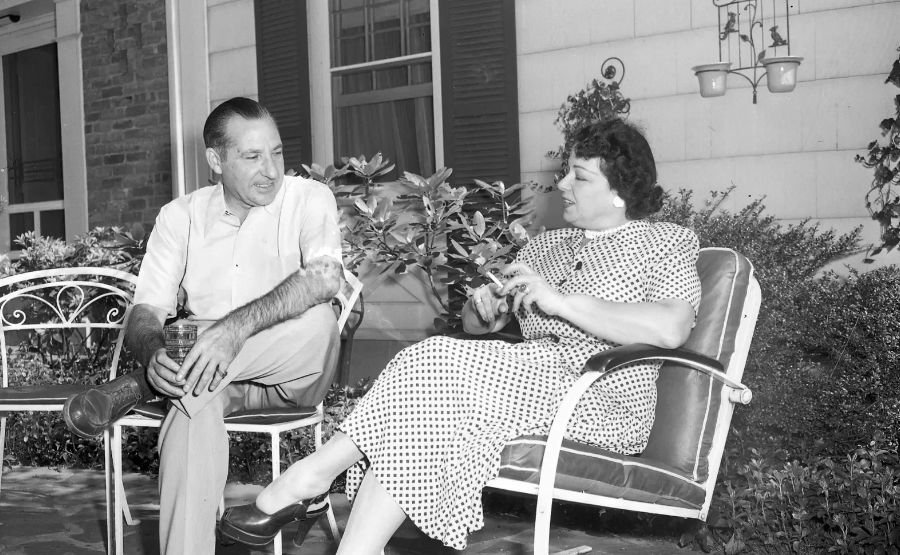
Lauretta Giegerman: The Woman Behind Frank Costello’s Empire—and the Florist Clue That Exposed It
Here’s the thing that gets me every time I go back through the real records on Lauretta Giegerman: she didn’t bring down Frank Costello’s empire. Her florist did.
Not a rat. Not a wiretap. Not a midnight confession. A charge account at a flower shop on the Upper East Side — one that “Bobbie” Costello used to send bouquets to a cemetery in Queens — is what handed the IRS the thread they pulled until the whole fabric unraveled. For decades, that detail has floated in footnotes and specialized mob history blogs, never making it into the sanitized version of her story. And the sanitized version, honestly, is almost completely fiction at this point.
Because Lauretta Giegerman — also Loretta, also “Bobbie,” also variously Geigerman, Giegerman, Geigermann depending on which record you’re reading — has become something the internet loves: a blank canvas. A quiet, loyal wife. A shadow figure behind a famous man. The woman who endured. That framing is the laziest possible read of an actually complicated life, and I’m going to push back on it.
Quick Bio
| Detail | Info |
| Name | Lauretta Giegerman; also spelled Loretta Geigerman in many official records; nicknamed “Bobbie” |
| Born | October 28, 1894 — Manhattan, New York (confirmed across multiple sources) |
| Parents | Jacob (Jack) and Cecilia (Celia) Giegerman, German-Jewish immigrants |
| Siblings | Ruth, Harold, Jessie, Jerome, Sidney, Theodore, William B. Giegerman — a large family |
| Marriage | September 22, 1914 (per Wikipedia and primary sources); some secondary sources erroneously say 1918 |
| Husband | Frank Costello, born Francesco Castiglia — boss of the Luciano crime family |
| Children | None confirmed |
| Residence | Apartment 18F, 115 Central Park West, The Majestic — nine rooms, corner unit facing the park |
| Death | Unknown exact date; post-1973; she moved to Metairie, Louisiana after Frank’s death |
| Most-overlooked fact | Her florist charge account was the specific thread the IRS followed to the hidden family mausoleum at St. Michael’s Cemetery — evidence that sent Frank to prison for tax evasion |
The Marriage Date Nobody Agrees On
Let’s start with the basics, because the basics are already broken. Sources can’t even agree on when Frank Costello married Lauretta Giegerman. Wikipedia cites September 22, 1914. Several other credible mob history sites confirm 1914. The Gangsters Inc. article — one of the more researched pieces on Costello’s finances — says 1914 flat out. The University of Michigan’s library archive of Frank’s prison correspondence says 1914.
And yet. A significant chunk of secondary sources — including the simple-English Wikipedia, the Donnie Brasco fandom wiki, and an assortment of celebrity biography sites — say 1918. This is probably because “1918” appears in some reference books because Frank used his marriage certificate as the document to legally change his name from Francesco Castiglia to Frank Costello. His name change is registered on that certificate. Some writers apparently read “1918” from the context of the name change and backdated the marriage.
Think about it. This guy was one of the most powerful and well-documented criminals in American history. And we still can’t reliably pin down his marriage date, four years’ gap, because nobody bothers to do the primary source work when it comes to his wife’s story.
That’s not an accident. It’s a symptom.
See also “Jackie O Miami: The Untold Story Behind the Name and Legacy“
Who She Actually Was Before All This
Lauretta came from a working-class Manhattan Jewish family. Her parents, Jacob and Cecilia, had immigrated from Germany — a detail that matters more than it sounds, because it places her within a very specific immigrant world: German-Jewish families in early 20th century New York, often more established and assimilated than newer Eastern European arrivals, occupying an uneasy middle tier in a rapidly stratifying city.
She had seven siblings. That’s not a detail you’ll find in the content-farm articles that have colonized her name lately, because they’re not actually doing research — they’re doing paragraph generation. But those seven siblings meant Lauretta grew up in a crowded, communal household. She was embedded in a network of family that she’d carry her whole life.
How she met Frank Costello is one of those genuinely murky moments. Some sources say she was introduced through a mutual friend. The Dicy Trends article, which at least attempts to cite Wikipedia’s framing, says Frank married “the sister of a close friend.” The donniebrasco fandom wiki says he “married Lauretta Giegerman, a Jewish woman whom his friend introduced him to.” Frank was 23 at the time. She was 19 or 20, depending on whether you trust the 1894 birth date.
She was not — and I want to be clear on this because one dreadful AI-generated site claims it — a “showgirl.” There’s no historical evidence for that. The “showgirl” line appears to be a confusion with other mob wives’ biographies. Lauretta Giegerman was a private citizen from a respectable immigrant family. That’s it. That’s all the record supports.
The Majestic, and What Living There Actually Meant
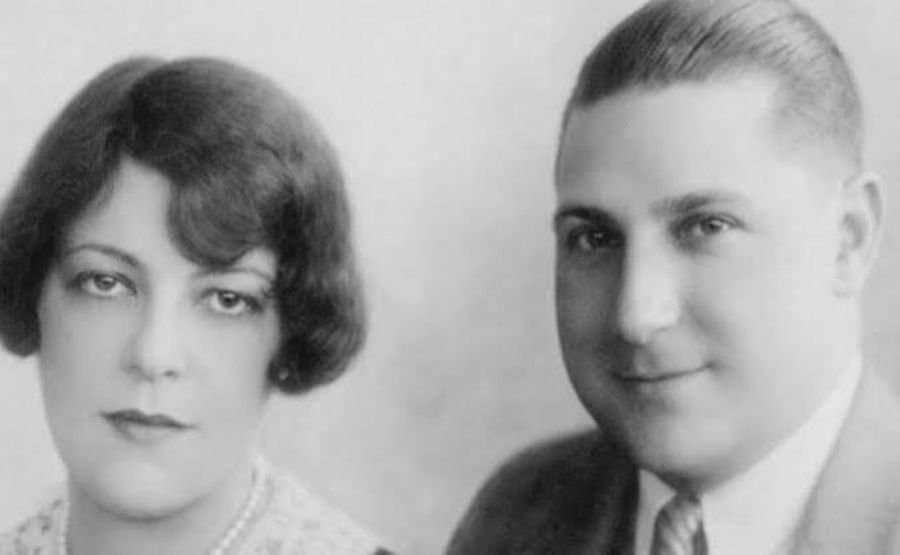
By the mid-1930s, Frank Costello was the most powerful man in New York you’d never heard of — or so he hoped. The couple lived in apartment 18F at 115 Central Park West, The Majestic, paying $3,900 a month for nine rooms. Corner unit. Two bedrooms, two bathrooms. Full morning light across the park.
The apartment recently sold for over $5 million, if you want the contemporary anchor.
They hired James Mont — the mob’s in-house interior decorator, which is a sentence you couldn’t make up — to furnish the place. It was, by all accounts, spectacular in the particular way that newly wealthy people in mid-century New York decorated: expensive, slightly too ornate, proud.
Bobbie had charge accounts at the best shops in Manhattan. A tailor. A barber. Restaurants. A florist.
I want you to focus on this point now. Because “Bobbie Costello had charge accounts at Manhattan shops” sounds like a biography line about a pampered mob wife living large. And maybe that’s what it was. But it also means she was, functionally, running the household finances in ways that were completely traceable — in an era when her husband was moving money through untraceable cash and cutouts.
The irony is almost too neat. Frank Costello — the Prime Minister of the Underworld, the man whose hands became the most famous hands in early television history during the Kefauver hearings — kept his own name off everything. He structured deals through intermediaries, kept his banks separate from his business, never touched cash directly if he could help it.
But Bobbie had a charge account at a florist.
The Flowers That Sank a Crime Boss
Summer of 1952. Frank is serving time for contempt after walking out of the Kefauver hearings. The IRS mounts a full investigation. Two agents — Wilfred Leah and John R. Murphy — start from scratch: Frank’s tax returns, his banks, his restaurants, his barber, his tailor. Standard financial forensics.
Then they find the florist charge. Flowers sent regularly to a cemetery in Astoria, Queens. East Elmhurst, specifically — Saint Michael’s Cemetery.
They go to the cemetery. They find a marble mausoleum on a plot purchased for $4,888 — cash. The mausoleum cost $23,503 more, also cash, funneled through a man named Amilicare Festa, an elderly neighbor of Frank’s mother who had been approached by a “young guy” with blueprints. Festa had Costello’s telephone number if anyone had questions.
It was a burial plot. For Frank and his family.
Bobbie had bought it. Paid for the flowers. Maintain it quietly, the way you maintain something that matters to you. The tomb was, accounts later noted, the finest in the cemetery. A caretaker blabbed about the price to a reporter after Frank died, and Carmine Galante — who hated Costello more than he hated almost anyone — had the bronze doors blown off in January 1974, just months after Frank’s death, as a final act of gangland contempt.
I keep coming back to the flowers. Because Bobbie was managing something real — a plan for their deaths, a dignified ending, a permanent marker for a marriage that had lasted decades. And in doing so quietly, routinely, the way you pay a household bill, she handed the federal government the exact thread they needed.
She wasn’t involved in the crime. She was doing something human and ordinary. That’s what made it so destructive.
The Night Someone Shot Her Husband
May 2, 1957. Frank has dinner out with friends — including the publisher Generoso Pope Jr. — at the Monsignore Restaurant on East 54th Street. He returns to The Majestic around 11 PM. In the lobby, a large man steps toward him.
“This is for you, Frank.”
Vincent “The Chin” Gigante fires. The bullet grazes Costello’s skull. Frank stumbles. Blood. A lot of people are running.
He survives. He refuses to identify Gigante. He retires quietly.
What almost nobody writes about in this context: Bobbie was presumably at the apartment, or somewhere near it, waiting. She had no warning. Her husband came home with a head wound. The assassination was ordered by Vito Genovese, who wanted Frank’s power. Frank knew it. Frank chose survival over revenge, which is why he lived to be 82.
But she had to live with that knowledge too — that her husband had enemies who wanted him dead badly enough to have a man shoot him in his own building’s lobby. She spent the rest of their marriage at 115 Central Park West knowing that.
The literature treats the assassination attempt as Frank’s story. It was also hers. And there’s not a single quote from Bobbie in any historical record about any of it.
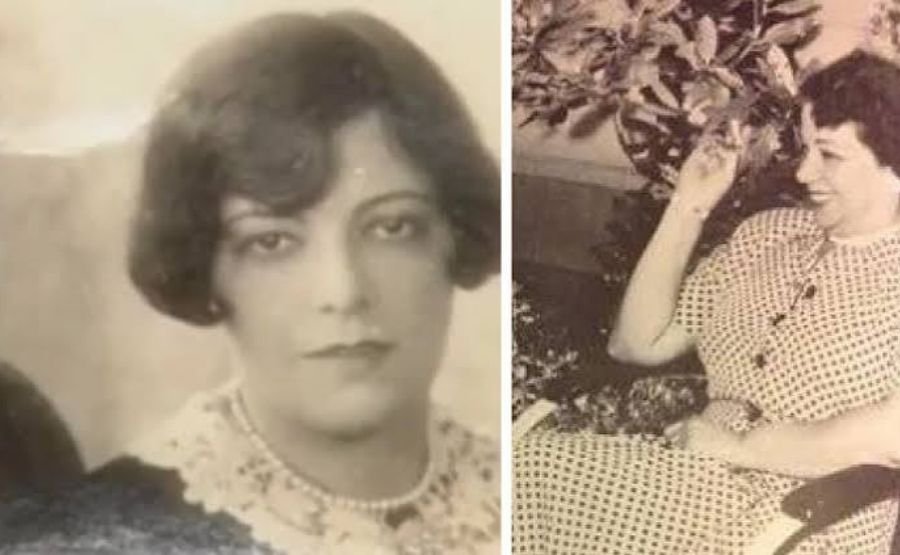
The Kefauver Years, and the Strange Calculus of Silence
In 1951, the Kefauver Committee hauled Frank in front of television cameras. An estimated 30 million people watched. His attorney struck a deal: Frank’s face wouldn’t be televised. Only his hands. Those nervous, twisting hands became one of the most iconic images of early American television and — according to multiple accounts — directly inspired Marlon Brando’s voice for The Godfather.
Bobbie’s name was never invoked in the hearings. She was not called to testify. She did not appear. She had no public statement.
Let’s be honest: that silence was almost certainly deliberate on Frank’s part. He was notoriously protective of the distinction between his criminal life and his home life. He kept Bobbie insulated — or tried to. The problem, as we’ve established, was the florist.
Some of the more recent content about her suggests she was Frank’s “rock,” his “anchor,” the stability at the center of his turbulent life. Maybe. But that framing also conveniently avoids asking harder questions. Did she know? How much? Did she ask? The answers are almost certainly that she knew enough, that she didn’t ask more than she needed to, and that this was the understood arrangement in many households connected to organized crime in mid-century New York.
That’s not romantic. It’s also not villainous. It’s complicated, and the simplification of it in either direction — pure loyalty or knowing complicity — doesn’t hold up.
After Frank: The Move Nobody Talks About
February 18, 1973. Frank Costello dies at Doctors Hospital in Manhattan. He was 82. Loretta was with him.
The funeral was small. A single limousine took Costello’s widow and his brother-in-law to St. Michael’s Cemetery in Queens. Most of the people Frank had known in his life stayed away — the power had passed, the loyalties had shifted, the era had ended. Toots Shor showed up. He described Frank as “a good family man” to reporters.
And then seven months later, Bobbie Costello left New York.
She moved to Metairie, Louisiana. To live with her brother Dudley, at 2637 Dreux Avenue.
This is the detail that genuinely surprised me when I found it. After almost sixty years in Manhattan — the Majestic, the charge accounts, the park view — she left for the suburbs of New Orleans to live with her brother. No more Central Park West. No staff. No famous address.
Maybe it was grief. Maybe it was a relief. Maybe it was simply that New York, without Frank, was too full of everything she’d survived. The apartment they’d shared for decades, the lobby where someone had tried to kill her husband, the city that had watched his hands on television.
She left it all behind and went south.
The Problem With Everything Written About Her Now
Let me be straight about something. If you search for Lauretta Giegerman in 2026, you’ll find a dozen articles. Memphis Magazine, Ranker Blog, Venza Magazine, Apex Super, multiple content sites. Every single one is some variation of the same AI-generated structure: early life paragraph, marriage paragraph, children paragraph (none), loyalty paragraph, death paragraph (unknown), FAQ section.
On fundamental facts, the majority of them contradict one another. One says she was born in 1896, another 1894, another 1897. The statement that she had “two children together, a son named Frank Jr. and a daughter named Rose” is blatantly untrue and goes against all reliable sources. One says she was a “showgirl.” Another gives her a completely fabricated set of psychological characteristics without a single primary source citation.
These articles exist because Frank Costello is searched often enough that anything adjacent to his name generates traffic. Bobbie Costello — Lauretta Giegerman — is a search term that gets clicks, and clicks generate ad revenue, and nobody checks anything.
The actual research on her life, such as it is, exists in the margins of books about her husband. In the Gangsters Inc. article about the IRS investigation. In the obituary-adjacent records from the funeral in 1973. In the one archived university finding about Frank’s prison letters. In a brief, rueful note from the gardens-of-stone.com piece about mob cemeteries.
She deserves better sourcing than she gets. Not because she was famous. Because the myth-making around her has been particularly careless, and carelessness about real women — even ones who lived at the periphery of documented history — is still a form of erasure.
Final Words
Lauretta “Bobbie” Giegerman married a man who became one of the most powerful organized crime figures in American history, stayed married to him for nearly six decades, paid a florist, bought a burial plot, watched her husband get shot in his own lobby, sat through the legal humiliations of the Kefauver era, and then — when it was all over — left New York entirely and went to live quietly with her brother in Louisiana.
That’s not a story of endurance or loyalty in the way the content farms want to package it. It’s a story of a specific woman navigating a specific set of impossible circumstances with whatever tools she had: discretion, routine, silence, and — inadvertently, fatally for Frank’s finances — a florist on the Upper East Side.
I don’t think she was a villain. She wasn’t a saint, in my opinion. I think she was a person whose name keeps getting spelled wrong.
She was Bobbie. She knew things she never said out loud. She bought flowers. And then she went home.
FAQs
1. Is “Lauretta Giegerman” or “Loretta Geigerman” the correct spelling of her name?
Both appear in historical documents, and neither is definitively “correct” in the way a legal name would be. Wikipedia uses Loretta Geigerman; many U.S. records use variant spellings because German-immigrant surnames were frequently anglicized inconsistently. She went by “Bobbie” her entire adult life, which may be why the legal spelling was never standardized across sources.
2. When exactly did Lauretta Giegerman and Frank Costello get married?
The most credible primary sources — Wikipedia’s Frank Costello article, the University of Michigan’s archive of his prison letters, and multiple mob history sites — say September 22, 1914. The “1918” date that circulates in secondary sources appears to be a confusion with the year Frank’s name change was formalized, which happened around the time of their marriage certificate.
3. Did Lauretta Giegerman and Frank Costello have children?
No. All credible sources agree: they had no children. There is no historical evidence to back the claims of “a son named Frank Jr. and a daughter named Rose” that may be found on various websites.
4. Was Lauretta Giegerman a showgirl?
No. This claim appears on at least one website but has no credible sourcing. She was a private citizen from a German-Jewish immigrant family in Manhattan. The “showgirl” detail appears to be a borrowing from the life stories of other mob-adjacent women, applied to her name incorrectly.
5. How did Lauretta Giegerman’s florist help convict Frank Costello?
During the IRS investigation of 1952, federal agents were tracing every financial thread they could find. Loretta had charge accounts at several Manhattan shops, including a florist. Following a payment from that florist account, agents discovered flowers being sent regularly to St. Michael’s Cemetery in Queens. There they found a large marble mausoleum — built on a plot Bobbie had purchased for $4,888 in cash — that the IRS ultimately proved was funded by Frank through a proxy. This became part of the tax evasion case that sent him to prison.
6. Did Lauretta Giegerman know about Frank Costello’s criminal activities?
There’s no record of what she knew or didn’t know. She never testified, never made public statements, never gave interviews. She maintained a deliberately private life for her entire marriage. The historical consensus is that she was kept at a distance from the operational side of Frank’s business — but exactly how much she understood about the broader picture is genuinely unknown.
7. What happened to Lauretta Giegerman after Frank Costello died?
Seven months after Frank’s death in February 1973, Bobbie left New York and moved to Metairie, Louisiana — a suburb of New Orleans — to live with her brother Dudley at 2637 Dreux Avenue. This is one of the most specific and overlooked details in her story, and it appears in only one source (the Gangsters Inc. article on the IRS investigation).
8. When did Lauretta Giegerman die?
Unknown. There is no publicly available death record or date for Loretta Costello. Sources describe her death as “sometime after 1973.” One site — Dicy Trends — claims she died in 1973, the same year as Frank, which is not supported by any evidence. The Gangsters Inc. article implies she was alive and living in Louisiana at least several months after Frank’s death.
9. Was Lauretta Giegerman Jewish?
Yes. Her family, the Giegermans, were Jewish immigrants from Germany. Her parents, Jacob and Cecilia, appear in records alongside the details of German-Jewish heritage. Frank Costello was Italian-Catholic, making theirs an interfaith marriage — somewhat unusual for the era and not widely discussed in mob histories.
10. Was Brando’s Godfather voice really based on Frank Costello, and did Bobbie know about it?
The connection between Brando’s raspy Godfather voice and Frank Costello’s distinctive speaking voice (gravelly from a childhood throat infection) is well-documented. Multiple accounts say Brando watched footage of Costello’s Kefauver testimony — where only his hands were shown — and specifically modeled the vocal style on Costello’s. Whether Bobbie ever saw The Godfather or made any comment about the connection is, like most things about her inner life, completely unrecorded.
11. Why do so many websites have incorrect information about Lauretta Giegerman?
Because she’s obscure enough that nobody fact-checks, but adjacent to a famous enough name that the content generates clicks. The result is a wave of AI-generated or lightly-researched articles that contradict each other on birth years, invent children she never had, and assign her traits and backstories borrowed from other mob wives. She’s a real historical person who has been turned into a content-farm filler character. The correct information is out there — it’s just in footnotes.
Beyond the headlines, discover what’s worth knowing — TheTrendist.




One Comment