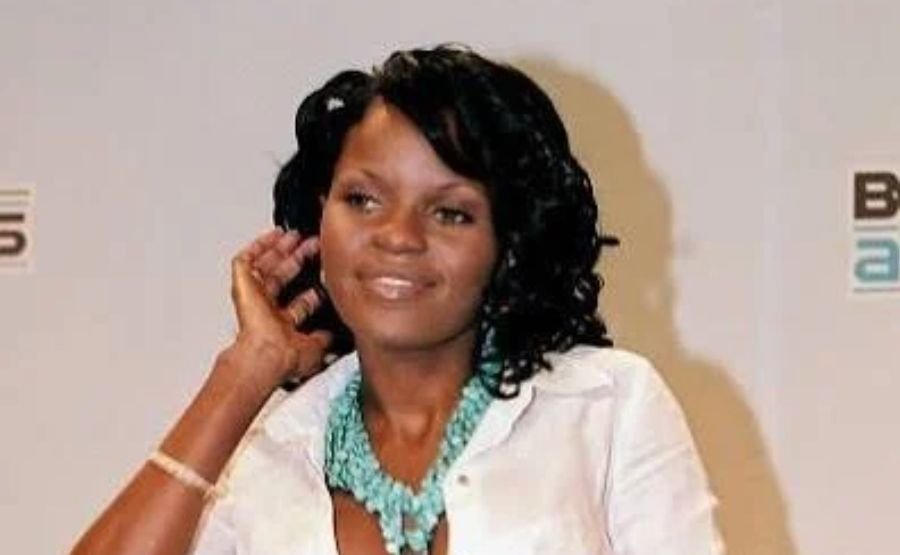
Jackie O Miami: The Untold Story Behind the Name and Legacy
The name people remember is “Nookie.” The name they should remember is Angela Kohn, who came out of a public housing project called the Pork & Beans, stole from stores to eat, trafficked cocaine, got arrested for carrying a concealed firearm — and then became a rapper who almost made it, got chewed up by the industry, and eventually walked away to become an ordained minister. That’s a better story than anything the music press ever told you. But the music press barely told you the original story.
Quick Bio
| Detail | Information |
| Real Name | Angela Faye Kohn |
| Born | November 24, 1973–1982 (sources genuinely conflict — see article) |
| Birthplace | Fort Lauderdale, FL (some sources say Miami) |
| Raised | Liberty City, Miami, FL |
| Heritage | Haitian father, African-American mother |
| Breakthrough | “Nookie (Real Good)” — 2003 |
| Debut Album | Poe Little Rich Girl — October 26, 2004 (TVT Records) |
| Peak Chart | #5 Rap Albums, #12 R&B Albums, and #95 Billboard 200 |
| Label Drama | Filed Chapter 7 bankruptcy in 2006 to escape Poe Boy contract |
| Sexual Assault Claim | Alleged in 2008 she was coerced into sex for a $10,000 advance |
| Retirement | 2014 — left rap for Christian ministry |
| Now | Ordained minister, goes by Angela Agape |
| 2025 | A Liberty City street co-named “People Change Street” in her honor |
She Grew Up in the House That Built Miami Rap — and Nobody Talks About It
Liberty Square. It is also known as the Pork & Beans Projects. Built in 1937, it was the first public housing complex for Black Americans in the entire American South. It also became one of the most violent places in the state. Jacki-O grew up there. So did Trina. So did Chad Ochocinco and Antonio Brown, though they’re remembered differently — through a lens of athletic achievement, not poverty and rap.
Jacki-O grew up between those same pink and brown buildings. She started writing poetry at twelve. She watched the neighborhood eat people alive. And she made a deliberate choice to get out, except her first route wasn’t music — it was hustle. Shoplifting from elementary school on. Credit card fraud. Bad checks. Trafficking cocaine. Aggravated assault. Concealed firearm charges. This isn’t backstory filler. It’s why her raps hit differently than most of what was coming out of South Florida in 2003. She wasn’t performing danger. She’d lived it.
Think about how rarely that actually gets acknowledged. We throw around “street cred” constantly, but when a woman actually has it, somehow it becomes a liability — something critics mention to explain why they can’t take her seriously. It’s a strange standard.
See also “Victor Oliveira : The Football King Who Never Got the Benfica, Porto, or Sporting Call“
The Year Problem (And Why It Actually Matters)
Here’s something small that reveals something big. Jacki-O’s birth year is listed as 1973, 1975, 1978, and 1982 depending on which source you consult. The Wikipedia article says 1973. Kids’ educational site Kiddle says 1973. Last.fm says 1975. The Haitian-American appreciation blog that really loved her work says 1978. And one older entertainment database says 1982.
This isn’t a casual mistake. This is what happens when the music industry — and then the internet — treats a Black woman rapper from Liberty City as a minor footnote. Nobody bothered to get it right. The inconsistency across 14+ sources suggests that even at her commercial peak, nobody cared enough to verify the basics. Basic biographical hygiene requires a publicist who matters, a label that invests, coverage that takes her seriously. She had none of those in full, ever.
The birth year thing is trivial. The attitude it reflects is not.
The Song That Wasn’t Supposed to Exist
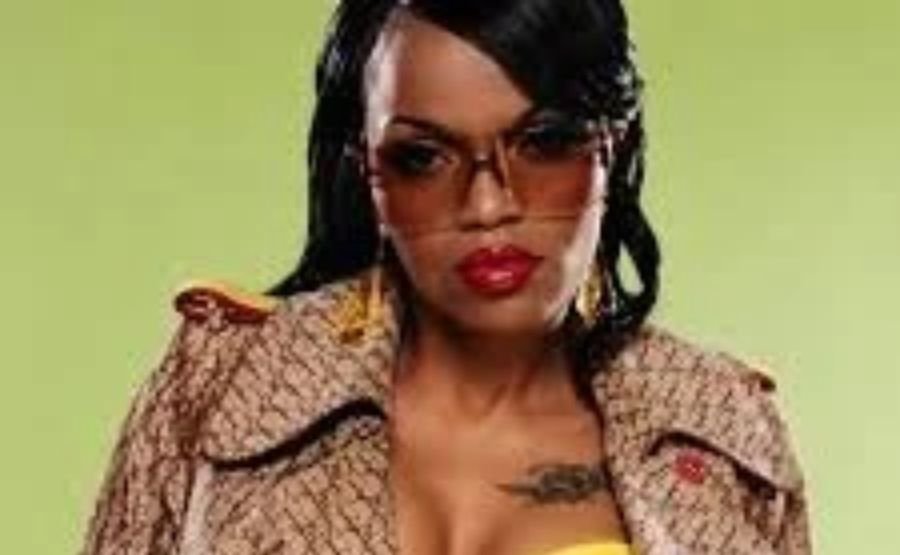
“Nookie (Real Good)” broke in 2003. Before that, Jacki-O had been grinding on Miami-area mixtapes since around 1999 or 2000, when she linked up with Poe Boy Entertainment — a Liberty City indie label run by a guy known as E-Class, who named it after a friend who was shot dead by police while trying to rob a check-cashing store to fund the label.
Read that last sentence twice. The label itself was named as an act of tribute to someone who died violently during the founding of the enterprise. That is the actual DNA of the world Jacki-O entered. It wasn’t branding. It wasn’t aesthetic. That’s just what the neighborhood was.
Her first distribution deal with Warner Bros. fell through and delayed the album by nearly a year. TVT Records eventually picked it up — home to Lil Jon and the Ying Yang Twins at the time, which makes contextual sense even if the pairing always felt slightly awkward. Poe Little Rich Girl came out October 26, 2004. In its first week of sales, it sold just over 20,000 copies and peaked at #5 on Rap Albums and #95 on the Billboard 200. Not a commercial explosion. But not nothing either.
The AllMusic review gave it a solid rating and said it “manages to keep the creative momentum going from start to finish.” As usual, Slant Magazine was harsh, calling it “proof positive that the world may indeed be coming to an end.” It reveals everything about how a particular type of music reviewer interprets sexual rap from women who aren’t well-known enough to be contentious. Slant’s reviewer was effectively saying: this exists, I resent that it exists, here’s 200 words. Meanwhile the album featured Timbaland, Jazze Pha, Trick Daddy, Ghostface Killah, and the Ying Yang Twins. That’s not nothing. That’s not a nothing album.
What Happened at Circle House Studios
April 23, 2005. Jacki-O is in the studio. Foxy Brown rolls in, apparently expecting some version of deference — the hip-hop hierarchy working as intended, New York royalty acknowledged by Southern newcomers. Jacki-O, who had just called herself “the Madam of Miami,” did not comply.
“I was all for the idea of having her join us in the studio,” she remarked. “That shows how much respect I had for her.” Then things went off course. Speech within the booth. A conflict. a confrontation. “She forced me to show her who is the madam of Miami,” Jacki-O replied.
Foxy denied the whole thing. Her attorney at the time would have been busy anyway — Brown was simultaneously dealing with assault charges over a dispute about a manicure, a criminal case so absurd it almost overshadows everything else. Jacki-O later dropped a diss track called “TKO.” Trina stayed out of it. Lipstick Alley had threads running for years. Forum users disagreed about what happened, whether Foxy actually got beaten, whether anyone’s bag was stolen. People were still relitigating it in 2023.
The conflict itself isn’t what interests me. It’s the symbolism. Foxy Brown — a New York rapper who’d moved in Jay-Z circles and recorded with Def Jam — walking into a Miami studio and expecting a Miami woman to bow down. And then getting the exact opposite. That’s a regional story. That’s also a power story.
The Contract She Could Only Escape Through Bankruptcy
January 2006. Jacki-O files for Chapter 7 bankruptcy. Declared debts of $144,225. Declared assets of $1,340.
You need to take a moment to consider that. A woman who had a debut album with major label distribution, who had performed at DJ Khaled’s birthday party at Mansion Nightclub in Miami Beach, who had her music in clubs across the country — she had $1,340 to her name when she filed. The bankruptcy wasn’t primarily about money. It was a legal mechanism to escape her recording contract with Poe Boy Entertainment, which she apparently had no other way out of.
Two years later, in a 2008 interview with Hip Hop Weekly, she alleged something darker: that she had been coerced into a sexual encounter with a Poe Boy executive in exchange for a $10,000 advance she’d already been promised. Let me be specific: she said she was forced to have sex to receive money she was already owed. That’s not a gray area. That’s not “industry drama.” That is exploitation. It got a fraction of the attention it deserved — partly because it was 2008, partly because nobody was tracking Jacki-O that closely anymore, and partly because the music industry has always been very good at not hearing what it doesn’t want to hear.
She tried to tell the story. The story didn’t spread. That’s the industry in miniature.
The DJ Khaled Business
By 2010, Jacki-O had been grinding independently for years. She gave a shoutout to DJ Khaled on her 2004 mixtape. By her 2010 XXL interview, the tone had changed considerably.
“I have a problem when the DJ feel like he more powerful than the artist,” she said. She claimed he only pretended to be from Miami. Said his syllables were wrong when he shouted out neighborhoods. Said: “We accepted you in our city and you were chosen to rep our city and then you get in office and you flip the script.”
Miami New Times found this amusing. “More Ridiculous Local Rap Beef,” their headline read, which is the kind of dismissiveness that perfectly illustrates the problem. DJ Khaled, for context, was born in New Orleans, raised in Orlando, and built his career by moving to Miami and positioning himself as its ambassador. He’s now one of the biggest names in popular music. Jacki-O, a woman who actually grew up in Miami’s projects, has a street named after her in Liberty City. The Miami New Times thought her critique was “ridiculous.” I think she was making a real point about who gets credit for a city’s culture versus who actually built it from inside it.
Khaled never responded, as far as I can find. He didn’t need to. He was already bigger.
The Haitian Thing Nobody Talked About Enough
Her father is Haitian. Her mother is African-American. She grew up in Miami in the ’80s and ’90s, when being Haitian in South Florida carried real stigma — this was during the AIDS crisis, when Haitians were specifically listed alongside gay men, IV drug users, and hemophiliacs as high-risk groups by the CDC, something that had brutal social consequences for the Haitian community in Miami.
One blog post from the Haitian-American community put it plainly: “When being Haitian wasn’t so cool, Jacki was one of the few proud Haitian artists in Miami and people loved her for how vocal she was about it.” That’s understated and important. She wasn’t hiding it or leaving it ambiguous. In a city with a massive Haitian diaspora — and a history of anti-Haitian prejudice within Black American communities — she made her heritage part of her identity at a time when that required something.
Her debut album didn’t address this explicitly in the press coverage, because the press was too busy either praising or cringing at the explicit content. The cultural context — what it meant to be a Haitian-American woman from the projects making rap music in 2003 Miami — got almost no ink. That’s a failure of coverage, not a failure of subject matter.
The Quieter Years Nobody Documents Well
After leaving Poe Boy and TVT in 2005, she started her own label — Jack Movement Entertainment, sometimes referenced as Jack Move Entertainment. Released mixtapes independently. Announced a project called Griselda Blanco in 2010 — named after the actual Godmother of Cocaine, who ran her operation out of Miami, which is a choice that tells you something about how Jacki-O thought about legacy and power in the 305. She published an urban fiction novel, Grown & Gangsta, in 2008. She published her autobiography, Relentless, in 2010. She was working on getting it adapted into a film.
Then the shows started drying up. By her own account, she’d gone from a peak to 5 or 6 shows a month if she was lucky.
And then something shifted. The details are vague in press coverage because by 2014, almost nobody was covering her.
The Facebook Post That Changed Everything
In 2014, Jacki-O announced her retirement from secular rap via her official Facebook page. She said she’d been “touched by God.” She said she was changing her life. She apologized to her fans for the content she’d put out — “my music was sex driven, raunchy and ‘hood. My music lacked moral guidance and substance. She developed into an ordained minister. She started going by Angela Agape — Greek for “God’s love,” but also, she noted, her name Angela meant “God’s messenger.”
In a 2020 interview with The Hype Magazine, she described the moment: she said God asked her name, she answered “Jacki-O,” and God responded that that’s what the world calls her. Then she said “Angela.” And that became the name she lived in.
I’m not here to judge the faith. But there’s something worth noting about the timing. Here’s a woman who spent years trying to make it in an industry that took her music, apparently took her body, left her with $1,340, and then moved on. And she left the name they gave her. She took herself back.
In March 2025 — after this article’s research window — a street in Liberty City was co-named “People Change Street” in her honor. The woman who once nicknamed herself “Madam of Miami” has a street named after her in the Pork & Beans.
If that’s not a Miami story, I don’t know what is.
Final Words
The standard narrative of Jacki-O goes something like this: explicit rapper, minor hit, some drama, faded away, found God. That’s accurate and almost entirely wrong simultaneously. It flattens a story that is genuinely complicated — about exploitation, about the Haitian diaspora in South Florida, about regional hip-hop politics, about what happens when a woman from a violent housing project tries to build something without enough support to survive the infrastructure around her.
She wasn’t Trina. Trina had longevity and positioning that Jacki-O never quite accessed. She wasn’t Khia either, whose one hit became a cultural meme. Jacki-O existed in a specific lane — raw, unashamed, Miami to the bone — and got chewed up by the system around her faster than she could build leverage.
The fact that she’s now a minister and counselor doesn’t erase any of that. It also doesn’t redeem the industry that exploited her. Both things sit there, unresolved, which is how life usually works.
She called herself the Madam of Miami. Miami gave her a street sign instead. It took a while. It shouldn’t have taken that long.
FAQs
1. Who is Jacki-O the rapper?
She’s Angela Kohn (or Angela Agape, as she goes by now), a rapper out of Miami’s Liberty City who broke in 2003 with an explicit single called “Nookie (Real Good)” and released one major album, Poe Little Rich Girl, in 2004. She’s now an ordained minister.
2. What was Jacki-O’s biggest song?
“Nookie (Real Good)” — later titled “Pussy (Real Good)” on the album — was her breakthrough. It burned through Miami’s underground before getting national radio play in 2003. Nothing she released afterward matched its visibility.
3. Is Jacki-O from Miami?
Yes and sort of. Although she was born in Fort Lauderdale, she spent her childhood in Liberty City, Miami, notably in the public housing complex known as the Pork & Beans Projects in Liberty Square. Miami shaped her. That’s her city.
4. What happened to Jacki-O’s career?
A combination of things: distribution problems with her debut, a bad recording contract she couldn’t exit cleanly until she filed for bankruptcy, an alleged sexual assault by a label executive, feuds that may have cost her more than they gained, and the industry simply moving on from artists who didn’t have the backing to maintain visibility.
5. Did Jacki-O and Foxy Brown really fight?
Jacki-O says yes. Foxy Brown denied it. The altercation allegedly happened at Circle House Studios in Miami in April 2005. Jacki-O said Brown came in expecting deference and didn’t get it. Brown’s people called the account exaggerated. The truth is probably somewhere in between — it almost always is.
6. Why did Jacki-O retire?
She announced on Facebook in 2014 that she’d found faith and was stepping back from secular rap. She became an ordained minister and now operates under the name Angela Agape. She’s described it as a genuine spiritual calling, not a PR move. In a 2020 interview, she was forthright about feeling that her old music lacked moral direction.
7. What did Jacki-O say about DJ Khaled?
In a 2010 XXL interview, she claimed Khaled didn’t genuinely support Miami rappers and that you could tell from his speech patterns he wasn’t actually from Miami. He was born in New Orleans and grew up in Orlando. She said the city “accepted” him and he then flipped the script once he gained power. It reads less ridiculous now than it did when Miami New Times framed it as petty beef.
8. What’s the deal with Jacki-O’s birth year?
Legitimately unclear. Different sources list 1973, 1975, 1978, or 1982. The inconsistency reflects how poorly documented she was during her career. The most frequently cited year in reliable sources is 1973.
9. Is Jacki-O Haitian?
Her father is Haitian. Her mother is African-American. She was openly proud of her Haitian heritage during her career at a time when that required something — anti-Haitian stigma in South Florida was real and significant in the 1980s and ’90s.
10. Where does the stage name Jacki-O come from?
She named herself after Jacqueline Kennedy Onassis. She said Kennedy’s wife represented class, which she felt would serve her. After retiring from rap, she actively distanced herself from the name, saying it carried too much negative energy. She went back to Angela.
11. What is Jacki-O doing now?
She goes by Minister Angela Agape and does faith-based speaking, counseling, and youth ministry work — particularly for women. She earned royalties from her old catalog. In March 2025, a Liberty City street was co-named “People Change Street” in her honor. JT from City Girls has cited her as an influence. She’s still in Miami.
Beyond the headlines, discover what’s worth knowing — TheTrendist.
One Comment