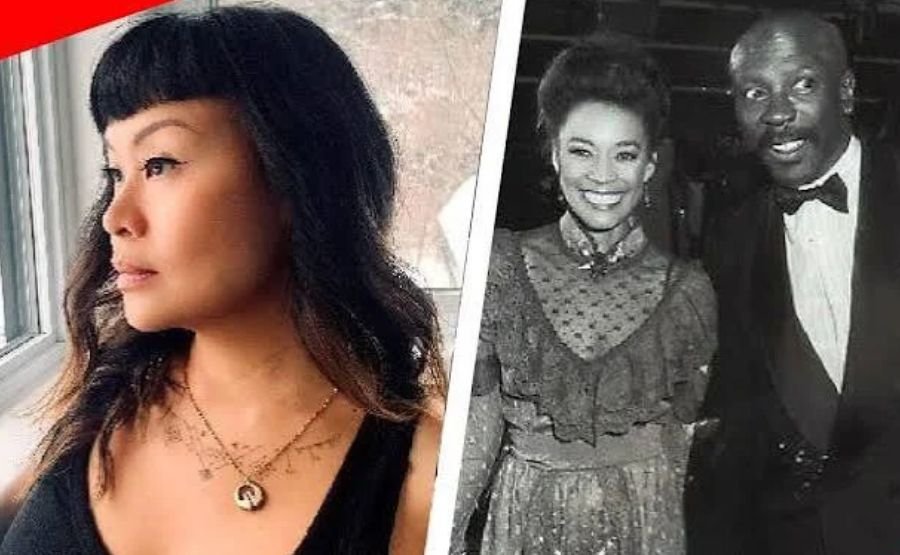
Christina Mangosing: The Untold Story of Louis Gossett Jr.’s Mysterious Second Wife
Here’s a fact that should stop you cold: search “Christina Mangosing” right now and you’ll find her described simultaneously as a Filipina-Canadian novelist who taught creative writing at UBC, a White House Champion of Change who founded the Filipina Women’s Network in 2005, and a rising entertainment industry star born in Los Angeles on March 12, 1995. She is also, apparently, a motivational speaker, a diversity advocate, and the author of three novels including one called Banana Heart Summer.
None of these people are real.
The actual Christina Mangosing is the woman who married Louis Gossett Jr. on August 21, 1973, divorced him in 1975, had one son with him named Satie, and then disappeared from documented public life so thoroughly that the content farm machine invented three entirely separate fictional women to fill the silence.
Quick Bio
| Detail | Info |
| Known for | Second wife of actor Louis Gossett Jr. |
| Married | August 21, 1973 |
| Divorced | 1975 |
| Son | Satie Gossett (born 1974; writer, director, producer) |
| Ethnicity | Filipino-American (surname “Mangosing” is Filipino) |
| Louis Gossett Jr. | Died March 28/29, 2024, age 87 |
| Career/biography | Entirely undocumented in verified sources |
| Current status | Unknown; no public record post-1975 |
| Content farm versions | At least 3 entirely fictional identities fabricated online |
Who Louis Gossett Jr. Was — Because That’s The Context That Matters
You can’t understand the information environment around Christina Mangosing without first understanding who she was married to and what that marriage represented in the broader story of one of American cinema’s most distinguished careers.
Louis Gossett Jr. was born in Sheepshead Bay, Brooklyn, on May 27, 1936. A high school teacher pushed him toward acting. He debuted on Broadway at seventeen. He spent years doing stage and TV work before the roles that would define him landed. He won the Emmy Award in 1977 for Roots. He won the Academy Award for Best Supporting Actor in 1983 for An Officer and a Gentleman, becoming only the third Black man ever to win that award at the time.
He was also married three times. To Hattie Glascoe beginning in August 1964 — an annulment less than five months later. To Christina Mangosing from August 21, 1973, to 1975 — two years, one son. To Cyndi James-Reese from December 25, 1987, to 1992 — five years, one adopted son. He died on March 28, 2024, in Santa Monica, at eighty-seven.
Christina was wife number two. The marriage began before Roots, before the Oscar, before the peak of fame that would later make her name a search query.
See also “Mallory Plotnik: The Untold Story of Phil Wickham’s Private Wife and the Truth Behind the Rumors“
The Marriage That Produced One Well-Documented Person
The one person from the Gossett-Mangosing marriage who has a documented public life is their son, Satie Gossett. Born in 1974 during the brief marriage, Satie grew into a working filmmaker — writer, director, producer. He directed the documentary American Addict 2, available on Amazon Prime. He operates in the entertainment industry his father made his home for seven decades.
Satie is photographed. Satie has an IMDB page. Satie appears in captions at events alongside his famous father. He is, in all the ways that matter for the internet’s record-keeping purposes, findable.
His mother is not. Christina Mangosing, who was in her twenties when she married Louis Gossett Jr. in 1973 and in her mid-twenties when they divorced in 1975, left essentially no trace in any publicly accessible record. No career. No subsequent high-profile relationships. No interviews about what it was like to be briefly married to a man who hadn’t yet won his Emmy or his Oscar. No memoir. No tabloid appearances. Nothing.
This quiet is interpreted by the internet as a vacancy. A vacancy demands filling.
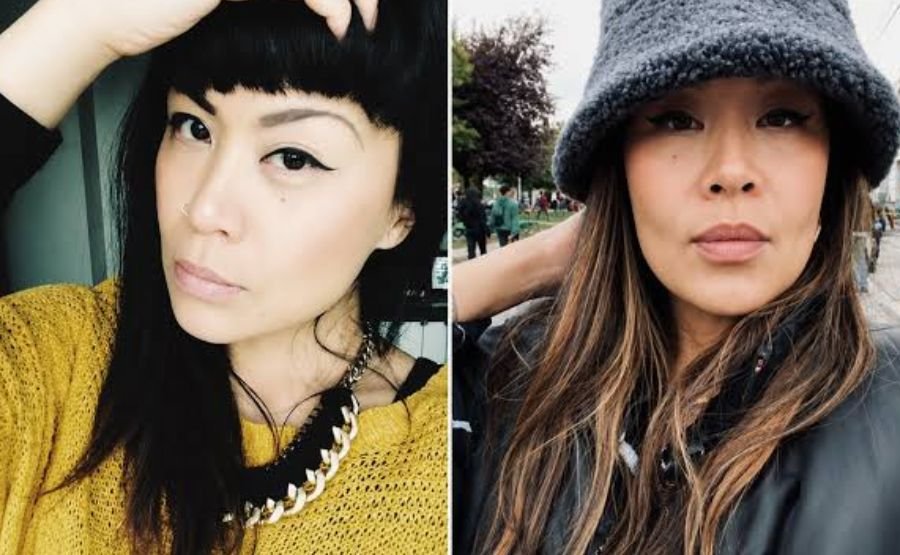
The Three Fictional Christina Mangosings — A Taxonomy
Let me document these fabrications properly, because they tell you something real about how the content machine works and what it does to private women attached to famous names.
Fictional Christina #1: The Filipina-Canadian Novelist. This version was born in the Philippines, immigrated to Canada, and became a celebrated literary writer who “explores the complexities of identity, family, and loss.” The Heart Breaks in Different Ways, the collection of short stories Many Beds, and the novel Banana Heart Summer, which follows “a young Filipina woman, Gabby, as she navigates the challenges of growing up in a small town in Canada” are some of her works. At the University of British Columbia, she is a creative writing instructor. She describes herself as “an active member of the literary community.”
None of these books exist. None of these academic appointments exist. Banana Heart Summer is actually a real novel — written by Merlinda Bobis, a completely different Filipina author. The content farm scraped the title from somewhere, reattributed it to a person named Christina Mangosing, and published it as a biography.
Fictional Christina #2: The Champion of Change in the White House. In 2005, this version established the Filipina Women’s Network. The Obama White House named her a Champion of Change. “A Filipino-American advocate, author, and motivational speaker,” she “amplifies the challenges and barriers” that Asian American women face. She is “a vocal advocate.”
The Filipina Women’s Network is real. It was founded in 1998 by Marily Mondejar. An AI system presumably scraped an article about the organization, swapped in “Christina Mangosing” as the founder, and published the fabrication as fact. Marily Mondejar has nothing to do with Christina Mangosing. They are different people.
Fictional Christina #3: The Rising Entertainment Star. This version was born March 12, 1995, in Los Angeles. She attended “the prestigious School of Arts in Los Angeles” where she “honed her skills in acting, singing, and dancing.” She has received “several accolades.” She’s had “several exciting projects lined up.” She is described as “a talented artist whose journey in the entertainment industry is just beginning.”
Born in 1995. Louis Gossett Jr.’s second wife, who divorced him in 1975. The math alone makes this impossible — the third fictional Christina is either twenty-two years younger than the marriage ended or she is, in fact, a completely different person whose biography was attached to this name by an algorithm that found the combination of words and generated plausible-sounding content regardless of coherence.
What The Filipino Name Reveals — And What It Doesn’t
Her surname, Mangosing, is a Filipino family name. This is itself a small piece of information that content farms have wildly over-extrapolated. From “Filipino surname” the machine generated a Filipino-Canadian novelist. From a Filipino-Canadian novelist it generated an advocacy career. From an advocacy career it generated a White House award. From the White House award it generated a nonprofit. At every step, the AI is adding one more layer of fabricated specificity onto a kernel of genuine ethnicity.
Here’s what the actual Filipino surname suggests: she was likely Filipino-American or of Filipino heritage. She would have been, in 1973, a relatively unusual presence in Hollywood celebrity culture — a Filipino woman marrying a Black Oscar-bound actor in the year before The Towering Inferno and two years before Roots would fundamentally change Gossett’s public profile. That intersection — Filipino-American woman, rising Black star, early-70s Hollywood — is itself a story worth knowing. And it’s a story that nobody has told, because she didn’t become famous and therefore nobody prioritized finding out.
The Oscar That Came After
Here’s the timing problem that nobody flags in any of the biographical coverage of Louis Gossett Jr. His marriage to Christina Mangosing began in 1973. It ended in 1975. The Emmy nomination for Roots came in 1977. The Academy Award for An Officer and a Gentleman came in 1983. The peak of fame — the cultural defining moment — arrived after the marriage was already over.
She was there before the peak. She was raising their son in the period when he was a working, respected actor but not yet the Oscar winner everyone would remember. Whatever she knew of him, she knew the pre-Oscar version. The post-Oscar version belongs to someone else’s story.
Think about what that chronology means if you’re Christina Mangosing. You marry a man. You have his son. You divorce him two years later. And then he wins an Emmy. And then he wins an Oscar. And then he becomes the subject of fifty years of profile journalism and documentary retrospectives that reduce your role to one line — “his second wife, Christina Mangosing (1973-1975)” — and move on.
She has never, to any documented record, commented on any of this. Not the Oscar. Not the Emmy. Not the retrospectives. Not even the obituaries in March 2024 that ran on every major platform after he died at eighty-seven.

Final Words
The story of Christina Mangosing is ultimately a story about what happens when a private woman becomes a search term. She was a Filipino-American woman who married a significant actor in 1973, had a son with him, divorced two years later, and then made the decision — consciously or not — to live outside any documentary record.
The internet’s response was to fabricate her wholesale. Three separate fictional characters, each with a different career, a different origin story, a different contribution to society. The novelist. The activist. The starlet. Three made-up women dressed in her name, none of them real.
The actual Christina Mangosing raised a son who became a working filmmaker. She was present in the early career years of a man who went on to make cinematic history. She was Filipino-American in an industry that barely noticed Filipino-Americans existed, in a marriage that crossed racial lines at a time when that still carried weight. And then she disappeared from the public record and let the algorithm figure out what to do with her absence.
The algorithm made three people up. I’d have preferred to know the one real one.
FAQs
1. Who is Christina Mangosing?
She is the second wife of Louis Gossett Jr., the Academy Award-winning actor. They married August 21, 1973, and divorced in 1975. They had one son together, Satie Gossett (born 1974), who became a filmmaker. Beyond this, her life has not been publicly documented.
2. Did Christina Mangosing write any books?
No. Multiple AI-generated sites attribute novels to her, including Banana Heart Summer, The Heart Breaks in Different Ways, and Many Beds. These are all fabricated. Banana Heart Summer is a real novel, but it was written by Merlinda Bobis, not Christina Mangosing.
3. Did Christina Mangosing found the Filipina Women’s Network?
No. The Filipina Women’s Network was founded in 1998 by Marily Mondejar. Content farm sites have incorrectly attributed this organization to Christina Mangosing. They are different people.
4. Was Christina Mangosing a White House Champion of Change?
No verified evidence supports this. The claim appears in AI-generated content that appears to have conflated her identity with other Filipino-American advocates.
5. When did Louis Gossett Jr. die?
Louis Gossett Jr. died on March 28, 2024, at the age of 87, in Santa Monica, California.
6. What is Christina Mangosing’s background?
Her surname “Mangosing” is Filipino, indicating Filipino or Filipino-American heritage. Beyond this basic ethnic identifier, no documented biographical information about her origins, education, or career has been made publicly available.
7. Does Christina Mangosing have any children?
Indeed. Satie Gossett was born in 1974 to her and Louis Gossett Jr. Satie Gossett is a working filmmaker — writer, director, and producer. His documentary American Addict 2 is available on Amazon Prime.
8. Why are there so many fake biographies of Christina Mangosing online?
Because she is attached to a famous name but has no documented public life of her own, AI content farm systems generated fictional identities to fill the search demand. The result is at least three completely different fabricated people — a novelist, an activist, and an entertainment star — all sharing her name.
9. Who were Louis Gossett Jr.’s other wives?
His first wife was Hattie Glascoe, married August 1964, annulled less than five months later. Christina Mangosing was his second wife (1973-1975). His third wife was singer Cyndi James-Reese, married December 25, 1987, divorced 1992. He adopted a son, Sharron, with Cyndi.
10. What happened to Christina Mangosing after the divorce?
Unknown. There is no public record of her activities, career, relationships, or whereabouts after the 1975 divorce. She has maintained complete privacy since then.
11. Is there a real Christina Mangosing who is a Filipina-Canadian writer?
No verified one connected to Louis Gossett Jr. Multiple content farms describe a Filipina-Canadian writer with this name, but the books attributed to her are either nonexistent or belong to other authors, and the academic positions attributed to her cannot be verified. This appears to be a content farm fabrication built around her Filipino surname and the absence of real biographical information.
Beyond the headlines, discover what’s worth knowing — TheTrendist.

One Comment