Suhaib Zaino: The Syrian Activist Who Stayed Anonymous for 13 Years
There is a Suhaib Zaino the internet thinks it knows — a shadowy “American businessman” conjured out of thin air by celebrity gossip mills who wrote four hundred words of filler and called it a biography. And then there is the actual Suhaib Zaino: a Syrian exile who spent over a decade writing about one of the most catastrophic civil wars in modern history, who published analysis that got cited by serious scholars, who co-founded a magazine calling for dignity and accountability in a country where those words could get your relatives killed — and who, until December 8, 2024, had never once spoken publicly under his own full name.
Let that sit for a moment. Thirteen years of work. Under cover.
Quick Bio
| Detail | Information |
| Full Name | Suhaib Zaino |
| Known For | Co-founder, Hurriya English-language Syria magazine; Syrian exile activist |
| Location | Europe (specific country undisclosed) |
| Family ties | Extended family in and around Damascus, Syria |
| Magazine | Hurriya (hurriya.net), launched July 17, 2023 |
| First public name use | December 12, 2024 — The Intercept interview, after Assad’s fall |
| Twitter handle | @suhaib_zaino |
| Notable writing | “Syria Still Needs an Opposition” (August 2025); multiple Hurriya essays |
| Other “Suhaib Zaino” | Celebrity-spouse persona linked to actress Sasha Barrese — claims are almost entirely unverifiable and likely AI-generated content-farm output |
Two Men, One Name, Zero Overlap
Before we go anywhere, I want to address the elephant in the room. Type “Suhaib Zaino” into Google and you get two completely different human beings who apparently share a name and absolutely nothing else.
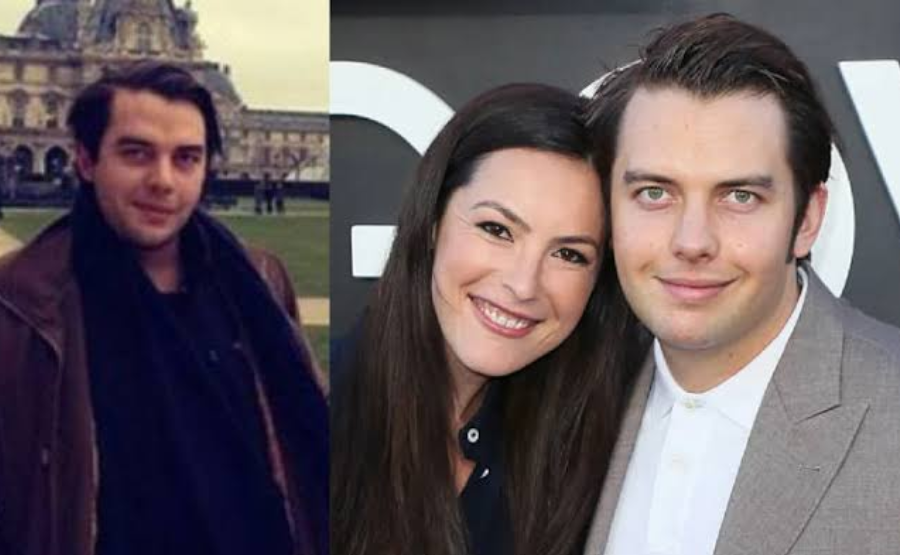
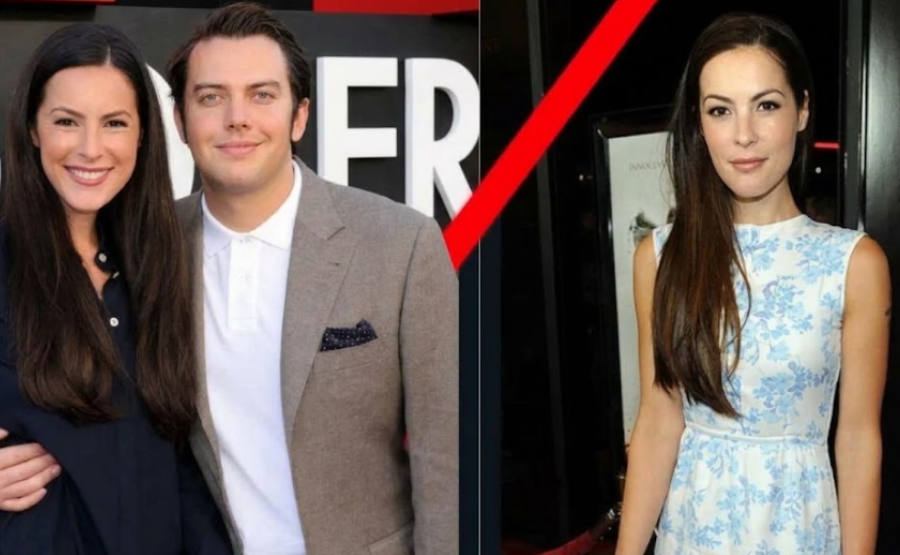
The first hits you’ll see are gossip-adjacent bio pages calling him Sasha Barrese’s husband. Sasha Barrese is the actress known for a small role in The Hangover. These pages claim Zaino is an “American entrepreneur,” married in August 2016, father of twins, worth an estimated $2 million. They cite no source for any of this. Zero. They say his “exact profession is not publicly known.” They note he was “born in the early 1980s, possibly.” One site lists that he spent his childhood in Paris. Another says he was “born in the United States.” They don’t agree with each other because they’re all spinning from the same void, dressed up in different font sizes.
I spent time trying to verify this angle. There is no marriage record I can point to. No Sasha Barrese interview confirming his name. No photo. No LinkedIn. No nothing. What exists is an ever-expanding ecosystem of AI-scraped “biography” sites that have essentially written a man into existence without any underlying person to write about.
That’s worth sitting with. Because the actual Suhaib Zaino — the one who spoke on record to The Intercept, the one who wrote biting, incisive analysis of Syria’s post-Assad transition, the one who was recommended alongside real journalists and analysts — that person is right there, documented, substantial, and almost entirely overlooked by the people who keep Googling “Suhaib Zaino net worth.”
What Anonymity Actually Means When the Stakes Are Real
Think about what it means to spend years working on something you genuinely believe in without putting your name on it. Not because you’re shy. Not for brand strategy. Because a government with 17 intelligence agencies ran a regime that actively reached across international borders to harm dissidents’ families inside the country.
Zaino said, “The Assad regime doesn’t just go after people inside the country,” in an interview with The Intercept in December 2024. This was his first public use of his full name. “They can also hurt people outside the country by hurting their relatives inside Syria.”
He had family in and around Damascus. Not in the abstract — actual people. People he couldn’t even speak to about politics without the call potentially being monitored or recorded and used against them. He had to decide whether to carry out the task he felt was essential or shield the people he cared about from its effects.
So he chose both. He did the work under cover. For years. Writing, publishing, advocating, and maintaining what The Intercept described as “a lively and at times belligerent presence on X” — all without revealing who he was.
That’s not just personal discretion. That’s a particular kind of courage that doesn’t get a lot of credit because it’s invisible by design.
December 8, 2024
The morning Islamist-led rebels took Damascus and Assad fled to Moscow, something unlocked for a lot of people. Activists who had tweeted under pseudonyms for over a decade posted their real faces. Dissidents in European cities called their families in Syria openly, freely, without the habitual terror of surveillance. The Syrian diaspora had one of those rare collective exhales that you can only understand if you’ve been holding your breath for a decade.
Suhaib Zaino was part of that moment.
He used his full name in an interview with The Intercept. For the first time. December 12, 2024. Four days after Assad’s fall. If you want a single data point that tells you something real about who this man is and what his work meant to him — that’s it. The moment the thing that had kept him in the shadows vanished, he stepped out. Not gradually. Immediately.
It’s the kind of behavior that retroactively validates every year of anonymous effort. He wasn’t hiding because he was ashamed of his views. He was hiding because the cost of visibility was borne not by him but by people who couldn’t choose.
What He’s Actually Been Saying
Here’s where it gets interesting. Because once you step past the celebrity-spouse noise and actually read what Suhaib Zaino has written, you find someone who is not interested in easy narratives.
His August 2025 piece, “Syria Still Needs an Opposition,” published in Hurriya, is one of the sharper pieces of political writing about Syria’s post-Assad moment that I’ve read from anyone. His celebration of the regime’s downfall is not straightforward. He is watching the new transitional government and being entirely willing to call out what he sees going wrong.
“Silence in such circumstances is not stability,” he claims, “but the prelude to rot.”
He describes a creeping pressure on Syrians to stop criticizing the new authorities — the idea that after 14 years of fighting, criticism itself has become somehow treasonous. He talks about the weaponization of revolutionary credentials, where former Assad supporters have somehow transformed overnight into revolutionary purists demanding that long-term dissidents prove they were on the right side. He describes it as “political opportunism” — and he’s not wrong.
Let’s be honest: this is not the kind of thing you write if you just want to be celebrated. He had every reason, after years of anonymous resistance, to cash in on the moment Assad fell and just enjoy being right. Instead he immediately pivoted to the next problem. The harder problem. The one where your allies might be making the same mistakes.
The Magazine and What It Represents
Hurriya launched July 17, 2023. The name means “freedom” in Arabic. The About page describes it as “a Syrian-led online platform” with an entirely volunteer team. It publishes in English — deliberately, it seems, in order to reach audiences beyond Arabic speakers and to make Syrian voices accessible in international policy discussions.
This is not small. The Syrian exile media ecosystem is vast and fragmented. Most of it operates in Arabic, for Arabic audiences, for the Syrian diaspora. Hurriya’s English focus is a strategic bet that the conversation about what Syria is becoming matters to people who aren’t Syrian, and that those people need Syrian voices to be intelligible to them — not filtered through Western correspondents who parachute in and out.
Zaino co-founded it and writes for it. He is listed as a go-to analyst on Syria in at least one guide circulating in activist circles, alongside seasoned journalists and veteran opposition figures. That’s not an accident.
The magazine covers topics like transitional justice, accountability for crimes committed by both the old regime and potentially the new one, and the politics of identity in a country that Assad’s family spent 53 years trying to reduce to a simple loyalty binary. It’s exactly the work that needs to happen and that nobody is incentivized to fund at the scale it deserves.
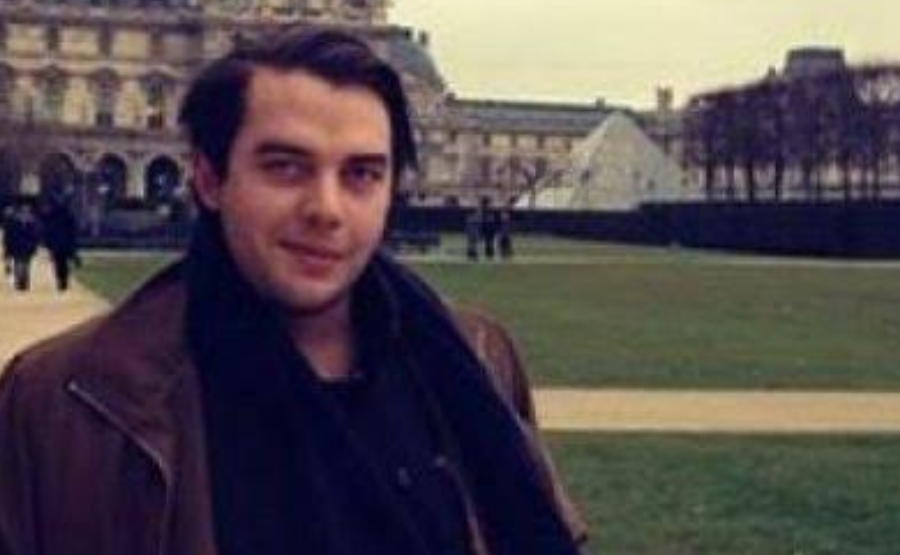
The Question Nobody Asks
Here’s what bothers me about how Suhaib Zaino gets talked about — in the rare cases where he’s talked about at all. The Intercept piece is excellent, but it’s primarily about the broader phenomenon of Syrian activists coming out of anonymity. He’s a voice in it, not the subject of it.
And then on the other side, you have the content-farm industry that has apparently decided there’s another Suhaib Zaino who is a private American businessman worth $2 million. That version of the name gets more Google traffic. It gets more “biography” articles. It occupies more of the search real estate.
The actual guy — the one who spent over a decade doing difficult, risky, anonymous political work, who co-founded a serious publication, who gave his first named interview after 13 years the moment the regime that had kept him silent fell — he’s the one that search algorithms sort toward the bottom.
There’s something depressing about that. The man who carefully measured out every public word for over a decade, who earned the right to be known by doing the work first and taking the risk second, gets buried under fabricated content about a man who may not exist at all.
What He Gets Right — And What I’d Push Back On
Zaino’s writing about Syria’s transitional moment is sharp. But it’s worth noting that some of the contradictions he identifies are deeply hard ones. He calls for principled critique of the new government without undermining its fragile legitimacy. He wants accountability without destabilization. He acknowledges that the new leadership in Syria is operating under extremely challenging conditions, but he wants Syrians to hold them to high standards.
That’s a real tension. I’m not sure if he solves it completely. He acknowledges the extraordinary challenges the transitional government faces — a shattered country, armed factions, regional interference — and then argues this makes principled governance more urgent. That’s philosophically coherent. Whether it’s politically realistic in a country that just emerged from one of the most devastating conflicts in modern history is another question.
But this is the kind of argument worth having. This is serious political thinking, not empty op-ed posturing.
Final Words
You searched for Suhaib Zaino and probably expected a quick bio hit. A celebrity husband. A table with his height and net worth. That’s what most of the internet was designed to give you.
What you actually found — if you dug past the content mills — is a man who did the kind of work that takes real conviction, under real constraints, for real stakes. Who built something serious during the worst stretch of Syria’s catastrophe and then, the moment the largest threat to his anonymity disappeared, immediately used his name to keep going.
He’s not famous. He’s not a celebrity husband. His net worth is none of your business. What he’s done is build a platform that amplifies Syrian voices about Syria’s future, written political analysis worth reading, and waited patiently for the day he could just say his own name out loud.
I think that counts for more than most of the “bios” you’ll find about him will ever tell you.
FAQs
1. Who is Suhaib Zaino?
There appear to be two people sharing this name in search results. The documented, verifiable one is a Syrian exile activist and co-founder of the English-language online magazine Hurriya, who writes about Syria’s political transition. The other “Suhaib Zaino” — described as Sasha Barrese’s husband and an American businessman — has almost zero verifiable sourcing behind the claims made about him.
2. Is Suhaib Zaino married to Sasha Barrese?
This claim appears in dozens of content-farm biography sites, but none of them cite a verifiable source — no news article, no interview with Barrese confirming this, no wedding announcement, no public record. It may be real. It may be fabricated. The internet cannot currently tell the difference, and that’s a problem worth naming.
3. What is Hurriya magazine?
It’s an English-language online publication covering Syria, launched July 17, 2023. It is volunteer-run, Syrian-led, and aims to provide Syrian voices to a global audience. Suhaib Zaino is a co-founder. Find it at hurriya.net.
4. Why did Suhaib Zaino hide his identity for so long?
His extended family lived in and around Damascus, Syria, under Assad’s rule. The regime had a documented history of targeting dissidents’ relatives inside the country as a tool to silence critics living abroad. Using his real name would have put them at risk.
5. When did Suhaib Zaino first use his full name publicly?
December 12, 2024, in an interview with The Intercept, four days after Assad fled Syria following a rebel offensive. The reporter was informed by him that he was “speaking under his full name for the first time.”
6. What has Suhaib Zaino written?
His most widely circulated piece is “Syria Still Needs an Opposition,” published in Hurriya in August 2025. It argues that the pressure on Syrians to stop criticizing the new transitional government mirrors some of the same suppressive instincts that characterized the Assad era. It’s incisive and worth reading.
7. What is Suhaib Zaino’s net worth?
Content-farm sites claim “around $2 million” for the businessman version. That figure has no sourcing. For the activist/writer version, this question just doesn’t apply.
8. Where does Suhaib Zaino live?
The activist Zaino is based in Europe; he has not publicly specified which country. The businessman version’s location is also not verified by any credible source.
9. Does Suhaib Zaino have children?
The businessman version is said to have twins. Again, no source. The activist Zaino’s personal life is not publicly documented.
10. What Twitter handle does Suhaib Zaino use?
@suhaib_zaino — the activist and Hurriya co-founder. He was recommended alongside established Syria analysts and journalists in at least one circulating guide to understanding Syrian coverage.
11. Why does the internet have so little information about Suhaib Zaino?
Two reasons pulling in opposite directions. For the activist: he deliberately kept himself anonymous for over a decade to protect his family from a violent authoritarian government. For the businessman version: because that version of him may have been invented by content-generation systems producing celebrity-spouse articles with no actual humans to research. Either way, the gap between what exists and what’s claimed is enormous.
Beyond the headlines, discover what’s worth knowing — TheTrendist.