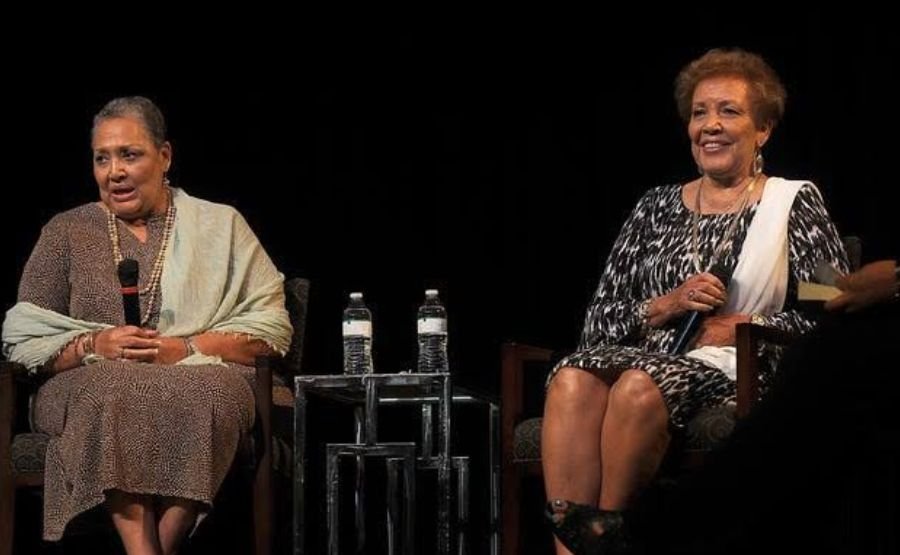
Joylette Goble: The Daughter of Katherine Johnson Who Followed Her Mother to NASA
Here’s something nobody says about Joylette Goble Hylick: her mother actively told her not to participate in the civil rights demonstrations happening on her college campus. Not because Katherine Johnson didn’t care. Because she cared too much. “If you want to work at NASA,” the elder Johnson reportedly told her daughter, “you can’t have a record.” That’s not the wholesome STEM-inspiration narrative you’ll find on content-farm biography sites. That’s a mother raising children inside a specific, constrained, carefully calculated kind of survival.
Joylette didn’t protest. She watched. After that, she went on to become a mathematician and continued to work at NASA.
Quick Bio
| Detail | Info |
| Full Name | Joylette Goble Hylick |
| Parents | Coleman, Katherine Johnson, and James Francis Goble |
| Siblings | Constance (d. before 2020), Katherine Goble Moore |
| Named After | Her maternal grandmother, Joylette Coleman |
| Where She Lives | Mount Laurel, New Jersey |
| Career | Mathematician; NASA Langley Research Center; retired from Lockheed Martin |
| Author | Co-authored My Remarkable Journey (2021) and One Step Further (2021) |
| Father’s Fate | In 1956, James Francis Goble passed away from a brain tumor. |
| Legacy Work | Speaker, STEM advocate; accepts honors on behalf of late mother |
A Name That Carries Weight From Two Directions
Let’s start with the name, because it matters and nobody talks about it enough.
Joylette Coleman was Katherine Johnson’s mother. A teacher. A North Carolinian. She raised Katherine to believe that education was the one thing racism couldn’t entirely take. Joylette was Katherine’s first daughter.
So the name doesn’t just pass down family affection. It passes down a whole set of values — what education means, what a Black woman can achieve, what you owe the generations coming after you. Joylette the daughter carries the name of a grandmother who understood that the only way through was to be so prepared, so excellent, that there wasn’t a good argument left to exclude you.
That’s the origin story. Not a celebrity birth. A lineage.
See also “Adda Quinn: The Woman Who Told Larry Ellison to Make His Fortune—and Walked Away“
The Father Nobody Mentions
James Francis Goble. He barely exists in most accounts of this family, which is strange because he’s the biological source of the “Goble” that Joylette still carries in her name, and the reason she grew up with a working mother long before that was typical.
He was a chemistry teacher. Katherine and he first met at West Virginia State College. They married in 1939. He was not a mathematician — every source that says otherwise is wrong — but Katherine has said he was enormously supportive of her.
He died in 1956. Brain tumor. Inoperable. He was 43.
Think about what that means for Joylette’s childhood. Her father was gone when she was still very young. Her mother was now widowed with three daughters, working at NACA — soon to become NASA — doing math that would help put men into orbit. There’s no tidy way to hold all of that at once.
Katherine Johnson went on to marry Jim Johnson in 1959 and stayed married to him for sixty years until his death in 2019. But the years between 1956 and 1959, raising three girls on a government mathematician’s salary during the height of Jim Crow? Nobody writes about that stretch much.
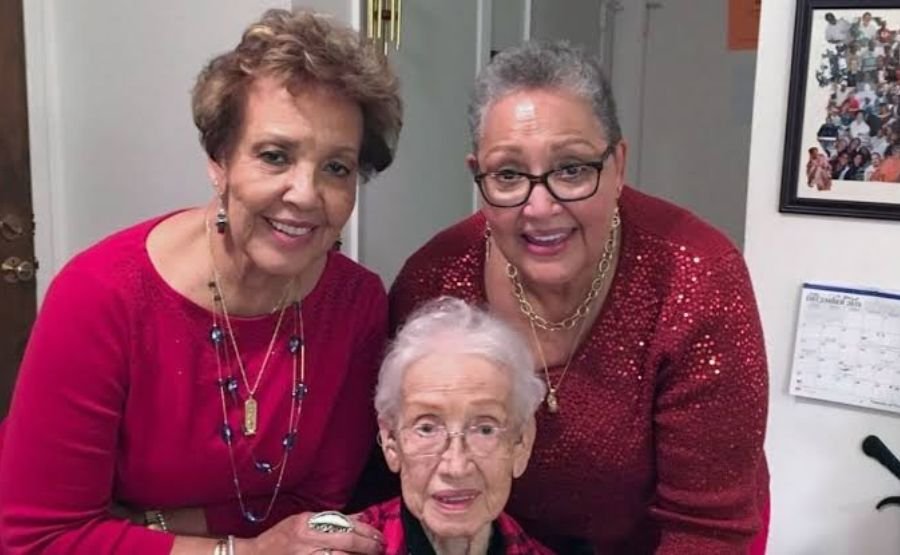
The College Years And The Thing Her Mother Said
In the early 1960s, Joylette was a college student. That’s not an abstract historical note. That means she was a young Black woman on a campus during the exact years when students were being arrested, beaten, and expelled for sitting at lunch counters and demanding the right to exist as full citizens.
She has said publicly that her mother didn’t want her involved. Not because Katherine Johnson was indifferent to the movement — she wasn’t — but because she’d built her career by navigating around barriers rather than through them, and she believed a criminal record would permanently close the NASA door.
“If you want to work at NASA, you can’t have a record,” Joylette told the Christian Science Monitor, quoting her mother.
That’s a painful instruction to carry. You’re watching your country try to change itself in real time, and your mother is telling you to stay off the street because your future requires a clean record. That’s not accommodation. That’s strategy. But strategy and sacrifice are sometimes hard to distinguish from the outside.
Joylette stayed out of the demonstrations. Later, she worked at NASA. Make of that what you will.
What She Actually Did For Work
This is where the internet really falls apart. I’ve seen Joylette described variously as a registered nurse, a psychiatrist, an attorney, a social worker, a financial analyst, and a “community advocate.” Most of those are fabricated. The content-farm problem around this family is severe — people creating fake biographies by interpolating details from one sentence about Katherine Johnson into entirely invented backstories for the daughters.
What she actually did: She became a mathematician. She worked at NASA Langley Research Center — the same complex where her mother spent 33 years. She later moved into information technology. She eventually retired from Lockheed Martin.
Let that sit for a moment. She didn’t just vaguely “follow in her mother’s footsteps.” She literally worked at NASA. At the same facility. In mathematics.
When asked about it, she described this as something that wasn’t pushed on her. Her mother, she has said, didn’t drill math into the children at home. The interest was organic. Which is either exactly what Katherine Johnson would want you to believe, or it’s just true.
Hidden Figures Changed Everything — And Created A New Job
For roughly five decades, Joylette Hylick lived a relatively private life. Retired professional. New Jersey resident. Daughter of a woman most of America had never heard of.
And then Margot Lee Shetterly wrote a book, and then Hollywood made a movie, and Taraji P. Henson played Katherine Johnson at the Oscars, and everything changed.
Suddenly there was a demand for the daughters. The living testimony. The actual eyewitnesses to this history.
Joylette and her sister Katherine Moore became a touring act of sorts, speaking at schools, at women’s empowerment events, at science museums, at library Zoom calls. The Spartanburg County Foundation event in South Carolina drew over 200 adults and 300 students. They accepted awards on their mother’s behalf when the 99-year-old couldn’t travel.
In 2017, Joylette accepted the Liberty Science Center Genius Award for her mother at a Jersey City gala. She said her mother would have loved the center’s focus on children.
She didn’t appear to be performing any of this. When you read the accounts from people who attended these events, the word that keeps coming up about Joylette specifically is “real.” Not polished. Not rehearsed. Real.
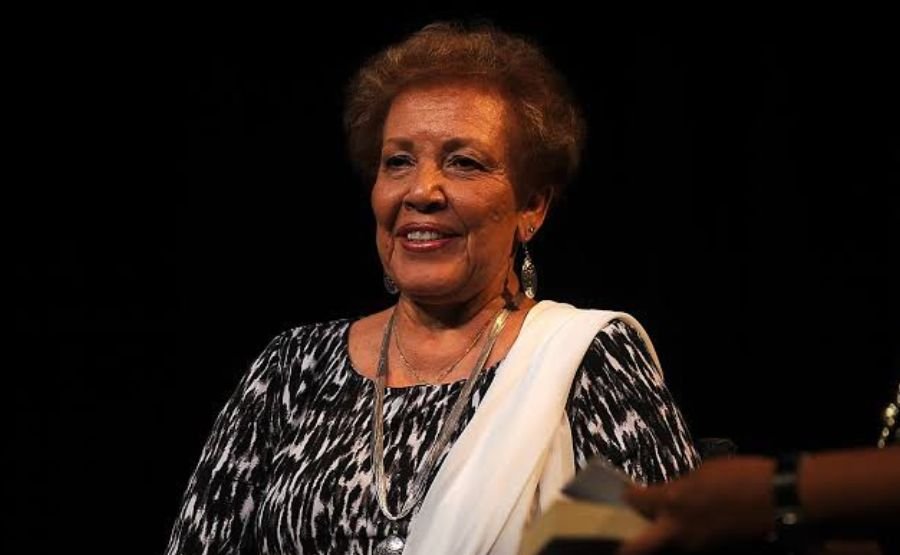
The Quiet Revelation At The Building Naming
In 2018, NASA renamed its Independent Verification and Validation facility in Fairmont, West Virginia, after Katherine Johnson. Joylette stood outside it and said it took her breath away. She choked back tears.
“We just never believed that this could happen,” she stated.
And then there was Katherine G. Johnson Computational Research Facility at Langley — a ribbon-cutting where Joylette was present, standing next to her living mother.
Katherine Johnson leaned over and whispered to her daughter. What she said, according to Joylette, was: “It would have been nice to have it named after the team.”
That sentence is everything, isn’t it? An entire building with her name on it, and the woman is thinking about Dorothy Vaughan and Mary Jackson and the rest of the West Area Computers who never got the solo spotlight. Joylette told this story publicly — not to expose her mother, but to honor her. Because that whisper was the clearest possible expression of who Katherine Johnson actually was.
The Books And What They Actually Reveal
Along with her mother and sister Katherine Moore, Joylette co-wrote two books. One is a memoir for adults — My Remarkable Journey (2021, Amistad/HarperCollins). The other is a children’s picture book — One Step Further: My Story of Math, the Moon, and a Life-Long Mission (2021, National Geographic Kids).
The picture book is more revealing than it might seem. In it, the daughters speak directly in speech bubbles alongside their mother’s narrative. One passage shows the family at a “Colored Only” beach, with Joylette’s voice in the bubble: “We were forced to go to the ‘Colored Only’ beach. White people were mean to us because of the color of our skin.”
That’s a picture book for ages 4–8 that uses the word “forced” and doesn’t flinch. That’s Joylette Hylick’s editorial voice on the page. She wasn’t going to soften her own childhood for optics.
The memoir, meanwhile, confirms something that often gets buried in the inspirational framing: Katherine Johnson says she didn’t really notice the segregated bathrooms at Langley, and that she never “felt” the discrimination. Joylette has been careful to contextualize that in interviews — her mother’s attitude was “if I can’t do it this way, I’ll do it that way,” which is a coping strategy as much as a philosophy.
The Contradiction At The Heart Of The Legacy
This is what I keep coming back to. The standard story of Katherine Johnson, as told post-Hidden Figures, is one of quiet triumph against racism and sexism — a woman who persevered through barriers with grace and humility. And that’s true, as far as it goes.
But Joylette’s testimony adds friction to that story. Her mother told her to stay out of demonstrations. Her mother believed that fighting publicly was less strategically effective than excelling quietly within the system. Her mother said she never “felt” segregation while working in a segregated building.
These aren’t contradictions to be ashamed of. They’re choices made by a specific person in specific circumstances with specific information about what it took to survive in a specific institution. But they’re real choices, not just triumphs.
Joylette hasn’t flattened them. She’s told the complicated parts. That’s its own kind of courage.
Final Words
I’ve spent a good chunk of time digging through what’s actually documented about Joylette Goble Hylick, and let me tell you — the bad-faith content farms have done her a particular disservice. Every time I searched her name, I found some garbage AI-written page listing her as a psychiatrist or a nurse or a financial analyst, as though any family-adjacent profession could be arbitrarily assigned to the daughter of a famous person.
What the real record reveals is a person who made decisions that are more difficult to properly appreciate than the style of an inspirational biography seeks to accept. She watched civil rights protests from the sidelines because her mother gave her a pragmatic directive. She followed her mother’s professional path so closely she worked at the same NASA facility. She spent the post-Hidden Figures years essentially becoming the living representative of her mother’s story, traveling to libraries and high schools and community centers.
None of that is small. All of it is complicated.
The “Joylette” name connects grandmother to daughter to granddaughter across generations of Black women who understood that education was a form of resistance — and also a form of survival. Joylette Hylick inherited both the name and the understanding.
She’s still carrying it. That seems like enough.
FAQs
1. Who is Joylette Goble?
She’s the daughter of Katherine Johnson — the NASA mathematician featured in Hidden Figures — and James Francis Goble. She goes by Joylette Goble Hylick after marriage and lives in Mount Laurel, New Jersey. She’s not a nurse, a psychiatrist, or a financial analyst, despite what dozens of terrible websites claim.
2. What is Joylette Goble’s occupation?
She was a mathematician who worked at NASA Langley Research Center and retired from Lockheed Martin as an information technology professional. Since Hidden Figures made her mother famous, she has also become a speaker and co-authored two books with her mother and sister.
3. Is Joylette Goble the oldest daughter of Katherine Johnson?
Most reliable sources list the daughters as Constance, Joylette, and Katherine (in birth order), making Joylette the middle daughter. However, some event listings call her the “oldest” — the discrepancy likely comes from the fact that Constance predeceased Katherine Johnson, so by the time her mother died in 2020, Joylette was the eldest surviving daughter.
4. What is Joylette Goble’s married name?
Hylick. She is Joylette Goble Hylick. You’ll sometimes see it spelled slightly differently in older records.
5. Did Joylette Goble work at NASA like her mother?
Yes. That’s the part most content farms get wrong by listing other professions. She was a mathematician at NASA Langley Research Center — the same complex her mother worked at for 33 years.
6. Who was Joylette named after?
Her maternal grandmother — Joylette Coleman, Katherine Johnson’s mother. Joylette Coleman was a teacher from North Carolina born in 1887. The name carries down three generations.
7. What books did Joylette Goble co-author?
Two books released in 2021. The adult memoir My Remarkable Journey (published by Amistad/HarperCollins), and a children’s picture book One Step Further: My Story of Math, the Moon, and a Life-Long Mission (published by National Geographic Kids). Both were technically authored by Katherine Johnson, with Joylette and sister Katherine Moore as co-authors.
8. What happened to Joylette’s father, James Goble?
He died in December 1956 from an inoperable brain tumor at age 43. This left Katherine Johnson a widowed mother of three young daughters, working at what would soon become NASA. She remarried in 1959 to Colonel James A. Johnson.
9. Was Joylette Goble involved in the civil rights movement?
Not in demonstrations, by her own account. She was in college during the early 1960s when lunch-counter demonstrations were happening, but her mother specifically told her not to participate because a record could prevent her from working at NASA. She has spoken about this publicly.
10. What does Joylette say about her mother’s legacy?
She’s been consistent and specific in interviews, quoting her mother’s philosophy: “Always do your best,” “accept the help you’re given,” “help others when you can,” and “you’re no better, you’re no worse.” She also shared that when the Computational Research Facility was named after her mother, Katherine whispered that she wished it had been named after the team instead.
11. Are the online biographies of Joylette Goble accurate?
Most are not. There is a severe content-farm problem around her name — AI-generated and SEO-stuffed pages list her profession as everything from registered nurse to psychiatrist to attorney to financial analyst. The verified facts from interviews and institutional records show she was a mathematician who worked at NASA and later Lockheed Martin. Treat any page that doesn’t cite actual interviews or named institutional events with skepticism.
Beyond the headlines, discover what’s worth knowing — TheTrendist.



One Comment