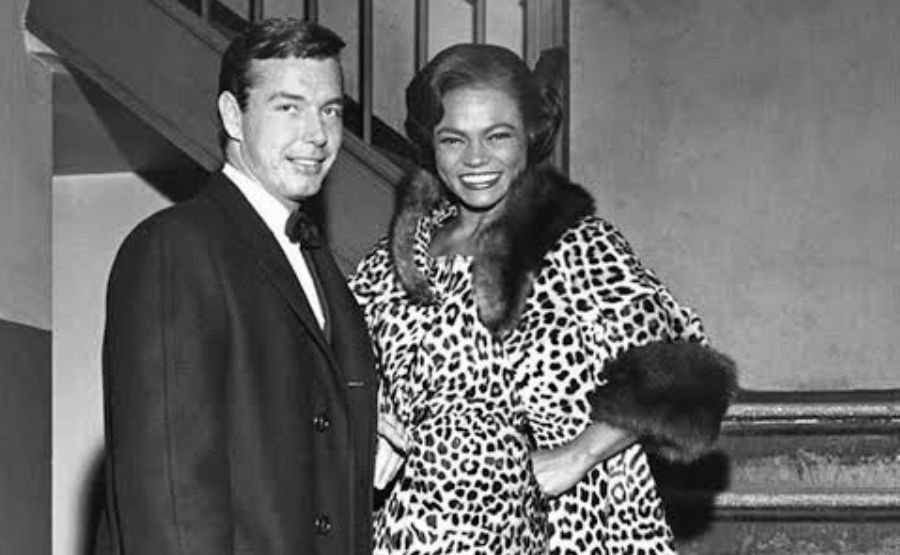
Eartha Kitt Husband: The Man She Married, the Love She Lost, and Why She Never Remarried
The search term “Eartha Kitt husband” gets millions of hits and most of them miss the point completely. They tell you his name — John William McDonald — and they tell you he was a real estate investor, and they tell you they divorced in 1964 or 1965, and that’s it. Case closed. Move on.
But here’s what Eartha Kitt actually said about why she married him. In a 2001 interview with the Globe and Mail, a reporter asked how she fell in love with McDonald. She sniffed. Then she said: “It wasn’t a matter of falling in love with him.”
That’s the whole story. In eight words. From the woman herself.
The marriage wasn’t a love story. It was a woman who’d spent her entire life being unwanted — by her mother, by the man who refused to accept a mixed-race child, by Arthur Loew Jr.’s family who’d rather see their son marry “trash” than a Black woman, by a country that made interracial romance illegal in most of its states — who finally found a decent man willing to give her something she’d never had: the right to be somebody’s chosen person. And a daughter. Mainly a daughter.
What you learn about Eartha Kitt through the story of her one marriage is not how she loved. It’s what love had cost her before she stopped asking for it.
Quick Bio
| Detail | Info |
| Eartha Kitt | Born Eartha Mae Keith, January 17, 1927, North, South Carolina; died December 25, 2008, Weston, Connecticut |
| Husband | John William McDonald — real estate associate, accountant, military veteran; met through mutual friend Bob Dix after studying at USC |
| Married | June 6, 1960 (per South Carolina State House Resolution — most authoritative source) |
| Divorced | Approximately 1964-1965 (sources genuinely disagree; Wikipedia says 1965, other records suggest 1964) |
| Children | One daughter: Kitt McDonald, born November 26, 1961 (later Kitt Shapiro after her 1987 marriage) |
| Race of marriage | Interracial — Kitt was mixed-race (Black, Cherokee, likely white); McDonald was white. Still illegal in many U.S. states in 1960 |
| McDonald’s issue | Developed a serious drug addiction that became the primary strain on the marriage |
| Kitt’s own words on it | “It wasn’t a matter of falling in love with him” — Globe and Mail interview, 2001 |
| What she actually wanted | Arthur Loew Jr. (of the MGM/Loew’s theater family) — his family rejected her on racial grounds |
| After divorce | Never remarried; devoted life to daughter Kitt and career |
| Note on misinformation | Multiple AI sites falsely claim “Charles Lawrence” was her second husband — he was her DAUGHTER’s husband, not hers |
The Woman Who Was Never Wanted Enough
To understand why marriage matters, you have to understand what preceded it.
Eartha Mae Keith was born in 1927 on a cotton plantation in North, South Carolina. Her father was likely white — possibly the plantation owner’s son, possibly conceived by rape. Her mother was Black and Cherokee, fourteen years old when she gave birth, and gone shortly afterward. Gone because the man she went to live with refused to accept a “yella” girl — too light, too mixed, belonging nowhere.
When her mother departed, she was four years old.
Handed off to relatives. Abused in one household. Taunted by other children for her light skin. “Nobody wanted me,” she said repeatedly in interviews. “Negro or white.” She moved to Harlem at eight to live with “Aunt Mamie,” who also turned out to be abusive. By her early teens she was essentially raising herself.
She once said: “I wasn’t black enough to be black or white enough to be white, so I had no race, creed or color. I made my own race — me.”
That’s not a tagline. That’s survival. That’s decades of being rejected by every category available.
She ran away at sixteen to audition for the Katherine Dunham Company. She got in. The business traveled throughout Europe and South America. She found — not family, not belonging in any traditional sense, but something more useful: an audience. A stage. A place where being Eartha Kitt was an achievement rather than a problem.
By the early 1950s, she was performing in Paris to massive acclaim. She was fluent in Dutch, German, French, and English. She sang in Spanish, Swedish, and Turkish. Orson Welles, directing her in a Paris production, called her “the most exciting woman in the world.” She put that in her act and kept it there for six decades.
None of that fixed the wound underneath.
See also “Itzhak Ezratti Wife: Who Is She? The Mystery Behind the Billionaire Builder’s Private Life“
The Man She Actually Wanted
Before Bill McDonald, there was Arthur Loew Jr.
The Loews. The family behind MGM, the family behind the theater empire, one of the wealthiest entertainment dynasties in mid-century America. Arthur Loew Jr. was their heir. He and Kitt were involved. He wanted to marry her. He told his father.
His father’s response: the shareholders would never accept a Black heir. If he married Kitt, he’d be disinherited. And if he couldn’t marry her, Loew suggested to Kitt — because this is the detail that really lands — he could keep her as a mistress.
Kitt walked.
She described his family’s position plainly: “The mother would have Arthur marry trash than someone of color no matter how wonderful that person was.”
She never quite got over it, though. In that same 2001 Globe and Mail interview, talking about Bill McDonald, she said something remarkable: “The man that I really wanted to be the father of my daughter was Arthur Loew.”
She was 74. She said it plainly, without particular bitterness. Just as a fact. The man she loved couldn’t marry her because of race. So she found someone who could.
There was also Charlie Revson — founder of Revlon, one of the most powerful men in American cosmetics. A relationship Kitt described as meaningful. But Revson didn’t offer marriage, and Kitt was not in the market for an arrangement.
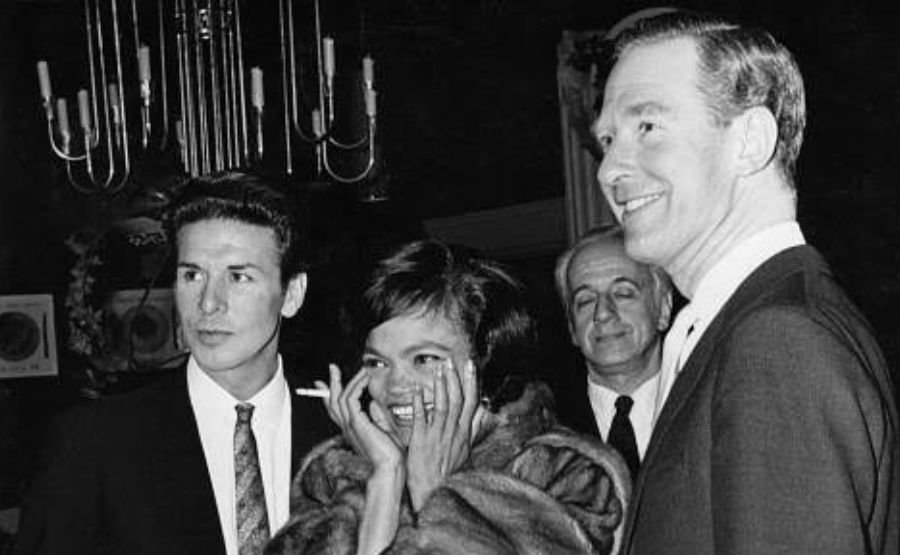
June 6, 1960: The Marriage That Was Already Named
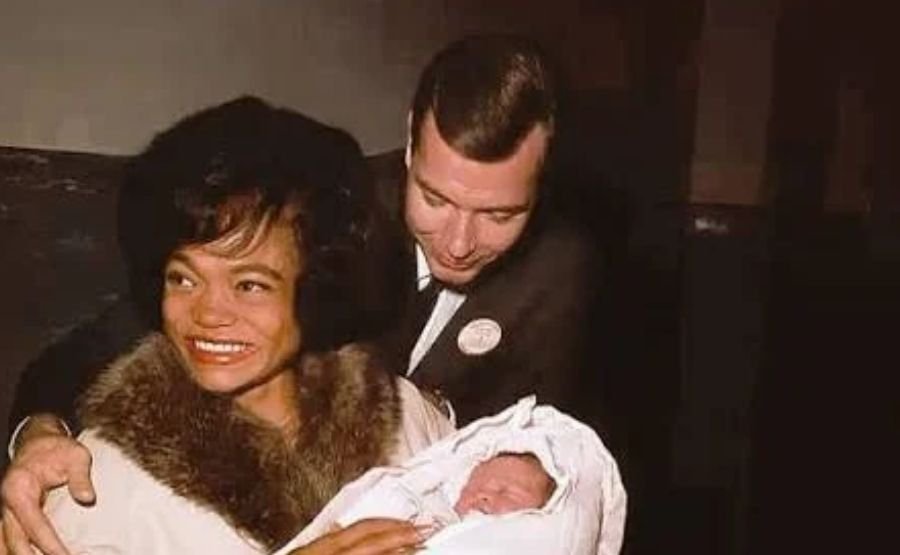
On June 6, 1960, Eartha Kitt wed John William McDonald. At that time, interracial marriage was still prohibited in around one-third of US states. The Supreme Court wouldn’t strike those laws down until Loving v. Virginia in 1967. They were married in Los Angeles, which was legal, but think about what it meant to do it publicly, with photographs, with newspaper coverage of their smiling faces leaving Cedars of Lebanon Hospital four days after their daughter’s birth.
That was a choice. A deliberate, visible, documented choice in a country that hadn’t yet decided those marriages were legal.
McDonald was a white man from a comfortable background, a military veteran who’d attended the University of Southern California and went into real estate. Not glamorous. Not famous. Not Arthur Loew. But available, and willing, and by all accounts — at least initially — decent.
Kitt was 33. McDonald was reportedly younger. Her fame was at its height. The interracial marriage made news.
A Globe and Mail reporter, sitting with her forty years later, asked the obvious question. She didn’t soften it. She slapped the air, as if pushing aside the phantom of McDonald, and said she sometimes got fed up when she came home from tour and he immediately wanted to throw her in bed. She used the phrase “the only husband I ever had” with a particular flatness that said everything about the distance between what marriage had promised and what it delivered.
But she also has a daughter.
The Daughter Is the Point
This is what the “husband” story is really about, and the articles that search-optimize around the topic almost universally miss it.
Eartha Kitt wanted a child. Specifically. Deliberately. She said in multiple interviews that motherhood was the most important thing she ever did. More than Catwoman. More than “Santa Baby.” More than any stage.
She named her daughter Kitt. Not after herself — after the name she had taken, the name she had constructed from nothing, the name that meant belonging to no one and therefore belonging entirely to herself. Her daughter would carry that.
Eartha & Kitt: A Daughter’s Love Story in Black and White is a book written by Kit Shapiro, the married name of Kitt McDonald. That subtitle is doing real work. Black and white. The mother who was neither, who was both, who had been rejected by both. The daughter who was blonde and light-skinned, who followed her mother to every club and movie set and country. Who, till her final day, was “inseparable” from her.
“We were a team,” wrote Shapiro. “Inseparable. From the first day of my existence till the final day of hers.”
That’s what the marriage produced. Not a lasting romantic partnership. The marriage itself was over before the decade was. But the daughter lasted. The daughter was the designer.
McDonald’s Decline and the Shape of the Divorce
Here’s what ended it: McDonald developed a serious drug addiction.
Multiple sources cite this. Blinkist’s Eartha Kitt profile, the Globe and Mail interview framing, Kitt Shapiro’s book — all point to McDonald’s substance abuse as the structural collapse of the marriage. McDonald was having severe difficulties by the time it was finalized (1964 or 1965, depending on which data you trust).
Kitt did not speak harshly about him in public, or at least not consistently. In the 2001 interview she’s dismissive rather than bitter — the air-slap, the flat phrasing. But she also didn’t pretend the marriage had been something it wasn’t.
In interviews, daughter Kitt Shapiro has been particularly considerate of her father’s memory. She described her childhood as involving both her mother and McDonald, and by all accounts they maintained a functional co-parenting arrangement after the divorce. Which means something, given everything.
After the divorce, Kitt never married again. She was 37 or 38 when it ended. She lived another forty-four years. She had relationships. She had suitors. She had, she said, tremendous love for men as a category. But she never walked down another aisle.
Lady Bird, the CIA, and What Followed
The twist is that when the White House ruined her career, she was already separated from McDonald.
January 18, 1968. Lady Bird Johnson hosted a luncheon on “Crime in the Streets.” Kitt was there in genuine good faith — she had real, documented work with inner-city youth organizations, and she had thoughts on the reasons why young men ended up in jail and on the front lines.
She stood up and said the obvious: you send the best of this country off to be killed, and the survivors come home to nothing, and then you wonder why there’s crime. She said it plainly. The room went cold. Lady Bird reportedly wept — though Kitt believed those were not tears of moral awakening.
Within days, the CIA had a dossier on her. Not a new one — they’d been watching her since 1956, it later emerged. But now they share it actively with venues, producers, and promoters. The dossier described her, using information that would read as pure McCarthyite character assassination today, as a “nymphomaniac” with a “very nasty disposition.”
She didn’t know why her bookings dried up until 1975, when Seymour Hersh of the New York Times broke the story.
“As for reports of the CIA’s invasion of my right to privacy,” she responded when informed, “I am insulted, disappointed, and annoyed, but I don’t find it particularly surprising.”
She joked, “What has that got to do with the CIA if I was?” when someone brought up the CIA file’s description of her as a nymphomaniac.
She performed almost exclusively in Europe for the better part of a decade. She was a grandmother-aged woman doing nightclub shows across the Atlantic because a president’s wounded ego had made her unemployable at home.
She came back eventually. She always came back.
What the Internet Gets Wrong About All of This
Let me name a few things clearly, because the misinformation around “Eartha Kitt husband” is genuinely impressive in its density.
First: she was not married twice. One fabricated AI-generated site describes “Charles Lawrence” as her “second husband.” Charles Lawrence Shapiro was her daughter Kitt’s husband — her son-in-law. Not hers. Eartha Kitt had one husband. One.
Secondly, McDonald wasn’t a “real estate mogul.” This is how he is described in several articles. He was an associate at a real estate investment company. There’s a difference. He was not particularly powerful or wealthy compared to Loew or Revson. He was a working professional from a decent background who happened to be willing to marry her.
Third: the marriage was not a love story as commonly told. She said explicitly it wasn’t a matter of falling in love. The man she wanted to be her daughter’s father was someone else. She chose McDonald practically and deliberately, and there’s no shame in that — but the romantic-comedy version that some profiles try to construct ignores her own words.
Fourth: the CIA dossier was not separate from the marriage story. The whole arc — being unwanted as a child, being rejected by Loew’s family because of race, marrying the available white man in an interracial marriage that was still illegal in many states, then being blacklisted by the government that was supposed to protect her — is one continuous line about what it cost to be Eartha Kitt in America.
Final Words
Here’s what strikes me about Eartha Kitt’s marriage when you actually look at it honestly.
She was a woman who had been abandoned by the people who should have loved her from the moment she was born. Her mother left. Her relatives abused her. The man she wanted to marry was taken from her by his family’s racism. The country that celebrated her on a stage would later sic the CIA on her for having an opinion.
In that context, marrying Bill McDonald wasn’t a failure of romantic imagination. It was a woman who understood exactly what she was doing, said what she needed — a child, a legal partnership, a father willing to be present — and built something real from it, even if that something was primarily the daughter who would be with her until the final day.
Let’s be honest about something. We don’t usually look at men who marry for practical reasons and call that a failure of love. We call it pragmatism. We call it strategy. We say they knew what they wanted and got it.
Eartha Kitt knew what she wanted. She got it. The marriage collapsed around the father’s addiction, and she raised her daughter across forty countries and four decades as a team. She never married again because she didn’t need to. She’d gotten what she came for.
She was not a woman who needed completion. She was already Eartha Kitt. She made that herself. The marriage was just one line in a story she’d been writing since she was four years old, standing on a dirt road in South Carolina while her mother walked away.
She was fine.
FAQs
1. Who was Eartha Kitt’s husband?
One husband only: John William McDonald, a real estate associate, accountant, and military veteran who studied at USC. They married June 6, 1960, in an interracial marriage that was still illegal in many U.S. states at the time. They divorced approximately 1964-1965. McDonald later struggled seriously with drug addiction, which is cited as the primary reason the marriage ended. Kitt never remarried.
2. Did Eartha Kitt have a second husband?
No. Several AI-generated websites falsely claim she married twice and that “Charles Lawrence” was her second husband. Charles Lawrence Shapiro was her daughter Kitt’s husband — Kitt’s son-in-law. Eartha Kitt had one and only one husband.
3. Why did Eartha Kitt and Bill McDonald divorce?
Multiple sources, including accounts connected to daughter Kitt Shapiro’s memoir, cite McDonald’s drug addiction as the central reason. The marriage was already strained by Kitt’s demanding touring schedule, and McDonald’s substance abuse became the structural collapse that ended it. They divorced around 1964-1965.
4. Did Eartha Kitt love her husband?
By her own account, not exactly. In a 2001 Globe and Mail interview, when asked how she fell in love with McDonald, she said: “It wasn’t a matter of falling in love with him.” She was candid that the man she truly wanted to be her daughter’s father was Arthur Loew Jr. — but his family rejected her on racial grounds. McDonald was the man who was willing and available.
5. Who was Arthur Loew Jr. and what happened to Eartha Kitt?
Arthur Loew Jr. was the heir to the MGM/Loew’s theater empire — one of the wealthiest entertainment families in mid-century America. He and Kitt were romantically involved and he wanted to marry her. His family refused, threatening disinheritance if he proceeded. She left when Loew proposed to keep her as a mistress. She later said he was the man she truly wanted to father her daughter.
6. Did Eartha Kitt have children?
One child: a daughter named Kitt McDonald, born November 26, 1961, from her marriage to John William McDonald. The daughter later married Charles Lawrence Shapiro in 1987 and became Kitt Shapiro, writing the memoir Eartha & Kitt: A Daughter’s Love Story in Black and White. Shapiro has described the mother-daughter bond as “inseparable” from birth to death.
7. Was Eartha Kitt married during the White House incident?
No. She divorced McDonald approximately 1964-1965. The White House luncheon incident, in which she spoke out against the Vietnam War and was subsequently blacklisted by the CIA, occurred January 18, 1968 — several years after the divorce. She faced the decade-long career consequences as a single woman and single mother.
8. Why was Eartha Kitt’s marriage considered controversial?
Because it was interracial. When she married McDonald — a white man — in June 1960, interracial marriage was still banned by law in approximately seventeen states. The Supreme Court didn’t strike down those laws until 1967. They married in California, where it was legal, but the marriage was publicly photographed and documented at a time when such visibility carried real social risk.
9. What did the CIA say about Eartha Kitt?
The CIA compiled a dossier on her within days of the January 1968 White House incident, reportedly at President Lyndon Johnson’s personal request. The dossier contained what a 1975 New York Times investigation described as “secondhand gossip.” Reports indicated the file described her as a “nymphomaniac” with a “very nasty disposition.” When the story broke, she said she was insulted but not surprised. On the nymphomaniac description, she quipped: “What has that got to do with the CIA if I was?” Since 1956, she has been monitored.
10. What happened to Eartha Kitt’s career after her divorce?
The divorce had no major impact. Her career continued through the 1960s, including the Catwoman role in Batman’s third season in 1967. The damage came from the White House blacklist in 1968, after which she worked primarily in Europe for nearly a decade. She returned to Broadway with Timbuktu! in 1978, earning a Tony nomination, and never stopped working until her final months.
11. How did Eartha Kitt die, and who was with her?
She died of colon cancer on Christmas Day, December 25, 2008, in Weston, Connecticut. She was 81. Her daughter Kitt Shapiro was with her. She moved to Weston specifically to be near her daughter’s family in her final years. Her obituaries noted she was survived by her daughter and two grandchildren — the family she built from a marriage that, whatever its complications, gave her the one thing she said mattered most.
Beyond the headlines, discover what’s worth knowing — TheTrendist.


2 Comments