
Carlos Scola Pliego: The Spanish Filmmaker Whose Entire Public Biography Has Been Replaced By Fiction — And Why The Real Story Is Better
The internet has turned Carlos Scola Pliego into a Mexican chess grandmaster, an energy infrastructure CEO, the head of Grupo Alfa, a philanthropist running the Carlos Slim Foundation, a music star with Latin Grammy wins, and at least twice into a Jesuit priest who died in 1987. None of these are him. None. The content-farm machine, sensing a name people search and a life nobody documents, simply built him from scratch. Multiple times over.
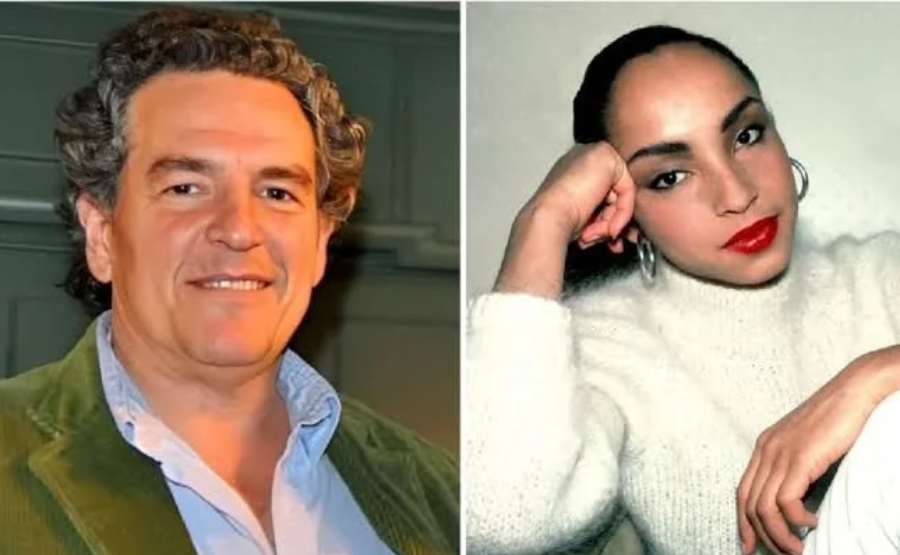
Here’s what’s actually true: Carlos Scola Pliego is a Spanish filmmaker. He spent the early 1980s working his way up from third assistant director to second assistant director on Spanish location shoots for international productions — one of which happened to be a James Bond film. He directed two documentaries in the late 1980s, one about gorillas in the Congo and one about Africa. He married Sade Adu in a Spanish castle in October 1989. The marriage was troubled, over everything but paperwork within a year, and finalized in divorce by 1995. He is, from everything verifiable, still somewhere in Spain. Still private. Still not giving interviews.
That’s the real story. And it’s more interesting than the fabricated one, if you actually sit with it.
Quick Bio
| Detail | Info |
| Full Name | Carlos Scola Pliego |
| Nationality | Spanish |
| Estimated Birth Period | Likely late 1950s–early 1960s (career started 1981-82; no DOB confirmed) |
| Early Career | Assistant director on international Spain-based productions, 1981–1985 |
| Notable AD Credits | Never Say Never Again (1983, uncredited), Curse of the Pink Panther (1983, uncredited), Christopher Columbus (1985, TV miniseries), Eleni (1985) |
| Director Credits | Ngira: Gorilas en la Montaña (1988 short documentary, Congo), Donde termina el corazón (1989 documentary) |
| Last IMDb Credit | Goal II: Living the Dream (2007, additional crew) |
| Met Sade | 1985, during music video shoot in Spain for her Promise album |
| Marriage | October 11, 1989, in a Spanish castle |
| Separation | Reportedly within a year of marriage (circa 1990) |
| Divorce Finalized | 1995 |
| Children with Sade | None confirmed (Sade’s daughter Ila was born 1996 with Bob Morgan) |
| Current Status | Private life in Spain; no public presence |
The Man The Internet Built (And Keeps Rebuilding)
Before we talk about the real Carlos Scola Pliego, we need to spend a minute in the rubble of what the internet made him.
One site calls him a Mexican businessman born in 1940, chairman of Grupo Alfa and founder of the Museum of Contemporary Art in Monterrey. Another says he’s a Mexican entrepreneur born in 1970, with a business degree, “redefining the hospitality industry.” A third says he’s an energy CEO, founder of IEnova, chemical engineer from UNAM, and also happens to run the Carlos Slim Foundation — a philanthropic organization that belongs to one of the world’s wealthiest men, who is a completely different person.
One search result is about a chess grandmaster. Several are about an Argentine basketball coach named Luis Scola who played in the NBA. Two separate articles confuse him with Anthony de Mello, the Jesuit spiritual writer from Goa, India, who died of a heart attack in 1987.
And through it all, the actual Carlos Scola Pliego — Spanish, early career in film production, married Sade, disappeared from public view around the mid-1990s — barely surfaces. His IMDb page exists. A handful of credible sources mention him in pieces about Sade. The National Portrait Gallery in London mentioned him, briefly, in a 2007 exhibition profile. That’s roughly the universe of reliable documentation.
The internet couldn’t tolerate the silence. So it invented people to fill his name.
See also “Who Is Elizabeth Marighetto? Biography, Personal Life, and Interesting Facts“
The Career He Actually Had
Here’s what’s on his IMDb page, which is the most reliable primary document we have for his professional life.
From 1981 to 1985, Carlos Scola Pliego worked as an assistant director — starting at the bottom, moving up. His earliest credit is Dos y dos, cinco (1981). Then Black Commando (1982). Then a cluster of 1983 productions that tell you something real about where Spanish location shooting was happening at the time: G’olé!, the official 1982 World Cup documentary. Hundra, a low-budget sword-and-sandal film. Scarab (1983). And then — twice in the same year — uncredited second assistant directors work on two major international productions: the James Bond film Never Say Never Again with Sean Connery and Kim Basinger, and Curse of the Pink Panther with Ted Wass. Both shot partial units in Spain. Scola Pliego was part of the Spain crew.
This is genuinely interesting and doesn’t get mentioned properly anywhere. Let me be clear about what it means to be a second AD on a Bond film in 1983. You are not famous. You are not interviewed. You do not get an official credit in the titles unless the production chooses to give you one — and in these cases, they didn’t. But you are working on a major international production at what appears to be a fairly young age, inside the machinery of real commercial filmmaking. You’re learning.
In 1985 he moved from uncredited productions into credited ones: assistant director on the John Malkovich film Eleni, and assistant director (credited as Carlos Scola Pliego) on the four-episode TV miniseries Christopher Columbus, starring Gabriel Byrne and Virna Lisi. These are not trivial productions. This is someone building a legitimate resume.
And then something shifted. The transition from assistant director to director happened, but not in the commercial direction you might expect. In 1988 he directed Ngira: Gorilas en la Montaña — a short documentary about mountain gorillas filmed in what was then Zaire (now the Democratic Republic of Congo). In 1989, he directed a full-length documentary called Donde termina el corazón, described as exploring aspects of the African continent. He also wrote and produced that film.
Think about what this career arc actually looks like. You come up through Hollywood-adjacent productions in Spain. You work on Bond, on Pink Panther, on historical TV miniseries. And then you pivot toward documentary work about Africa. That’s a guy with something on his mind besides climbing the commercial ladder.
His last IMDb credit is 2007: additional crew on Goal II: Living the Dream, a British sports drama. One credit, sixteen years after his last directorial work. What happened in between? Nobody knows, because nobody asked.

Spain, Sade, and Three Words About the Marriage
Here’s how they met, as best as the public record allows us to reconstruct it.
In 1985, Sade shot music videos in Spain for her second album, Promise — the one with “The Sweetest Taboo” and “Never as Good as the First Time.” The videos were directed by Brian Ward. Carlos Scola Pliego was involved in the production side of those shoots. He was, by this point, an experienced AD on Spain-based productions. Sade was the most buzz-worthy singer in the world that year, fresh off Diamond Life and about to become a global icon.
They met on set. Let that settle for a second. The Bond film guy and the woman making “Smooth Operator.” Spain. Music videos. 1985.
They were apparently together for several years before formally marrying. AmoMama’s sourced piece notes that Sade reportedly introduced Pliego as her husband in 1987 while they were recording in France — two years before the actual ceremony. That’s a meaningful detail. These weren’t strangers who rushed to the altar. This was a multi-year relationship that the public knew almost nothing about, consummated in a Spanish castle on October 11, 1989.
And then it fell apart quickly. Faster than the public ever knew. Multiple credible sources note that the relationship was “turbulent,” that Sade left Madrid and returned to London roughly a year after the wedding. The South China Morning Post, in a profile of Sade, described the relationship as “turbulent” and noted the couple “broke up shortly before Sade began making the 1992 album, Love Deluxe.” If that’s accurate — and it aligns with other reporting — then the functional marriage lasted perhaps from 1989 to 1990 or 1991, with the divorce paperwork not finalized until 1995. That’s four or five years of legal marriage during which they were not actually together.
The National Portrait Gallery’s 2007 exhibition profile of Sade said it plainly: “few knew that she married, and subsequently divorced, Spanish filmmaker Carlos Scola.” The privacy was operational. It worked.
When asked about it, Sade gave three words: “I got divorced.” That quote, from The National News’s profile of her, is the entirety of her public comment on the marriage. Not a sentence. Three words. In a sentence. Delivered once. Never expanded upon.
Love Deluxe and What It Might Mean
This is where you have to be careful, because the connection is speculative. Nobody can prove what songs are about.
But Love Deluxe came out in 1992. Sade has described it as her most personal album. “No Ordinary Love” — which won a Grammy — is a song about someone consumed by a love that isn’t reciprocated with the same intensity. “Pearls” is something else entirely, about a Somalian woman collecting food, one of the most devastating tracks she ever made. But the emotional texture of Love Deluxe as a whole — the longing, the quiet devastation, the sense of someone processing loss rather than celebrating connection — arrived during and just after what several sources suggest was a turbulent breakdown of her marriage.
It’s not a stretch to read that into the music. It’s just impossible to confirm. Carlos Scola Pliego has never spoken about it. Sade hasn’t named names. The album is what it is.
What’s not speculative: Love Deluxe arrived in 1992 and is sonically heavier, more inward, than Stronger Than Pride (1988) or Promise (1985). Something changed. Whether that was Carlos Scola Pliego, the isolation of living in Madrid, the collapse of the marriage, or simply artistic evolution — or all of it together — is a question nobody can answer, because the only two people who know never told anyone.
The Daughter That Isn’t His
This needs clarifying because the misinformation around it is so widespread.
Multiple biography sites say that Sade has a daughter with Carlos Scola Pliego. Some name the daughter “Mickailia.” Some name her “Ila.” A few claim she’s transgender and goes by Izaak. One source says she was born “from this marriage,” placing the birth within the Scola Pliego years.
Here’s what actually happened. Wikipedia’s Sade article, which has proper sourcing, says she has one child. That child — born Mickailia “Ila” Adu in 1996 — is the daughter of Sade and Jamaican record producer Bob Morgan, not Carlos Scola Pliego. The child has since come out as a transgender man, going by Izaak Theo Adu. Sade and Pliego divorced in 1995. The child was born in 1996. The timeline alone settles this.
The National News profile that says “I got divorced” in reference to her 1989 marriage, and then mentions a daughter, is describing two separate chapters of her life — but the context collapse in content-farm retelling turned “Sade’s daughter” into “Sade and Carlos’s daughter,” which is wrong.
No children from the marriage. The divorce settled in 1995. The daughter arrived the following year, to a different father. These are separate facts.
What Spain and Silence Produced
Since about 1995, Carlos Scola Pliego has essentially not existed in the public record except as a citation in stories about Sade. His one post-1995 IMDb credit — a non-directing crew role in 2007 — is a single data point. No interviews. No film retrospectives. No social media. No magazine pieces on where he is now.
You might be tempted to read this as a sad ending — the man obscured by his famous ex-wife, relegated to footnote status. I’d push back on that reading. There’s no reason to assume Carlos Scola Pliego views his public invisibility as a problem. He was private during the marriage. He’s been private since. The pattern suggests preference, not failure.
Let’s be honest about something: a man who spent the early 1980s working international film sets in Spain, who pivoted in the late 1980s toward documentary filmmaking about gorillas and the African continent, who married a global music star and managed to keep almost every detail of that marriage out of the press — this is not a person who is chasing attention. This is a person who, when the spotlight arrived uninvited through marriage, never tried to hold onto it.
The internet filled his absence with invented biographies because that’s what the internet does. But the absence itself is an honest biographical fact.
Final Words
The story of Carlos Scola Pliego that I can actually tell — not the invented one — is this: a Spanish filmmaker who came up through legitimate international productions in the early 1980s, who found his voice in African documentary work rather than commercial cinema, who fell in love with Sade Adu in 1985 on a video set in Spain, who married her in a castle four years later when the world was watching her ascend to genuine icon status, whose marriage lasted perhaps a year in practice and six in paperwork, and who then went back to being exactly what he was before: private, Spanish, and not talking to anyone about any of it.
The elaborate fiction the internet built around him — the chess grandmaster, the energy CEO, the Jesuit priest, the basketball coach, the Latin Grammy winner — says everything about how we handle the people adjacent to fame and nothing about the person himself.
He directed gorilla documentaries. He worked on a Bond film nobody gave him credit for. He married someone extraordinary. He didn’t leverage it. He kept living in Spain.
That’s real life. It just doesn’t trend.
FAQs
1. Who is Carlos Scola Pliego?
He’s a Spanish filmmaker, known primarily for being Sade Adu’s ex-husband. His verified career includes assistant director credits on major productions in the early 1980s including Never Say Never Again (1983), and director credits on two documentaries in 1988–89. His personal details are almost entirely private.
2. Is Carlos Scola Pliego Mexican?
No. Every site saying he’s Mexican, born in Mexico City or Monterrey, is fabricating that information. His nationality is Spanish, confirmed across all credible sources including Wikipedia’s Sade article and his own IMDb filmography, which credits him as working on Spanish location shoots.
3. Did Carlos Scola Pliego work on James Bond?
Yes, in a minor uncredited capacity. He was the second assistant director on the Spanish location unit of Never Say Never Again (1983), the Sean Connery Bond film. His contribution was uncredited in the film’s titles. He also worked uncredited on Curse of the Pink Panther (1983) in Spain.
4. How did Carlos Scola Pliego meet Sade Adu?
They met in 1985 when Sade was filming music videos in Spain for her Promise album. Carlos was involved in the production. They were reportedly together for several years before marrying, with Sade introducing him as her husband as early as 1987 at recording sessions in France.
5. When did Carlos Scola Pliego and Sade get married?
October 11, 1989, in a Spanish castle. They lived together in Madrid afterward. Multiple reliable sources confirm the date and location.
6. When did they divorce?
Their functional separation reportedly happened within a year of the 1989 wedding, with Sade returning to London around 1990–91. The divorce was formally finalized in 1995. Wikipedia’s Sade article lists the marriage as “m. 1989; div. 1995.”
7. Do Carlos Scola Pliego and Sade have children together?
No. Sade’s daughter (born 1996, later identified as Izaak Theo Adu, a transgender man) was born to Sade and Jamaican record producer Bob Morgan. This is the year after the divorce was finalized. Numerous sites incorrectly state the child belongs to Carlos; this is wrong.
8. Did the marriage influence Love Deluxe?
No one can confirm this, but the timeline is suggestive. Love Deluxe (1992) arrived during or just after the breakdown of the marriage. Multiple sources note the couple split before Sade began recording it. The album’s emotional register — longing, loss, interiority — is tonally darker than her earlier work. Whether that’s causal is unknowable; both Carlos and Sade have maintained public silence on the subject.
9. What is Carlos Scola Pliego’s net worth?
Unknown. Estimates online range from $15 million to $70 million — both figures are invented without any sourcing. Given his career as a mid-tier Spanish film industry professional with two documentary credits and no major commercial directing work, neither figure has any basis in fact.
10. Is Carlos Scola Pliego on social media?
No verified accounts. He has maintained no documented public social media presence.
11. What happened to Carlos Scola Pliego after the divorce?
His last IMDb credit is a minor crew role on Goal II: Living the Dream (2007). Beyond that, nothing is documented in the public record. He is believed to still be living privately in Spain. No interviews, no profiles, no press appearances since the mid-1990s.
Beyond the headlines, discover what’s worth knowing — TheTrendist.




One Comment