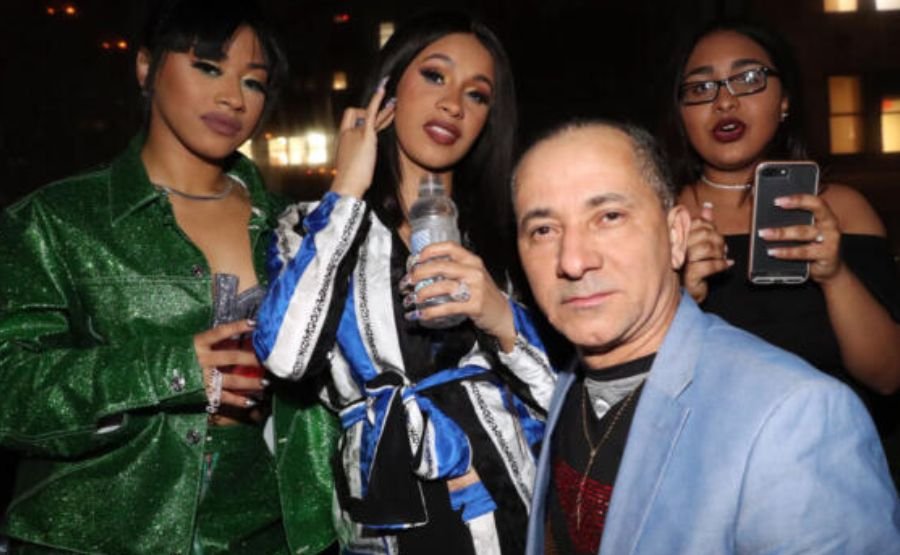
Clara Almánzar Ethnicity: The Truth About Cardi B’s Mother and Her Caribbean Roots
One site says she’s Afro-Latino. Another says she’s Caucasian. A third says she’s Dominican. A fourth says she’s Trinidadian-Spanish. A fifth says she’s of mixed Dominican and Trinidadian descent. These are not interpretations of an ambiguous fact. They are describing the same woman with radically different answers, some of which are flatly wrong and at least one of which is so wrong it makes you wonder if the author accidentally filed the wrong person’s biography.
Clara Almánzar is Cardi B’s mother. She was born in Trinidad and Tobago, immigrated to the United States, raised two daughters in the Bronx on a cashier’s salary, and has spent most of her adult life deliberately outside the public eye. The confusion about her ethnicity isn’t her fault. It’s a consequence of being a private person attached to a very famous one, in an era when search traffic generates content regardless of whether the content is accurate.
Let me try to actually explain who she is.
Quick Bio
| Detail | Information |
| Full name | Clara Mercedes Almánzar (née Disla Arenzo, per some sources) |
| Born | September 19, 1965 (most cited date), Trinidad and Tobago |
| Ethnicity | Afro-Trinidadian — African and Spanish-Caribbean heritage |
| Nationality | Trinidadian-American (dual) |
| Former spouse | Carlos Almánzar (Dominican; married approx. 1991, separated approx. 2005) |
| Children | Belcalis Marlenis Almánzar Cephus (Cardi B; b. October 11, 1992) and Hennessy Carolina Almánzar (b. December 22, 1995) |
| Siblings | Approximately 12 |
| Career | Retired cashier; store clerk |
| Current residence | Bronx, New York |
Why Does This Confusion Exist in the First Place?
Before we get to what Clara’s ethnicity actually is and why it matters, let’s diagnose the problem.
Trinidad and Tobago is not a country most content farms know how to categorize. When they encounter a person of Trinidadian descent, they don’t know what box to reach for. The island nation has a complex, multilayered ethnic history that includes African descendants of enslaved people, East Indian descendants of indentured laborers, Spanish colonial settlers, French Creoles, Chinese immigrants, and more. It is genuinely one of the more ethnically complex societies in the entire Caribbean.
Clara Almánzar’s specific heritage within that complexity — African and Spanish roots, by the most consistent reporting — doesn’t fit neatly into American racial categories. So websites make guesses. Someone typed “Caucasian” into a data table for her and published it. Someone else typed “Dominican.” These are errors that propagate because nobody checks.
The other source of confusion is her ex-husband Carlos. He’s Dominican. And because Cardi B’s identity is tightly bound up with both sides of her heritage, some articles have collapsed the distinction and attributed the Dominican side to Clara instead. That’s just factually wrong.
What Trinidad and Tobago Actually Means Here
If you want to understand Clara Almánzar’s ethnicity, you need to understand what it means to be from Trinidad specifically.
The island was colonized by Spain, then Britain. It received African enslaved people during the transatlantic slave trade. After emancipation, a massive influx of indentured laborers came from India, creating the Indo-Trinidadian population that now makes up roughly 35% of the country. French Creoles, mixed-race Creoles, Chinese, Syrians — the demographic texture is genuinely unlike anywhere else in the Caribbean.
The specific African-Spanish combination that characterizes Clara Almánzar’s background is rooted in this history. The Spanish colonial period left linguistic and cultural traces that persisted through subsequent eras. Trinidadian culture is not Dominican culture. It is not Jamaican culture. It has its own specific soca music tradition, its own carnival tradition, its own creole language (Trinidadian Creole English), its own food. It’s a genuinely distinct cultural identity.
Cardi B has spoken about this directly. In a CR Fashion Book interview, she said: “One thing that always bothers me is that people know so little about my culture. We are Caribbean people.” That’s not a vague statement. That’s a correction of people who tried to reduce her identity to one familiar American racial box.
Clara is on the Caribbean side. Carlos brought the Dominican side. And together, in the Bronx, they raised two daughters who are genuinely both.
The Specific Confusion About Race
The “Caucasian” label that one site attached to Clara Almánzar is so wrong it deserves its own paragraph.
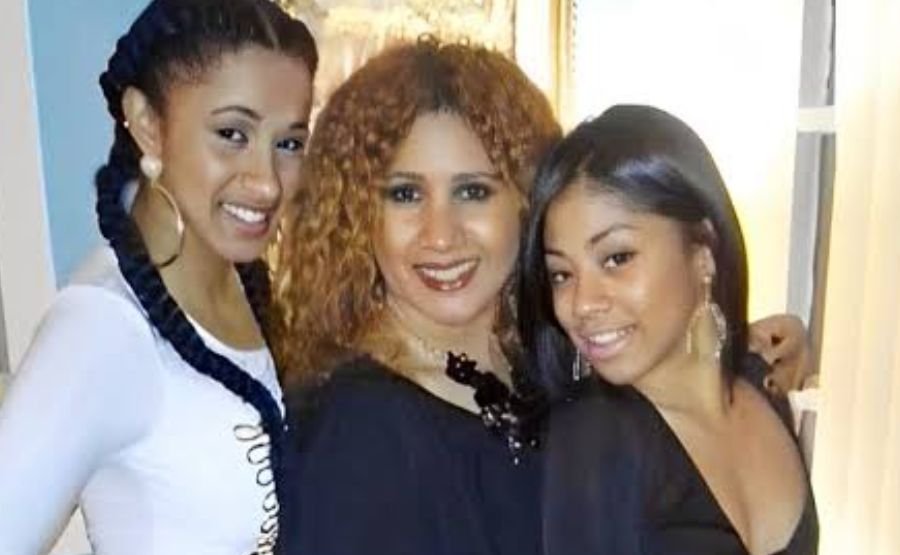
Clara Almánzar is Afro-Trinidadian. Her African heritage is part of the most consistent reporting across sources that actually traced her background. The Wikipedia entry for Hennessy Carolina, Cardi B’s sister, specifically notes that their mother Clara is Trinidadian “of African and Spanish descent.” That’s the most precise and cross-referenced description available.
The site that labeled her Caucasian appears to have either confused her with another person entirely or populated the ethnicity field without any research. It is one of those errors that is both utterly inconsequential to the person labeled and also strangely illustrative of the content farm problem. When generating a biographical table, some sites treat the ethnicity field like a form checkbox that needs to be filled in, and they guess rather than research.
The Woman Behind Cardi B’s Identity Debates
Here’s the more substantive reason Clara Almánzar’s ethnicity matters, and it goes beyond biographical accuracy.
Cardi B has faced persistent criticism about her racial identity. Some critics have argued that she leans into Black aesthetics and culture while distancing herself from Black identity; others have claimed she’s “not really Latina” because she doesn’t look or sound like the conventional American idea of a Latina. Cardi B has pushed back against both simultaneously.
Her answer to both critiques is rooted in what Clara passed down to her.
Afro-Caribbeans — people of African descent from the Caribbean — exist in a space that American racial categories struggle to accommodate. They are Black by heritage and lineage. They are also often Spanish-speaking, or Spanish-influenced, or Latina/Latino by cultural identity. These are not mutually exclusive categories, even though American media has historically treated them as if they are.
Clara Almánzar is Afro-Trinidadian. Cardi B inherits from her mother a heritage that is simultaneously African and Caribbean and Spanish-influenced. That’s not a complicated political stance — it’s just the actual demographic history of Trinidad and Tobago filtering down through one woman’s family into the Bronx in the 1990s.
The debates about Cardi B’s identity only make sense if you understand what Clara brought to the table. And most of those debates would be answered, or at least enriched, by a clearer understanding of what Trinidadian Afro-Latino heritage actually means.
Who Clara Actually Is (Beyond The Ethnicity Table)
The biographical stuff, quickly, because it matters and most of it gets garbled.
She was born September 19, 1965, in Trinidad and Tobago. She migrated to the United States and settled in the Bronx, New York. She came from a large family — reportedly around 12 siblings. She married Carlos Almánzar, Dominican-American, in approximately 1991. They had Cardi B in 1992 and Hennessy Carolina in 1995. The marriage fell apart over the course of the late 1990s and early 2000s, with the separation finalized around 2005.
She worked as a cashier. A store clerk. The jobs that keep American cities running and that generate no particular recognition. Cardi B has talked about her mother’s strict parenting in multiple interviews — strict enough that she kicked Cardi out of the house as a teenager for getting involved with the wrong crowd. Cardi B has credited her mother’s strictness with preventing worse outcomes than what actually happened.
Clara eventually gave Cardi B an ultimatum: get a job, go back to school, or leave. Cardi B, famously, went to work at a strip club. Clara was not thrilled. The relationship has been, by Cardi B’s own account, close and sometimes contentious and ultimately deeply formative.
There’s a detail in some reports that Cardi B asked her mother to name her second daughter, and Clara chose Kulture for Cardi’s first child with Offset. I cannot fully verify this, so take it as the second-hand family story it is. But it suggests Clara has remained present and involved even as the family’s circumstances changed dramatically.
What “Afro-Latino” Actually Means in This Context
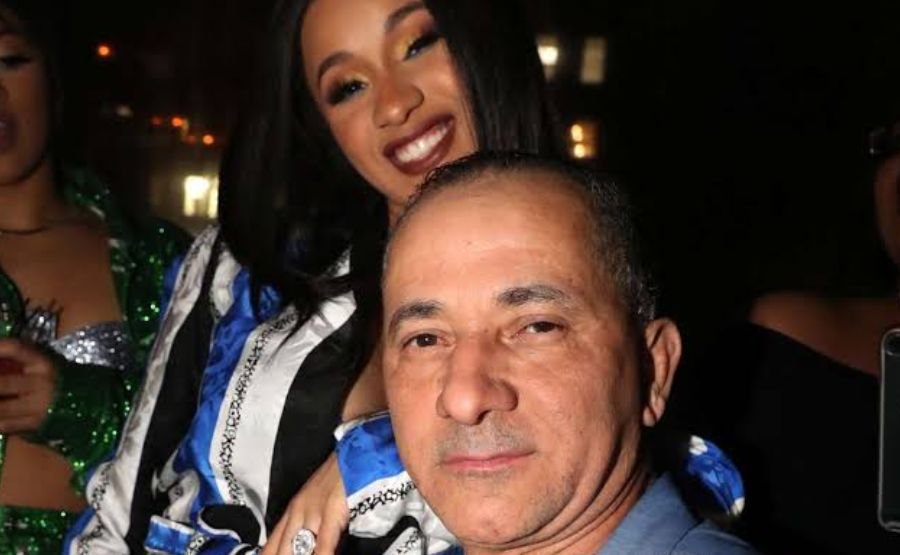
The term gets applied to Clara Almánzar frequently, and it’s worth unpacking because “Afro-Latino” means different things in different countries.
In the United States, “Afro-Latino” typically describes someone who has Latin American or Caribbean heritage and is also of African descent. It’s a category that encompasses Afro-Brazilians, Afro-Cubans, Afro-Dominicans, Afro-Panamanians, and yes, Afro-Trinidadians.
Clara fits the description. She’s of African and Spanish-Caribbean heritage, from a country where those two streams have been intertwined for centuries. The “Spanish roots” part of her background reflects the colonial linguistic and cultural history of Trinidad, not necessarily direct Spanish ancestry in the recent sense.
What it does not mean is that she’s Dominican. What it does not mean is that she’s Caucasian. What it does not mean is that the ethnicity field on a content farm website that lists three different things simultaneously is reliable.
Final Words
Clara Almánzar is an Afro-Trinidadian woman who immigrated to the United States, raised two daughters in the South Bronx largely on her own, worked cash registers and store counters for decades, and produced — through a combination of strictness and love and Caribbean cultural transmission — one of the most commercially successful rappers in the world.
The question of her ethnicity is genuinely interesting because it illuminates something that the debates around Cardi B often miss. Black identity and Latina identity are not opposing categories. Afro-Caribbean people embody both simultaneously, as a matter of historical fact. Clara Almánzar didn’t choose a complicated identity — she was born into one of the most ethnically layered regions in the Western Hemisphere, and she brought that layered identity with her to the Bronx.
The content farms saying she’s Caucasian are simply wrong. The ones saying she’s Dominican are confusing the father’s heritage with the mother’s. The ones saying she’s Trinidadian-Afro-Latino with African and Spanish roots are closest to the truth, even if they don’t always explain what they mean.
What she actually is: a private woman whose cultural inheritance shaped one of her era’s most recognizable public figures, and who has apparently preferred to let that influence speak through her daughter rather than through a media presence of her own.
That’s a dignified choice. The internet’s response has been to write thirty slightly wrong biographies about her.
FAQs
1. What is Clara Almánzar’s ethnicity?
Afro-Trinidadian — she is of African and Spanish-Caribbean descent, born in Trinidad and Tobago. The African and Spanish elements in her heritage reflect Trinidad’s specific colonial and demographic history. She is not Dominican (that is her ex-husband Carlos’s heritage) and is not Caucasian (that label appears on some content farm sites and is incorrect).
2. Is Clara Almánzar Black?
Yes, by heritage. She is Afro-Trinidadian, meaning she is of African descent from Trinidad and Tobago. She also carries Spanish-Caribbean cultural heritage. These are not mutually exclusive, particularly in the context of Caribbean demographics.
3. Where is Clara Almánzar from?
Trinidad and Tobago. She was born there and later emigrated to the United States, settling in the Bronx, New York, where she raised her daughters.
4. What is the difference between Clara’s heritage and Carlos Almánzar’s?
Clara is Trinidadian (African and Spanish-Caribbean descent). Carlos is Dominican. Cardi B inherits from both — her mother’s Afro-Caribbean, Trinidadian cultural background and her father’s Dominican heritage.
5. Is Clara Almánzar Latina?
In the sense that she carries Spanish-influenced Caribbean heritage, yes. The “Afro-Latina” or “Afro-Caribbean” labels that get applied to her and to Cardi B reflect a heritage where African and Spanish-Caribbean cultural elements coexist, as they do throughout much of the Caribbean.
6. What language does Clara Almánzar speak?
English, as the primary language of Trinidad and Tobago is English. However, there’s a creole tradition in Trinidadian culture, and exposure to Spanish through the Caribbean cultural world around her and through her Dominican ex-husband. Cardi B is known for speaking Dominican Spanish.
7. How many siblings does Clara Almánzar have?
Approximately 12. By multiple accounts, she comes from a large Trinidadian family. This contributed to Cardi B and Hennessy Carolina being raised in a large extended family.
8. What did Clara Almánzar do for a living?
For the majority of her career, she worked as a retail clerk and a grocery store cashier. She has since retired. Cardi B has described her mother as working multiple jobs during their childhood.
9. Why do so many websites get Clara Almánzar’s ethnicity wrong?
Because she is a private person who has not given interviews, content farms generate biographical information by inference, guesswork, and copying other sites. The result is a spread of contradictory claims — Caucasian, Dominican, Trinidadian, Afro-Latino — that exist simultaneously across the internet with nobody checking which is accurate.
10. How did Clara Almánzar influence Cardi B’s identity?
Directly. Cardi B’s Afro-Caribbean cultural identity — her identification with Caribbean rather than narrowly American racial categories, her knowledge of Dominican Spanish, her comfort in both Black and Latina cultural spaces — comes from the household her parents built in the Bronx. Clara brought the Trinidadian side. Carlos brought the Dominican side. The Bronx synthesized them.
11. Is Clara Almánzar still in the Bronx?
By most accounts, yes. Multiple sources list the Bronx as her current residence. She has not followed her daughter into the kind of public life that would generate a confirmed current address or location.
Beyond the headlines, discover what’s worth knowing — TheTrendist.



One Comment