Harlene Rosen: The Woman Who Gave Woody Allen His Mind—Then Sued Him for Calling Her “Quasimodo”
Here’s what the internet never says clearly: Harlene Rosen didn’t just exist in Woody Allen’s story. She shaped it. While he was still a gag writer mailing jokes to newspaper columnists from his parents’ Flatbush apartment, she was the one reading philosophy. She introduced him to the discipline. The preoccupation with Kierkegaard, with Dostoevsky, with the crushing weight of meaninglessness that would eventually become his entire cinematic identity — some of that came from her. From her bookshelves. From their conversations in a small apartment they shared when both were barely adults.
His thank-you was to call her “Quasimodo” in nightclub acts and on national television until she had to sue him to make him stop.
Think about the arc of that. She gives him the intellectual furniture he builds his career on, and he turns her into a punch line. And then, sixty years later, most articles about Harlene Rosen begin with the words “Woody Allen‘s first wife.” As if the sentence should be the other way around.
Quick Bio
| Detail | Info |
| Full Name | Harlene Susan Rosen |
| Born | Approximately 1939–1941, Brooklyn, New York (exact birth date not publicly confirmed) |
| Family | Father: Julius Rosen; raised in a Jewish household in Brooklyn |
| Met Allen | Circa 1955; she was approximately 16, he was 19 |
| Married | 1956 — Woody Allen (born Allan Stewart Konigsberg) |
| Separated / Divorced | Separated approximately 1959; divorce finalized 1962 |
| Children | None |
| Allen’s stated reason for marriage | Sexual intimacy and leaving his parents’ home (per scholar Jill Franks, citing Allen) |
| Her contribution | Introduced Allen to philosophy; he credited philosophical reading from their shared life |
| The lawsuit | 1967: sued Allen and NBC for defamation after he repeatedly called her “Quasimodo” on TV and in clubs; a judge issued a temporary cease-and-desist |
| Post-divorce | Entirely private; no public statements for decades |
| 2015 | Sent a birthday message for Allen’s 80th birthday via biographer David Evanier — first public statement in over 30 years |
The Internet Has Her All Wrong
Before getting into the actual story, let me flag the disinformation landscape, because it’s remarkable.
Multiple AI-generated websites describe Harlene Rosen as a “fashion designer” who met Allen “in the late 1960s” and whose relationship helped shape his films from Annie Hall through Midnight in Paris. None of that is true. She was not a fashion designer. Their marriage ended in 1962, years before Annie Hall existed. They met in 1955, not the late 1960s. One site — presented with full editorial formatting, section headers, a byline — invents a “film historian Peter Kintzer” who apparently said something meaningful about her. Peter Kintzer does not appear in any credible source anywhere.
The real facts are stranger and more interesting than the invented ones. Which tends to be true.
The other problem is the birth year. Sources confidently offer 1938, 1939, or 1941, often without any citation. The discrepancy matters because it affects how young she was when Allen proposed — ranging from barely 14 to 17. Allen’s own memoir “Apropos of Nothing mentions marrying “Harlene Rosen, 17” — which is the most direct primary account, but even there he’s writing seventy-plus years later from memory. Consider all birth years approximate.
See also “Justin Qualley: The Famous Son Who Chose Montana, Trees, and a Life Away From Hollywood“
The Apartment, the Books, the Very Young Marriage
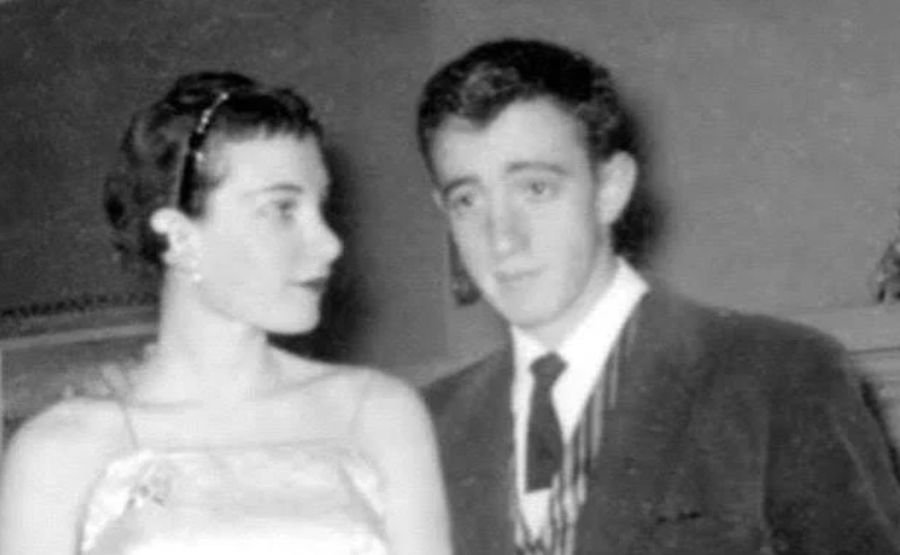
What did a marriage between a 19-year-old aspiring comedy writer and a 16-year-old Jewish girl from Brooklyn actually look like in 1956?
It looked like this: Allen wanted to get out of his parents’ house. He wanted, as scholar Jill Franks documents in Woody Allen and Charlie Chaplin, sexual intimacy and independence. Harlene Rosen was the route to both. He pressured her; she eventually agreed. Neither of them was in a position to understand what they were agreeing to.
But here’s the part that gets omitted: Harlene Rosen was genuinely intellectually curious. When she enrolled in college, she studied philosophy. She brought those texts home. And Allen, who had never shown particular interest in philosophical study — who had spent his teenage years writing gags about the suburbs — found himself genuinely engaged by what she was reading.
This is not a small detail. Allen’s work, from its earliest stand-up through his late films, is saturated with philosophical anxiety. The comedy of meaninglessness. The desperate, failing negotiations with mortality. The constant, slightly hysterical citation of Dostoevsky and Kierkegaard as sources of both comfort and dread. That intellectual DNA has to come from somewhere. It came partly from the apartment they shared, from a girl barely out of high school who took her coursework seriously.
Allen wrote to his friend Jack Victor about loneliness a year into the marriage. Already. He had gotten married in order to avoid loneliness, but he quickly discovered it within the union. Victor would later say of Rosen: “Leaving when she did, as Woody was about to make it, she got a bad deal.” That’s the charitable reading — timing. She was with him before the fame and gone before the money arrived.
He Was Using Her As Material Before They Even Divorced
Let’s establish the timeline precisely, because it matters.
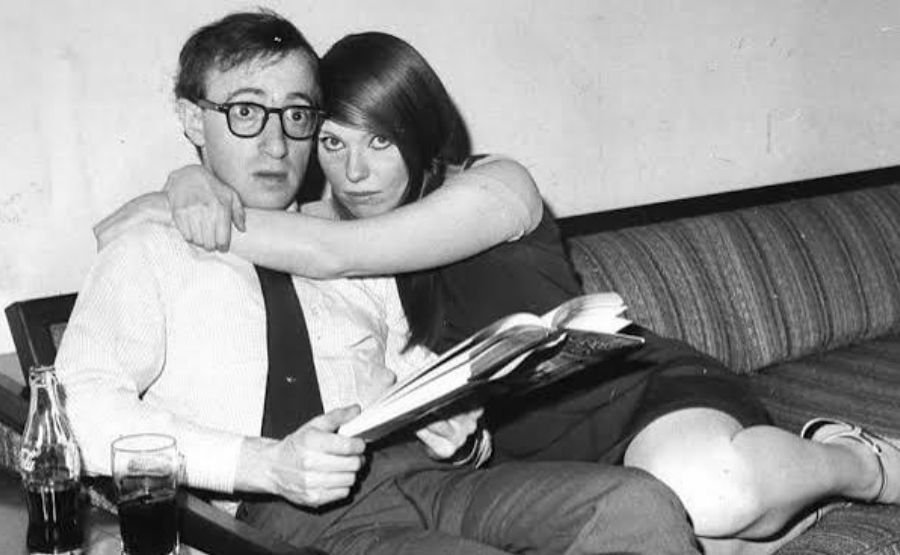
Allen and Rosen separated around 1959 — three years in. The divorce wasn’t finalized until 1962. And Allen began doing stand-up in Greenwich Village clubs around 1960, right in the middle of that legal limbo.
He was performing jokes about her while they were still technically married.
In a November 1963 appearance on The Steve Allen Show, he said on national television: “For the first year of marriage, I had a bad basic attitude toward my wife.” The audience laughs. This was not confessional intimacy. This was a man processing — or performing the processing of — a failed relationship in front of an audience while the legal paperwork was barely cold.
And then came “Quasimodo.”
The “Quasimodo” reference appeared in his nightclub act and on television. The specific formulation — calling her that, publicly, repeatedly — was the thing that eventually forced her hand. This wasn’t a passing joke that landed awkwardly. It was a running bit. A recurring characterization of his ex-wife as monstrous.
She was in her early-to-mid twenties. The divorce had just been finalized. He was making his name as a comedian, and part of that name was built on mocking the woman he’d married at nineteen.
The Lawsuit Nobody Takes Seriously Enough
In 1967, Harlene Rosen sued Woody Allen and NBC for defamation.
It usually just receives one sentence in biographies before moving on to Allen’s career, so let’s take a moment to consider that.
She sued a nationally broadcast network and one of America’s most prominent rising comedians. She was in her mid-to-late twenties. He was already famous enough to be on national television. The power disparity is stark. A judge issued a temporary cease-and-desist order against Allen and the NBC host involved.
Paste Magazine, reviewing Allen’s stand-up albums in 2015, noted it directly: “During his stand-up career, Allen joked so vociferously about his first ex-wife Harlene Rosen — whom he married when he was 19 and she was 16 — that she once sued him for defamation of character.”
The lawsuit was not, by most accounts, financially catastrophic for Allen. The cease-and-desist was temporary. He kept performing. He kept building his career. Take the Money and Run came out in 1969, Bananas in 1971, Everything You Always Wanted to Know About Sex in 1972, Annie Hall in 1977. The lawsuit was a footnote.
For Rosen, it was presumably the final attempt to draw a line. To say: this is my face, my name, my reputation, and you don’t get to do this.
She lost the long game, in the sense that he kept making movies and winning Oscars and appearing on magazine covers, and she vanished entirely from the public record. But she did the thing. She went to court. She made a judge issue a cease-and-desist. In 1967, before any of the cultural frameworks we’d use to describe this today existed.
The Thirty Years of Quiet
After the lawsuit, Harlene Rosen stopped existing in the public record.
Not dead. Not disgraced. Just absent. Completely, successfully, stubbornly private for three decades or more.
We have a big knowledge gap, so let me be honest about what we don’t know. We don’t know if she remarried. No record confirms it either way. We don’t know what career she built, where she lived, what she made of the years. The internet — including sources that pretend to know — offers nothing credible about her life post-divorce except her own eventual words.
That silence is worth respecting. It’s also worth examining.
The comedy business in the 1960s was not a context in which a woman could easily defend her reputation against a famous man using her as stage material. The options were: disappear, or fight. She tried fighting once, got a temporary order, and then disappeared. Whether that was defeat or self-protection or simple preference — genuinely impossible to say.
But she was not a passive figure who got swept up in someone else’s narrative and had no response. She took legal action. She then made a strategic decision to protect her privacy with extraordinary thoroughness for fifty-plus years. Both of those things are active choices.
David Evanier, writing his 2015 biography Woody: The Biography (St. Martin’s Press), searched for her for over a year before finding her. Over a year. For a woman who had been one of the more publicly discussed targets of a famous comedian’s act. That is an impressive disappearance.
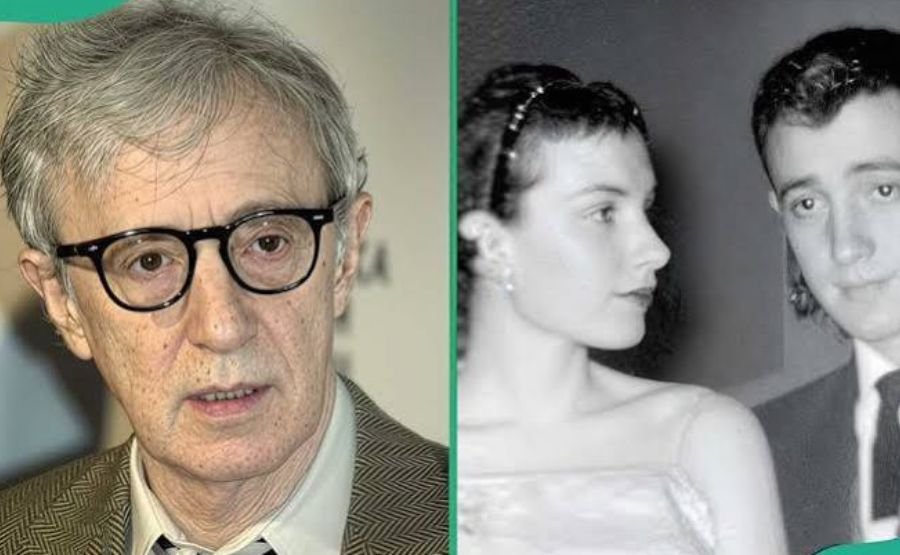
“Wondrous Woody”
In 2015, Rosen sent Evanier a message for Allen’s 80th birthday to be included in the biography. It was her first public statement about Allen in over thirty years.
The message reads: “Wondrous Woody, you inspired me with your enormous energy, creativity and charisma.”
Then: tears and laughter and love.
Then: “Happy 80th birthday.”
You can read this multiple ways. You can read it as genuine affection — the complicated warmth that remains between two people who were teenagers when they loved each other, even after everything else. You can read it as precisely calibrated closure, the minimum possible public statement that ends a story without reopening it. You can read it as the act of someone who has genuinely processed the whole thing, from the young marriage through the jokes through the lawsuit through the silence, and arrived somewhere that allows for this.
What it isn’t is bitterness. She calls him “Wondrous.” That word choice is deliberate. It doesn’t deny the tears. It doesn’t pretend the laughter was all comfortable. It holds the complexity of knowing someone very young, before they became what they became, and finding something true to say about that.
Jack Victor, Allen’s friend, told Evanier: “Leaving when she did, as Woody was about to make it, she got a bad deal.” That’s one frame. Here’s another: she left a man who by his own account married her to get out of his parents’ house, who was writing loneliness letters to friends one year into the marriage, who was using her as comedic material before they’d even legally separated. Getting out before the money arrived was also getting out before she became even more thoroughly raw material for the bit.
What She Actually Gave Him
The philosophy books. Let’s come back to that.
Woody Allen’s intellectual persona — the neurotic philosopher-comedian who reads Camus on the subway and watches Bergman on a first date — didn’t emerge fully formed from Brooklyn. It developed. The Greenwich Village stand-up years were part of it. But the philosophical texture underneath — the genuine engagement with questions of meaning, death, the absurdity of existence — has to come from somewhere earlier.
Harlene Rosen was studying philosophy. She shared the reading material. He took it up, genuinely, and never put it down.
Think about the films: Love and Death, which is almost entirely a comedic engagement with Dostoevsky and Tolstoy. In Hannah and Her Sisters, a character in a crisis reads Cummings and discovers something. The serious moral philosophy movie Crimes and Misdemeanors is dressed in middle-class New York attire. In Stardust Memories, the director’s character struggles with legacy and significance and ultimately fails.
The through-line in all of it is someone who actually read the books. Who found the questions genuinely tormenting rather than academically interesting. Who couldn’t leave the big questions alone.
She started that. A sixteen-year-old philosophy student in a Brooklyn apartment she shared with her nervous young husband who was trying to figure out how to be funny. She handed him a book and he never recovered.
His acknowledgment: Quasimodo. A lawsuit. And then, sixty years later, a birthday message she sent through a third party, addressed to “Wondrous Woody.”
Final Words
Harlene Rosen is not a footnote and she’s not a victim and she’s not a cautionary tale, though her story contains elements of all three.
If you actually read the record rather than the AI-generated summaries of it, you will see that she was a person who helped shape one of the most significant careers in American cinema, was publicly ridiculed for it until she had to file a lawsuit to stop it, successfully defended her privacy for fifty years, and then decided to send a heartfelt message to the man who had accomplished all of that when he turned eighty.
The generosity is remarkable. I don’t mean that as a compliment to Allen. I mean it as an observation about her. Whatever she worked through in those private decades, she worked through enough of it to write “Wondrous Woody” without apparent irony. That’s not a small thing.
What the internet mostly does with her story is use it as a data point in an argument about Allen — either in his defense or against him. She’s evidence. She’s a data point. She doesn’t get to be a person in those articles.
She was a person. She was smart. She read philosophy at sixteen and shared the books. She took a man to court in 1967 when the culture gave her almost no tools to do so. She built a private life that fifty years of journalism couldn’t breach. And she said goodbye to a chapter of her life with five words that contain the whole complexity of it.
Wondrous Woody. Tears and laughter and love.
That’s a person who did the work.
FAQs
1. Who is Harlene Rosen?
From 1956 to 1962, she was Woody Allen’s first wife, but she was much more than that. She grew up in Brooklyn in a Jewish household, studied philosophy in college, introduced Allen to philosophical literature that shaped his entire career, and was approximately 16 when they married. After their divorce, she successfully maintained total privacy for decades, emerged briefly in 2015 to send Allen a birthday message via his biographer David Evanier, and has been private ever since.
2. What led to the marriage of Woody Allen and Harlene Rosen?
By multiple accounts — including the scholarship of Jill Franks in Woody Allen and Charlie Chaplin — Allen married Rosen primarily to gain sexual intimacy and to leave his parents’ house. He reportedly pressured her into the marriage. She was around 16. He was 19. Neither was in any position to understand what they were agreeing to, and Allen himself admitted in a 1963 TV appearance that he had “a bad basic attitude toward my wife” from the very beginning.
3. Why did Harlene Rosen sue Woody Allen?
After their 1962 divorce, Allen repeatedly used Rosen as material in his stand-up comedy routines and on national television — most notably calling her “Quasimodo.” The mockery was sustained, public, and specific enough to constitute defamation. In 1967, she sued Allen and NBC. Allen and the network were given a temporary cease-and-desist injunction by a judge. Allen went on to become one of the most celebrated directors in cinema. The lawsuit is usually covered in a single sentence in his biographies.
4. Did Harlene Rosen and Woody Allen have children?
No. The marriage produced no children. Allen has children from his relationship with Mia Farrow (Dylan, Moses, and Ronan) and has adopted Bechet and Manzie with his current wife Soon-Yi Previn.
5. What happened to Harlene Rosen after the divorce?
She disappeared from public life with remarkable thoroughness. No verified record of a second marriage exists. No professional record is publicly documented. She successfully avoided any public profile for roughly fifty years. David Evanier searched for her for over a year while researching his 2015 Allen biography before finding her.
6. What did Harlene Rosen say about Woody Allen in 2015?
She sent a birthday message for his 80th birthday to biographer David Evanier for inclusion in the book Woody: The Biography. The message began “Wondrous Woody,” praised his “enormous energy, creativity and charisma,” mentioned tears and laughter and love, and wished him a happy birthday. Evanier described it as her first public statement about Allen in over thirty years. It was addressed to “Wondrous Woody” — notably generous given the history.
7. How old was Harlene Rosen when she married Woody Allen?
This is genuinely uncertain because her birth year has never been publicly confirmed. Sources variously claim 1938, 1939, or 1941. Allen’s own memoir Apropos of Nothing says he married “Harlene Rosen, 17” — suggesting she was 17 at the 1956 wedding, which would put her birth year around 1938-1939. Some sources say 16. Take all specific ages with some caution.
8. Is Harlene Rosen still alive?
No credible source documents her death, so as of available information, yes. She was likely born in the late 1930s to early 1940s, which would put her in her mid-to-late eighties. Her deliberate privacy makes it impossible to say more than that.
9. Did Harlene Rosen influence Woody Allen’s work?
In a real and underacknowledged way, yes. When she studied philosophy in college, she introduced Allen to that reading material, and he took to it genuinely. Allen’s persistent engagement with Kierkegaard, Dostoevsky, existential dread, and the comedy of meaninglessness — themes that run through everything from Love and Death to Crimes and Misdemeanors to Stardust Memories — developed during and after their marriage. She planted the intellectual seed. He built a career on it.
10. What is the most important thing the internet gets wrong about Harlene Rosen?
Multiple AI-generated sites describe her as a “fashion designer” who met Allen in “the late 1960s” and discuss her influence on his films from the 1970s onward. Every word of this is fabricated. Their marriage ended in 1962. She was not a fashion designer. Their meeting was around 1955. One fake site invents a “film historian” who commented on her. None of it is real. The actual story, involving a young philosophy student who sued a famous comedian for defamation in 1967 and then vanished into fifty years of private life, is considerably more interesting than anything the AI invented.
11. Why don’t we know more about her life after the divorce?
Because she chose privacy with exceptional discipline and sustained it for decades. In an era of increasingly porous celebrity culture, she maintained total silence from roughly 1962 to 2015 — over fifty years. She didn’t write a book. She didn’t give interviews. She didn’t use her association with Allen as social capital. She found a life away from the spotlight and kept it there. Whatever that life was, it was hers, not a footnote to his.
Beyond the headlines, discover what’s worth knowing — TheTrendist.