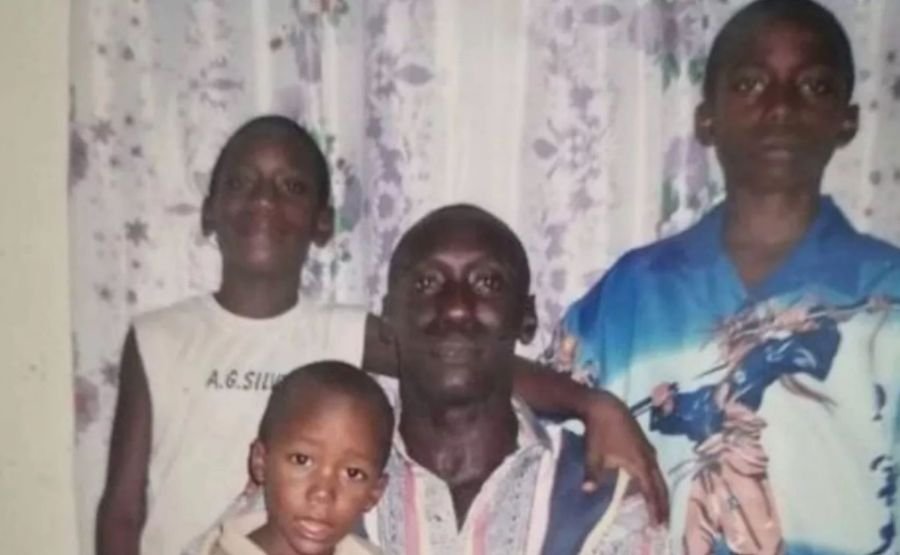
Jesús Arozarena: The Tragic Story of Randy Arozarena’s Father and the Rice Bowl That Changed Everything
Here’s what the internet decided about Jesús Arozarena: he died when his son was fifteen, and that tragedy became the emotional engine of one of baseball’s greatest underdog stories. Viral posts said it. Commentators repeated it. The number fifteen traveled so far that nobody bothered checking it. The actual ESPN deep-dive on Randy Arozarena — sourced directly to Randy in 2023 — tells a different story. Jesús died while Randy was playing professional Cuban baseball for Vegueros de Pinar del Río. Randy was in his late teens, not fifteen. He was at a hotel while his father waited at the field.
The number is wrong. The story is real. And the fact that nobody caught it tells you everything about how we treat the fathers of famous people.
Quick Bio
| Detail | Info |
| Full Name | Jesús Arozarena |
| Nationality | Cuban |
| Relation to fame | Father of MLB star Randy Arozarena |
| Sport | Baseball (pitcher, amateur-level in Cuba) |
| Death | 2014; anaphylactic reaction to shellfish in a bowl of rice |
| Where he died | At a baseball field, waiting to watch Randy play for Vegueros de Pinar del Río |
| Randy’s age at death | Approximately 19 (not 15, as viral claim stated) |
| Randy’s salary at the time | $36/month maximum, Cuban baseball |
| Legacy | Invoked by Randy on the escape boat to Mexico; honoured in every career milestone |
The Rice Bowl Nobody Talks About Correctly
The story is this. Jesús Arozarena came to the baseball field to watch his son play for Vegueros de Pinar del Río in the Cuban National Series. He was waiting. He had a bowl of rice. The rice had small pieces of shellfish cooked into it. He didn’t know. He had an allergic reaction, and he died on that field before the game started.
Randy was at the team hotel. He found out later.
Every version of this story that you’ll find on social media compresses it into a single bullet point and gets the age wrong. A viral tweet from 2020 said Randy’s father died when he was fifteen. It spread everywhere, cited nowhere, and it’s still embedded in hundreds of websites that haven’t bothered to update it.
The ESPN profile by Jeff Pearlman, published in 2023, is the authoritative source — Randy told him the story directly. And in that account, Randy was playing professional Cuban baseball when it happened. You don’t play for Vegueros at fifteen. You play for them at eighteen or nineteen, after proving yourself through youth programs. The math matters, even when the emotional truth doesn’t change.
A father died at a baseball field waiting to watch his son. That’s the sentence that matters. The age is a detail. The viral machine made it fifteen because fifteen sounds more tragic, and once something sounds more tragic, nobody fact-checks it.
See also “Gwendolyn Lee Byrd: The Daughter Who Raised Her Sisters While Tammy Wynette Became a Legend“
What We Actually Know About Jesús
Almost nothing. That’s the honest answer.
We know he was Cuban. We know he played baseball as a pitcher, though apparently never at a level that generated records or documentation beyond family memory. Randy has said his father played soccer too — it was actually Randy’s first love, soccer, which he pursued because his father played it. He switched to baseball because baseball paid. Four dollars a day was more money than soccer offered.
We know Jesús never missed a game he could watch. Every account that mentions him — whether from Randy or from third parties — emphasizes that he showed up. At the field. In the stands. He was present in the specific way that fathers who understand what their sons are trying to do tend to be present.
One content farm site says Jesús left Cuba in 2001 to play baseball professionally in Mexico. This appears to be fabricated — it conflicts with everything in Randy’s own telling and with the ESPN account, which places the father alive in Cuba watching Randy play Cuban league ball until 2014 or 2015. The invented Mexico career is nowhere in any interview Randy has given. It’s the kind of biographical filler that appears when AI systems try to make a thin subject feel substantial.
We know the salary context. Randy eventually made $36 a month playing Cuban baseball. That was the ceiling. His father almost certainly made something similar, or less, during whatever playing time he had. The economic reality of Cuban baseball in that era was that your talent could build national recognition and still leave your family eating rice with shellfish they couldn’t afford to sort through carefully. The system rewarded the country’s reputation, not the players’ households.
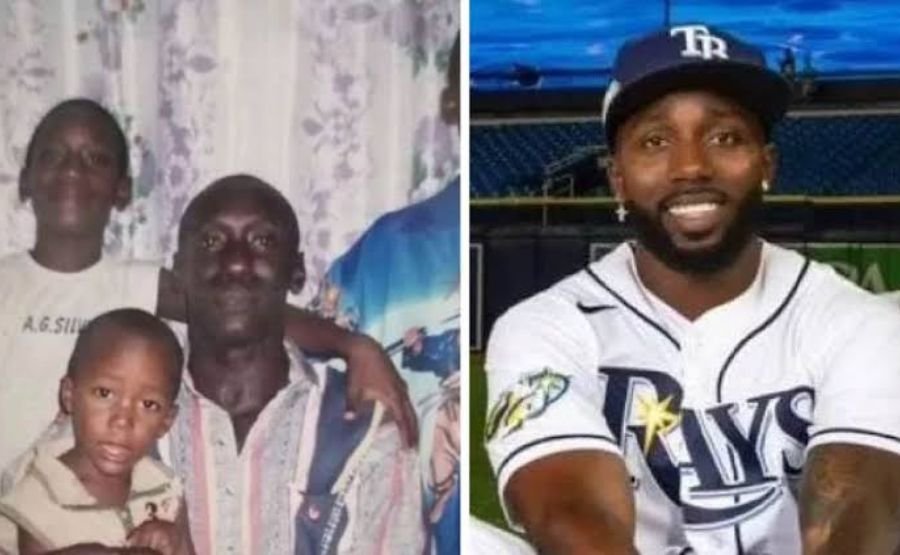
The Boat Crossing — And What Jesús Meant In That Moment
Here is the part that makes the story of Jesús Arozarena something more than a tragic footnote.
In 2015, Randy left Cuba on a small boat crossing the Yucatán Channel — roughly 120 miles of open water between Cuba’s western tip and the Mexican coast. He was on the deck. It was dark. The waves were moving. He was nineteen or twenty years old, and his father had died just months earlier.
He talked to his father. On the boat, on the water, in the dark, with no guarantee he was going to make it to Mexico alive, he looked up and asked Jesús to protect him.
Think about what that moment contains. A young man who had just lost the person who came to every game. Crossing an ocean not for adventure but because staying in Cuba on $36 a month after his father died was a life he couldn’t build a future on. The boat was the only way forward. And in the middle of it, he didn’t pray to God or invoke luck or think about baseball. He called on his dead father.
That’s not hagiography. That’s a specific kind of grief that turns into fuel.
Randy eventually made it to Mexico. He stayed for years, developed his game, and became a citizen. He signed with the St. Louis Cardinals for $1.25 million in 2016. He was traded to Tampa Bay in 2020. In the 2020 postseason he set the MLB record with 10 home runs in a single postseason. He dedicated his performances to the memory of the man who ate contaminated rice at a field in Pinar del Río, waiting to see him play.
The Contradictions The Content Farms Built
Let’s walk through what the internet has decided to believe about Jesús Arozarena that isn’t accurate.
The heart attack. Multiple sites — including some that get other Randy details correct — say Jesús died of a heart attack. The actual account, in Randy’s own words to ESPN, is an allergic reaction to shellfish hidden in a bowl of rice. Not a heart attack. The shellfish detail is specific, strange, and almost certainly true precisely because it’s not the kind of thing you invent. You don’t romanticize your father’s death as a shellfish allergy if you’re trying to make it cinematic.
The age. The viral tweet said fifteen. The ESPN profile doesn’t give an explicit age but places the death during Randy’s time playing for Vegueros in the Cuban National Series, which would put it during 2013-2015 when Randy was 18-20. One source says Jesús died in 2014, which would make Randy 18-19. Either way, not fifteen.
The professional career. Several content farms describe Jesús as a professional baseball pitcher who played in organized leagues. Nothing in Randy’s own telling supports this. He was a baseball player in the way that most Cuban men of his generation were baseball players — playing the national sport, loving it, never earning a professional contract. The distinction matters because the content farm version makes the father a failed professional, which carries different weight than the reality: a man who loved baseball, raised his son in baseball, and never had the platform to be more than a fan of the game who could also throw.
What $36 A Month Means As Context
You want to understand Jesús Arozarena, understand that baseball salary.
Randy has been specific about the economics of Cuban baseball. He started getting paid something like $4 a day, he says. He switched from soccer to baseball at least partly because baseball offered any income at all. By the time he was in the Cuban National Series playing for Vegueros, his salary had climbed to $36 a month at its peak.
Thirty-six dollars a month. That was the income that was supposed to support a family in Pinar del Río. That was what Jesús Arozarena watched his son earn while he sat in the stands at games, eating whatever was available.
The rice with shellfish wasn’t carelessness. It was the economic reality of a system where a talented baseball player’s father ate stadium food he couldn’t necessarily verify. Cuba’s sports infrastructure lifted athletes to a level of national pride and provided basic subsistence. It did not provide the luxury of checking every ingredient.
Randy switched agents after his father died. He started thinking about the defection more seriously. The $36 a month was part of the calculation. He said directly: “Baseball was the only opportunity to make money and help my parents.” After his father died, the “parents” became his mother. And the money needed to get bigger.
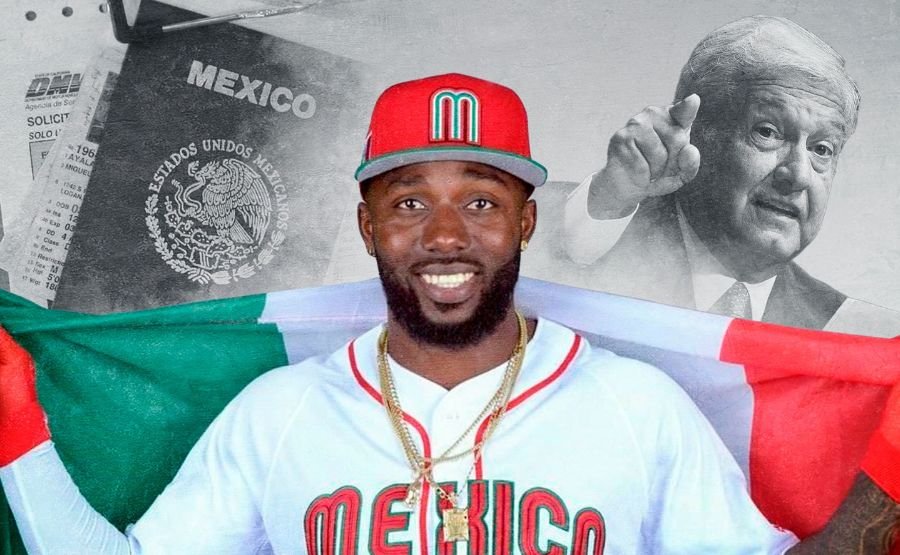
What Gets Lost When We Compress A Life Into A Tweet
The virality of the fifteen-years-old claim did something specific to the story of Jesús Arozarena. It made him a device. A unit of tragedy. An emotional accelerant for the Randy Arozarena narrative.
Fifteen years old losing your father is a particular emotional frequency in American culture — it’s childhood grief, it’s being robbed of a parent during the formative years, it activates a specific category of sympathy. Nineteen years old losing your father is still devastating. But it’s different. You’re an adult. You’ve already made choices. You’re already building something. The grief is no less real but the story it belongs to is different.
By fixing the number at fifteen, the viral machine gave Jesús a role in his son’s story rather than a life. He became a data point in a list of hardships — father died at 15, defected on a raft at 19, wasn’t called up until 2020 — rather than a man who showed up to every game, who loved soccer and passed that love to his son, who ate a bowl of contaminated rice while waiting and never got to see what happened next.
He died months before Randy left Cuba. He never knew about Mexico. He never knew about St. Louis. He never knew about the 2020 postseason, or the ten home runs, or the celebration where Randy spun on his head on the field doing the dance moves he used to do with his brothers and friends in Cuba.
Jesús Arozarena watched his son play in the Cuban National Series on $36 a month. That was the last thing he saw.
Final Words
The story of Jesús Arozarena is what happens when a person becomes a supporting character in someone else’s mythology. He was a father who played baseball in Cuba, watched his son become the better player, came to every game he could reach, and died at a field waiting for one more game. That’s a complete life. It doesn’t need the fifteen-year-old embellishment. It doesn’t need the invented professional career in Mexico. It doesn’t need to be a tear-jerker bullet point in a sports motivation tweet.
The shellfish in the rice is the detail that’s true. The $36 a month is the context that makes everything else make sense. The boat crossing with Randy asking his dead father to protect him across dark water is the moment where grief became something else.
Content farms gave Jesús a heart attack because that’s more legible. They said he died when Randy was fifteen because that’s more viral. They invented a professional playing career because empty bios need filling. And in doing all of that, they replaced a specific man with a generic tragic-father shape.
He deserved better. So does the actual story.
FAQs
1. Who is Jesús Arozarena?
He is the father of MLB outfielder Randy Arozarena. He was Cuban, played baseball as a pitcher, and was a devoted presence at his son’s games. He died in approximately 2014 from a severe allergic reaction caused by shellfish unknowingly cooked into a bowl of rice, while waiting to watch Randy play for Vegueros de Pinar del Río.
2. How did Jesús Arozarena die?
He ate a bowl of rice at the baseball field before a game. The rice contained small pieces of shellfish that he didn’t know were there. He had a serious allergic reaction and died. Randy was at the hotel at the time. Multiple content farm sites incorrectly state he died of a heart attack — the shellfish allergy account comes directly from Randy in an ESPN profile.
3. How old was Randy Arozarena when his father died?
Approximately 18-19. Viral social media posts stated he was fifteen, which is wrong. Randy was playing for Vegueros de Pinar del Río in the Cuban National Series when his father died — a league you join as an adult, typically 18 or older. Multiple sources suggest the death occurred in 2014, when Randy would have been 18 going on 19.
4. Did Jesús Arozarena play professional baseball?
Not in any documented professional league. He played baseball in Cuba at an amateur or semi-organized level and was described as a pitcher. Content farm sites have invented a professional career for him in Mexico, but this appears in no interview Randy has given and conflicts with the account in which his father was still in Cuba watching Randy play in 2014-2015.
5. Did Jesús Arozarena’s death affect Randy’s decision to defect?
Yes, significantly. Randy has indicated that his father’s death accelerated his thinking about leaving Cuba. He had already been weighing his options, but his father’s death was a turning point. He spoke to his mother in the days after and eventually made the decision to leave. In 2015, a few months after his father’s passing, he deserted.
6. What did Randy do on the boat crossing to Mexico?
He was on the deck of the small boat crossing the Yucatán Channel at night. He opened his eyes, looked up, and asked his father Jesús to protect him. This is documented in the ESPN feature on Randy from 2023 — one of the most emotionally significant moments in his defection story.
7. What was Cuban baseball paying Randy when his father died?
By Randy’s own account, his salary in the Cuban National Series had reached $36 a month at its peak. He initially described the pay as “$4” when he started. This economic context is essential to understanding why defection was a rational decision.
8. Is Jesús Arozarena’s story accurately told online?
No. The internet has gotten multiple details wrong: the age at death (viral claim: 15, reality: ~19), the cause of death (viral claim: heart attack, reality: shellfish allergy), and in some cases the biography (invented professional career in Mexico). The most accurate source is the 2023 ESPN profile by Jeff Pearlman, based on direct interviews with Randy.
9. Did Randy’s father ever see him play in the major leagues?
No. Jesús died in Cuba in approximately 2014. Randy didn’t make his MLB debut until August 14, 2019, with the St. Louis Cardinals. His father never saw him in a major league uniform, never saw the 2020 postseason heroics, and never saw Randy become one of the most electrifying players in baseball. Every major milestone has been posthumous to Jesús.
10. Why do so many sites get the details about Jesús Arozarena wrong?
The original viral tweet got the age wrong (15 instead of ~19), and that error multiplied exponentially as sites copied it without verification. The heart attack detail appears to come from AI-generated content that defaulted to the most common cause of sudden death. Because Jesús has almost no documented public life — no professional career records, no interviews, no public presence — content farms filled the void with plausible-sounding fabrications.
11. What is Randy’s relationship with his father’s memory today?
Public and deliberate. Randy has spoken about his father in multiple interviews, dedicated performances to his memory, and incorporated the defection boat moment — asking Jesús to protect him — into his public story. The father who came to every game and died at a field waiting for one more is present in everything Randy has described about his motivation.
Beyond the headlines, discover what’s worth knowing — TheTrendist.





One Comment