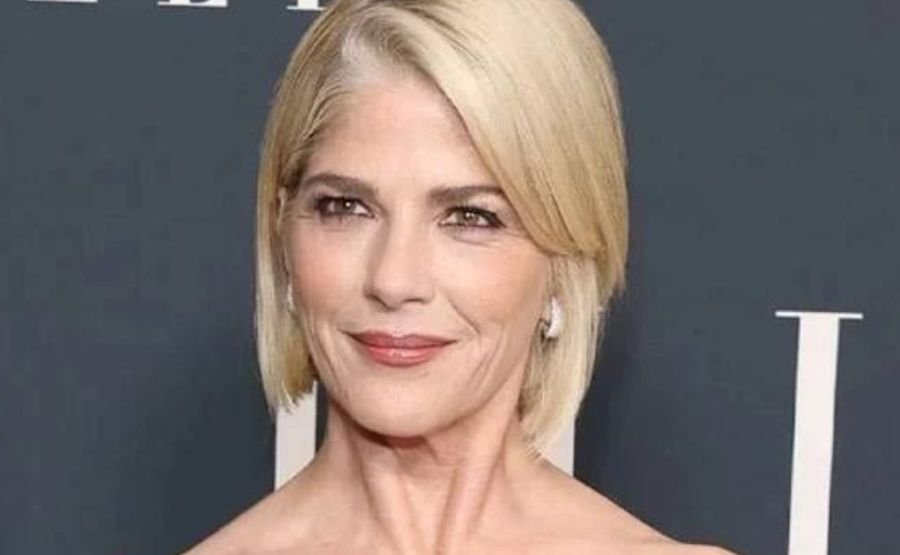
Selma Blair: The Untold Story Behind Her MS Battle, Hollywood Career, and Life’s Biggest Challenges
This is the version of Selma Blair that the internet chose: a former sidekick actress from the 1990s who was diagnosed with multiple sclerosis, transformed sorrow into grace, walked red carpets with a cane and a service dog, and became an improbable disability icon. Beautiful narrative. Very shareable. Very incomplete.
The full version is messier, more interesting, and harder to reduce to a headline. She’s been saying as much for years, and people keep flattening her back into the inspirational arc anyway.
Quick Bio
| Detail | Information |
| Full Name | Selma Blair Beitner |
| Born | June 23, 1972, Southfield, Michigan |
| Breakthrough role | Cruel Intentions (1999) |
| Marriages | Ahmet Zappa (Jan 2004 – Dec 2006); no remarriage |
| Son | Arthur Saint Bleick (born July 2011), father: designer Jason Bleick |
| MS Diagnosis | August 2018 (announced publicly October 2018) |
| Symptoms onset | Childhood — dismissed as growing pains for 40+ years |
| Sobriety | 2016 |
| Remission declared | 2021 (after stem cell transplant) |
| Additional diagnoses | Ehlers-Danlos syndrome; pseudobulbar affect (disclosed October 2026) |
| 2016 flight incident | Removed on stretcher, Cancun-LA flight; attributed to mixing medication with alcohol |
| October 2026 incident | Arrested, Delta Flight 938, JFK; charged with assaulting flight attendants, police officer, and nurse; bail $20K |
| Memoir | Mean Baby: An Account of My Childhood Knopf, Alfred A. (2022) |
Before She Was a Symbol, She Was a Kid Who Started Drinking at Seven
This is what the inspirational story consistently omits. Selma Blair did not become complex after her MS diagnosis. Her arrival was complicated. She wrote about it herself in 2022, in Mean Baby, which Publishers Weekly gave a starred review to, and which the internet mostly processed as context for the MS story rather than as the actual, devastating book it is.
She first got drunk at age seven. Passover wine. She writes about discovering what alcohol did — the safety it created, the feeling that her brain finally quieted. She kept drinking secretly through childhood. The daughter of a Detroit-area attorney/magistrate mother named Elliot, who could be brilliant and terrifying in the same sentence. Who once said to her daughter — and Selma put this in the memoir — “How can you be so beautiful from one angle and so ugly full face?”
That comment belongs in this story. So does the sexual assault by her school’s dean in ninth grade. So does the suicide attempt in college. So do the rapes she disclosed in the memoir for the first time, to anyone outside her therapist.
This isn’t a backstory. This is the story.
See also “Cheryl Ann Pontrelli: The Untold Story of Michael Landon’s Daughter and the Promise She Kept“
The Roles She Almost Had — And What the Almost Means
Before Cruel Intentions made her relevant in 1999, Selma Blair lost two roles that would have defined different actresses. She lost Dawson’s Creek’s Joey Potter to Katie Holmes. She lost the title role in Buffy the Vampire Slayer to Sarah Michelle Gellar.
Think about those counterfactuals. Katie Holmes became her public-facing early 2000s persona through Dawson’s. Buffy made Sarah Michelle Gellar a cultural icon. If either of those goes differently, the Selma Blair we know doesn’t exist in this form.
Instead she got Cecile Caldwell in Cruel Intentions — the naive ingenue getting manipulated, played against Sarah Michelle Gellar as the predator. That casting, retrospectively, seems very much in keeping with the emotional register of her actual childhood. She then got Vivian in Legally Blonde (2001) — the snobby antagonist to Reese Witherspoon’s Elle Woods. And then the career plateaued in ways that, as she now knows, the undiagnosed MS was making worse all along.
She told Glamour: “I was totally out of the workforce, and I couldn’t earn money.” The MS had been flaring since Arthur’s birth in 2011. She was dragging her legs and being dismissed by doctors.
The June 2016 Incident That Got Buried
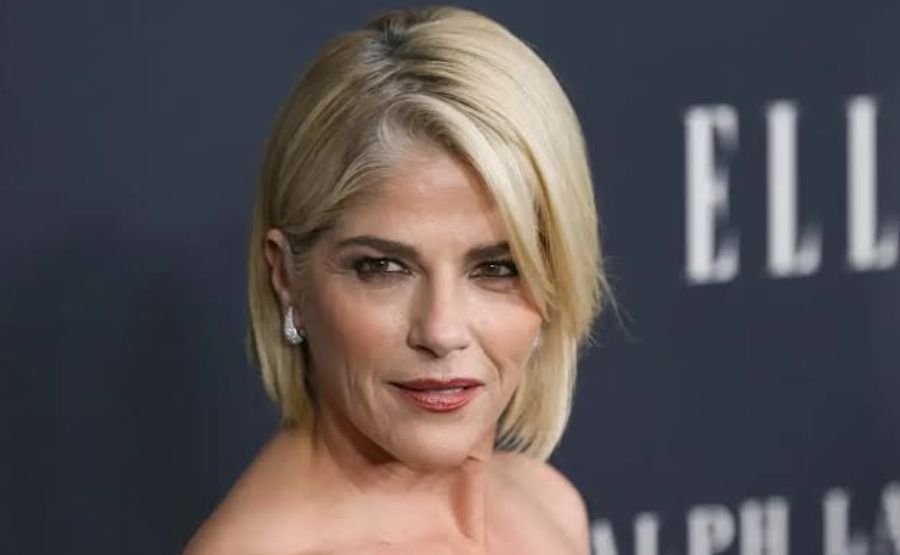
There were two flights. Most people only know about the recent one. The first was June 2016, on a Cancun-to-Los Angeles flight she was taking home with her son and his father. On a stretcher, she was taken out of the plane. Afterward, she apologized: “After a lovely trip with my son and his Dad, I mixed alcohol with medication, and that caused me to black out and led me to say and do things that I deeply regret.”
She called it, later on The Talk, “a total psychotic blackout.”
Here’s the part that gets underweighted: she got sober that same year, 2016. Two years before the MS diagnosis. Two months after the flight incident. A medical episode involving medication and alcohol in the middle of 2016, sobriety, and an MS diagnosis in 2018 are all connected. The trajectory makes a specific kind of sense when you know the full MS picture. Doctors had been missing it for decades. She had been self-medicating without knowing what she was self-medicating for.
The Diagnosis That Felt Like Relief
“When Dr. Berkley said the words, ‘You have MS,’ I felt an adrenaline rush of emotion,” she wrote in the memoir. “It felt like giving birth.”
People found that reaction hard to process. You’re relieved to find out you have an incurable neurological disease? But that reaction makes total sense when the alternative has been forty years of being told it’s in your head, or it’s depression, or you’re just tired, or it’s anxiety, or it’s hormones.
MS likely started when she was seven. She would have been symptomatic for most of her adult life without knowing why. The diagnosis didn’t give her a problem. It gave her an explanation for a problem that had existed all along.
She went public in October 2018 on Instagram: “I have #multiplesclerosis. I am in an exacerbation.” Straightforward. She didn’t manage the disclosure carefully through a publicist or a magazine cover. She put it directly on her own feed, with the hashtag still visible.
The response was enormous. She became, somewhat against her own stated preferences about sentimentality, a figure of public identification for MS patients and disability advocates.
The Cane, The Dog, The Red Carpet
Between 2018 and 2021, Selma Blair did something that sounds simple and wasn’t: she kept showing up. With her cane. With her service dog Scout. To premieres, to award shows, to events that had been designed for people moving faster and more smoothly than her body now permitted.
The documentary “Introducing Selma Blair (Discovery+, 2021) won Special Jury Recognition at SXSW for “Exceptional Intimacy in Storytelling.” It showed the stem cell treatment, the exhaustion, the effort of things that had once been automatic. It was one of the better health documentaries I’ve seen attached to a celebrity name.
By 2021 she was in remission. By April 2025 she was describing herself as “truly relapse-free.” Seven years after the diagnosis, the disease appeared to be under management.

October 11, 2026
Delta Flight 938. Los Angeles to New York. She was arrested at 11 p.m. when the plane landed at JFK.
The charges were serious. Two flight attendants allegedly injured — one punched, one bitten. One flight attendant was hospitalized. An attempt to open an aircraft door mid-flight. Then at Jamaica Hospital: a police officer allegedly assaulted, and a nurse allegedly kicked in the chest. Federal assault charges from the FBI for the in-flight conduct. State assault charges for the hospital incidents.
Her representative said she “experienced a medical emergency.” Her attorney had previously told a judge she “missed several doses of a powerful medication that controls severe neurological symptoms.” The rep also disclosed, for the first time, that Selma has pseudobulbar affect — a neurological condition causing uncontrollable emotional episodes — as a secondary diagnosis to her MS.
Let me be honest about the difficulty here. The medical explanation may be entirely accurate. The pseudobulbar effect is real. Neurological episodes from missed MS medication are real. Selma Blair’s documented history with MS and her public trajectory since 2021 represent genuine, photographed, medically corroborated conditions.
And also: someone punched a flight attendant, bit another one, and kicked a nurse. Those people were injured. The medical context matters for how the legal system processes what happened. It doesn’t erase the fact that real people got hurt.
The suggestion that she doesn’t have MS — which some corners of the internet were running with — is, as her representative said, outrageous. Her diagnosis has been documented and public for eight years. What is legitimate to examine is how a person who had been relapse-free for multiple years ended up in a medical crisis on a flight. And the answer, per her camp, appears to be: missed medication, a second condition nobody had publicly disclosed until the crisis required explaining it.
What The Media Gets Wrong About The Pattern
Every article about the October 2026 incident mentioned the 2016 incident as evidence of a “pattern.” That framing is both fair and lazy, depending on what you mean.
What’s fair: two significant in-flight incidents in ten years is a pattern of a kind. Both involved medications. Both happened on flights. Both caused harm to others.
What’s lazy: the 2016 incident involved voluntary alcohol consumption mixing with medication. Selma admitted this directly and apologized. The 2026 incident, if the medical explanation holds, involved an involuntary neurological crisis from missed medication doses — meaningfully different in terms of agency and culpability. Treating them as the same beat in a celebrity-behaving-badly story obscures the distinction.
She’d also been doing everything right for years in between. Sober since 2016. Transparent about her diagnosis. Working, publicly, to adapt to her disease. Seven film and television projects in 2026 alone, according to her rep. The image of someone who had given up on functioning was not what was happening.
Final Words
Selma Blair has been telling a complicated story for thirty years and the media has been simplifying it for all of them. She lost the roles that defined other people’s careers and found a different path anyway. She drank from age seven and didn’t know that she was self-medicating a disease her doctors couldn’t name. She survived things she wasn’t sure she’d survive. She wrote about them with specificity and dark humor in a memoir that got starred reviews from Publishers Weekly and Kirkus and still got reduced to “MS actress writes book.”
She walked into remission carrying two decades of misdiagnosis, a public arrest record, a cane, and a service dog, and somehow managed to be genuinely funny in interviews about all of it.
The October 2026 arrest is the story everyone is currently processing, and it deserves to be taken seriously — for the people who were hurt, for the legal process, for what it reveals about gaps in how we handle neurological emergencies on aircraft. What it doesn’t deserve is to become the replacement for the more complicated, more interesting, and ultimately more human story underneath.
She is not an icon. She is not a tragedy. She is a specific, difficult, tenacious woman from suburban Michigan who has been living multiple parallel stories simultaneously and outlasting every single narrative the internet tries to paste over her.
FAQs
1. Does Selma Blair actually have MS, or is that in question?
She has MS. It was diagnosed in August 2018 and she announced it publicly in October 2018. She has undergone stem cell transplant treatment and was declared in remission in 2021. Her rep, responding to skeptics after the October 2026 arrest, called any suggestion otherwise “outrageous.” Eight years of documented public medical history support the diagnosis.
2. What happened on the Delta flight in October 2026?
On October 11, 2026, aboard Delta Flight 938 from LA to JFK, Blair allegedly punched one flight attendant and bit another, and allegedly attempted to open the aircraft door. Both she and one flight attendant were taken to Jamaica Hospital, where she allegedly kicked a nurse and assaulted a police officer. Both state and federal assault allegations are pending against her. Her team says she experienced a medical emergency after missing doses of critical medication.
3. What is the pseudobulbar effect, and does Selma Blair have it?
Pseudobulbar affect (PBA) is a neurological condition causing sudden, uncontrollable episodes of laughing or crying. It can develop as a secondary condition to MS and other neurological diseases. Blair’s rep disclosed this diagnosis publicly for the first time in October 2026, after her arrest, as relevant context for her behavior.
4. What was the 2016 plane incident?
In June 2016, Blair was removed from a Cancun-to-LA flight on a stretcher. She subsequently apologized, attributing the episode to accidentally mixing alcohol with medication. She called it “a total psychotic blackout” on The Talk. She got sober the same year.
5. What is Mean Baby about?
Published by Alfred A. Knopf in May 2022, it’s Blair’s memoir about her entire life — childhood alcoholism starting at age 7, sexual assault by a school official in 9th grade, suicide attempt in college, rape, her mother’s complicated love, her career, and eventually her MS diagnosis. It received starred reviews from multiple publications and is significantly more substantial than its media coverage suggested.
6. When did Selma Blair get sober?
2016 — the same year as the first flight incident. She has been open about battling alcoholism for most of her adult life.
7. What is Selma Blair’s son’s name?
Arthur Saint Bleick, born July 2011. Jason Bleick, a fashion designer, is his father. Blair and Bleick separated in September 2012, roughly 14 months after Arthur’s birth, and co-parent him.
8. Who was Selma Blair married to?
Ahmet Zappa — son of musician Frank Zappa — from January 2004 to December 2006. They married at Carrie Fisher’s house in Beverly Hills. She has not remarried.
9. What was Selma Blair’s stem cell treatment?
Between 2019 and 2021, Blair underwent hematopoietic stem cell transplantation (HSCT) to treat her MS. In essence, the immune system is reset by the treatment. By 2021, she declared remission with no new lesions forming.
10. What major roles did Selma Blair almost get?
She lost the role of Joey Potter in Dawson’s Creek to Katie Holmes, and lost the title role in Buffy the Vampire Slayer to Sarah Michelle Gellar. These are both well-documented before her Cruel Intentions breakthrough in 1999.
11. What has Selma Blair said about her MS symptoms starting in childhood?
She’s said symptoms likely began around age 7 — and that doctors dismissed them as growing pains for roughly 40 years. In a 2025 Fox News interview, she described MS signs presenting clearly while she was still a child, none of which were identified as neurological at the time.
Beyond the headlines, discover what’s worth knowing — TheTrendist.


One Comment