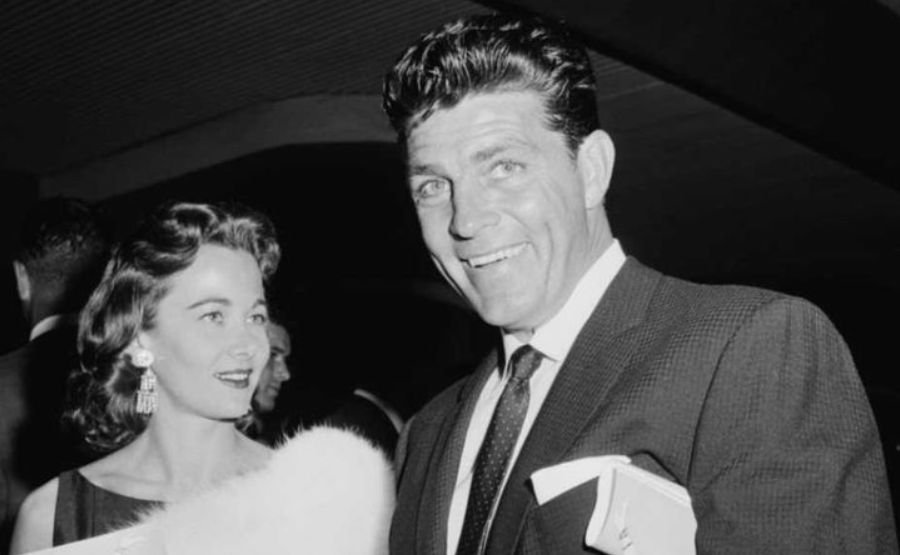
Susan Dee Robbins Is Not Who The Internet Thinks She Is — And What’s Actually Real Is More Interesting Anyway
Every article you’ll find about Susan Dee Robbins is basically the same paragraph recycled thirty times. She was a flight attendant. She married Dale Robertson. She had no children. She lives privately. End of story. And almost every piece of that minimalist portrait was assembled by AI content mills that clearly never looked at a single original source, because they can’t even agree on when she was born. One website — I’m not making this up — lists her birth date as February 27, 2013. The day her husband died.
That’s not a typo. That’s a machine scraping data and producing something that is technically alphabetically structured but functionally worthless. Which is why, if you want to understand Susan Dee Robbins, you need to completely ignore about 90 percent of what exists about her online and start from scratch.
Quick Bio
| Detail | Info |
| Full name | Susan Dee Robbins (married: Susan Dee Robertson) |
| Birth year | 1954 |
| Birthplace | California, United States (San Diego area) |
| Career | Flight attendant, American Airlines |
| Husband | Dale Robertson (actor, 1923–2013) |
| Marriage date | February 2, 1980 |
| Marriage end | February 26, 2013 (Dale’s death) |
| Age gap | ~31 years (Robertson born 1923) |
| Children | None together; stepmother to Dale’s daughters |
| Post-1980 life | Ranch in Yukon, Oklahoma; later San Diego, CA |
| Notable act | Wrote Bucking Hollywood (Page Publishing, 2019) — no ghost writer |
| Net worth est. | ~$1.7 million |
| Social media | None |
The Woman Nobody Could Agree On
Here’s the thing about Susan Dee Robbins. The actual verifiable public record on her is thin. Not suspiciously thin. Just genuinely, quietly thin, the way it gets when a person lives outside the media ecosystem by preference rather than accident. She was a flight attendant. She met a famous man. She married him. She stayed married to him for thirty-three years. She held together his final years. She arranged his memorabilia auction after he died. She wrote his biography herself, by hand, on her own terms.
That last part is the one thing almost nobody leads with, and it’s actually the most revealing thing she’s ever done publicly.
See also “Melina Gallo: The Untold Story of John Rzeznik’s Wife and Their Marriage“
Where It Started: A Flight, A Recognition, A Decision
Susan Dee Robbins was working for American Airlines when she met Dale Robertson. The details are thin — most sources just say she recognized him from Tales of Wells Fargo, the NBC series where he played special agent Jim Hardie for five seasons from 1957 to 1962. She enjoyed the show. He was traveling with her.
Think about what that moment actually looked like. This is the late 1970s. Robertson was born in 1923. He was somewhere in his mid-fifties at this point. Susan was in her mid-twenties. The age gap was roughly thirty-one years. That’s bigger than it sounds when you’re holding it in your hand.
And yet. By February 2, 1980, they were married. Small ceremony. Private. Dale had been married three times before this — to Mary Murphy (briefly, in 1956), Frederica Jacqueline Wilson, and then to Lula Mae Maxey from 1959 to 1977. Three marriages, three divorces, a man with a reputation for being exactly who he was on screen and not much willing to bend. When Susan agreed to marry him, she wasn’t signing up for a normal life.
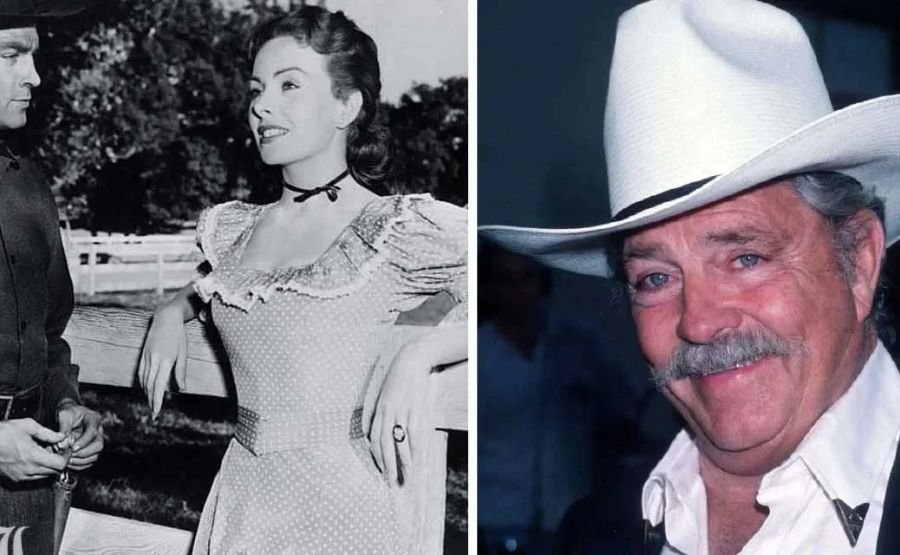
What Dale Robertson Actually Was
You can’t fully understand Susan Dee Robbins without understanding the man she built her adult life around. And that means spending a minute on Dale Robertson, because most people under sixty have no idea who he is.
Born in a small Oklahoma town during the twenties, Robertson grew up riding horses before most kids his age had learned to read properly. He boxed professionally. He served in World War II, where he was wounded twice and decorated with both a Bronze Star and Silver Star. He got into acting completely by accident: a studio talent scout saw his photograph in a photography store window, called him, and his career began from that single encounter.
He hated the word actor. Genuinely. He told an interviewer in 1988 that an actor changes himself to fit a part, while a personality changes the part to fit himself. He had a personality. That was his word for it. He said this clearly, repeatedly, and apparently without irony. Dale Robertson thought of Hollywood as a machine he could use temporarily and then leave, which is essentially what he did. When the money was good enough to fund a horse ranch in Yukon, Oklahoma, he went back there.
He owned 235 horses at one point, with five mares producing grand champions. Time magazine called him probably the best horseman on television in 1959. You could argue the horses were more real to him than any of the shows.
The Ranch Years and What They Actually Meant
In 1980, Susan wed into the ranch with Dale. Yukon, Oklahoma. Open land, horses, the quiet life of someone who had no particular desire to maintain his celebrity at the expense of his actual existence. Dale Robertson was not haunting Hollywood parties in 1980. He wasn’t chasing roles.
Let’s be honest about what this took. A woman in her mid-twenties, born and raised in California, former airline employee, marrying a fifty-six-year-old Oklahoma man who had sold his ranch work to his brother and was largely living the life of a gentleman farmer/retired Western star. The glamour, if there ever was any, was pretty much gone by then.
What there was, apparently, was genuine companionship. Every account that has any credibility describes their marriage as stable, warm, and grounded in exactly the kind of values Dale had been performing on screen for thirty years. There’s a certain poetry to that. He played a straightforward, honest cowboy for decades. His last marriage was to someone who seemed to appreciate that quality in the actual human.
The Auction Nobody Talks About
In May 2013, a few months after Dale died, Susan presided over an auction. It sold his memorabilia. His belongings. The accumulated objects of a career that had spanned four decades of American television history. It was arranged by her. She was the one who watched strangers come and take away what was left of his professional identity, piece by piece.
That picture has a subtly sad quality. She had sold the ranch years before because the horses became too much to manage as Dale’s health declined. They relocated to the San Diego area — closer to family, according to Susan’s own description in her book — because his lungs were failing. He died on February 26, 2013, at Scripps Memorial Hospital in La Jolla. Lung cancer. Pneumonia. His wife was with him.
Then she held the auction. Then she wrote the book.
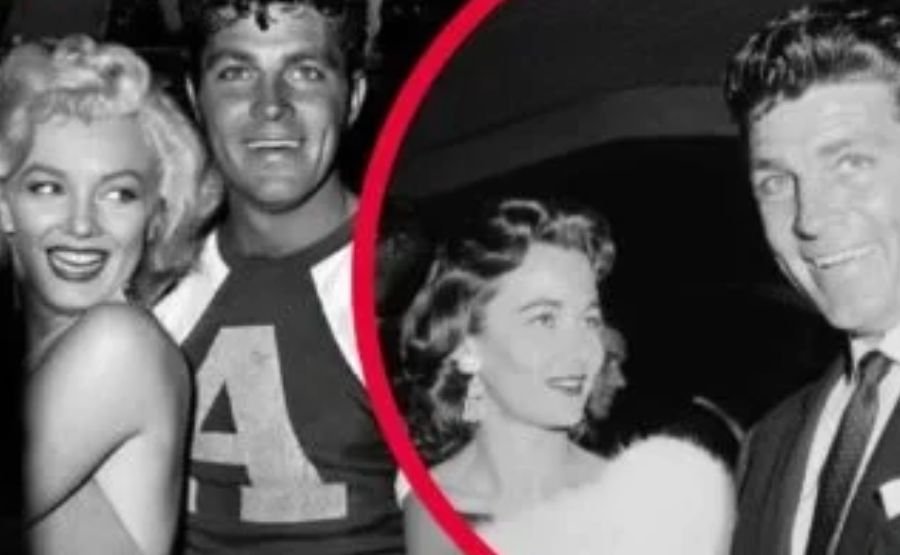
Bucking Hollywood: The Thing That Actually Matters
In 2019, Page Publishing released Bucking Hollywood: The Life and Legacy of Dale Robertson, authored by Susan Robertson. No ghost writer. She says so herself in the book — that she insisted on writing it entirely alone, in her own words, on her own time frame.
The title tells you everything. Dale Robertson didn’t play by Hollywood rules. He refused to take acting lessons. He turned down deals that didn’t suit him. Robertson once refused to allow a network to take over Tales of Wells Fargo and sold the program altogether instead of allowing them to make changes. The man had a spine. Susan apparently admired that spine enough to spend years documenting it.
She’s not a professional writer. She says so herself. The book is 396 pages, which is not nothing for someone who set out to preserve a legacy without professional tools. When people comment that she’s become a writer, she says she laughs it off. But she wrote nearly four hundred pages. That’s not a laugh-off. That’s a serious commitment.
Dale’s own attitude toward autobiographies was apparently that he didn’t know how they ended. He’d joke that when people approached him to document his life, he’d say not now — because the ending was still unwritten. Susan knew how it ended. She wrote the book anyway.
What’s Missing — And Why It Matters
Here’s where I want to push back slightly on the entire framing of Susan Dee Robbins as a topic. Every article about her is really an article about Dale Robertson, with Susan reduced to the supporting role. She is “the spouse of.”She is the fourth and last.She’s “married in 1980.” All of this is true, but it’s utterly insufficient.
She spent thirty-three years with a man who was, by many accounts, genuinely difficult to know. Dale Robertson was private, opinionated, and allergic to the kind of emotional vulnerability that makes for easy intimacy. The stories he told were controlled. The image he projected was the image he chose. Whatever happened behind that image — whatever the actual texture of their marriage was through all those Oklahoma years, through his declining health, through the auction and the grief — that’s entirely absent from the public record.
And Susan, to her credit, seems to have chosen not to fill that gap. The book is about Dale’s career, not their marriage. Her private life is just that. She doesn’t have Instagram. She doesn’t go on podcasts. She moved closer to family and went quiet.
I respect that, actually. But it does mean this article has a ceiling on what it can honestly tell you.
The Sources Conflict — Badly
Let me flag something I noticed during research because it matters for anyone trying to write about Susan Dee Robbins seriously. The discrepancies between sources are not minor. One says she was born March 12, 1985 in San Francisco. Another says she was born March 15, 1985 in the Midwest. Another says she was born March 24, 1985. Another says 1954 in San Diego. The 1954 date is the one that makes sense given that she’s a widow in her early seventies as of 2026, and aligns with contemporaneous reporting from her time with Dale.
The 1985 dates are obviously AI hallucinations — she couldn’t have married a fifty-six-year-old man in 1980 if she was born in 1985. But they’ve been copied across dozens of websites without anyone checking the math.
The children’s question also flickers. Most credible sources agree that Susan and Dale had no biological children together, though she was a stepmother to Dale’s daughters — Rochelle Robertson and Rebel Lee — from his earlier marriages. One granddaughter, Jade Angelica Fusco Robertson, survived Dale.
The marriage date itself: most sources say February 2, 1980, which appears to be correct.
Final Words
Susan Dee Robbins made one very big choice and then spent thirty-three years living with the consequences of it. She married a much older man at the end of his career, moved to an Oklahoma ranch, gave up whatever trajectory her own life might have taken, and poured herself into being a genuinely present partner during the long, quiet, final chapter of Dale Robertson’s life.
After he died, she didn’t try to become famous on the back of his fame. She didn’t write a tell-all. She didn’t leverage the grief for attention. She wrote a straightforward 396-page biography that she described as an attempt to preserve his legacy — not profit from his memory — and then moved back to San Diego and got on with her life.
That’s a particular kind of dignity that doesn’t photograph well and doesn’t generate clicks. But it’s real. More real, honestly, than the thirty-odd AI-generated articles pretending to know her birthdate while listing it as the same day her husband died.
She’s a woman who loved a man, stayed with him, and then told his story as truthfully as she could. You could do a lot worse as an epitaph.
FAQs
1. Who is Susan Dee Robbins?
She’s the fourth and final wife of Dale Robertson, the Oklahoma-born actor best known for Tales of Wells Fargo (1957–1962) on NBC. When they first met, she worked as a flight attendant for American Airlines, and in 1980, she wed Robertson. She later wrote his biography.
2. How did Dale Robertson and Susan Dee Robbins meet?
She met him while working as an American Airlines flight attendant. He was the star of one of her favorite shows, Tales of Wells Fargo. He was traveling with her. They married in 1980.
3. How old is Susan Dee Robbins?
Born in 1954, she’s around 72 years old as of 2026. Ignore any website that says she was born in 1985 — those dates are AI-generated nonsense that don’t survive basic arithmetic.
4. Did Susan Dee Robbins have children?
No biological children with Dale Robertson. She was a stepmother to his daughters from previous marriages: Rochelle Robertson and Rebel Lee. He had a granddaughter, Jade Angelica Fusco Robertson.
5. After Dale Robertson passed away, what became of Susan Dee Robbins?
She relocated to San Diego, California, to be closer to family. She organized an auction of Dale’s memorabilia in 2013. She wrote the book Bucking Hollywood about his life and career, published in 2019 by Page Publishing. Since then she’s maintained a very private life with no social media presence.
6. What is Bucking Hollywood about?
It’s Susan’s self-written biography of Dale Robertson — 396 pages, no ghost writer. She wrote it because Dale had always deflected autobiography requests (joking that he didn’t know how his story ended) and she wanted to preserve his legacy. The title refers to Dale’s lifelong refusal to compromise himself for Hollywood.
7. How old was Dale Robertson when he wed Susan?
When they got married in 1980, he was 56 years old. Susan was around 26. A 30-year age gap that almost no one writing about them chooses to mention directly.
8. How long was the marriage between Dale Robertson and Susan Dee Robbins?
33 years — from February 2, 1980 until his death on February 26, 2013.
9. What is Susan Dee Robbins’ net worth?
Estimated at around $1.7 million. Dale Robertson’s estate was worth approximately $5 million at his death.
10. Where is Susan Dee Robbins currently residing?
San Diego, California, as of the last available information (confirmed in her own words in the Bucking Hollywood book description, published 2019).
11. Did Dale Robertson have other wives before Susan?
Yes — three previous marriages. First to actress Mary Murphy (1956, briefly), then to Frederica Jacqueline Wilson, and then to Lula Mae Maxey (1959–1977). His fourth and last wife was Susan.
Beyond the headlines, discover what’s worth knowing — TheTrendist.
One Comment