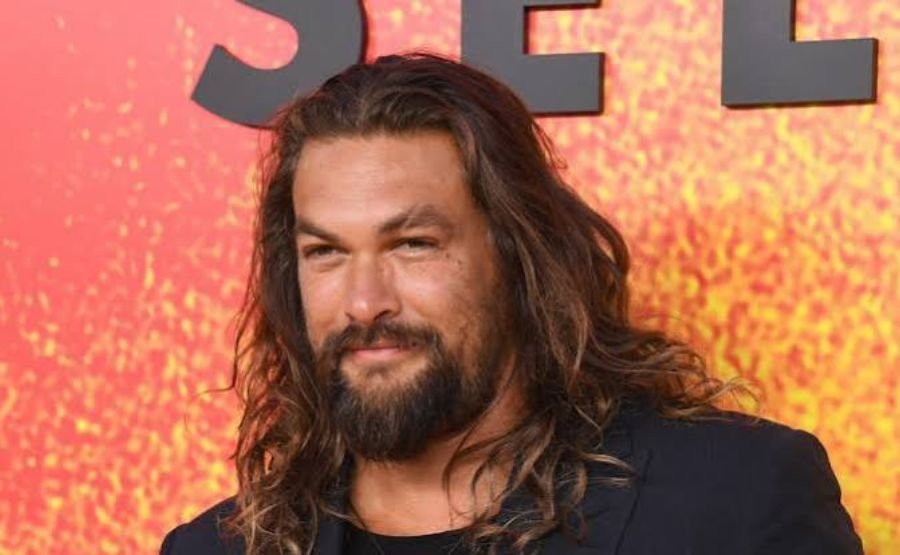
Jason Momoa Ethnicity: The Iowa Childhood, Hawaiian Roots, and Pawnee Heritage Behind the Star
Here’s the uncomfortable truth about Jason Momoa’s ethnicity that the magazine profiles never linger on: America’s most famous “Hawaiian” actor spent the first twelve years of his life in Norwalk, Iowa. Population: small. Landscape: flat. Ocean: nowhere. He didn’t grow up surfing. He didn’t grow up speaking ‘ōlelo Hawaiʻi. He grew up in the Des Moines metro area with a German-Irish-Pawnee mother who worked as a photographer, playing soccer alongside the guy who would later become Superman.
That’s not a knock on him. That’s the actual story. And it’s a much more interesting one than the sanitized “born in Honolulu, son of Hawaii” narrative that runs on autopilot in every entertainment piece published about him.
Quick Bio
| Category | Detail |
| Full Name | Joseph Jason Namakaeha Momoa |
| Born | August 1, 1979, Honolulu, Hawaii |
| Raised | Norwalk, Iowa (from ~6 months old) |
| Father | Joseph Momoa — Native Hawaiian, from Nanakuli, O’ahu; painter |
| Mother | Coni Lemke — German, Irish, and Pawnee ancestry; photographer |
| First Hawaii summers | Age 12 onward |
| Self-identified ethnicities | Native Hawaiian and Pawnee (primarily) |
| Heritage often omitted | Pawnee (Great Plains indigenous, mother’s side) |
| Major culture controversy | Malo-wearing on social media / Jimmy Kimmel (2022–2023) |
| Most personal heritage project | Chief of War (Apple TV+, set in 1780s–1790s Hawaii) |
The Iowa Years Nobody Talks About
His parents split up a few months after he was born. His mother, Coni Lemke — a woman he’s called his superhero in interviews — packed up and moved them back to her home state. Iowa. As far away from the Pacific surge and lava fields of Nanakuli as you can get on this continent, it is flat and landlocked.
He went to Norwalk High School. Played soccer. His teammate was Brandon Routh, who would later play Superman. This is the reality of Jason Momoa’s formative years: suburban Iowa, soccer practice, Brandon Routh.
His father Joseph visited sometimes. Even tried living in Iowa for stretches, but by his own account found it very hard to be a Hawaiian man in the Midwest. The geography was wrong. So Joseph stayed in Hawaii, and Jason stayed in Iowa, and the Hawaiian identity that would later become Jason Momoa’s entire cultural brand was something he had to actively pursue rather than passively absorb.
At twelve, he started spending summers in Hawaii. That visit changed him. He met his father’s extended family. He found the ocean, the fishing, the watermen — the Keaulana clan and others who became role models. He wanted to stay permanently. His father told him no. Finish school first. Hawaii will still be here.
Think about that dynamic for a second. The father from Nanakuli telling his half-white Iowa kid to stay in Iowa and get his education. That’s a very specific kind of parental wisdom that gets completely flattened when you write “Jason Momoa is a proud Native Hawaiian.”
See also “Scott Boatwright Didn’t Get Chosen. He Was Just Already There.“
What He Actually Is (And What Gets Left Out)
The typical breakdown you see everywhere: German and Irish (mother’s side), Native Hawaiian (father’s side). Sometimes Scottish gets thrown in, which appears to have no sourcing and seems to be a game of telephone that started somewhere on a content farm.
What you almost never see mentioned: Pawnee.
His mother Coni is of German, Irish, and Pawnee ancestry. Pawnee — the Great Plains indigenous nation, originally from what’s now Nebraska and Kansas. Wikipedia has it, sourced to interviews. The Star-Advertiser piece on him mentions it. But in the broader celebrity biography ecosystem, it evaporates. Every third-tier bio site writes “German and Irish” and stops there.
Why does the Pawnee ancestry get dropped? Probably because it complicates the clean Hawaiian narrative. Jason Momoa playing a Pacific warrior is a better story than Jason Momoa being also part Great Plains indigenous on his mother’s side. The industry wants one indigenous identity per actor, ideally one that fits the role they’re most famous for.
He has been identified as Pawnee himself, in interviews. Not loudly or often. But it’s there if you look.
The father’s side is documented and real. Joseph Momoa is from Nanakuli — that matters. Nanakuli is a predominantly Native Hawaiian community on the west side of Oʻahu, historically underserved, with strong cultural preservation traditions. It’s not the tourist coast. It’s the community that has held onto language, fishing practices, and identity under pressure. When Jason says his Hawaiian heritage is real, the Nanakuli connection is the backbone of that claim.
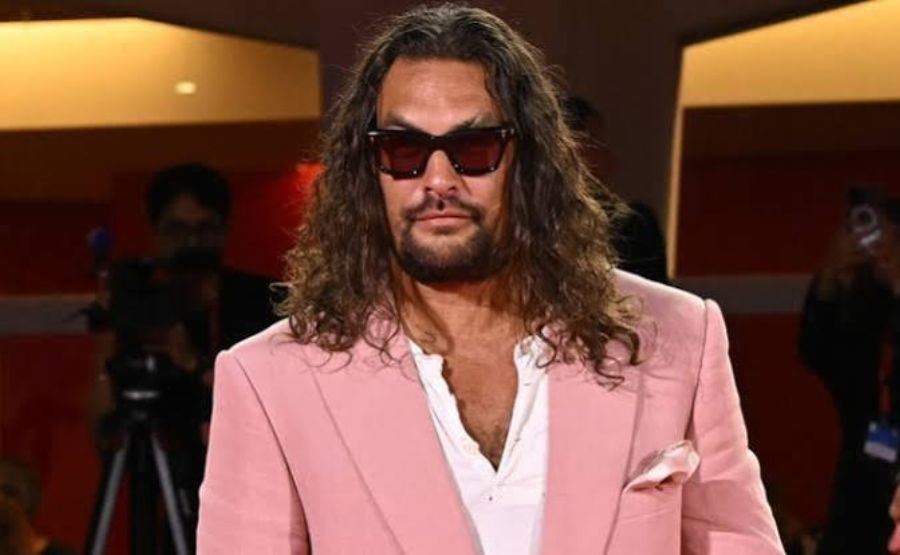
The Haka Problem
In 2010, Jason Momoa auditioned for Game of Thrones. He was given a scene to read in which Khal Drogo basically just says “no” over and over. That was not going to work, he concluded. So, on a friend’s suggestion, he performed a Haka instead.
The casting directors were reportedly startled, then fascinated. They asked him to come back and do it on camera. He got the role.
Here’s the thing. The Haka is Māori. New Zealand. Not Hawaiian. Those are two distinct indigenous cultures from two different island nations separated by several thousand miles of ocean.
Momoa has been clear about this — he’s spoken openly about his admiration for Māori culture, his sense of Polynesian kinship with New Zealand, and his genuine love of what the Haka represents. He said in interviews that Polynesian cultures share something deep, and that when he encountered Māori traditions he “fell in love with it.” That’s a real and defensible position. Polynesia is vast, and the cultural relationships across it are genuine.
But let’s not pretend this isn’t a slightly complicated thing. A half-Native-Hawaiian, half-German-Irish-Pawnee man raised in Iowa used a Māori war dance borrowed from another indigenous culture to convince Hollywood he was a Dothraki warlord. It worked brilliantly. It’s one of the most effective audition maneuvers in recent Hollywood history.
Whether it’s culturally clean is a different question. Momoa himself has leaned into the Māori connection enough over the years that it doesn’t read as casual borrowing — he’s maintained a genuine relationship with New Zealand and its people. But the framing in most coverage — “Jason performed the Haka from his Polynesian heritage” — smooths over the specifics in a way that isn’t quite accurate.
Post-Game of Thrones: Broke, and Why That’s Relevant
Here’s something almost nobody ties back to his identity story: after Game of Thrones, he was effectively broke.
He’s said this himself. “We were starving after Game of Thrones.” He played Khal Drogo for one season of what became the most watched television series on the planet. And then he couldn’t get cast. For years.
The reason matters here. He was told, repeatedly, that his Game of Thrones performance was too good. He’d been so thoroughly convincing as a physically menacing non-white warrior king that casting directors couldn’t see him as anything else. Hollywood had filed him under “ethnic intimidation” and locked the drawer.
This is the industry logic that indigenous and mixed-race actors navigate constantly. You get celebrated for being visually striking and physically powerful. You get typecast for the same reason. Momoa’s Hawaiian-ness, his Polynesian physicality, his particular combination of features — all of it that made him magnetic as Drogo became a trap.
He broke out of it with Aquaman. Which, let’s be honest, isn’t that different a role in terms of genre — but it’s the DC universe, it’s a blockbuster budget, and it repositioned him as a lead rather than a supporting threat. The ethnic intimidation got rebranded as superhero royalty.
The Malo Controversy and What It Actually Reveals
In late 2022, Momoa posted fishing photos on Instagram wearing a malo — the traditional Hawaiian loincloth. The internet went predictably insane. Then he wore it on Jimmy Kimmel’s show. Took his clothes off on camera. The audience cheered.
The backlash from part of the Native Hawaiian community was real and worth taking seriously. Some argued he was commodifying Hawaiian culture, turning something sacred into a sexualized entertainment moment. One Twitter post that circulated — from a person whose Hawaiian partner felt uncomfortable wearing traditional clothing in front of non-Hawaiians precisely because of how it gets consumed — got to the heart of the issue without making it personal about Momoa.
The counterargument, also from Native Hawaiians, was that he was representing, not exploiting. That more visibility for the malo is better than less. That critiquing a Native Hawaiian man for wearing Native Hawaiian clothing is its own problem.
Where do I land on this? Both can be true at the same time, in my opinion. Momoa’s malo is genuine — he was deep in preparation for Chief of War, the Apple TV+ series set in 1780s and 1790s Hawaii that he created, co-wrote, and starred in, a project built on his Hawaiian identity in the most serious way possible. He said he wore it every day for months getting into character. The fishing trip wasn’t a PR stunt.
And also — the Kimmel segment was pure spectacle. He took his clothes off on late-night television because the audience wanted him to. That’s a choice. Two things can coexist.
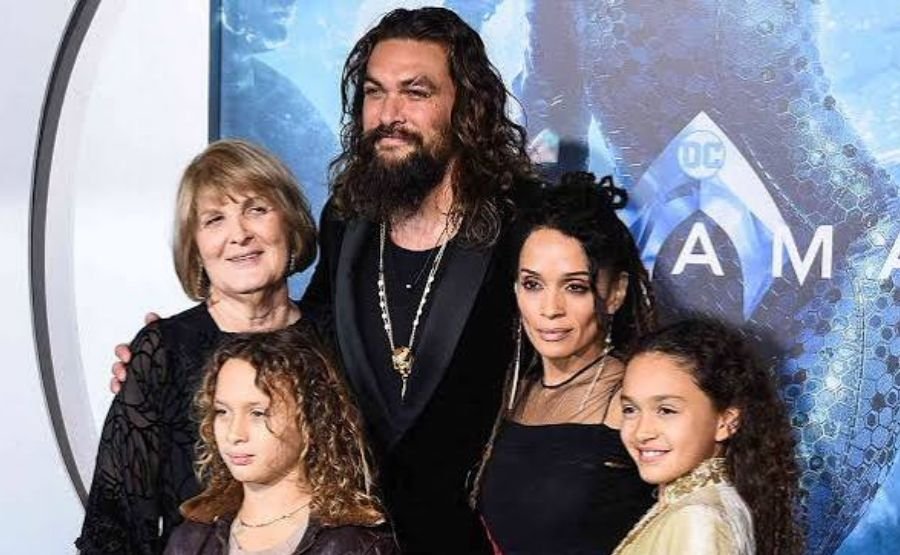
Chief of War: The Project That Makes Everything Else Make Sense
If you want to understand what Jason Momoa’s ethnic identity actually means to him, look at Chief of War. Not Aquaman. Not GoT.
Chief of War is the Apple TV+ historical series set in Hawaii during the unification wars of the late 1700s. He spent years developing it. He created it. He wrote it. He convinced his own father, Joseph, to appear in it. His dad, the Native Hawaiian painter from Nanakuli, stands in a recreation of the world he comes from.
That’s not a man performing his ethnicity for a paycheck. That’s a man who spent the gap between his Iowa childhood and his Aquaman stardom actively reconstructing a relationship to a culture he didn’t grow up inside, and then using the platform his career created to tell that culture’s story on his own terms.
Is it the story a person who grew up in Nanakuli would tell? Probably not exactly. His path to Hawaiian identity was an immigrant’s path — or something close to it. He came to it consciously, deliberately, across years of summers and visits and relationships rebuilt with his father’s family. That makes his relationship to the culture different from someone raised inside it, but it doesn’t make it fake.
The Pawnee side of him never got a Chief of War. Maybe it will someday.
The Contradictions That Make Him Interesting
Here’s what most coverage gets wrong about Jason Momoa: it treats his ethnicity as a stable, settled fact rather than something he’s been working out his whole life.
He’s Hawaiian and not Hawaiian. Born there, exiled at six months, returned at twelve, emotionally committed since. He’s Pawnee in ways that never get mentioned. He performed a Māori dance to prove he belonged in Hollywood, and he was right that it would work, and the cultural math on that is genuinely complicated.
His father is from a community that has survived real deprivation and cultural erasure. His mother is from Iowa and has Pawnee blood that appears in the fine print of his biography and nowhere else.
And he grew up in Norwalk, Iowa, playing soccer.
The standard celebrity ethnicity narrative wants a clean throughline: person has heritage, heritage shapes person, person represents heritage proudly. Momoa’s actual story is choppier and more human than that. It’s about distance and reconnection. About building an identity you didn’t get automatically. About using a New Zealand war dance to get a job playing a Central Asian warlord because you had no other scene to read.
That’s not a compromise of his identity. That’s the actual texture of it.
Final Words
I’ll be direct about this. Jason Momoa is genuinely of Native Hawaiian descent, through his father, from a specific and meaningful community. That’s real. His Pawnee heritage through his mother is also real, and I find it telling that it disappears from almost every published biography — it doesn’t fit the commercial story.
His relationship to Hawaiian culture is complicated by his Iowa childhood in ways nobody has a clean answer to, including probably him. The Haka was borrowed, not inherited. The malo controversy revealed tensions in the Native Hawaiian community that don’t resolve neatly. Chief of War is the most honest expression of where he stands.
What bugs me about how his ethnicity gets covered is the tidiness. “Native Hawaiian, German, Irish, and Scottish” — where does Scottish even come from, and why is Pawnee missing? The answer is that internet content farming picks a narrative and runs it without checking sources, and the narrative for Jason Momoa was written by the Aquaman press department.
The actual story — Iowa kid actively reclaims the Hawaiian father’s lineage through his teens, uses pan-Polynesian cultural knowledge to break into Hollywood, becomes the most visible Native Hawaiian face in blockbuster history while also being part German, part Irish, part Pawnee, raised in the Midwest — is messier, more interesting, and more honestly American than anything that gets published about him.
That’s the story worth telling.
FAQs
1. Is Jason Momoa actually Hawaiian?
Yes, genuinely. His father, Joseph Momoa, is Native Hawaiian from Nanakuli on O’ahu’s west side. That lineage is documented. What’s complicated is that Jason was raised in Iowa from six months old, not in Hawaii, and didn’t reconnect with his Hawaiian heritage until summer visits starting at age twelve. So he’s ethnically and ancestrally Hawaiian, but his relationship to the culture is one he built deliberately rather than absorbed from birth.
2. What is Jason Momoa’s full ethnic breakdown?
The confirmed breakdown: Native Hawaiian (father’s side) and German, Irish, and Pawnee (mother’s side). Coni Lemke, his mother, is of German, Irish, and Pawnee Native American ancestry. Pawnee gets dropped from most bios, but it’s sourced to his own interviews and Wikipedia cites it. The “Scottish” ancestry that appears on some sites has no clear sourcing and appears to be content farm error.
3. Was Jason Momoa raised in Hawaii?
No. He was born in Honolulu but moved to Norwalk, Iowa with his mother when he was approximately six months old, after his parents divorced. He attended Norwalk High School in Iowa, where Brandon Routh was a fellow soccer player. He started spending summers in Hawaii at age twelve, and moved back after finishing school.
4. Why did Jason Momoa do a Haka at his Game of Thrones audition?
He was given a scene where Khal Drogo mostly just says “no,” and a friend suggested the Haka as an alternative. The Haka is a traditional Māori war dance from New Zealand — it’s not Native Hawaiian. Momoa has explained that he feels a deep Polynesian kinship with Māori culture and has described falling in love with it through research. The audition worked — casting directors were startled enough to invite him back to tape it. He got the role.
5. Is Jason Momoa Polynesian?
In the broad geographic sense, yes — Native Hawaiians are a Polynesian people. But “Polynesian” isn’t a single culture; it’s a large region spanning Hawaii, New Zealand (Māori), Samoa, Tonga, and others. Momoa is specifically Native Hawaiian on his father’s side, not Samoan or Māori, though some IMDB bios incorrectly add “Samoan” to his father’s background. He has embraced a broader Polynesian identity in his public persona and has spoken about kinship with Māori culture.
6. What is the malo controversy about?
In 2022, Momoa posted fishing photos wearing a malo — a traditional Hawaiian loincloth — and later revealed it on Jimmy Kimmel’s show. Media coverage was predominantly sexualized (“bare butt” headlines). Some Native Hawaiians online objected, arguing the reaction commodified and fetishized the malo — a sacred cultural garment — rather than respecting it. Others in the Hawaiian community defended Momoa, seeing it as genuine cultural representation. The context matters: he was deeply immersed in filming Chief of War at the time, an Apple TV+ series set in 1780s–1790s Hawaii, and had been wearing the malo daily for the role.
7. What is the Chief of War and why does it matter for understanding his heritage?
Chief of War is an Apple TV+ historical series set in Hawaii during the late 1700s unification wars. Momoa created it, co-wrote it, produced it, and stars in it. His father, Joseph Momoa, has a role in it. It’s the clearest expression of his deliberate, years-long project to engage with his Hawaiian ancestry at depth — as a storyteller with creative control, not just an actor cast for his appearance.
8. Does Jason Momoa speak Hawaiian?
Not fluently, as far as public record shows. His connection to Hawaiian culture was rebuilt through relationships, research, and creative work — particularly Chief of War — rather than through linguistic immersion from childhood. Growing up in Iowa gave him no exposure to ‘ōlelo Hawaiʻi (Hawaiian language).
9. What exactly is Pawnee ancestry?
Pawnee is a Great Plains indigenous nation originally from present-day Nebraska and Kansas. Momoa’s mother, Coni Lemke, has Pawnee ancestry on her side. This is confirmed in his own interviews and by Wikipedia, which cites a source about Jason learning of his Native American identity while growing up in Iowa. It’s almost entirely absent from celebrity biography coverage, which consistently reduces his mother’s background to “German and Irish.”
10. How did being typecast after Game of Thrones relate to his ethnicity?
Significantly. After playing Khal Drogo — a physically imposing, non-white warrior king — he struggled to find work for years, despite the role’s massive cultural footprint. He described his family as “starving” during this period. The industry had essentially filed him under a category of threatening ethnic physicality that limited what he could be cast as. Aquaman broke that pattern by giving his Polynesian physicality a superhero context rather than a villain or savage one.
11. Why does his ethnicity matter to Native Hawaiians specifically?
Because Native Hawaiian representation in Hollywood at any meaningful scale is extremely rare. There are very few Native Hawaiian actors in major studio productions. Momoa’s platform — Aquaman alone has generated over $2 billion at the global box office — gives visibility to a community that has been systematically marginalized both culturally and economically. That’s why the community response to how he represents that heritage, including the malo controversy, carries real weight. He’s not just a celebrity with interesting ancestry. He’s a significant and unusual cultural signal for a community that doesn’t get many.
Beyond the headlines, discover what’s worth knowing — TheTrendist.
One Comment