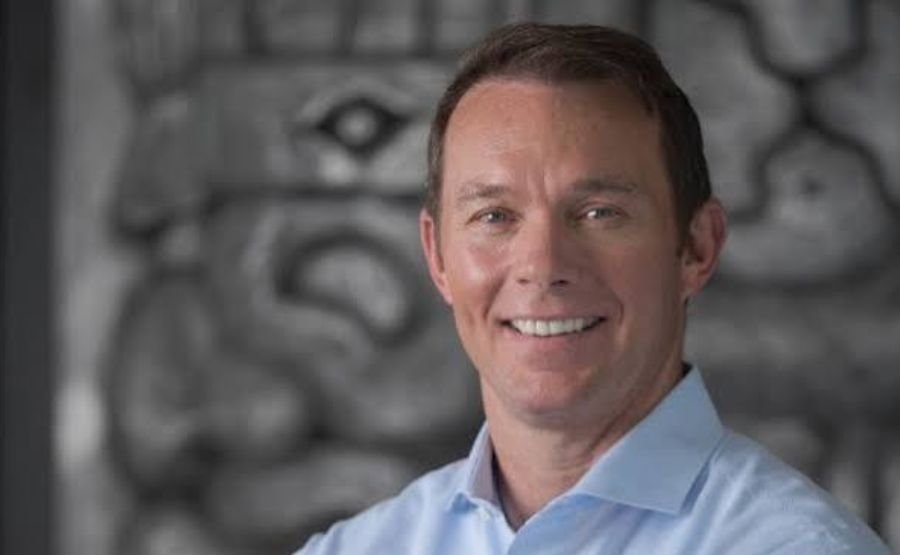
Scott Boatwright Didn’t Get Chosen. He Was Just Already There.
The way Chipotle‘s board told it, they ran a “thorough and rigorous external search process” and, after surveying the landscape of American business talent, concluded that the best possible person for the CEO job was… the guy who’d been running operations from the inside for seven years.
Which is fine. Maybe that’s true. But let’s not pretend the search was anything other than what it actually was: an organization stress-tested by a sudden departure, quietly hoping that the answer was already in the building, running backward so fast they could call it deliberate.
Scott Boatwright got the job because he was there. He stayed, he executed, he didn’t make headlines for the wrong reasons, and when Brian Niccol followed his ambitions to Seattle, Boatwright was left standing in the kitchen. That’s not nothing. Longevity and reliability are genuine qualities. But the story being sold — that this was a competitive search that happened to produce the obvious internal candidate — is polite fiction.
He’s now running a $40 billion restaurant company. He earned that. The path he took just wasn’t the one the press release described.
Quick Bio
| Detail | Info |
| Full Name | Scott Boatwright |
| Age | ~52-53 years old (SEC filings, 2024-2025) |
| Hometown | Grew up in a “humble family” — specific location not publicly confirmed |
| Education | Georgia State University’s J. Mack Robinson College of Business, MBA |
| Early career | Washed dishes at a steakhouse in high school “because he had to” |
| Arby’s tenure | ~18 years (RTM Restaurant Group franchisee + corporate); SVP Operations by April 2015 |
| Chipotle joined | May 2017, as first-ever Chief Restaurant Officer |
| CEO (interim) | August 31, 2024 — following Brian Niccol’s departure for Starbucks |
| CEO (permanent) | November 11, 2024 |
| 2025 compensation | $1.1M base salary + up to 200% bonus + $13M equity = potential ~$16M+ total |
| Personal | Wife Erin; five-year-old son (as of late 2025); Dallas Cowboys fan; Florida State alum |
| Chipotle 2025 | Stock fell ~35-42%; first full-year same-store sales decline since 2016 (-1.7%) |
| His go-to Chipotle order | Brown rice, black beans, chicken, pico de gallo, and cheese |
| Key quote | “We’re not adventurous at all.” |
The Dishwasher Who Didn’t Plan on This
Here’s what every polished CEO profile skips or buries: Scott Boatwright started washing dishes in high school not because he loved hospitality, but because his family needed the money. “I had to work,” he told NRN’s editor-in-chief in late 2025, sitting across from him in a Manhattan Chipotle.
He wasn’t trying to build a career in restaurants. It just happened to be where someone kept giving him more responsibility.
A manager at that steakhouse noticed something. Spent time with him. Talked to him about what a career in the industry could look like. By his junior year of high school, Boatwright had moved beyond washing dishes into actual management territory. And then a friend called. Said a recruiter from something called RTM Restaurant Group had reached out. Boatwright went.
RTM was, at the time, the largest franchisee of any restaurant brand in the country — 750 Arby’s locations. Six months after that phone call, Boatwright was inside the system. He was in his early 20s and he’d found the track without particularly looking for it.
He’d eventually spend eighteen years at Arby’s. Franchisee first, then corporate, climbing through field operations until he hit SVP in April 2015. During that stretch, Arby’s ran its “We Have the Meats” campaign, reversing years of brand decay, grew sales 9.2% in Boatwright’s first full year at the corporate level. Paul Brown, the Arby’s CEO who built Inspire Brands, became a formative mentor.
And then one day Steve Ells called.
See also “Mayweather Net Worth: The $1.2 Billion Fortune That May Not Exist Anymore“
The Call That Wasn’t Supposed to Be a Job Interview
This is the detail that gets glossed over in every Boatwright profile, but it’s the most revealing thing about how he ended up where he is.
In 2017, Chipotle was in genuine trouble. A norovirus outbreak at a location in Sterling, Virginia had compounded the reputation damage from prior food safety crises. Same-store sales were recovering, barely. The brand needed operational credibility. Steve Ells, the founder and CEO, was in problem-solving mode.
He is called Boatwright. Not to offer him a job. To ask for his take on Chipotle’s operational gaps — what an outsider could see that they couldn’t from inside. Boatwright was still at Arby’s. He gave his honest read.
Ells liked the conversation well enough that it turned into something more. By May 2017, Boatwright was the first Chief Restaurant Officer in Chipotle’s 24-year history — a role that didn’t exist before him, created because they needed someone who could actually run the floor at scale.
He’d first walked into a Chipotle in 2005 in Dallas. Got a burrito. Was hooked. Spent the next twelve years passing them on his Arby’s visits and popping in occasionally. When Ells called, he already had years of personal attachment to the brand as a customer.
That matters more than people acknowledge. The best operations leaders tend to be genuine believers in the product. Boatwright wasn’t faking it.
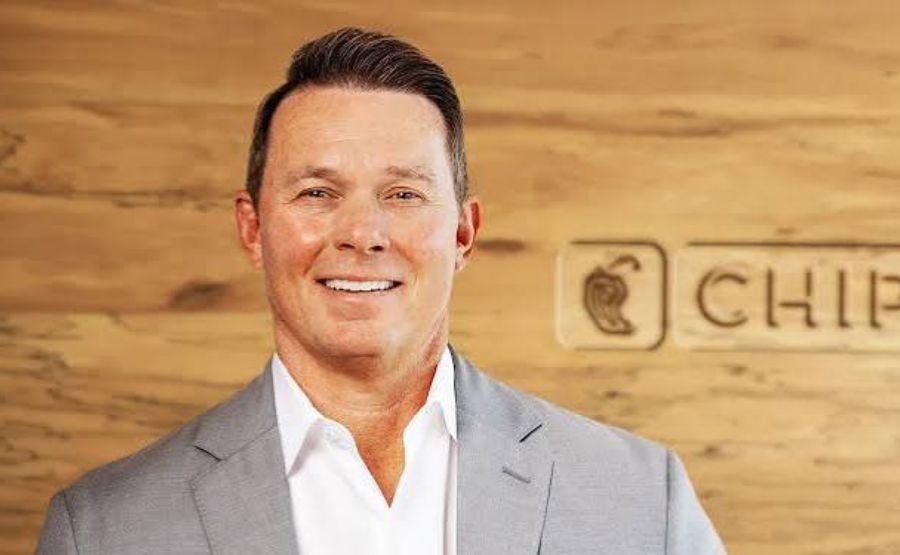
Seven Years of Running Chipotle While Brian Niccol Got the Credit
Here’s where a certain amount of honest accounting needs to happen.
Brian Niccol joined Chipotle as CEO in March 2018 — ten months after Boatwright arrived. During Niccol’s tenure through mid-2024, Chipotle stock rose approximately 773%. Revenue more than doubled. Digital ordering went from a friction point to a genuine competitive advantage. The stock became one of the restaurant industry’s most celebrated growth stories.
Niccol got — and largely deserved — the credit.
But Boatwright was the operational backbone of all of it. He described his relationship with Niccol as a tag team: Niccol managed the stock price, the investor narrative, and the broader vision. Boatwright managed the restaurants. “He managed the key KPIs for the organization,” Boatwright explained in the QSR Magazine cover profile. What that actually means: Boatwright was the one who made sure the guacamole was right, the throughput was up, the general managers weren’t quitting, the food safety protocols were followed.
Think about what that division of labor looks like from the outside. One person gets named “the architect of the turnaround.” The other person makes sure 3,700 locations all actually function on Tuesday at noon.
He never complained about this publicly. Not once. Which is either extreme discipline or the quiet confidence of someone who knows exactly what they did and who they are.
Probably both.
The Portion Scandal That Landed on His Desk Before He Was Even Official CEO
Scott Boatwright wasn’t even a permanent CEO yet when the burrito bowl situation blew up into national news.
The summer of 2024 saw TikTok flooded with videos of Chipotle customers pointing cameras at the assembly line, asking for more chicken, documenting what appeared to be measurably smaller portions than they’d received years before. Wells Fargo analysts — and yes, this happened — physically weighed 75 burrito bowls across multiple New York City locations. The results showed significant variance. The internet was already merciless.
Niccol addressed it in July 2024, said there was never any directive to serve less, and admitted about 10% of stores were “outliers” in portion sizing. Then he left for Starbucks.
Boatwright inherited the entire thing, mid-crisis, as interim CEO.
His response at the October 2024 earnings call was to point at social media as evidence of improvement. “People are posting big burritos, big bowls and are really excited about the portioning they’re getting in the Chipotle brand.” He presented it as an inversion. Critics noted that using customer TikToks as proof of portion compliance is… not a rigorous measurement system.
But the approach held. By November, the portion story had largely faded from headlines. Whether that’s because the crisis was actually resolved or because the next news cycle arrived is hard to disentangle. Either way: Boatwright walked into a mess and walked out of it without the company catching fire.
That’s not a small thing. His first three months as interim CEO were operationally chaotic, and he kept the wheels on.
“We’re Not Adventurous at All.” Good. Own That.
Here’s the Boatwright quote that I find most revealing, and it comes from a Fortune interview in June 2025.
When asked about menu innovation, he said, matter-of-factly: “We’re not adventurous at all.”
Following that: “When brands start trying to be everything to everyone, they lose their identity.”
This is the opposite of a CEO trying to sound dynamic and transformative. This is someone who has spent years watching brands destroy themselves by chasing trends, and who has decided that the most important thing Chipotle can do is stay very precisely Chipotle. Brown rice, black beans, chicken, pico de gallo, and cheese — his literal order, every time, filed publicly in a December 2025 trade interview.
Let me be honest: I think he’s right. Chipotle’s identity is built on a short menu with fresh ingredients executed consistently across thousands of locations. Every time the chain has flirted with major menu expansion, it has created operational headaches that undercut the customer experience. The discipline to say no to things that would make you look innovative is genuinely rare.
He does want to go from two limited-time offerings per year to maybe three. And he wants to add smiling back into the employee experience — a thing that Steve Ells, apparently, had literally deprioritized. Ells told him in 2017 that Chipotle “didn’t need to be friendly, it just needed to be fast.” Boatwright is now operationalizing friendliness. He used the phrase “guest obsessed” seventeen times at a leadership summit within his first month as permanent CEO.
The contradiction between “fast machine” Boatwright and “guest obsessed” Boatwright is interesting. Seven years under Ells’ efficiency-first mandate, now adding smiles to the key performance indicators. Which is the real philosophy? Maybe both. Maybe the answer changes when you’re the one setting the culture instead of executing someone else’s.
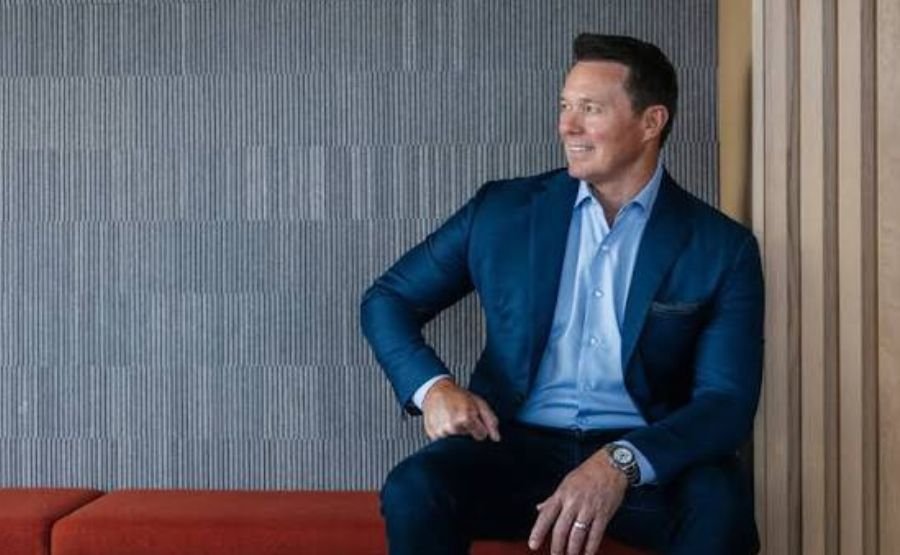
The Stock Drop That Nobody Can Fully Explain
Let’s be clear-eyed about 2025, because the trade press has been oddly gentle about it.
Chipotle stock fell approximately 35-42% during 2025. Full-year comparable restaurant sales declined 1.7% — the first such decline since 2016, the year before Boatwright arrived. Q3 2025 saw an 18-19% single-day stock crash after earnings. The company lowered its full-year guidance three consecutive quarters. For 2026, management guided for flat same-store sales — well below Wall Street’s expectations of nearly 2% growth.
Boatwright’s explanation: macroeconomic consumer uncertainty, tariff-driven cost pressures, lower-income customers eating at home more often. “Persistent macroeconomic pressures.” “A dynamic consumer backdrop.” These are real things. The broader restaurant industry has struggled in 2025. Chipotle’s lower-income customers — roughly 40% of sales — have been genuinely squeezed.
But here’s the part that gets quietly set aside: the stock started declining in July 2024. Two months before Niccol left. The post-split sentiment was already cooling. And the question of whether a COO-to-CEO transition at a high-valuation growth stock is itself a source of investor uncertainty is legitimate and not fully answered by attributing everything to macroeconomics.
Is the 2025 performance Boatwright’s fault? Mostly no. The macro is real. But is he getting enough credit for the fact that the company started slowing before his tenure officially began? Also mostly no — the narrative has attached the decline to his era in ways that aren’t entirely fair.
He called 2025 a “great learning year” at the CREATE conference. He used the duck-on-water analogy: looks still on top, churning like crazy underneath. He’s not panicking publicly. Whether that’s strategic composure or genuine confidence, I honestly can’t tell. Probably a mix.
The Inheritance Problem Nobody Talks About
There’s a structural issue in Boatwright’s position that the business press hasn’t examined honestly.
He’s running a company whose stock, during its peak years, was priced for extraordinary growth — 20%+ EPS growth, double-digit same-store sales, a premium valuation that left almost no room for a normal business cycle slowdown. Niccol built that narrative brilliantly. He was also the one who got to exit before the narrative hit its natural ceiling.
Boatwright inherited the obligations of that valuation. The expectation of high-teens EPS growth, built into the stock price at the time of succession, was always going to be hard to maintain in a slowing consumer environment. He walked in the door and the stock already expected him to be as good as his predecessor at the market’s peak.
That’s an unfair starting position. And it’s made harder by the fact that his pay is roughly half of Niccol’s — $1.1M base versus Niccol’s significantly higher package — which some reads of CEO compensation theory would say creates a different incentive structure. Or maybe not. Maybe Boatwright genuinely doesn’t need to be paid Niccol money to be motivated. He’s been at this since he was a teenager washing dishes. The money was never the whole point.
Final Words
Scott Boatwright is an operations man running a narrative company, and that gap is the central tension of everything that happens from here.
Chipotle’s modern history was written by two charismatic CEOs — Ells the idealist founder, Niccol the growth architect — who both understood that running a publicly-traded consumer brand requires managing stories as much as supply chains. Boatwright is, by every indication, a genuinely excellent operations leader who is learning the story part in real time.
The “guest obsessed” language, the smiling initiative, the Fortune interview carefully timed to lay out his strategy — these are the tools of a man who knows he needs to be visible in a way COOs don’t. He’s adapting. Slower than the market wants, maybe, but he’s adapting.
What he has that Niccol didn’t is institutional memory and genuine product love. He first ate a Chipotle burrito in 2005 and still orders the same bowl. He knew the fax-machine era of Chipotle’s order tracking system. He built the throughput muscle that made the digital ordering experience work. He is, in the truest sense, a Chipotle lifer.
That’s either going to be his greatest asset — a CEO who will never chase a trend that compromises the core — or his limitation, if what the brand actually needs right now is someone willing to reinvent parts of it.
He told the audience at the CREATE conference to focus on what you do best. That’s his operating principle, applied to Chipotle.
The stock market is currently unconvinced. But the stock market has been wrong about patient operators before.
FAQs
1. Who is Scott Boatwright?
The CEO of Chipotle Mexican Grill, named permanent CEO on November 11, 2024, after serving as interim CEO since August 31 of that year. He joined Chipotle in May 2017 as its first-ever Chief Restaurant Officer and served as COO from 2023 until becoming interim CEO. Before Chipotle, he spent 18 years at Arby’s Restaurant Group, rising to SVP of Operations. He’s approximately 52-53 years old, started his career washing dishes at a steakhouse in high school, and holds an MBA from Georgia State University.
2. How much does Scott Boatwright make?
His 2025 compensation package: $1.1 million base salary, a cash bonus target of 200% of base salary (up to $2.2 million), and equity awards with a grant date value of $13 million — bringing potential total compensation to approximately $16 million or more, depending on stock performance. This is roughly half of what Brian Niccol made at Chipotle. The SEC Form 8-K filed December 20, 2024 is the primary source on this.
3. Why did Chipotle stock drop in 2025 under Boatwright?
Multiple factors: full-year comparable restaurant sales fell 1.7% (first annual decline since 2016), transactions dropped 2.5%, and the company lowered its full-year guidance three consecutive quarters. A Q3 2025 earnings call sent the stock down 18-19% in a single day. Boatwright attributed the slowdown to macroeconomic consumer uncertainty — lower-income customers eating out less due to economic pressures and tariff-related cost increases. Critics note the stock started declining before his tenure, in July 2024.
4. What was Boatwright’s role before becoming CEO?
Chief Operating Officer (2023-2024), and before that Chief Restaurant Officer (2017-2023) — a title created specifically for him when he joined Arby’s. As CRO/COO, he had direct accountability for all of Chipotle’s restaurant operations: food safety, training, facilities, supply chain, and the throughput systems that became Chipotle’s competitive edge in service speed.
5. Did Boatwright really win a CEO search, or was he just the obvious choice?
Board chairman Scott Maw repeatedly described a “thorough and rigorous external search process.” Analysts noted that Boatwright was always the front-runner and that the outcome — internal COO gets the job — is the most statistically common CEO succession pattern, with 77% of S&P 500 CEOs promoted from within in 2024. Whether the external search found genuinely competitive candidates or was a process that confirmed a predetermined conclusion is not publicly known.
6. What is Boatwright’s leadership philosophy?
He talks about being “guest obsessed” — a departure from the Steve Ells era when the emphasis was purely on speed. He says: “When brands start trying to be everything to everyone, they lose their identity.” His operational focus is on throughput (how many customers served per peak 15 minutes), general manager retention (at historic lows under his watch), and keeping the menu disciplined. He personally orders the same Chipotle bowl every time: brown rice, black beans, chicken, pico de gallo, and cheese.
7. What is Chipotle’s financial situation under Boatwright?
2024 total sales were $11.3 billion. Average unit volume exceeded $3 million, with a target of $4 million. The 2025 performance was rough — stock down 35-42%, same-store sales declining for the full year, flat guidance for 2026. The company is still opening 315-345 new restaurants annually and pursuing international expansion in South Korea, Singapore, Middle East, and ultimately Mexico.
8. Is Scott Boatwright married?
Yes. His wife’s name is Erin. At the time he joined Chipotle in 2017, they were based in Denver. He’s subsequently described being based in Newport Beach, California, near Chipotle’s headquarters. As of his December 2025 interview, he mentioned having a five-year-old son at home. He says he loves golf (self-described as “not very good”) and spends most free time with his family.
9. Did Scott Boatwright go to college?
He graduated with an MBA from Georgia State University’s J. Mack Robinson College of Business. His official bio does not openly list his undergraduate degree. He began his restaurant career before completing any degree, working his way up operationally and earning the MBA along the way during his Arby’s tenure.
10. What awards has Boatwright won?
Nation’s Restaurant News “Operations CREATOR of the Year” (2021); Fast Casual’s “Top 25 Executives” (2020); Best Practice Institute’s “Top Most Loved CEOs of 2025.” He serves on the boards of Academy Sports and Outdoors (since 2017, predating his CEO role) and previously served on the Big Brothers Big Sisters of America board. He’s a member of the Business Roundtable and Business Council.
11. What is Scott Boatwright’s strategy to turn around Chipotle’s performance?
He’s identified several levers: increasing throughput from approximately 25 orders per peak 15-minute period toward the low 30s; expanding from two limited-time menu offerings to potentially three annually; international expansion into new markets; updating the digital commerce and loyalty platforms; adding “smiling” and hospitality back into the operational culture after years of pure speed focus; and maintaining menu discipline by resisting the temptation to chase trends. He’s called 2025 a “learning year” and says Chipotle needs to make “bold moves” while staying true to its “Food With Integrity” ethos.
Beyond the headlines, discover what’s worth knowing — TheTrendist.
One Comment