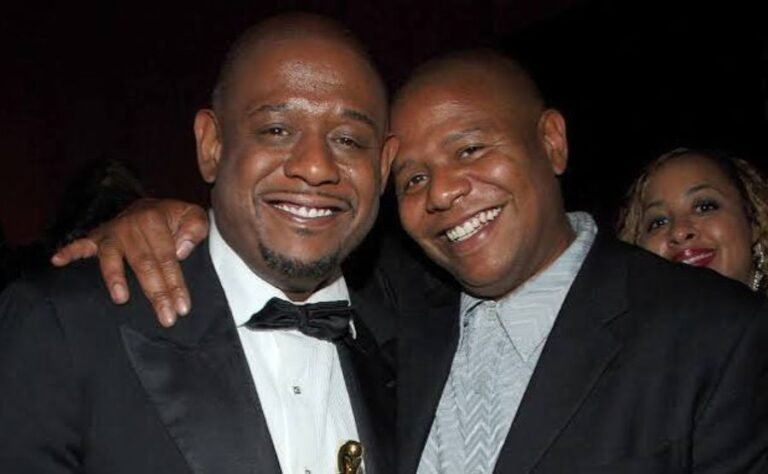
Melih Nicholas: The Untold Story of Harold Nicholas’s Son Who Died at 45
Here’s what the internet will tell you about Melih Nicholas: he was the quiet, private son of a legendary dancer. He honored his family’s legacy through dignified anonymity. He was a symbol of resilience. He chose personal dignity over the bright lights of Hollywood.
Here’s what the internet is actually doing: painting a portrait of a person it knows nothing about, in the flattering light of a story it wishes were true.
Melih Nicholas died at 45 in his Los Angeles home. We don’t know why. We barely know how he lived. And almost everything the content farms have written about him — the “French elegance” he absorbed from his mother, the graceful navigation of legacy, the “rich, multicultural upbringing shaped by the arts” — is decoration applied over a silhouette.
That silhouette is real and worth examining. The decoration is not.
Quick Bio
| Detail | Info |
| Full Name | Melih C. Nicholas |
| Born | October 29, 1958, Paris, France |
| Died | November 5, 2003, Los Angeles, California (age 45) |
| Father | Harold Nicholas — legendary tap dancer, Nicholas Brothers |
| Mother | Elyanne Patronne (Harold’s second wife) |
| Half-Sister | Harolyn Suzanne Nicholas (b. 1943, d. 2003) — daughter of Harold Nicholas and Dorothy Dandridge; born with severe brain damage |
| Education | Fairfax High School, Los Angeles |
| Marriage | Janice F. Stout, June 30, 1989, Clark County, Nevada |
| Public Career | None documented |
| Cause of Death | Not publicly disclosed |
| Father’s Death | July 3, 2000 — Melih outlived Harold by three years |
Paris, 1958
Harold Nicholas had been in France for roughly nine years by the time Melih was born. Let’s establish why. Hollywood — racist, contractually suffocating, Jim Crow in a tuxedo — had effectively run the Nicholas Brothers out by 1951. They were geniuses. Fred Astaire called their “Jumpin’ Jive” sequence in Stormy Weather the greatest movie musical number he had ever seen. And still, their roles were “specialty acts” — sequences crafted to be excised from prints shipped to the American South without the theatre ever needing to admit they’d been there. Harold and his brother Fayard eventually danced with a white star, Gene Kelly, in The Pirate (1948). That was the last film they made together. By the following year, Harold’s marriage to Dorothy Dandridge had collapsed and he left for Paris to work solo.
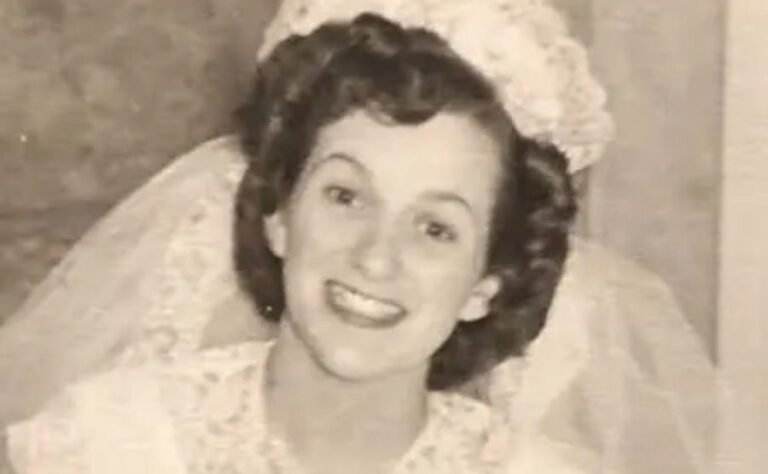
So when Melih arrived in October 1958, he entered a world defined by his father’s self-imposed European exile. Harold would stay in France until roughly the mid-1960s, working as a singer and dancer, free — or freer, at least — from the specific American configurations of racism that had constrained him. Melih’s mother was Elyanne Patronne, a French woman who was Harold’s second wife. That marriage also ended in divorce.
What did childhood look like for Melih in those years? We have no account of it. None. The gap between his 1958 Paris birth and his enrollment at Fairfax High School in Los Angeles is a blank. The content mills fill it with warm adjectives. They have no basis to do so.
See also “Rodney Keith Jones: The Producer Who Challenged Diddy Before the World Was Watching“
The Man Behind the Legend — and What That Meant for His Children
Think about Harold Nicholas’s actual life, not the triumphant Wikipedia summary of it. Yes: Kennedy Center Honors in 1991. Hollywood Walk of Fame. Fred Astaire saying what he said. Gregory Hines wrote that casting someone to play Harold would require computer-generated performances because no human dancer could replicate him. The man was that good.
But Harold Nicholas also left his first wife and brain-damaged daughter in Los Angeles, eventually stopping financial support. He married and divorced again. His son from that second marriage was born an ocean away, in a country where Harold had retreated after American racism made his career untenable. Harold then married a third time and that is the wife — Rigmor Newman Nicholas — who was listed beside him in every obituary and who survived him. The third wife, who stayed.
I am not trying to villainize Harold. His circumstances were genuinely brutal. He was a Black performer who conquered Hollywood in the segregation era and found that Hollywood would not let him be anything other than a “specialty act.” The racism that pushed him to Paris was real and grinding. But his children bore costs that his legacy doesn’t typically include in the accounting.
Harolyn Suzanne Nicholas lived in a state institution in Camarillo, California for the last stretch of her life. Dorothy Dandridge, who had spent years fighting for Harolyn’s care, died in 1965 — broke, at 42, from an antidepressant overdose. Harold, meanwhile, was in Europe. He eventually returned to the United States for the later revival of his career and reputation.
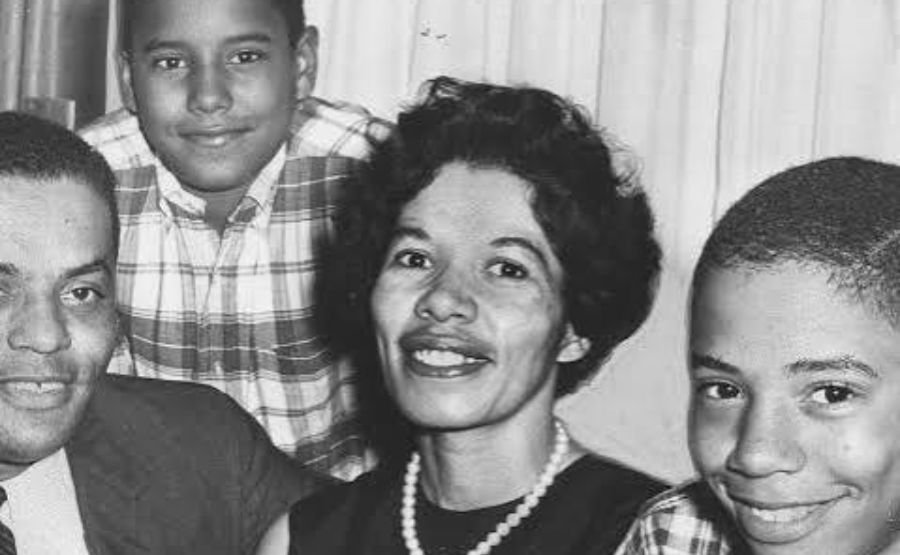
And Melih? When Harold returned to America, Melih came with him — or came separately, at some point — and ended up at Fairfax High School in Los Angeles, a school notable for producing a quietly remarkable roster of alumni across the arts and entertainment.
What We Know About His Life, Straight
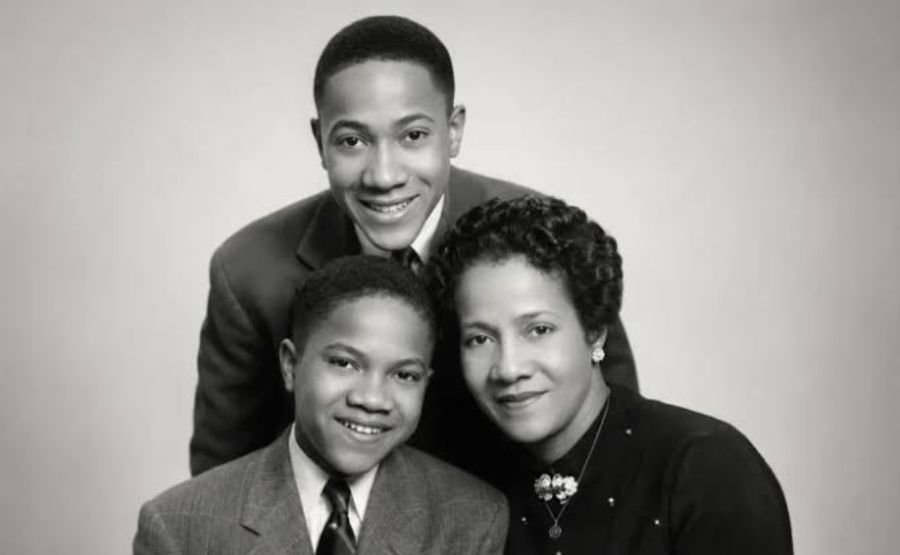
Let me just be direct about this. The verifiable facts about Melih Nicholas’s adult life fit into a short paragraph.
He attended Fairfax High. He married Janice F. Stout in a Las Vegas marriage on June 30, 1989 — Clark County, Nevada, which means Las Vegas, which means they either eloped or had the kind of low-key ceremony that doesn’t generate press releases. He lived in Los Angeles. He chose not to pursue a career in showbiz. He died at home on November 5, 2003, at 45. The cause was not disclosed publicly.
That’s it. The rest — his personality, his relationship with his father, whether he was close to Harolyn, what he thought of the Nicholas Brothers legacy, whether he ever saw the Stormy Weather sequence that made Fred Astaire’s jaw drop — we don’t know. Nobody who knew him has spoken on record. No interview exists. No profile was written while he lived.
The Year 2003
Here is the thing that the biography mills don’t pause on, but probably should.
Harold Nicholas died July 3, 2000. By 2003, within less than three years of losing his father, Melih Nicholas was dead. And in the same year — also 2003 — Harolyn Suzanne Nicholas, his half-sister, died too.
Think about that. Harold had two children. A daughter born in 1943 with severe brain damage, who spent her life in institutional care and outlived her mother by 38 years. A son born in 1958 in Paris, who came to Los Angeles, built a private life, and died young. Both of them were gone by the time 2003 ended.
The year 2003 erased both of Harold Nicholas’s children from the world. Three years earlier, it had taken Harold himself. His third wife Rigmor survived. His brother Fayard would follow in 2006. By the end of that half-decade, the Nicholas family had essentially concluded its Hollywood-era chapter.
This is not a coincidence with a meaning. I’m not implying anything conspiratorial or tragic beyond what facts suggest. But let’s be honest: the obituaries and legacy pieces about Harold don’t dwell on this. The “Kennedy Center Honors, Hollywood Walk of Fame, greatest dancers who ever lived” narrative doesn’t make room for the 2003 double-erasure of Harold’s bloodline.
The Content Farm Version of Melih Nicholas
I want to spend a moment on what has been written about Melih, because it illuminates something worth naming.
Articles about him describe a man who “handled his unique lineage with incredible grace,” who “honored his ancestors while staying true to his inner identity,” who “grew up between Paris and the United States” absorbing “French elegance and refinement” from his mother. One article calls him “a symbol of resilience.” Another describes him as “a bridge between eras — between Black artistic legacy and modern complexity.”
All of this is fabricated characterization. Not even carefully fabricated. The sources include one 2000 Variety obituary and genealogical databases. You cannot derive “incredible grace” and “French elegance” from a Find a Grave entry. You cannot call someone “a symbol of resilience” on the basis of knowing their death date. You can’t know how a man who left no trace of his life “felt” about the burden of his family’s history.
The private individual as a canvas is what’s taking place here, and it’s a trend I’ve seen develop over the last few years in the creation of online content. When someone leaves no self-documentation, the algorithm-driven content mills treat that as an invitation rather than a limit. They write the person they wish had existed in the spaces around the verified facts. It’s not malicious. It might not even be conscious. But it produces something false.
Melih Nicholas deserves better than that — not because he was Harold’s son, but because he was a person.
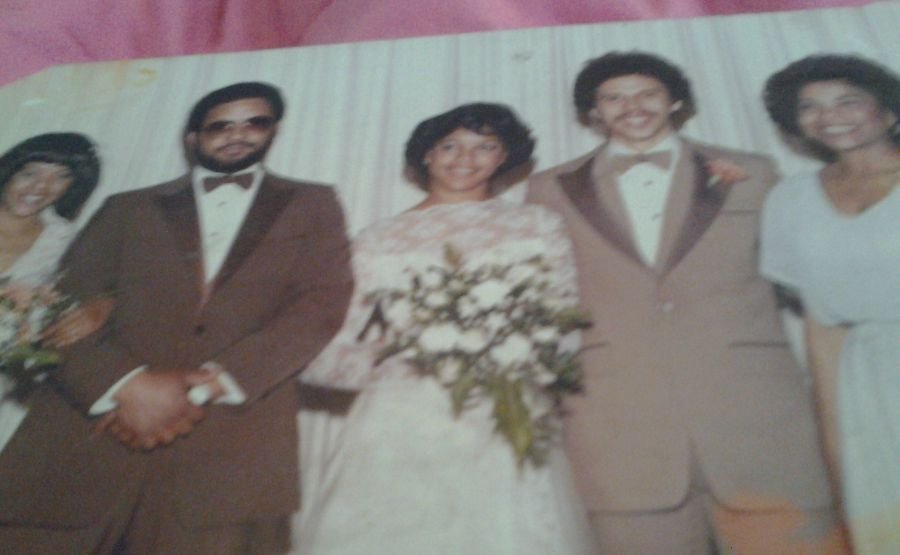
The Name Itself
Melih. It’s a Turkish name. Not French, not English, not a name that announces a connection to the Nicholas Brothers legacy or the Harlem Renaissance or Hollywood. Turkish. Meaning “beautiful” or “handsome,” depending on which etymology you consult.
Why? We don’t know. His mother Elyanne Patronne was French. His father Harold was African American from Winston-Salem. Neither background immediately suggests “Melih” as a naming choice. Maybe Elyanne had a connection to Turkish culture. Maybe Harold had toured in Turkey during his European years. Maybe the name meant something private and specific that neither of them ever explained publicly. We don’t know.
I’m raising this not as a mystery to be solved but as a reminder that people are specific. Melih Nicholas was specific. He wasn’t a symbol or a canvas or a bridge between eras. He was a person with a Turkish name who grew up in Paris, moved to Los Angeles, attended a high school that produced music industry legends, married someone named Janice in Las Vegas, and died at home at 45 without leaving a public record of what any of it meant to him.
That specificity deserves more respect than the content mills are giving it.
Final Words
Here’s what I think, for whatever it’s worth.
Melih Nicholas’s story is genuinely poignant, but not in the ways the biography articles keep insisting on. The poignancy isn’t “graceful navigation of a legendary legacy.” It’s simpler and harder than that. He was born in Paris to a man who had fled American racism, came of age in Los Angeles in the shadow of one of the most celebrated dance acts in history, built a private life that left no documented record, and died young. His half-sister — the daughter his father had abandoned along with Dorothy Dandridge — died the same year.
What we know about Harold Nicholas is rich and documented and extraordinary. What we know about Melih could fit on a business card. That gap isn’t an indictment of Melih. It’s the natural result of a man who, for whatever reason, did not seek or achieve public documentation of his existence.
And you know what? That’s fine. Not every life is a story for strangers. Some lives happen entirely between people who know each other and are told in rooms we’ll never have access to. The hunger to fill those rooms with invented adjectives says more about the content mills than it does about Melih.
He was Harold’s son. He was Harolyn’s half-brother. He was Elyanne Patronne’s child. He was Janice Stout’s husband. He attended Fairfax High. He lived in Los Angeles. He died at 45.
The rest is silence — not symbolism, not resilience, not a bridge between eras. Silence.
FAQs
1. Who was Melih Nicholas?
He was the son of Harold Nicholas — the legendary tap dancer who, with his brother Fayard, made up the Nicholas Brothers. Melih was born to Harold and his second wife, Elyanne Patronne, in Paris in 1958. He didn’t pursue an entertainment career and spent his adult life in Los Angeles, away from the spotlight.
2. How did Melih Nicholas die?
He died on November 5, 2003, at his home in Los Angeles at age 45. The cause of death has not been publicly disclosed. No death announcement, no detailed obituary, no family statement on record. We simply don’t know.
3. Was Melih Nicholas related to Dorothy Dandridge?
He was related by one degree: his father Harold Nicholas was Dorothy Dandridge’s first husband. Their daughter together, Harolyn Suzanne Nicholas, was Melih’s half-sister. Melih was not Dorothy Dandridge’s biological child — his mother was Elyanne Patronne, Harold’s second wife.
4. Why was Melih born in Paris?
Harold Nicholas had moved to Paris in the late 1940s after his Hollywood career stalled due to racism and his first marriage to Dorothy Dandridge collapsed. He spent roughly 15 years in France working as a solo entertainer. Melih was born during that period, in 1958.
5. Did Melih Nicholas have a career in entertainment?
No verified career of any kind — entertainment or otherwise — appears in public records. He did not follow his father’s footsteps into film, dance, stage, or music. What he actually did for a living is not documented anywhere I’ve found.
6. When did Melih Nicholas’s father Harold die?
Harold Nicholas died on July 3, 2000, of heart failure in New York, at age 79. Melih outlived him by just over three years.
7. Did Melih Nicholas have siblings?
His half-sister was Harolyn Suzanne Nicholas, born in 1943, the daughter of Harold and Dorothy Dandridge. Harolyn was born with severe brain damage (cerebral anoxia) and spent much of her life in institutional care. She and Melih both died in 2003 — the same year.
8. Was Melih Nicholas married?
Yes. Records show he married Janice F. Stout on June 30, 1989, in Clark County, Nevada. That’s Las Vegas, for context.
9. Where did Melih Nicholas go to school?
He attended Fairfax High School in Los Angeles — a school that over the decades has produced musicians, entertainers, and notable alumni in many fields.
10. What is Melih Nicholas’s net worth?
Unknown. Not documented. The figures you’ll see on content farm sites — anything specific — are invented.
11. Why is there so little information about Melih Nicholas?
Since he didn’t leave any public records and was a private person. He gave no interviews, published nothing, and appears in the historical documentation only through genealogy records, his father’s obituary, and a Find a Grave memorial. The internet’s “biography” pages about him are constructed from those bare facts plus invented characterization. He was a real, specific person. He just didn’t document himself for strangers, and the content industry has filled that silence with noise.
Beyond the headlines, discover what’s worth knowing — TheTrendist.