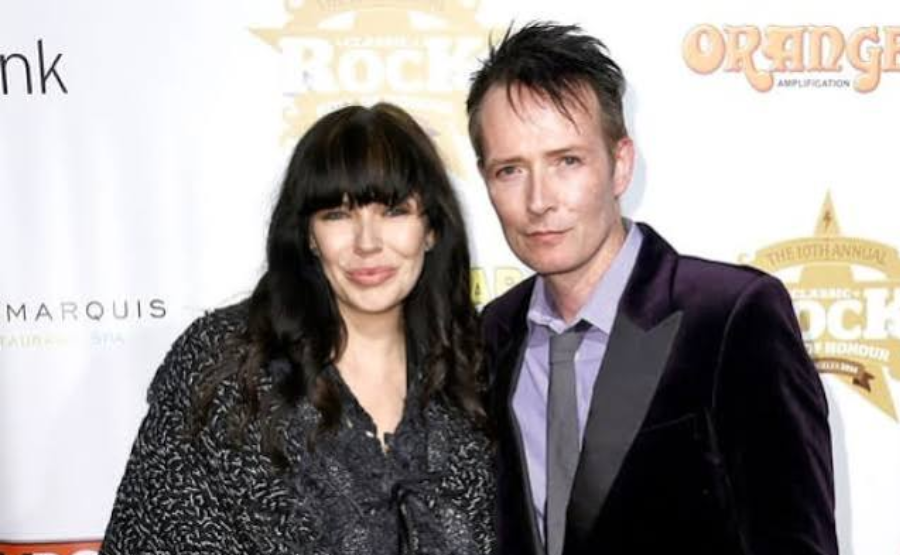
Weiland Girlfriend: The Three Women Who Loved Scott Weiland and His Tragic Story
Nobody talks about Janina Castaneda anymore. And that’s the tell. That’s where this whole story actually starts — not with the more famous, more photographed, more written-about women in Scott Weiland’s life. It starts with a quiet woman who inspired two Stone Temple Pilots songs, watched her husband become one of the most electric frontmen of his generation, and left before he completely came apart. She was the first. She saw it first.
The story of Scott Weiland’s romantic life is not the story of a tragic rock star and his women. It’s the story of a man who kept finding love, kept meaning every word when he said it, and kept destroying the thing anyway. Three marriages. Three different versions of “she’s the one.” One through line.
Quick Bio
| Detail | Info |
| Full name | Scott Richard Weiland (born Scott Richard Kline) |
| Born | October 27, 1967 — San Jose, California |
| Died | Bloomington, Minnesota, December 3, 2015 (age 48) |
| Cause of death | Accidental overdose: cocaine, alcohol, MDA |
| First wife | Janina Castaneda (married September 17, 1994 — divorced 2000) |
| Second wife | Mary Forsberg (married May 20, 2000 — divorced 2007) |
| Third wife / widow | Jamie Wachtel (married June 22, 2013 — until his death) |
| Children | Noah Weiland (b. 2000), Lucy Weiland (b. 2002) — both with Mary |
| Estate value at death | ~$2 million |
| Autobiography | Not For Sale & Not Dead (Scribner, 2011) |
The One Everyone Forgets
September 17, 1994. Stone Temple Pilots had just become one of the biggest rock bands in America. Purple was a monster. They were selling out arenas. Scott Weiland was on every magazine cover, that black mascara and those cheekbones doing exactly what they were supposed to do. And on that specific date — right at the top — he married Janina Castaneda.
He told Rolling Stone the following year: he loved his wife more than anything in the world. He loved being married. Straight up. No hedging.
She had already been in two STP songs by then. “Still Remains” was the love song he wrote for her. “Lounge Fly” was the apology song. Which tells you something, actually — the apology song existed before the marriage certificate had time to settle. That particular dynamic was already in place.
They lasted until 2000. Six years of the most chaotic period in rock history, and Janina Castaneda lived inside it. She watched her husband be arrested for buying crack cocaine in 1995. She watched tours cancelled. She watched cycles of rehab and relapse so predictable they had their own rhythm. And then she left.
Here’s the detail people keep getting wrong. When “Sour Girl” came out in 1999 — STP’s biggest single, their only Billboard Hot 100 entry — everyone assumed it was about Mary Forsberg, the model Scott was publicly with by then. Weiland himself corrected this in his 2011 autobiography. The song was about Janina. About her departure. The lyric is right there in the open: she was a happy girl the day she left him.
Think about that. He’s performing a song about his first wife walking away while the audience is convinced it’s about his new girlfriend. Nobody caught it for years.
See also “Is Bobby Wagner Married? The Truth About His Wife, Girlfriend, and Two Kids“
The Underage Driver’s Passenger
Let me back up, because how Scott Weiland met Mary Forsberg is something the mainstream coverage usually skates past quickly.
Mary had legally emancipated herself as a minor so she could travel for modeling work. Scott was assigned to drive her to appointments when he was still essentially nobody — before STP broke through. She was a teenager. He was her driver. The power dynamic there is worth a moment of thought.
They ended up together. They married May 20, 2000 — the same year his divorce from Janina was apparently finalized, and some timeline accounts suggest the overlap wasn’t strictly tidy. Noah was born in 2000. Lucy in 2002. Both parents were fighting addiction. Mary was later diagnosed with bipolar disorder, which she’s spoken about extensively. She wrote Fall to Pieces in 2009 — a memoir about that entire period.
They divorced in 2007. And this is where it gets genuinely uncomfortable.
In her letter to Rolling Stone following Scott’s passing, Mary stated that during her fifteen years as a father, the children only sometimes saw their father. She says he was a paranoid man who couldn’t remember his own lyrics toward the end. She says he called her late at night, crying, unable to separate himself from bad choices. And she says that when he married Jamie Wachtel in 2013, the children were not invited to the ceremony. “When he remarried,” she wrote, “the children were replaced.”
Some people pushed back on that letter — argued she was settling old scores in the immediate aftermath of his death. Others said she was the only one willing to tell the truth about what addiction looks like from the inside of a family. Both things are probably true. What isn’t in dispute: Scott missed child support payments. The kids barely saw him. He died in Minnesota while they were still teenagers.
“The Greatest Thing That’s Happened to Me”
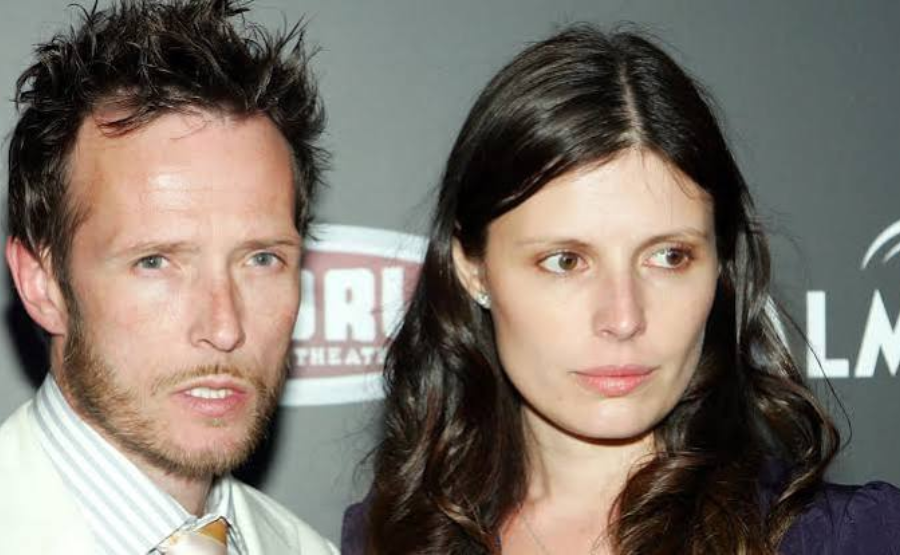
By November 2012, Scott Weiland was talking to Rolling Stone again. He was engaged. Her name was Jamie Wachtel, a photographer. He’d met her in 2011 at the music video shoot for his Christmas album — a Christmas album, of all the things. He said he looked at her across the set and felt certain he was going to fall in love.
She’s lovely, smart, and passionate. She loves my kids. That was him, verbatim.
They married June 22, 2013, at their home in Los Angeles. His third. He was 45. He had just been formally fired from Stone Temple Pilots — kicked out of the band he co-founded — and he was describing his new marriage as some kind of rescue.
Here’s what the quick-take articles miss. The prenuptial agreement between Scott and Jamie stipulated he would deposit two thousand dollars per month into a joint account. A small, concrete, very measurable act of financial commitment. By the time he died in December 2015 — roughly two and a half years into the marriage — he had made exactly two deposits.
Jamie filed a creditor’s claim against his estate. She wanted $64,406. A judge denied it in 2019. She received nothing, despite being his legal widow. The estate itself was worth around $2 million, and Mary had filed paperwork to be named executor using a 2007 will Scott signed the same year he and Mary divorced — a will that predated Jamie entirely. The widow and the ex-wife, fighting over an estate neither of them had ever actually seen secured.
June 2015
I keep coming back to this one detail, and maybe I’m being uncharitable — but probably not.
In June 2015, six months before he died, Scott Weiland told interviewers he had been off drugs for thirteen years. Clear, direct, specific.
December 2015: the Hennepin County Medical Examiner ruled his death an accidental overdose. The toxicology report found cocaine, alcohol, and MDA in his system. His body also showed signs of cardiovascular disease consistent with long-term substance abuse. Jamie has objected to the wording, claiming that Scott’s death was caused by the cumulative physical damage of decades of drug usage rather than a single, high dose. There’s a real distinction there, and she’s not wrong to make it.
However, six months before that toxicological report, I was clean for thirteen years. It takes a lot to keep that gap in your mind.
She also disclosed after his death that Scott had been experiencing paranoia and manic episodes in his final months. Bipolar disorder, she said. The same diagnosis that had followed Mary Forsberg through her own darkest years. It ran through everything.
What the Relationships Actually Tell You
Let’s be honest about the shape of this story. Three women. Three completely genuine declarations of love. Every single one of them — Janina, Mary, Jamie — clearly mattered to him. And every single time, the addiction eventually took precedence.
He was also, by every available account, a profoundly unreliable father. Mary’s letter is uncomfortable specifically because it isn’t angry in tone — it’s depleted. She’s not trying to destroy his legacy. She’s trying to explain, patiently, what loving someone through that looks like from the receiving end for fifteen years.
In 2011, he published an autobiography titled Not Dead & Not For Sale. He died four years later. There’s not much to add to that irony. It just sits there.

The Songs Are the Real Record
If you want to understand Scott Weiland’s relationships better than any interview will tell you, listen in order. “Still Remains” is about devotion that feels permanent. “Lounge Fly” is about failing the person who loves you. “Sour Girl” is about watching someone leave and understanding that the leaving makes them lighter. And that acoustic guitar, that quiet voice on the recording — it doesn’t sound like anger. It sounds like recognition.
He kept writing the same song. Different woman, different context, same basic shape: I loved her, I couldn’t stay, she was better off when I was gone.
Final Words
Scott Weiland was not a villain in his relationships and he wasn’t a passive victim of them. He was someone who loved with real force and could not, in the end, choose the people he loved over the addiction when it came to that decision. That’s not a unique story. What’s unusual is that he left such a specific, contradictory, well-documented public record — the interviews, the songs, the autobiography, the legal filings, the letter from his ex-wife — that you can actually trace the pattern clearly.
Janina Castaneda had the clearest eyes. She left while she still could. Mary Forsberg stayed long enough to have two kids and a memoir and an open letter that will outlast most of what’s been written about him. Jamie Wachtel fell in love with him after all of it, got two and a half years, and left a courthouse in 2019 with nothing.
None of them deserved the particular grief he brought. All of them, clearly, loved him despite knowing better. And the music they helped generate — consciously or otherwise — is still undeniably great.
He meant every word he ever said about every woman in his life. The tragedy isn’t that he was lying. The tragedy is that he wasn’t.
FAQs
1. Who was Scott Weiland’s girlfriend?
He had three significant relationships that turned into marriages. Janina Castaneda (1994–2000), Mary Forsberg (2000–2007), and photographer Jamie Wachtel (2013–his death in 2015). Each had a girlfriend prior to their official marriage. No other confirmed significant relationship exists in the public record.
2. Did Scott Weiland marry Jamie Wachtel?
Indeed. On June 22, 2013, they tied the knot in their Los Angeles residence. She was his legal wife when he died on December 3, 2015, making her his widow.
3. Who was Scott Weiland’s second wife?
Mary Forsberg, a model. Married May 2000, divorced 2007. Mother of Noah and Lucy Weiland. She wrote the memoir Fall to Pieces in 2009 and the Rolling Stone open letter after his death — probably the most honest and painful thing ever published about him.
4. Did Scott Weiland have children?
Two — Noah (born 2000) and Lucy (born 2002), both with Mary Forsberg. No children with Janina Castaneda or Jamie Wachtel.
5. What was Mary Forsberg’s open letter about?
Published in Rolling Stone shortly after Scott’s death, titled “Don’t Glorify This Tragedy,” it described what addiction looks like from the family side. She said the kids saw Scott a handful of times across fifteen years. She said he missed child support. She said the children weren’t invited to his 2013 wedding. She asked people to stop romanticizing rock star self-destruction. Some found it cold. Most found it necessary.
6. How did Scott Weiland meet Jamie Wachtel?
At the 2011 music video shoot for his Christmas album. He told Rolling Stone he looked at her and felt he was going to fall in love. They were engaged by November 2012. Married June 2013. He described her as the greatest thing that had happened to him in years.
7. Who was “Sour Girl” really about?
Janina Castaneda — his first wife. Not Mary Forsberg, as most people assumed given the song appeared on the 1999 album No. 4 when he was already involved with Mary. Weiland clarified this himself in his 2011 autobiography: the song was written about his first marriage collapsing.
8. Did Jamie Wachtel receive money from Scott Weiland’s estate?
No. She filed a creditor’s claim for about $64,000, arguing Scott had agreed in their prenuptial agreement to deposit $2,000/month into a joint account and made only two payments over their marriage. A court denied her claim in 2019. The estate was worth around $2 million.
9. What was the formal cause of death for Scott Weiland?
Accidental overdose. The medical examiner found cocaine, alcohol, and MDA in his system. In Bloomington, Minnesota, he was discovered in his tour van. His cardiovascular health had also been deteriorating. Jamie Wachtel maintains the word “overdose” is misleading and that cumulative long-term drug damage was the more accurate framing.
10. Had Scott Weiland been claiming sobriety before he died?
Yes. In June 2015 — six months before his death — he publicly stated he had been drug-free for thirteen years. The toxicology report contradicted this directly.
11. In hindsight, was the title of Scott Weiland’s autobiography ironic?
He published Not Dead & Not For Sale in 2011. He died in 2015. Make of that what you will.
Beyond the headlines, discover what’s worth knowing — TheTrendist.
One Comment