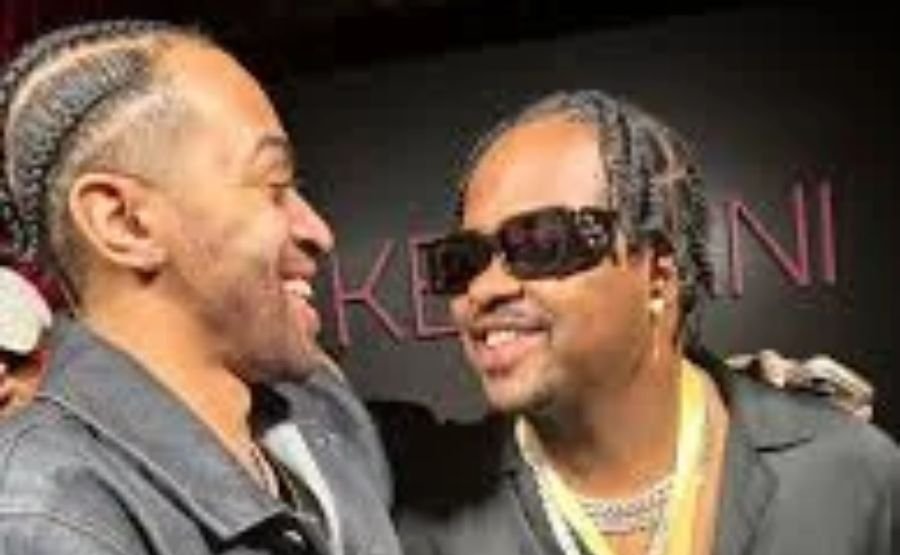
Rodney Keith Jones: The Producer Who Challenged Diddy Before the World Was Watching
Here’s what the coverage got wrong from the very beginning: when Rodney Jones Jr. filed that 73-page federal lawsuit against Sean Combs in February 2024, nobody in the mainstream press treated it as the opening shot it turned out to be. They treated it like a money grab. A disgruntled producer looking for a payday. Diddy’s lawyers called it “pure fiction.” The motion to dismiss called it “countless tall tales, shameless celebrity namedrops.” Major publications covered it with raised eyebrows, not alarm.
Seven months later, federal agents raided Combs’s homes. A month after that, he was in handcuffs at JFK. And the lawsuit Rodney Jones filed — the one everyone dismissed — turned out to describe, in broad strokes, the same pattern of alleged conduct that a federal grand jury had independently indicted Combs on.
Let’s just sit with that for a second before we get into anything else.
Quick Bio
| Category | Detail |
| Full Name | Rodney Jones Jr. |
| Stage Name | Lil Rod |
| Born | Approx. 1985/1986, Chicago, Illinois |
| Background | West Side Chicago; gospel music roots |
| Known Industry Credits | The Love Album: Off the Grid (Diddy, 2023); T-Pain; Jack Harlow |
| Lawsuit Filed | February 26, 2024, U.S. Federal Court, New York |
| Lawsuit Amount | $30 million |
| Complaint Length | 73 pages |
| Core Allegations | Sexual assault, sex trafficking, RICO enterprise, forced drug use, firearms |
| Co-Defendants Named | Justin Dior Combs, Ethiopia Habtemariam, Lucian Grainge, Cuba Gooding Jr. |
| Separate Lawsuit | Named Jay-Z (later withdrawn) |
| March 2025 Ruling | 5 of 9 claims dismissed; sexual assault, TVPA, premises liability survive |
| Post-Lawsuit Status | In hiding, self-described broke, blackballed from industry |
Gospel Music to Harlow Sessions: The Career Nobody Covered
Before the lawsuit, most of the internet had never heard of Rodney “Lil Rod” Jones. After February 2024, the pre-lawsuit phase was mostly ignored by the media, which portrayed him as someone who appeared expressly to charge Diddy.
He didn’t.
He’s from Chicago’s West Side. He came up in gospel music — a detail the Chicago Sun-Times flagged and virtually every other outlet ignored. Gospel is a serious apprenticeship. It’s not background noise. It teaches you arrangement, dynamics, live performance pressure, and working with vocalists who expect technical precision from their musicians. You don’t come out of Chicago gospel production being bad at your job.
He transitioned from gospel to the wider music business, gaining production credits with T-Pain and Jack Harlow, who are not well-known to casual listeners but are also not unimportant. Harlow, in particular, has been one of the more commercially successful rappers of the early 2020s. You have established professional credibility that precedes all of this if you are able to secure production employment in that circle.
In September 2022, he was hired by Sean Combs to work on what would become The Love Album: Off the Grid — Diddy’s first studio album since 2006, a Grammy-nominated project. Not a mixtape. Not a loosie drop. A full album on a major label that got a Grammy nomination in 2024. Production credits are attributed to Rodney Jones. That is undeniable.
The production credits on the completed, Grammy-nominated album were therefore clearly visible when Diddy’s camp dismissed the case as a fraud by someone attempting to get paid for work he didn’t accomplish.
See also “SosMula Age: How Old Is the City Morgue Star Really? The 1988 vs. 1994 Mystery“
The Lawsuit Nobody Took Seriously
February 26, 2024. That’s the date Jones’s 73-page federal complaint hit the docket in the Southern District of New York. Read it against everything that came out later and it maps onto the criminal indictment with uncomfortable specificity.
The complaint alleged a RICO enterprise. It alleged sexual assault on multiple occasions — Jones saying he woke up “naked, dizzy, and confused” in bed with Combs and sex workers. It alleged he was pressured to procure sex workers, including allegations involving minors. It alleged weapons possession. It alleged NDAs used to control people inside Diddy’s orbit. It described the “freak offs” that would later show up as central to the federal case, though Jones used different language.
Diddy’s response was immediate and aggressive. His lawyer Shawn Holley called Jones “nothing more than a liar who filed a $30 million lawsuit shamelessly looking for an undeserved payday.” The motion to dismiss — filed in August 2024 — called the complaint Jones’s “third attempt to dress up a run-of-the-mill commercial disagreement as a salacious RICO conspiracy” and described it as packed with “irrelevant images” and “blatant falsehoods.”
Strong language. The kind of language you use when you’re confident you’ll win.
Diddy’s homes were raided in March 2024. Three months following the filing of the case. He was arrested in September 2024. The arrest came nine months after Rodney Jones’s lawsuit dropped, and the federal indictment described conduct that bore a clear family resemblance to what Jones had documented in his civil complaint.
Nobody owes Jones vindication just because the criminal case against Diddy moved forward. Civil and criminal are different standards. But the timing tells a story that the original “money grab” framing doesn’t hold.
The Rolling Stone Interview: When Reality Set In
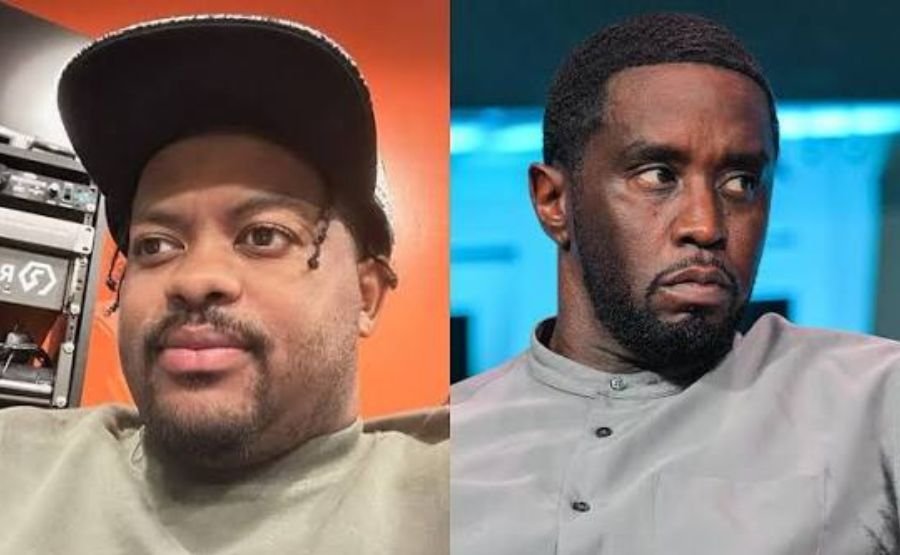
August 2024. Six months of silence since the lawsuit. Then the Rolling Stone piece.
Jones broke his silence and what came out wasn’t triumphant. It was frightening. He said he was broke — “I’m broke. I have no source of income right now. He claimed to be hiding. “I’m trying to figure out how the bills are going to be paid every month.” Where did he not say? In order to get out of the house, he was disguised. Three therapists treated him. He admitted to Rolling Stone that he was considering suicide.
“I got threats. I’ve never had so much hitting me at once,” he said.
He wasn’t describing someone who’d filed a lawsuit and was now cashing in on media attention. He was describing someone who’d poked the most powerful man in hip-hop and was now living with the consequences of that in real time.
He called Combs “a gatekeeper in the music industry” and made a statement that I think is the most important line in any of his interviews: “In this industry, to be successful, you have to have worked with someone like him or Jay-Z, Dr. Dre.” That’s not hyperbole. That’s how the major label ecosystem has worked for thirty years. You need a cosign from the top to get distribution, radio play, label backing. The people at the top control access. And if one of those people decides you’re a problem, the machine works against you.
T-Pain, to his considerable credit, stood publicly by Jones and performed with him at the Hollywood Bowl in June 2024. That’s one relationship that survived. Jones said most others hadn’t.
The Jay-Z Chapter and Why It Matters
Here’s the thing that muddied the waters in a real way: Jones’s lawyer, Tyrone Blackburn, filed a separate action that named Jay-Z.
Shawn Carter was accused in a related lawsuit of participating in the alleged enterprise. He denied it categorically and with considerable force. That lawsuit was subsequently withdrawn. And the judge in Jones’s primary case against Diddy explicitly warned Blackburn that his filings had not been “up to par” — in one example, noting that Blackburn seemed not to understand that Diddy was presumed innocent in the separate grand jury context.
That’s a judicial reprimand. That’s a real thing. And it handed Diddy’s team something to point at every time the lawsuit came up — “even the judge thinks his attorney doesn’t know what he’s doing.”
The Jay-Z accusation being withdrawn further complicated the public perception of Jones’s legal strategy. Critics said it looked like a celebrity name-drop dragnet. Supporters said that naming powerful industry figures is exactly what you do when alleging an enterprise.
You can hold both things at once. The Blackburn missteps are documented facts. And the core sexual assault and trafficking claims against Combs survived the motion to dismiss.
The judge’s actual decision in March 2025 was more complex than the press announcements from both parties indicated. Five of nine claims were dismissed — the RICO count, emotional distress, breach of contract, and the TVPA claim against Combs Global specifically. But the sexual assault claims stayed alive. The premises liability claims stayed alive. The TVPA violations against Combs personally and his chief of staff Kristina Khorram stayed alive.
That’s not a total dismissal. That’s the most serious material advancing toward discovery.
The Structural Problem Nobody Wants to Name
In his interview with Rolling Stone, Jones made a statement that ought to have received more attention.
He described Diddy as “more executive than musician” — not the creative force, but the power structure that surrounded the creative process. Everything flowed through Combs’s control. The NDAs. The staffers. The environment where you couldn’t be certain who had signed what. A Thanksgiving dinner where, he alleged, the guests “were saying very little” and Jones assumed they were all under nondisclosure agreements.
Think about what that describes. An entire social and professional world organized around a single person’s ability to control information. Everyone in the room potentially signed away their right to talk about what they saw. The framing of the lawsuit — as a RICO enterprise, as an organized system rather than individual misconduct — isn’t legally unusual in cases involving alleged organized patterns of behavior. The judge found the RICO framing too loose in its current form and dismissed that count. But the underlying description of a controlled environment where access to the industry depended on acquiescence to that environment — that’s the structural claim that doesn’t go away when you dismiss a legal count.
“To be successful, you have to have worked with someone like him or Jay-Z, Dr. Dre.” The diagnostic, not the charge, is contained in that sentence. The accusation is what allegedly happened inside the gatekeeper’s orbit. The diagnosis is why someone in Jones’s position couldn’t simply leave, couldn’t simply say no, couldn’t simply find another path — because in the major label industry there was no alternate route to the same location in the 2010s and early 2020s.
Where Things Stand in 2026
Diddy is awaiting trial on federal sex trafficking charges. His federal criminal case has moved through pretrial motions with an expected trial date of May 2025. As of October 2026, the case is in later stages of the legal process, with Combs having spent over a year in detention.
Jones’s civil case — the surviving claims — is in discovery or approaching it. The sexual assault counts against Combs personally are what remain. The attorney conduct issues are a live concern. Blackburn is still on the case.
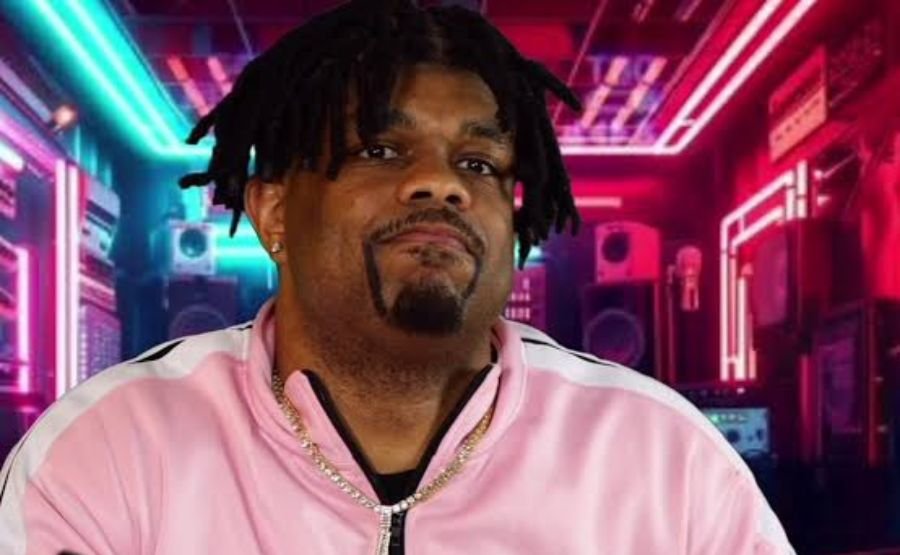
Jones himself has not publicly surfaced in any major media outlet since the Rolling Stone piece. Whether he’s still in hiding, whether his financial situation has stabilized, whether T-Pain’s public backing translated into anything professionally — none of that is documented in any source from the past year.
He was 38 when he filed the lawsuit. He’s in his early forties now. His career, as he himself described it after the lawsuit, was effectively in limbo — nobody in the industry wanted to come near him while the case was active. The criminal indictment of Combs doesn’t automatically rehabilitate Jones professionally. Industry relationships don’t work that way. The people who distanced themselves from him aren’t going to send a formal apology.
The man who was first. Who filed before the raids, before the indictment, before the avalanche of civil suits that followed. He did not get the treatment afforded to first movers.
Final Words
Rodney Jones filed the first public lawsuit against Sean Combs. He was broke, in hiding, wearing disguises, and telling a magazine he was having suicidal thoughts six months later. His lawyer got reprimanded by a federal judge. His Jay-Z complaint was withdrawn. Five of his nine claims were dismissed.
And some of the most serious allegations he made in February 2024 are still alive in federal court while Diddy sits in detention awaiting trial on a criminal indictment that describes, in federal law enforcement language, a pattern of conduct that echoes what Jones put in his complaint.
None of that proves Jones’s civil case will succeed. Discovery could reveal problems with his claims. A trial could go any direction. The attorney conduct issues are real and could matter.
But the original dismissal — “money grab,” “pure fiction,” “shameless celebrity namedrops” — aged poorly. That’s worth stating plainly. A man from Chicago’s gospel scene with real production credits on a Grammy-nominated album was the first person in public to say what the federal government later said. For it, he paid a heavy price. He described that price in honest, frightening terms in a Rolling Stone interview that most people have already forgotten.
That initial action cost him something, regardless of the outcome of the civil case. He said so himself. And the industry that called him a liar hasn’t made it right.
FAQs
1. Who is Rodney “Lil Rod” Jones?
A music producer and musician from Chicago’s West Side, born around 1985/1986. He came up in Chicago’s gospel music community before transitioning into hip-hop production, accumulating credits with T-Pain and Jack Harlow before being hired by Diddy in September 2022 to work on The Love Album: Off the Grid (2023). He became widely known in February 2024 when he filed a $30 million federal lawsuit against Sean Combs.
2. What exactly did Rodney Jones allege against Diddy?
His 73-page complaint alleged sexual assault on multiple occasions (including waking up naked and disoriented in bed with Combs and sex workers), being pressured and coerced into procuring sex workers, forced drug use, exposure to firearms, and participation in what he characterized as a RICO enterprise. The complaint also alleged NDAs were used systematically to control people in Combs’s orbit.
3. Was Jones the first person to publicly sue Diddy?
Yes. His lawsuit was filed February 26, 2024 — before the March 2024 home raids by federal agents, and well before Combs’s September 2024 arrest on federal sex trafficking charges. The criminal indictment came roughly seven months after Jones’s civil complaint.
4. What happened with the Jay-Z lawsuit?
Jones’s attorney, Tyrone Blackburn, filed a related action naming Jay-Z (Shawn Carter) as a participant in the alleged enterprise. Jay-Z denied the allegations forcefully. That lawsuit was subsequently withdrawn. The judge in Jones’s primary Diddy case separately reprimanded Blackburn for filing issues, including apparently misunderstanding the presumption of innocence in the criminal context.
5. What did the judge rule in March 2025?
Judge Paul Oetken dismissed five of Jones’s nine claims against Diddy: the RICO count, infliction of emotional distress, breach of contract, and the TVPA claim against Combs’s company specifically. He upheld the sexual assault allegations, premises liability claims, and TVPA violations against Combs personally and his chief of staff Kristina Khorram. The case moved forward on those surviving claims.
6. Is Rodney Jones still in hiding?
As of October 2026, his current public status is not documented in any available source. After his Rolling Stone interview in August 2024, he has not surfaced in major media coverage. His Rolling Stone interview described him as in hiding, wearing disguises, broke, with three therapists, and experiencing suicidal thoughts at that time.
7. Did T-Pain support him?
Yes. T-Pain is the most publicly documented industry figure to stand by Jones after the lawsuit. The two performed together at the Hollywood Bowl in June 2024. Jones specifically thanked T-Pain in his Rolling Stone interview for not distancing himself.
8. Was Diddy’s response to the lawsuit successful?
Partially in court. Five of nine claims were dismissed, which Diddy’s camp characterized as a significant win. However, the most serious allegations — sexual assault, trafficking violations, premises liability — survived and are active. The overall dismissal of the lawsuit that Diddy’s team sought was denied.
9. What does “blackballed” mean in Jones’s case?
He claimed that filing the lawsuit made most industry figures unwilling to work with him, regardless of whether they believed his allegations — either because they had existing relationships with Combs, or because they were waiting to see how the legal situation resolved before associating with him. He said his music couldn’t get picked up or distributed. He described losing income entirely in the months following the filing.
10. What is “The Love Album” and what was Jones’s role?
The Love Album: Off the Grid was released in September 2023 and was Diddy’s first studio album since 2006. It received a Grammy nomination. Rodney Jones has production credits on the project — a documented contribution to a real commercial release. This is relevant because Diddy’s initial legal response suggested Jones was essentially a disgruntled worker with no legitimate creative contribution, while the album credits tell a different story.
11. What’s the current status of the Diddy criminal case?
Sean Combs was arrested at JFK Airport in September 2024 and charged with federal sex trafficking and racketeering. Since then, he has been detained. The criminal trial has been in pretrial proceedings. As of October 2026, Combs has been in custody for approximately two years. The criminal case is separate from Jones’s civil lawsuit, and their outcomes don’t determine each other, but the factual overlaps between what Jones alleged and what the federal indictment charges are significant.
Beyond the headlines, discover what’s worth knowing — TheTrendist.
One Comment