
Lee Najjar Net Worth: From a $220 Million Empire to a $5 Million Fortune
Here’s what the internet gets consistently wrong about Lee Najjar: they treat his money like it was always there, and they treat his broken years like a footnote. Flip that. The broken years are the story. Everything else is just setup.
Quick Bio
| Detail | Info |
| Full name | Lee Najjar |
| Born | 1957 or 1958, Puerto Rico (sources disagree on the year) |
| Died | April 18, 2026, Miami-Dade area, age 68 |
| Peak net worth | Estimated $200–220 million (mid-2000s) |
| Net worth at death | Estimated $5 million (maybe less) |
| Known as | “Big Poppa” on Real Housewives of Atlanta |
| Spouse | Kimberly Najjar (married throughout the Kim Zolciak affair) |
| Kids | Katelin and Jeremy Najjar |
| Primary business | Real estate — commercial and residential, Atlanta-based |
| Biggest asset lost | Buckhead mansion, listed at $25M, auctioned for $1.358M in 2015 |
| Confirmed cause of death | Unknown |
Start at the Bottom, Because That’s Where He Ended Up
In 2015, Lee Najjar’s crown jewel — a 25,000 square-foot Buckhead estate literally across the street from the Georgia Governor’s Mansion — sold on courthouse steps for $1.358 million. Let that number sink in. He’d been asking $25 million for it. For years. The gap between those two numbers isn’t a rounding error. It’s a collapsed empire measured in concrete and marble.
The house had been on Teen Cribs. It was in Zombieland and The Three Stooges. Multiple wine cellars, a recording studio, gold detailing that apparently cost millions by itself. One of the most theatrical private homes in the entire American South.
Gone for one-point-three million at auction.
That’s the part of the Lee Najjar net worth story nobody leads with. They want to open with the Range Rovers and the diamond watches. That’s not a story — that’s a flex. The foreclosure is where the actual information lives.
See also “Kyle Forgeard Net Worth Is Way More Complicated Than You Think“
Who He Actually Was Before the TV Cameras Got Near Him
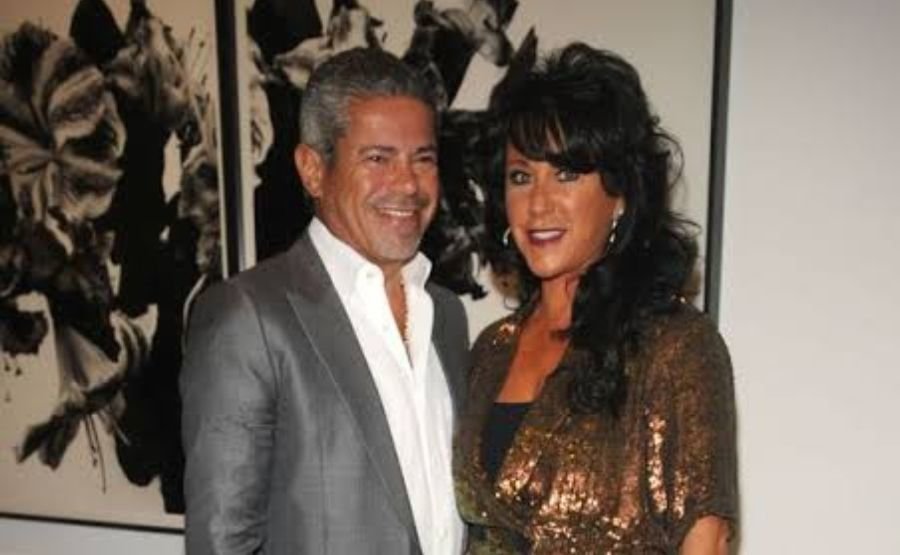
Najjar came from Puerto Rico. Birthdate is fuzzy — some sources say 1957, some say 1958, a couple say 1969 (clearly wrong). He landed in Atlanta at some point in the 1990s and started doing what ambitious guys in the ’90s Atlanta real estate market did: buying stuff. Specifically, beat-up shopping centers, undeveloped land in Florida, and residential properties in the nicer parts of Georgia.
He wasn’t famous. He wasn’t particularly visible. He was just building.
By the mid-2000s, he had assembled something genuinely impressive. Union Station Mall (the old Shannon Mall, rebranded after his acquisition). Loehmann’s Plaza. Andrews Square. A development he called Bella Palazzo. His full portfolio, across multiple states, was being valued north of $220 million. He was generating somewhere around $20 million annually in net operating income.
Think about what that actually means. This wasn’t paper wealth. This was a guy pulling eight figures a year from properties he controlled. He had real leverage, real cash flow. The business worked — until it spectacularly didn’t.
The Engine Under the Hood Was Borrowed Money
Here’s what every profile of Najjar either glosses over or buries: the whole operation ran on debt. He leveraged everything. Every acquisition funded the next. And one of his primary lenders was Integrity Bank of Alpharetta, Georgia.
Integrity Bank failed in August 2008. It was one of the first Georgia banks to go under in the financial crisis, and the FDIC investigation that followed was not gentle. The bank had been over-lending to a small cluster of speculative real estate developers. Najjar was among the largest of those borrowers.
The FDIC’s resolution of Integrity Bank cost the agency over $200 million. Najjar reportedly defaulted on more than $45 million in loans personally. He lost multiple shopping centers. A private jet share. His St. Marlo property. And eventually, yes, the Buckhead mansion.
Let’s be honest about something here. The 2008 crash wiped out thousands of investors who were over-leveraged. Najjar wasn’t unique in that. But the scale of his specific collapse — from $220 million in holdings to maybe $5 million at death — that’s not a bad-luck story. That’s what happens when leverage is your entire business model and the underlying assumptions collapse.
He knew what he was doing. And it worked brilliantly, until the moment it didn’t.
Kim Zolciak and the Worst Timing in Reality TV History
Somewhere in the late 2000s — right as his empire was beginning to crack — Lee Najjar fell into an affair with Kim Zolciak, a cast member on the first season of Real Housewives of Atlanta. He had a wife. Kimberly Najjar. Two kids. All of that.
Zolciak never said his name on camera. He was just “Big Poppa.” A mystery sugar daddy who gave her a custom diamond-bezel watch worth $150,000, a Range Rover, a luxury townhouse. He showed up at the Season 2 reunion show in 2009 — surprised everyone by kissing Zolciak on the lips in front of the cast, then pecked each housewife on the cheek. Charmed the room, apparently. Then disappeared back off-camera.
Najjar told Zolciak he was divorcing his wife. Classic. Kimberly Najjar, presumably, had not received the same memo.
By 2009 they broke up. Zolciak told the world: “He will always be the love of my life, but it’s time for me to move on.” They got back together briefly in 2010. Then things actually ended. Then Zolciak met Kroy Biermann, married him, and had a whole second act. Najjar went back to his actual family.
Here’s what’s fascinating and almost nobody says out loud: Najjar was almost certainly funding Kim’s lifestyle during the exact period his own financial house was collapsing. The Range Rovers and diamond watches were coming out of an empire that was simultaneously defaulting on $45 million in loans. That’s a particular kind of denial. Or bravado. Maybe both.
The Numbers Nobody Can Agree On
Spend an afternoon reading about Lee Najjar’s net worth and you’ll find figures ranging from $5 million to $1.5 billion. The billion-dollar figure is clearly AI-generated garbage from a content farm — some idiot article that invents a “TechInnovate Solutions” backstory and talks about Silicon Valley mansions. That’s not Lee Najjar. That’s a hallucinated version of him built by a language model with no guardrails.
Even the legitimate sources can’t agree. Celebrity Net Worth landed on $50 million, which is the number most sites just copy-paste without verification. Some put him at $55 million. A couple put his final net worth at $5 million, which — given the documented collapse of his portfolio, the foreclosures, the $45+ million in loan defaults — actually seems the most credible.
The $50 million figure doesn’t account for the fact that his signature asset sold for $1.3 million at forced auction. It doesn’t account for the Union Station Mall shutting down because management couldn’t pay the electric bill. It doesn’t account for a 2012 arrest for failing to appear in court after being fined $75,000 for not maintaining a property.
None of that says $50 million man. Some of it says the man was still treading water years after the crash.
The Mall Nobody Mentions
People always focus on the mansion. The mansion is visually dramatic — 25,000 square feet, gold, nine bedrooms, it was in Zombieland — so everyone leads with that.
But the Union Station Mall collapse is actually more revealing about who Lee Najjar was as a businessman.
He bought the old Shannon Mall in Union City, Georgia. Renamed it. Had plans to transform the area into something like Atlantic Station — mixed retail and residential, ambitious redevelopment. By 2005, he was publicly pitching this vision to city officials.
Five years later the mall was shutting down because the power bill wasn’t being paid. Tenants were describing conditions as unsatisfactory. The management company, apparently hired by Najjar, had stopped maintaining the place. Anchor stores Sears and Macy’s stayed open in their standalone boxes; the rest of the mall went dark.
That’s not a financial crisis victim story. That’s a story about over-extension and neglected operational basics. The 2008 crash accelerated it, sure. But a well-run regional mall doesn’t close because the lights get shut off.
The Second Act Nobody Saw
After the crash, after the Zolciak drama, after the foreclosures and lawsuits — Najjar basically vanished from public life. Went back to Kimberly. Back to his kids. Moved eventually to the Miami-Dade area, where he died in April 2026.
The cause of death remains unknown. His daughter Katelin confirmed it through Instagram. A family friend described him as “genuinely funny” with a great sense of humor — one-liners, wit. Someone who loved his family deeply. Who told the story of how he and Kimberly met so many times people had it memorized.
That version of Lee Najjar — the private guy, the father, the husband who somehow held his marriage together through a nationally televised affair — almost never shows up in the coverage. He’s always “Big Poppa.” He’s always the sugar daddy with the mansion. He’s always the punchline to a financial collapse story.
Which is, if you think about it, deeply strange. The man built a $200 million real estate empire from scratch starting in the 1990s. That’s legitimately impressive. It collapsed badly, yes. But a lot of people who never built anything are happy to sneer at the wreckage.
What His Net Worth Actually Tells You
The $5 million figure at death — if accurate — represents a guy who built 40 times that, lost almost all of it to a combination of over-leverage, bad timing, and possibly some genuinely bad operational decisions, and then quietly survived anyway. Still had a wife. Still had his kids. Died in his late sixties in Florida.
I’m not romanticizing it. The Zolciak affair was messy and dishonest. The Union Station Mall situation hurt people — tenants, communities, city officials who trusted his redevelopment pitch. The Integrity Bank loans contributed to a broader crisis that cost the FDIC over $200 million.
He wasn’t a hero. He wasn’t a villain either, exactly. He was a highly leveraged optimist in a market built on optimism who ran out of runway in 2008.
The net worth number — whatever it actually was — is less interesting than the gap. $220 million to $5 million. That gap is a biography.
Final Words
Most of what’s written about Lee Najjar is either a Wikipedia-adjacent bio that treats his affair as the whole story, or a content-farm article that can’t even keep his fake net worth consistent from paragraph to paragraph.
The real story is about leverage. About what happens when a man builds everything on borrowed confidence — borrowed money, borrowed time, borrowed identity on a reality show he never even appeared on. He wasn’t “Big Poppa” at home. He was Lee. A husband, a father, someone who reportedly told a really good one-liner.
He died mostly broke by the standards he’d set for himself. But he’d also built something real once, which is more than most people manage. I don’t think he deserves the mockery that sometimes creeps into these retrospectives. And I don’t think he deserves the $50 million puff-piece treatment either.
He deserves the actual story. Which is messier, more human, and considerably more interesting than either version the internet serves up.
See also “Henry Winkler Net Worth: How the Fonz Built His $40 Million Fortune“
FAQs
1. What was Lee Najjar’s net worth when he died?
Most credible estimates put it around $5 million. This is a steep fall from the $200+ million peak in the mid-2000s. The $50 million figure you see on most sites is probably outdated and doesn’t account for the full extent of his financial collapse.
2. How did Lee Najjar make his money?
Real estate. Commercial and residential properties across Atlanta and the Southeast, bought aggressively starting in the 1990s using heavy bank financing. At his peak he owned shopping centers, luxury homes, and undeveloped land across multiple states.
3. Did Lee Najjar actually go bankrupt?
He defaulted on over $45 million in loans. Lost multiple properties to foreclosure, including the Buckhead mansion in 2015. Whether he filed formal bankruptcy isn’t confirmed in public records, but the practical effect was similar.
4. Who was “Big Poppa” on RHOA?
Lee Najjar. He was Kim Zolciak’s off-camera benefactor in Seasons 1 and 2 of Real Housewives of Atlanta. Internet sleuths identified him fairly quickly after Zolciak started dropping hints. He made one brief on-camera appearance at the Season 2 reunion.
5. Was Lee Najjar married during his affair with Kim Zolciak?
Yes. To Kimberly Najjar. He reportedly told Zolciak they were separated and headed for divorce. Kimberly apparently did not consider this to be the case. He went back to his wife after the Zolciak relationship ended.
6. How much did the Buckhead mansion sell for at auction?
$1.358 million. In 2015. After years of being listed at $25 million with no takers. It later sold again in 2023 for $8.5 million — but Najjar saw none of that.
7. What happened to Union Station Mall?
Najjar bought the old Shannon Mall in Union City, Georgia, renamed it, and had ambitious redevelopment plans. By 2010, it had shuttered — partially because management couldn’t pay the utilities. The anchor stores (Sears and Macy’s) stayed open independently.
8. What was Najjar’s connection to Integrity Bank’s collapse?
He was one of the bank’s largest borrowers. When Integrity Bank of Alpharetta failed in August 2008, FDIC investigations revealed the bank had over-lent to a small group of speculative real estate developers, Najjar included. The FDIC resolution cost over $200 million.
9. How old was Lee Najjar when he died?
68. He died on April 18, 2026, in the Miami-Dade area. The cause of death was not made public. His daughter Katelin confirmed the news on Instagram.
10. Did Kim Zolciak comment on his death?
At the time of writing, no substantial public statement from Zolciak had been reported — which, given everything she’s been dealing with (a bitter divorce from Kroy Biermann, financial problems of her own), isn’t entirely surprising.
11. Is the “$1.5 billion” net worth figure for Lee Najjar real?
Absolutely not. That comes from AI-generated spam sites that confuse or fabricate details entirely — one article invents a company called “TechInnovate Solutions” and places him in Silicon Valley. Discard any site giving him a billion-dollar net worth. It’s fiction.
Beyond the headlines, discover what’s worth knowing — TheTrendist.