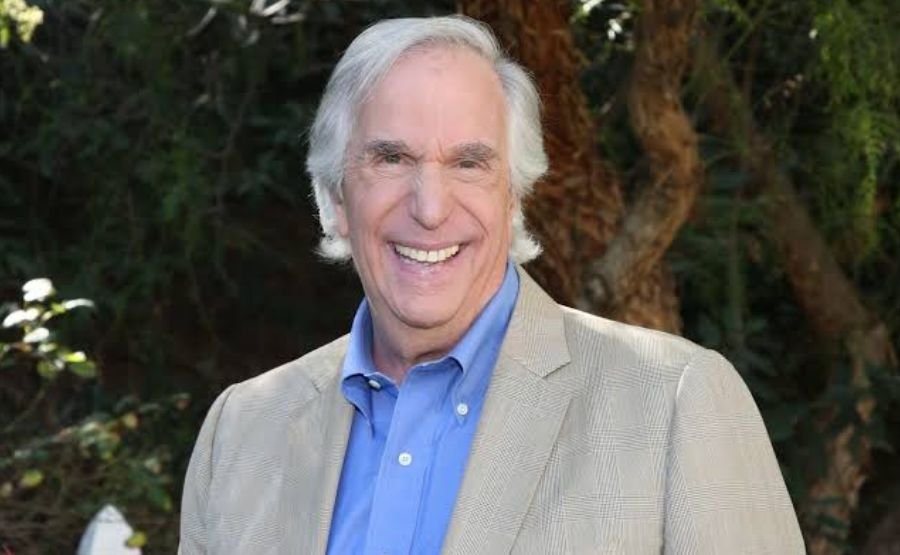
Henry Winkler Net Worth: How the Fonz Built His $40 Million Fortune
Here’s what nobody leads with when they write about Henry Winkler: the man who spent a decade playing the coolest guy on television was simultaneously one of the most financially anxious people in Hollywood. His $40 million net worth didn’t arrive smoothly. It came through contract walkouts, a bruising merchandise lawsuit, a decade where he couldn’t get hired as an actor, and a decision he still calls “dumb” that handed John Travolta one of the most lucrative film careers in history.
We worship the “Ayyy” and the leather jacket. We don’t discuss restless nights.
Quick Bio
| Detail | Info |
| Full Name | Henry Franklin Winkler |
| Born | October 30, 1945, Manhattan, New York |
| Estimated Net Worth | ~$40 million (as of 2026) |
| Primary Wealth Source | Acting, producing (MacGyver), book royalties, real estate |
| Best-Known Role | Arthur “Fonzie” Fonzarelli, Happy Days (1974–1984) |
| Happy Days Salary | Approximately $50,000 per episode |
| Brentwood Home Purchase | $3.4 million (1993) |
| Emmy | Won in 2018 for Barry — 42 years after first nomination |
| Key Regret | Turned down the lead in Grease (went to John Travolta) |
| Diagnosis | Dyslexia — discovered at age 31 |
“Dummer Hund” to $40 Million
Start here: Henry Winkler’s parents called him “dummer Hund.” Dumb dog. In German. To his face.
These weren’t distant or cold parents. They were actively, relentlessly dismissive. Holocaust survivors — they’d fled Berlin in 1939, lost most of their extended family to the Nazis — who had built a successful lumber business in America and expected their son to join it. When he brought home failing grades instead, they didn’t search for a reason. They found a label. Dumb dog.
The thing is, he wasn’t dumb. He had undiagnosed dyslexia. He wouldn’t find that out until he was 31 years old. By then, he was already The Fonz. Already famous. Still carrying years of shame about not being able to read a script cleanly at a table read.
Think about that. One of the most recognizable TV personalities of the 1970s was secretly embarrassed every time he had to read out loud. He improvised constantly — not because he was a natural creative maverick, but because reading the lines cold was genuinely difficult. And somehow, that improvisation made the character better.
He got admission to Yale School of Drama not on his academic record — which was, let’s say, inconsistent — but on the strength of his audition. His grades were terrible. He couldn’t pass geometry. He wasn’t allowed to attend his own high school graduation ceremony. And he still ended up with an MFA from Yale in 1970.
That’s the foundation of everything. A kid told he was worthless becoming someone who outworked the label.
See also “Tim Tebow Net Worth Is Both Simpler and Weirder Than Anyone Admits“
The Numbers Game (And Why You Should Be Suspicious of Them)
Let me be upfront with you: celebrity net worth figures are, at best, educated guesses. At worst, they’re circular citations — one site writes $40 million, five other sites copy it, suddenly it’s “verified.”
For Henry Winkler, sources range from $30 million on the low end to an absurd $85 million on one particularly creative website. One site even floated for $50 million. The consensus, and the figure that appears on the most credible sources including Celebrity Net Worth, settles around $40 million.
What’s actually verifiable? A few things. He bought a home in the Brentwood neighborhood of Los Angeles in November 1993 for $3.4 million — that’s documented. That property is now estimated at somewhere between $11 million and $15 million depending on which assessment you’re reading, which alone tells you something about how real estate has done the heavy lifting for a lot of legacy Hollywood wealth.
His Happy Days salary is reported as approximately $50,000 per episode in the show’s peak years. Over the course of 11 seasons, he made over 250 appearances. Do the math roughly and you’re looking at around $12.5 million from the show alone, before accounting for syndication, which paid residuals for decades.
But — and this is where it gets interesting — his producing work probably eclipsed his acting income during the 1980s. He was executive producer on MacGyver, which ran seven seasons from 1985 to 1992 and scored five Emmy nominations. That’s serious, durable money. The kind that keeps paying when reruns air on cable at 2 a.m. in 1997.
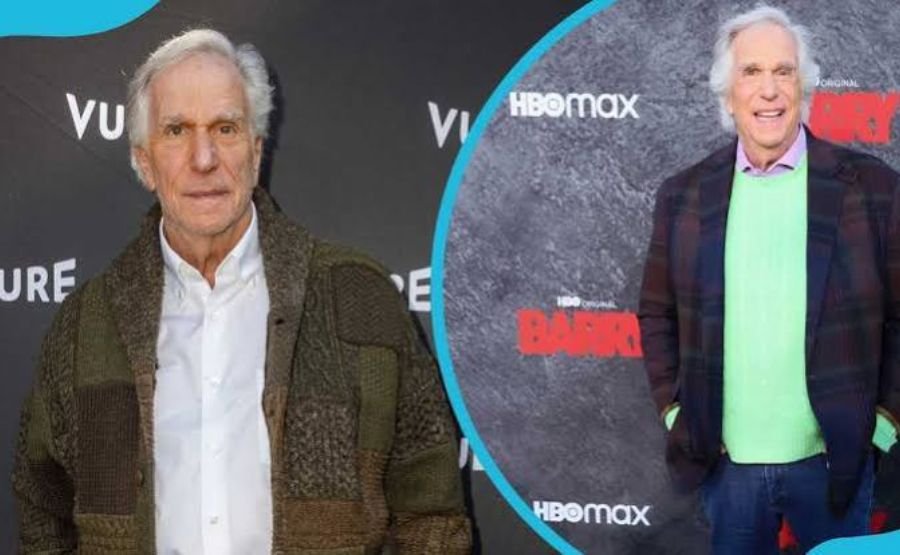
The Contract Standoff Nobody Remembers
Here’s a story that gets buried under the “Ayyy” mythology: in 1976, Henry Winkler walked off the set of Happy Days for two days.
He didn’t quit. He didn’t throw a tantrum. He simply wasn’t there. The rumor mill immediately concluded he was leaving the show. Fan mail poured in. Winkler had to go on record saying he was absolutely not leaving.
What had actually happened? He’d staged a quiet, one-man protest about his contract. His earnings from the show weren’t keeping pace with what he was generating for the network. Think about it — by 1976, Fonzie’s face was on lunchboxes, slot machines, bedroom posters, you name it. Winkler wasn’t seeing meaningful money from any of it.
He let his lawyer handle the negotiations and waited. He got a better deal. A larger share of merchandising was added. He went back to work.
What strikes me about this story is the discipline. He didn’t give interviews trash-talking the producers. He didn’t lawyer up loudly. He just… stopped showing up, quietly, and let the leverage speak.
That kind of composure, by the way, did not come naturally to someone who described himself as having “a high level of low self-esteem” for most of his life.
His former cast members weren’t as fortunate. Years later, Anson Williams, Marion Ross, Don Most, and the estate of the late Tom Bosley filed a lawsuit against CBS — which had acquired the show’s rights — alleging they were owed unpaid merchandising revenues. They literally started wondering where their money was when they saw their own faces on casino slot machines.
Winkler was not part of that lawsuit. Whether he had better legal representation, a better original contract, or had simply sorted this out in 1976 when he walked off the set — it’s not entirely clear. But it speaks to something: the guy who seemed like just a TV greaser was actually paying attention to the business side.
The Decade of Quiet Terror
Here’s the piece of the story that gets smoothed over: after Happy Days ended in 1984, Henry Winkler’s acting career fell off a cliff. Not immediately. Not dramatically. Just… quietly, steadily, he became difficult to cast.
He said it himself: “There were eight or nine years at a time when I couldn’t get hired because I was ‘The Fonz,’ because I was typecast.”
Eight or nine years. That’s not a rough patch. That’s a career-threatening span. He had a family. A mortgage. And he was sitting at his desk at Paramount thinking, as he later put it to CNN, “Am I ever going to find anything with as much impact as the Fonz? Will anybody ever ask me?”
The irony cuts deep because he’d spent so much energy trying not to get typecast during the show’s run. He turned down the lead role in Grease in 1978 — the Danny Zuko part that went to John Travolta — specifically because he worried it would cement the leather-jacket persona. He later called this decision “dumb.” His exact words, years afterward: “I now go home, I say no, and I have a Diet Coke. After finishing the film, John Travolta returns home and purchases a plane.”
The self-deprecation is funny. The underlying reality is brutal. He passed on one of the defining film roles of the decade out of fear, and the fear came true anyway. He was typecast regardless.
So what did he do? He pivoted. Became a producer. Built a production company, by his own account, out of “will and fear.” MacGyver was his big score behind the camera. He also produced Sabrina the Teenage Witch in the 1990s. These projects gave him income streams that didn’t depend on people forgetting he was Fonzie.
He was also quietly starting therapy, though he wouldn’t get to what he describes as “meaningful” therapy until he was 70. Seventy. By then he’d already won the Emmy for Barry.
The 42-Year Wait
You want to understand what Henry Winkler’s career looks like from the inside? He was first nominated for a Primetime Emmy Award in 1976 for Happy Days. He was nominated again in 1977. And again in 1978. Never won.
He waited 42 years.
In 2018, at age 72, he walked onto the Emmy stage and won Best Supporting Actor in a Comedy for Barry — an HBO show in which he played Gene Cousineau, a narcissistic, washed-up acting teacher with hidden darkness. A character who is, in many ways, the dark mirror of the wholesome mentor figure Winkler has become in public life.
He said backstage that he’d been wearing rubber pants, just in case he wet himself if he won. That’s the kind of joke you make when you’ve genuinely stopped expecting to win.
The thing about Barry that doesn’t get discussed enough: it gave Winkler probably his most demanding and rewarding work at an age when most actors of his era were collecting honorary awards or doing cameo appearances. He described it as “the most intense work I have ever done in my career” — and his career, by 2022, was 52 years old.
Cousineau wasn’t likable. He was deluded, self-serving, morally compromised. Playing that character required Winkler to access something a lot darker than Fonzie ever asked for. He did it. He was extraordinary.
The Emmy is now on his résumé. So is the fact that it took four decades.
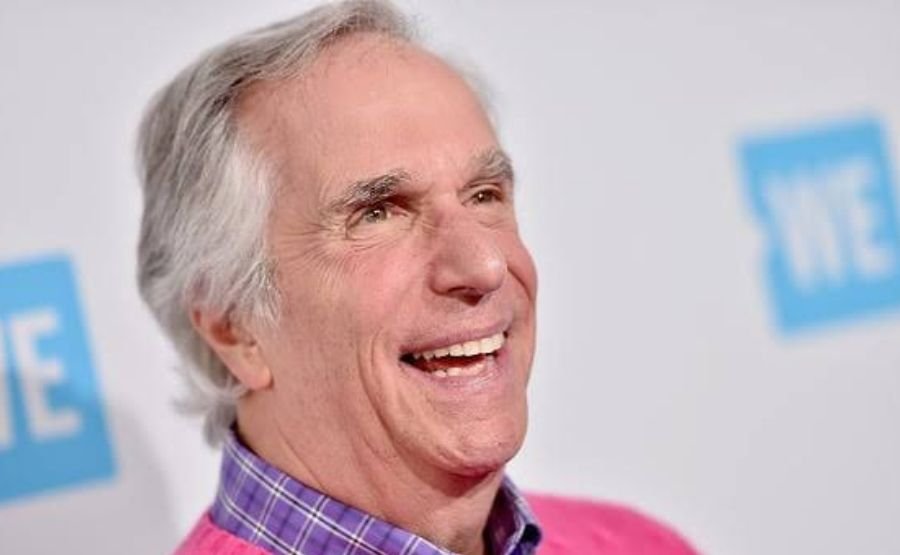
What $40 Million Actually Looks Like
Here’s where I’ll be honest: $40 million sounds like a lot, but in the context of legacy Hollywood wealth, it’s… respectable but not spectacular. Ron Howard, his former co-star on Happy Days, is estimated at north of $200 million. Howard moved into directing, and directing megabudget films for studios is where serious wealth accumulates.
Winkler never had that kind of breakout behind the camera. He was a solid producer, not a blockbuster director. His acting work in the lean years — Scream, The Waterboy, Click, five Adam Sandler films — kept him working but wasn’t building dynasty-level money.
The real estate has held up. The Brentwood property he bought for $3.4 million in 1993 has appreciated substantially by any measure. He’s reportedly also written or co-written over a dozen children’s books in the Hank Zipzer series, loosely based on his own experience with dyslexia. Those books became a BBC series. Royalties and licensing fees from a children’s franchise, running quietly in the background for 20-plus years, add up in ways that don’t make headlines.
Is $40 million the right number? Probably in the ballpark. The $85 million figure I found looks made up. The $30 million figure seems slightly conservative given the property appreciation alone.
But here’s what I think actually matters: the money represents not one act but four or five distinct reinventions. The child of German immigrant Holocaust survivors said he was a dumb dog. Yale MFA. Television icon. Typecast exile. Producer. Actor’s comeback. Emmy winner. Children’s author. Dyslexia advocate. He didn’t accumulate $40 million by being Fonzie — he accumulated it by refusing to stay there.
The Therapy Admission Nobody Talks About
He started meaningful therapy at 70. He said this in interviews promoting his 2023 memoir Being Henry: The Fonz…and Beyond. He also admitted in that same memoir that he still, at 78, carries feelings of not being worthy enough, of not being perfect enough.
That’s not the story we usually get. We get the triumph arc: kid told he’s dumb becomes a star. But Winkler’s version is messier. The wound never fully healed. He cared for his dying mother despite everything she and his father had done to him. He carried the “dummer Hund” voice — a literal voice, in German — long past the point when you’d think he’d have drowned it out.
The money, the Emmy, the books, the advocacy work for dyslexic children — none of it fully erased that. He’s still working on it. At 80, give or take.
That’s the part the net worth articles leave out. And it’s the part that, to me, makes the $40 million actually mean something.
Final Words
Henry Winkler is not the richest person to come out of Happy Days. He made a decision about Grease; he’ll probably always half-regret. He had a long stretch where he wasn’t sure anyone would ever call again.
But he built something durable. A $40 million net worth built on five or six different careers, real estate, a children’s book franchise, and an HBO comeback that most people his age wouldn’t have had the artistic courage to pursue. He also — and this is the part that gets lost in celebrity finance coverage — spent most of that accumulation period genuinely frightened.
The Fonz was never afraid. Henry Winkler was afraid most of the time. He just kept going anyway.
That’s not a bad blueprint for getting to $40 million. Or for anything else, frankly.
See also “Lemuel Plummer Net Worth: How Much Is the Zeus Network Founder Worth?“
FAQs
1. What is Henry Winkler’s net worth in 2026?
Most sources settle on approximately $40 million. You’ll see estimates ranging from $30M to a dubious $85M floating around certain websites. The $40M figure comes from Celebrity Net Worth and aligns with what’s publicly knowable about his income sources, real estate holdings, and career output. Treat any number you see online as an informed estimate, not a bank statement.
2. What was Henry Winkler’s salary for each Happy Days episode?
Approximately $50,000 per episode during the show’s peak years, according to multiple sources including Celebrity Net Worth and various reports. He appeared in over 250 episodes across 11 seasons, which adds up to a significant sum — though, importantly, the merchandising situation was contentious, and he actually had to walk off set in 1976 to get a better deal on those rights.
3. Is Henry Winkler the richest star from Happy Days?
No. Ron Howard is generally considered the wealthiest Happy Days alumnus, with a net worth estimated by some sources above $200 million — built through his film directing career. Winkler is comfortably wealthy, but Howard’s pivot to blockbuster directing (A Beautiful Mind, The Da Vinci Code, Apollo 13) put him in a different financial tier.
4. Why did Henry Winkler turn down the role in Grease?
He was terrified of being typecast as a greaser after nearly a decade as the Fonz. The Danny Zuko role in Grease felt too similar to Fonzarelli, so he passed. That role went to John Travolta. Winkler later said “I was dumb” about this decision, and noted wryly that Travolta went home from Grease and bought a plane while Winkler went home and had a Diet Coke.
5. What did Henry Winkler do after Happy Days ended?
He pivoted to producing and spent roughly a decade in the career wilderness as an actor. His biggest producing success was MacGyver, which ran seven seasons (1985–1992) and became a genuine cultural landmark. He also produced Sabrina the Teenage Witch in the 1990s. Acting opportunities were scarce due to typecasting — by his own account, there were eight or nine years at a stretch when he couldn’t get hired.
6. How did Henry Winkler finally win an Emmy?
He won in 2018, at age 72, for his role as Gene Cousineau in HBO’s Barry — a narcissistic, morally compromised acting teacher. It came 42 years after his first Emmy nomination, which had been for Happy Days. He later called it the most intense work of his career. The win was met with a standing ovation and he joked backstage that he’d been wearing rubber pants just in case.
7. When was Henry Winkler diagnosed with dyslexia?
At age 31 — when he was already a television star. The diagnosis came after his stepson was tested for the condition and received a dyslexia diagnosis. Winkler suddenly understood why he’d struggled so profoundly in school and why his parents had written him off as lazy and stupid. He has since become a major public advocate for dyslexia awareness and co-wrote the Hank Zipzer children’s book series based loosely on his own experience.
8. What is Henry Winkler’s most expensive property?
He purchased a home in the Brentwood neighborhood of Los Angeles in November 1993 for $3.4 million. That property is now estimated at somewhere between $11 million and $15 million. He’s described it as a sanctuary — the place where he can be something other than The Fonz or Gene Cousineau or the guy who wrote children’s books.
9. Did Henry Winkler sue CBS over Happy Days?
Not publicly. Several of his former co-stars — including Anson Williams, Marion Ross, and Don Most, plus the estate of Tom Bosley — did file a breach-of-contract lawsuit against CBS, alleging they weren’t paid merchandising revenues owed to them. They reportedly started asking questions when they saw their own faces on slot machines. Winkler appears to have handled his merchandising arrangements separately and earlier — possibly as a result of the 1976 contract renegotiation.
10. How did Henry Winkler’s parents treat him growing up?
Roughly. His parents, German Jewish immigrants who escaped the Holocaust in 1939, called him “dummer Hund” — dumb dog — because of his poor academic performance. They didn’t know about his dyslexia. They wanted him in the family lumber business. He has spoken about carrying those wounds well into adulthood, saying he didn’t start what he describes as meaningful therapy until age 70, and that he still struggles with feelings of not being worthy enough.
11. What is Henry Winkler working on now?
As of 2025–2026, he’s executive producing Hazardous History with Henry Winkler for the History Channel, a show exploring the reckless products and habits of decades past. He remains active — books, advocacy, television appearances. For a man whose career was supposedly over after Happy Days, he’s been remarkably persistent at staying in the room.
Beyond the headlines, discover what’s worth knowing — TheTrendist.


One Comment