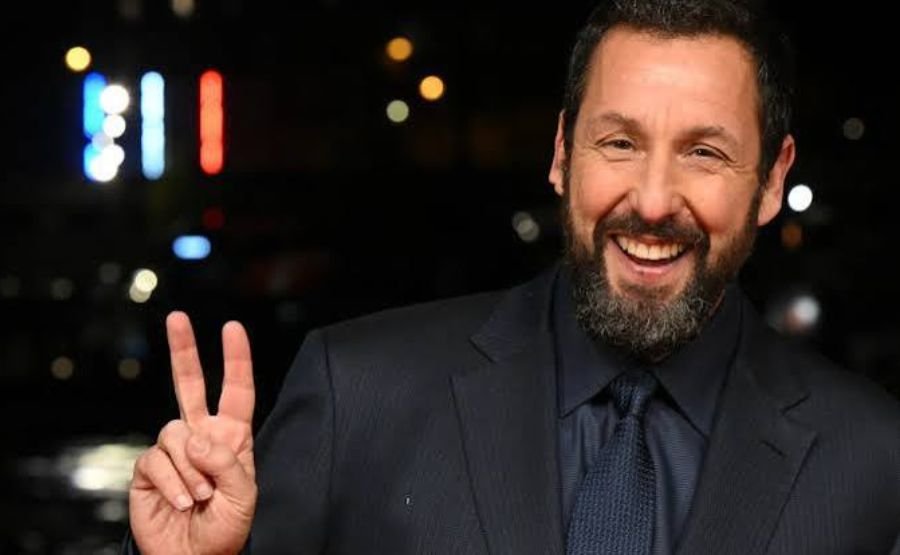
Adam Sandler Jewish? The Truth About His Faith, Family, and Unapologetic Jewish Identity
The standard piece about Adam Sandler and Judaism treats his faith like a seasoning. Oh, he sprinkles some Yiddish in, throws a menorah on screen, does the Chanukah song at Christmas — how delightful, how charming. As if his Jewishness is a flavor choice he makes periodically, rather than the structural foundation from which everything he has ever done extends outward.
Let’s be precise about this. A man who grew up as the only Jewish kid in a New Hampshire public school, getting “pick up a penny kinda sh*t” thrown at him by classmates, who carried that experience into comedy, into film, into a song that made Jewish children across America feel visible for the first time, who named his production company, cast his family, and built an empire — that man is not someone who “incorporates Jewish themes.” His Jewishness isn’t thematic. It’s structural.
The interesting question was never whether Adam Sandler is Jewish. It’s what kind of Jewish he is, and what it costs him to be that openly.
Quick Bio
| Detail | Info |
| Full Name | Adam Richard Sandler |
| Born | September 9, 1966, Brooklyn, New York |
| Heritage | Both parents of Russian Jewish immigrant descent; mother: Judith (née Levine); father: Stanley Sandler |
| Raised | Manchester, New Hampshire from age 6 |
| Jewish upbringing | Hebrew school, JCC basketball, bar mitzvah in parents’ basement; member of BBYO |
| Only Jewish kid | In his New Hampshire public school — endured antisemitic taunts |
| Education | NYU Tisch School of the Arts, graduated 1988 |
| Wife | Jacqueline Titone, converted to Judaism before their 2003 marriage |
| Children | Sadie and Sunny — both raised Jewish |
| His own quote | “I’m not crazy religious…but I’m proud of being a Jew and that’s what I am.” |
| On tradition | “It’s more about tradition.” NYT Magazine, 2019 |
| Key Jewish works | The Chanukah Song (1994); Eight Crazy Nights (2002); You Don’t Mess with the Zohan (2008); Uncut Gems (2019); You Are So Not Invited to My Bat Mitzvah (2023) |
| Notable contradiction | Has never visited Israel, despite playing an Israeli Mossad agent on screen |
| Social club | Member of Hillcrest Country Club — the oldest Jewish country club in Los Angeles |
Manchester, New Hampshire: Where It Actually Starts
People treat the New Hampshire years as a biographical footnote. Brooklyn birth, New Hampshire upbringing, back to New York for college. But the New Hampshire years aren’t a footnote — they’re the whole engine.
When his family moved to Manchester in 1972, Adam Sandler was six. He landed in a place with essentially no Jewish community, no Jewish peers, no cultural camouflage. He was the only Jewish kid in his public school. And he heard about it.
“Pick up a penny kinda sh*t,” he said to Howard Stern in 2015. You can translate that without me spelling it out. His parents’ response to that environment was not to smooth over it or encourage him to assimilate quietly. “When you hear an antisemitic thing,” they told him, “the move is to punch somebody.”
He followed the advice, apparently, into his late teens. “The last fight I got in I was 18,” he told Stern. “I had just come from a bar mitzvah with my parents out on Long Island.”
Think about what this environment does to a kid’s Jewish identity. It sharpens it. It makes it essential. When you’re surrounded by indifference or hostility toward something you are, you either hide it or you own it loudly. Sandler’s family clearly taught him the second option.
He played basketball at the local JCC. He went to Hebrew school. He had his bar mitzvah in his parents’ basement. He joined BBYO — B’nai B’rith Youth Organization, a Jewish teen group — as a teenager. None of this is the behavior of a family hiding their religion in a non-Jewish environment. This is a family holding the line.
That formation is the direct ancestor of everything. The Chanukah Song. The Hillcrest Country Club membership. The daughters’ Jewish upbringings. The lulav at the Chabad street festival in Brentwood in 2017. It’s continuous.
See also “David Bowie Was Gay? The Truth About His Sexuality, Bisexuality, and the 2002 Revelation“
The Advice He Ignored
Here’s a detail that almost nobody includes in the standard Sandler-Jewish profile: Rodney Dangerfield advised him not to lead with his Jewishness when he was starting in comedy.
Rodney Dangerfield, whose actual name was Jacob Rodney Cohen. The comedian who spent his entire career hiding the fact that he was Jewish behind a Gentile stage name and a deliberately non-ethnic persona. The man who had experienced firsthand how the industry had treated overtly Jewish performers in the mid-twentieth century. He looked at young Adam Sandler and said, essentially: don’t do what I couldn’t.
Sandler’s own father reportedly echoed this. Don’t advertise it. Keep it quiet.
He did the opposite.
He kept his name. He used it on marquees, on posters, on his production company, on everything. Happy Madison Productions, built around an SNL character — but the name Adam Sandler, with its very un-anglicized sound, was always front and center. He wore the chai necklace, even if it did end up in “the third drawer under the T-shirts” most of the time. He played Jewish characters across genre after genre, in broad comedies and prestige dramas alike. He made the Chanukah Song.
This was a choice. A deliberate, sustained, decades-long choice to be publicly, unavoidably Jewish in an industry that, in his parents’ and mentors’ generation, had pushed people to sand off exactly those edges.
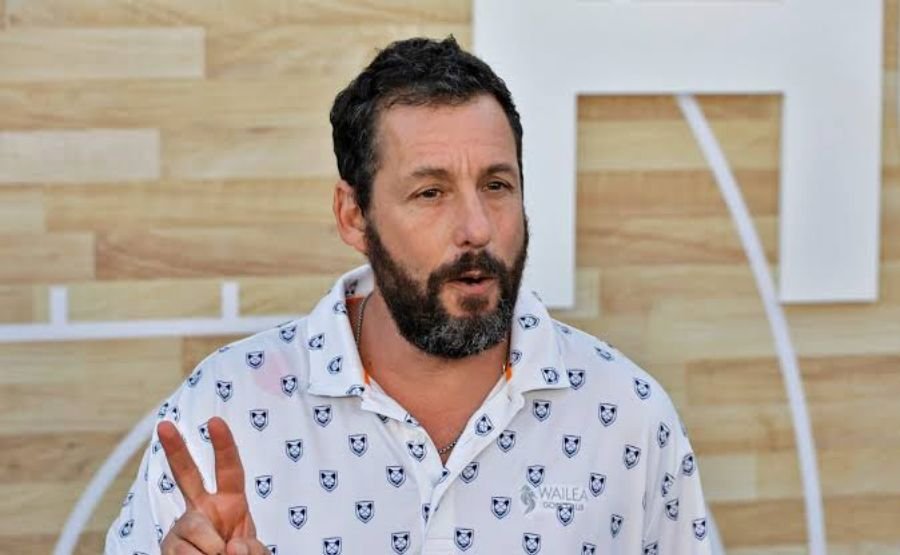
December 3, 1994: The Song That Changed What It Felt Like to Be Jewish at Christmas
You have to understand what 1994 was for Jewish kids in America who weren’t in New York or Los Angeles. It was Christmas everywhere, constantly. Carols on every speaker. Trees in every storefront. The entire culture — movies, TV, music, public school decorations — reflected one holiday with a faint nod to a secondary one. Being Jewish in that environment meant spending December feeling like a spectator at your own country’s biggest party.
Adam Sandler sat down next to Kevin Nealon on Weekend Update with a guitar, and sang a list of celebrity names.
“When you feel like the only kid in town without a Christmas tree / here’s a list of folks who are Jewish, just like you and me.”
That’s it. That’s the technology. Not theology. Not advocacy. Just: you’re not alone, and here are some famous people who prove it. Kirk Douglas, James Caan, Goldie Hawn, Paul Newman, the Beastie Boys. “Put them together, what a fine looking Jew!”
It was goofy. It was technically a little sloppy — some of the claims were imprecise, a few were wrong. Courtney Love is not half-Jewish, as it turns out. Harrison Ford, when he eventually met Sandler, immediately corrected him: “Half!” not “a quarter.” In the original song, Sandler repeated the incorrect figure four times.
None of that mattered. What mattered was the tone. Defiant pride wrapped in self-deprecating humor — the precise combination that has functioned as Jewish cultural armor for centuries. The song said: we are here, we are everywhere actually, and we’re not apologizing for it.
Sandler said in 2022 at a 92NY event that he was “so proud of that song, I love it.” He’s updated it multiple times over three decades. The endurance tells you what it meant.
“I’m Not Crazy Religious” and Why That Matters More Than the Alternative Would
Here’s where the internet gets this badly wrong, and it’s worth naming clearly.
A significant chunk of articles about Adam Sandler’s religion — especially the AI-generated content farms — describe him as “following Orthodox Judaism” or being a “practicing Jew” in a devout sense. This is fabricated. His own words contradict it directly.
“I’m not crazy religious,” he told Howard Stern in 2015. “But I’m proud of being a Jew and that’s what I am.”
In the 2019 NYT Magazine profile — his first major magazine interview since 1996 — he said of his Jewish identity: “It’s more about tradition.”
His chai necklace, he admitted, was “in the third drawer under the T-shirts.” He had, at the time of the Zohan shoot, never been to Israel — despite playing an Israeli Mossad agent in a film meant to be a love letter to the country. That discrepancy, which the Jewish Chronicle noted with some amusement, is not the profile of a religious devotee.
What he actually is — and this is the more interesting thing — is someone who practices cultural Judaism with genuine feeling. Hebrew school, JCC basketball, bar mitzvah in the basement, BBYO, daughters raised Jewish, bat mitzvahs observed with full ceremony. The observance is real. The theology is loose. The pride is absolute.
This is actually the most common form of American Jewish identity. Not Orthodox. Not even particularly Conservative in the religious sense. But intensely connected to the cultural and communal reality of being Jewish — the food, the humor, the history, the solidarity. Sandler is the most famous example of a category that describes a huge percentage of American Jews.
The fact that some sites call him “Orthodox” just reveals that the people writing those sites have no idea what they’re talking about, and have perhaps never met a Jew.
Uncut Gems and What Happened When He Stopped Joking
Here’s the pivot in the Sandler story that doesn’t get discussed enough in the Jewish context.
By 2019, the Chanukah Song was already twenty-five years old. The comedic-Jewish-pride lane was well established. Adam Sandler’s Jewish films ranged from affectionate (Eight Crazy Nights) to broad-action-parody (Zohan). He was the comfortable face of American Jewish humor.
And then Josh and Benny Safdie gave him to Howard Ratner.
Uncut Gems put all the jokes away. Howard Ratner is a compulsive gambler, a liar, a schemer, a man who is simultaneously hustling his bookie, his clients, his wife, his girlfriend, and the New York Knicks’ Kevin Garnett — all while visibly drowning. He is explicitly, unapologetically Jewish. The Diamond District, his world, is a Sephardic-Ashkenazi corridor of 47th Street that the film presents without romanticization. Safdies said in Slate: “the humor of the film is explicitly Jewish.”
Jewish Currents called it the most explicitly Jewish mainstream film since the Coen Brothers’ A Serious Man. They wrote an emergency editorial meeting about it.
Jewish critics asked: does this film traffic in stereotypes? Is Howard Ratner a modern Shylock? The Jewish community debated this seriously, which means the film was doing something real.
And here’s what makes Sandler’s participation interesting. He initially resisted the role. He was worried about what his kids would think watching him play this man. He eventually said yes — and delivered a performance that many, including serious film critics, considered the best of his career. He was not given an Oscar nomination for it, a rejection he handled at the Spirit Awards with such polished grace that even his acceptance of being passed over was humorous.
He didn’t tone it down. He went deeper in.
The Bat Mitzvah Film and the Critics Who Didn’t Understand
You Are So Not Invited to My Bat Mitzvah (2023) got a 95% on Rotten Tomatoes — the highest score of Sandler’s 34-year career. It starred his real daughters. His real wife appeared. His real family was the content.
One SF Chronicle critic gave it one star, calling it “a vapid showcase for Adam Sandler’s family.” That’s not entirely wrong as a description. It absolutely is a showcase for his family. But the framing — “vapid” — misses what the film is actually doing, which is creating an artifact of Jewish American family life where the bat mitzvah is so central to the story that it’s literally in the title.
Danny, Sandler’s character, yells at his daughter at one point: “When I got bar mitzvahed, we had a party in Grandma’s basement. This enormous ball of matzah was divided among us. You know what the theme was? Being Jewish.”
That line is doing multiple things. It’s a comedy. It’s commentary on the extravagance of modern coming-of-age ceremonies. And it’s autobiographical — Sandler’s own bar mitzvah was in his parents’ basement. He’s the Danny character. He’s making a film about his daughters’ Jewish coming of age because his own was a basement and a matzah ball, and the world has changed.
The film isn’t a great cinematic achievement. But as a Jewish cultural document, it’s fascinating.
The Thing About His Wife’s Conversion
Jackie Titone converted to Judaism before she married Sandler in 2003. This isn’t a throwaway fact.
Conversion to Judaism — especially for someone marrying into a family — is not a casual paperwork exercise. It involves study, immersion in Jewish practice, appearance before a rabbinical court, and genuine commitment to living Jewishly. The fact that Jackie Sandler converted tells you something about how seriously the Sandler household takes Jewish identity, even within the “I’m not crazy religious” framework.
Their daughters were not given the option of picking a religion later. They were raised Jewish. Sadie’s bat mitzvah in 2019 was held at Hillcrest Country Club — the oldest Jewish country club in Los Angeles, a place Sandler describes as where Jewish big shots could “unwind in semiassimilated fashion.” Adam Levine performed for the guests.
That’s a specific kind of Jewish American success story. The country club, the famous performer, the bat mitzvah at the center of it — and yet still Hillcrest, still specifically Jewish, not just a generic Bel Air venue.
What He Actually Is: The Liel Leibovitz Theory
According to Liel Leibovitz of Tablet Magazine, Sandler is “a normal dude from New Hampshire who was proud of his Jewish heritage the same way an Irish-American might celebrate his own on St. Patrick’s Day — that is, loudly, and with a never-ending supply of good cheer and high spirits.”
That’s right. He’s not a religious authority. He’s not a theologian. He’s not building a synagogue or writing essays about Jewish law. He’s a guy from New Hampshire who was told he was Jewish, experienced what that meant in a place that wasn’t particularly welcoming to it, decided to be loud about it anyway, and turned that decision into one of the most sustained, consistent expressions of Jewish cultural pride in the history of American entertainment.
He belongs to the Jewish country club. He shakes the lulav on the street. He makes the bat mitzvah film. He plays the diamond dealer. He wrote the song. And he says: I’m not crazy religious, the chai is in the drawer, but I’m a Jew and I’m proud of it.
That’s a completely coherent position. It’s just not the one the content farms expected when they tried to classify him as Orthodox.
Final Words
Let me say what the standard Jewish-celebrity profiles won’t say directly: Adam Sandler made a choice that was not commercially obvious.
Jewish performers in Hollywood have historically softened, coded, or renamed their Jewishness to maximize mainstream appeal. The genre of “Jewish comedy” in his era was something you did carefully, in designated spaces, not as the defining thread of a 35-year career.
He chose the other thing. Not because he was naive about the industry — he’d been warned by Dangerfield himself. But because the Manchester, New Hampshire kid who got mocked for his heritage and punched his way through it apparently decided he wasn’t going to pretend it hadn’t happened. Not to critics. Not to his audience. Not to his family.
The chai necklace in the drawer is real. The “not crazy religious” is real. The daughters’ bat mitzvahs with famous performers are real. All of it is simultaneously true and none of it is a contradiction. He is American Jewish identity in all its complicated, proud, loosely theological, fiercely cultural, multigenerational, bagel-and-lulav complexity.
He’s not a Jewish comedian. He’s the most Jewish major entertainment figure of his generation. There’s a difference.
FAQs
1. Is Adam Sandler Jewish?
Yes, fully. Both his parents, Judith (née Levine) and Stanley Sandler, descend from Russian Jewish immigrants. He was raised Jewish in Manchester, New Hampshire — went to Hebrew school, had a bar mitzvah, played basketball at the JCC, and was a member of the BBYO Jewish youth organization. He’s made Jewish identity a central thread of his professional career for thirty-plus years.
2. Does Adam Sandler practice Judaism?
He practices cultural Judaism with genuine feeling, but is not devoutly religious. His own words: “I’m not crazy religious…but I’m proud of being a Jew and that’s what I am.” He observes Jewish traditions, raised his daughters Jewish, his wife converted before their marriage, and he participates in community events (there’s footage of him shaking a lulav at a Chabad street festival in 2017). But he’s not Orthodox, not particularly observant of Jewish law, and his chai necklace is reportedly buried in a drawer.
3. What is the Adam Sandler Hanukkah Song about?
It’s a list-song of famous Jewish celebrities, co-written with SNL’s Lewis Morton and Ian Maxtone-Graham and first performed December 3, 1994, on SNL’s Weekend Update. Sandler said he wrote it because Jewish children feel invisible during the Christmas season when surrounded by Christmas culture and decorations. The song functions as both comedy and genuine affirmation of Jewish visibility. He’s updated it multiple times across thirty years.
4. Why did Adam Sandler write the Hanukkah Song?
He grew up as the only Jewish kid in his New Hampshire public school and experienced antisemitism firsthand. The song was his way of telling Jewish kids what he wished he’d known: you’re not alone, there are tons of famous Jews, and being Jewish is nothing to hide. It’s personal, not just commercial.
5. Is Adam Sandler’s wife Jewish?
Jacqueline Sandler (née Titone) converted to Judaism before their 2003 marriage. The conversion is considered meaningful — it’s not a paperwork exercise in Judaism — which tells you something about how seriously the Sandler household takes Jewish identity even within their culturally-focused, not-strictly-religious framework.
6. Are Adam Sandler’s daughters Jewish?
Yes. Sadie and Sunny Sandler were both raised Jewish. Sadie had her bat mitzvah in 2019, held at Hillcrest Country Club in Los Angeles — the oldest Jewish country club in the city — with Adam Levine of Maroon 5 performing for guests. Sunny starred in You Are So Not Invited to My Bat Mitzvah (2023), in which her fictional bat mitzvah is the central event.
7. Has Adam Sandler been to Israel?
Remarkably, no — or at least not as of 2023 when this was noted. He played Israeli Mossad agent Zohan in You Don’t Mess with the Zohan (2008), a film structured as a tribute to Israeli life, but reportedly had not visited the country by the time of the film’s mention. He has stated he is strongly pro-Israel and expressed disgust at BDS boycotts.
8. Is Adam Sandler considered good for Jewish representation?
Debated, genuinely. He receives strong positive recognition from the Jewish community press — The Jewish Chronicle, Times of Israel, Jewish News — for his consistent, proud, unashamed Jewish identity. The debate around Uncut Gems (2019) involved real discussion about whether Howard Ratner resurrected harmful stereotypes (the dishonest Jewish schemer). The consensus among Jewish critics was that the film’s authenticity and Jewish creative team gave it legitimacy, but the conversation was real.
9. What Jewish films has Adam Sandler made?
The major ones: Eight Crazy Nights (2002, animated Hanukkah film about a Jewish man in New Hampshire), You Don’t Mess with the Zohan (2008, Israeli Mossad agent parody), Uncut Gems (2019, Diamond District thriller with explicitly Jewish world-building), The Meyerowitz Stories (2017, Baumbach-directed ensemble with Danny Meyerowitz), and You Are So Not Invited to My Bat Mitzvah (2023, his highest-reviewed film ever). The NYT Magazine noted that “nearly every Adam Sandler character is Jewish, though if you aren’t Jewish, you might not even notice.”
10. What did Rodney Dangerfield tell Adam Sandler about being Jewish?
Dangerfield — whose real name was Jacob Rodney Cohen, a Jewish comedian who hid his heritage behind a stage name — reportedly advised Sandler not to advertise his Jewish identity when starting out in comedy. Sandler’s father apparently gave similar advice. Sandler ignored both and built his entire public persona around his Jewish identity. The contrast between Dangerfield’s generation of strategic assimilation and Sandler’s generation of deliberate openness is striking.
11. Is Adam Sandler Orthodox Jewish?
No, and this needs to be stated clearly because multiple AI-generated sites claim this. He is not Orthodox. Orthodox Judaism involves strict adherence to Jewish law — kosher diet, Shabbat observance, specific prayer requirements — which is inconsistent with everything Sandler has said about his own practice. He specifically described himself as “not crazy religious.” His Judaism is cultural, traditional, and deeply felt, but it is not Orthodox by any credible definition.
Beyond the headlines, discover what’s worth knowing — TheTrendist.