Andrew Zimmern and Wife: The Truth About His Marriage, Divorce, and Family Life
Here’s something nobody says directly when they write about the Andrew Zimmern and Rishia Haas marriage and divorce: by the time Rishia Haas met him at a Minnesota cooking school in 1999, Andrew Zimmern had already used up lifetimes of chances. He’d been homeless for nearly a year in New York City. He had an addiction to drink, heroin, cocaine, and anything else he could get his hands on. He hadn’t showered for a year. He’d made a plan to drink himself to death. He got sober on January 28, 1992, at Hazelden Betty Ford, seven years before he and Rishia crossed paths.
So when Zimmern later said his wife gave him “a thousand chances to make it right,” you have to hold that against the backdrop of a man who had already consumed thousands of chances before the marriage began. And still, somehow, this one ended too.
That’s the story. Not the exotic food. Not the Travel Channel career. The story is about what happens after you survive yourself, and whether you can build something that survives alongside you.
Quick Bio
| Detail | Info |
| Andrew Zimmern born | July 4, 1961, New York City |
| Background | Jewish; Upper West Side; parents divorced when he was 13 |
| Addiction period | Teens through 1992; heroin, cocaine, alcohol; nearly a year homeless in NYC |
| Sobriety date | January 28, 1992 (Hazelden Betty Ford, Minnesota) |
| Met Rishia Haas | 1999, Minnesota cooking school |
| Married | December 26, 2002 |
| Son | Noah Zimmern (born 2005) |
| Bizarre Foods debut | 2006, Travel Channel |
| Separated | 2018 |
| Divorce finalized | 2020 |
| Zimmern’s own quote | “My wife gave me a thousand chances to make it right” |
| Rishia now | Beekeeper at University of Minnesota Bee Lab |
| Zimmern now | Single; continues culinary media career |
What 1991 New York City Looked Like From A Pile Of Dirty Clothes On A Floor
You must comprehend the circumstances leading up to the marriage in order to comprehend it. The account of Zimmern’s homelessness serves as a dramatic preface to the success narrative in the majority of his profiles. I want to sit with it longer, because the details are specific.
He was drinking vodka around the clock. He was in an abandoned building in New York City. He didn’t shower for a year. He slept on what he called “a pile of dirty clothes that I called my bed.” He attempted suicide. And somewhere in there, he wrote in a notebook during his first week at Hazelden, over and over like Jack Nicholson in The Shining, that he felt hopeless and didn’t want to hurt people anymore.
His parents’ divorce when he was thirteen coincided with his mother’s serious illness. His father was navigating his own identity. The boy who grew up with what he characterizes as a typical childhood—learning to cook from his grandmother in New York City—lost the framework at the same time from several angles. And he reached for substances the way people do when the ground disappears.
The point isn’t to be lurid about it. The point is that this is the man who arrived in Minnesota in 1992 to get sober. This is who Rishia Haas eventually met in 1999. The recovery was seven years old by the time they met. He wasn’t at his worst with her. She was getting him at what looked like his best.
See also “Chamath Palihapitiya Wife: Meet His Two Wives, Brigette Lau and Nathalie Dompé“
How They Met — And What That Tells You
A cooking school in Minnesota. He was teaching. She was there, from Anoka, a small town north of Minneapolis. By the time he met her, he had already built a second career — the restaurant work in Minneapolis, becoming chef and eventually partner at the establishment that took him on right out of the halfway house when the owner fired his previous chef and offered Zimmern the job. By 1999, he had something like stability.
Rishia Haas who agreed to marry Andrew Zimmern on December 26, 2002, was saying yes to the recovered version. The version that had done the work. The version with the sobriety date he can tell you to the day. And for sixteen years, that looked like it was going to hold.
She is from Minnesota. He arrived in Minnesota because his treatment brought him there and he stayed because it worked. That’s a specific kind of relationship — the New York City garbage-head who got sober in someone else’s state and built his whole second life there. She’s native to that world he chose. She’s from the place that saved him.
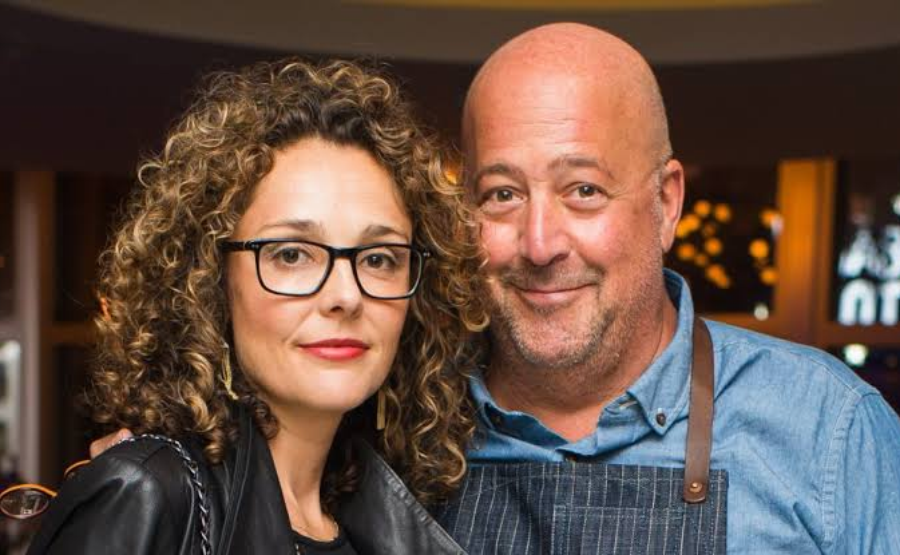
Rishia Haas — Who She Actually Was
The content farm version of Rishia Haas gives her five different occupations across different sites. Administrative assistant. Yoga instructor. Culinary producer. Beekeeper. The Hazelden Betty Ford Foundation appears as her employer in some sources, which is either meaningful symmetry or coincidence — the institution that saved her future husband later employing his future ex-wife.
What’s actually documented: she’s from Anoka, Minnesota. While Zimmern toured the world filming the show, she spent most of her time raising their son Noah in Edina, Minnesota. She was present. He wasn’t. That’s the arithmetic of the marriage that nobody is putting plainly.
And here’s the thing that deserves more space than it gets: the New York Times documented her recipe for chicken with shallots. That’s not a celebrity chef’s recipe. That’s a home cook’s recipe. A woman who was associated with Andrew Zimmern’s world of bizarre international foods in the media coverage had her own quieter culinary identity as someone who made good chicken for her family. The details are small. It tells you something about the distance between how the marriage looked from the outside and what it actually was.
She is now apparently a beekeeper at the University of Minnesota Bee Lab, which works to support bee pollinators through education and programs. I don’t know what to do with that except find it quietly poetic and also characteristically Minnesotan. After the divorce, she went to work supporting something that makes things grow. That’s her story now, and it barely appears anywhere.
The Fame Years — And What They Cost
Bizarre Foods launched in 2006 on Travel Channel. Noah was one year old. Zimmern was suddenly traveling to countries most people will never visit, eating things most people would never eat, and becoming a face that millions of people knew.
Consider the impact that has on a marriage. Not the impersonal “oh fame is hard” type. The specific version. You have a one-year-old. In order to consume fermented fish organs, your lover is taking a plane to Southeast Asia. He’s in sub-Saharan Africa eating insects. He’s on television describing things that make people gag in the comfort of their living rooms. And you’re in Edina, Minnesota, doing the daily work of having a child and building a life in a place that your spouse isn’t actually present in.
He said it himself. He said his fame and rigorous schedule destroyed the marriage. He claimed that he had a thousand chances to make amends with his wife.
Let’s examine the meaning of the line honestly. He was clean, so she wasn’t dealing with an active addiction. She was dealing with absence. And there’s a specific kind of loneliness in being the person who keeps the life running for someone whose life is happening somewhere else entirely.
The “Thousand Chances” Quote And What It Actually Reveals
He said this publicly. He put it out there. “My wife gave me a thousand chances to make it right.”
The context matters. He wasn’t describing this as a failure of her patience. He was taking responsibility. He was saying: she gave me the opportunities, and I didn’t take them. Which raises the harder question — what were those chances? What did “making it right” look like in the marriage and why didn’t it happen?
He never fully answers this publicly. The details stay private, which is appropriate and also slightly frustrating for anyone trying to understand what actually happened. What we’re left with is the external frame: sixteen years, one son, a career that required constant travel and absence, and a wife who eventually ran out of chances to give.
The “thousand chances” phrasing also echoes something he said in 2019 about his addiction recovery journey. “I didn’t get a second chance—I got a thousand,” he said to the James Beard Foundation. And I was still on the verge of missing it.” the same tongue. The same structure. The pattern of requiring many chances to change is part of how he understands himself. He applied it to his marriage in the same manner that he applied it to his sobriety. That’s worth sitting with.
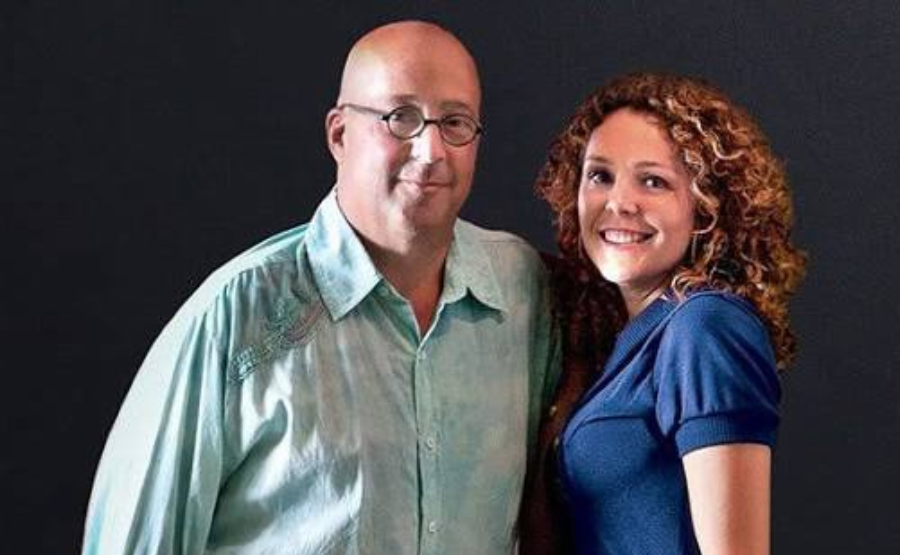
What The Divorce Actually Did To His Public Narrative
For years, Andrew Zimmern’s recovery story was central to his public persona. The guy who’d been homeless, who’d gotten sober, who’d built this career from nothing — it was genuinely compelling and he told it well. The stability story included marriage and family. They were evidence that the recovery had produced something durable.
The 2018 separation complicated that. Not because divorce is a moral failure, but because the “I built something real” part of the recovery narrative depended partly on the family being intact. When Rishia filed for divorce, Zimmern couldn’t offer the simple arc anymore.
What he did instead was more honest. He took responsibility publicly. He didn’t blame her. He didn’t go quiet about it. He named his role in what happened and moved forward. Whether that represents genuine evolution or very polished public damage control is something only he knows.
He remains single as of 2024-2025. No publicly documented relationships since the divorce. Through the James Beard Foundation’s Second Chances program, which assists those in recovery who wish to pursue culinary education, he continues to speak out about recovery.
Final Words
The story of Andrew Zimmern and Rishia Haas isn’t a cautionary tale about fame. The narrative explores the potential and limitations of recovery. The worst of it can be prevented by recovery. Recovery can build something. While recovery can provide you with the means to be present, it cannot make you truly present. That part is still a choice you make every day.
She made chicken with shallots. She raised Noah in Minnesota. She gave him a thousand chances. And then she went to work with bees. He traveled the world eating things that made people wince and became famous for it and said that’s what destroyed the marriage.
Both things are true. Fame requires absence. He was absent. She wasn’t willing to keep accepting that.
The recovery story doesn’t have a clean ending because real recovery doesn’t. You stay sober. You build a career. You lose the marriage. You take responsibility. You keep going. He’s still going. She’s still going. In the center of it is their son. That’s what actually happened, and it’s more complicated and more human than the TV personality story ever suggested.
FAQs
1. Who is Andrew Zimmern married to?
He is currently divorced and single. He was married to Rishia Haas from December 26, 2002, until their separation in 2018 and finalization of divorce in 2020. No new marriage or publicly confirmed relationship exists as of 2024-2025.
2. Why did Andrew Zimmern and Rishia Haas divorce?
Zimmern has said publicly that his fame and rigorous travel schedule destroyed the marriage. He has stated “my wife gave me a thousand chances to make it right,” accepting responsibility. Neither party disclosed specific private details beyond this framework.
3. Who is Rishia Haas?
She is originally from Anoka, Minnesota. She met Zimmern in 1999 at a cooking school where he was teaching. They married in 2002 and have one son, Noah Zimmern, born in 2005. She is reportedly now a beekeeper at the University of Minnesota Bee Lab.
4. Does Andrew Zimmern have children?
Yes. He has one son with Rishia Haas: Noah Zimmern, born 2005. Zimmern has spoken frequently about how central Noah is to his life and co-parenting arrangement.
5. What is Andrew Zimmern’s sobriety story?
Beginning in his teens, he developed an alcohol, heroin, and cocaine addiction. By 1990-1991 he was homeless in New York City — didn’t shower for a year, slept on dirty clothes on the floor, and had a plan to drink himself to death. He entered Hazelden Betty Ford addiction treatment center in Minnesota on January 28, 1992, and has been continuously sober since.
6. Is Andrew Zimmern dating anyone now?
As of 2024-2025, no publicly confirmed relationship exists. Multiple sources from that period describe him as single.
7. Where did Andrew Zimmern grow up?
He was born July 4, 1961, in New York City, and grew up on the Upper West Side of Manhattan. His parents divorced when he was 13, which he has cited as a significant turning point. He later moved to Minnesota after his addiction treatment and has stayed connected to that state.
8. How many James Beard Awards does Andrew Zimmern have?
Four. He has won the James Beard Award for Outstanding TV Food Personality in 2010, 2013, 2017, and one additional year. In addition, he received an Emmy. Some older sources incorrectly cite three awards.
9. What does Rishia Haas do now after the divorce?
She is documented as working at the University of Minnesota Bee Lab, which supports bee pollinator health and diversity. Some earlier sources list her as working at the Hazelden Betty Ford Foundation as an administrative assistant. Both may be accurate at different times.
10. Did the travel schedule really cause the divorce?
Zimmern says yes. He credits his fame and constant travel as the destroying factor. Rishia has not given public interviews about the marriage, so her perspective isn’t documented. What’s verifiable: he was filming extensively throughout the marriage; she was raising Noah in Minnesota; the marriage did end.
11. What does the quote “thousand chances” refer to?
Zimmern said publicly that “my wife gave me a thousand chances to make it right.” By portraying it as his inability to show her patience rather than her choice to go, he was able to bear personal responsibility for the marriage’s dissolution. Notably, he used almost identical language (“I didn’t get a second chance — I got a thousand”) when describing his addiction recovery, suggesting this is a genuine frame through which he understands his own patterns.
Beyond the headlines, discover what’s worth knowing — TheTrendist.