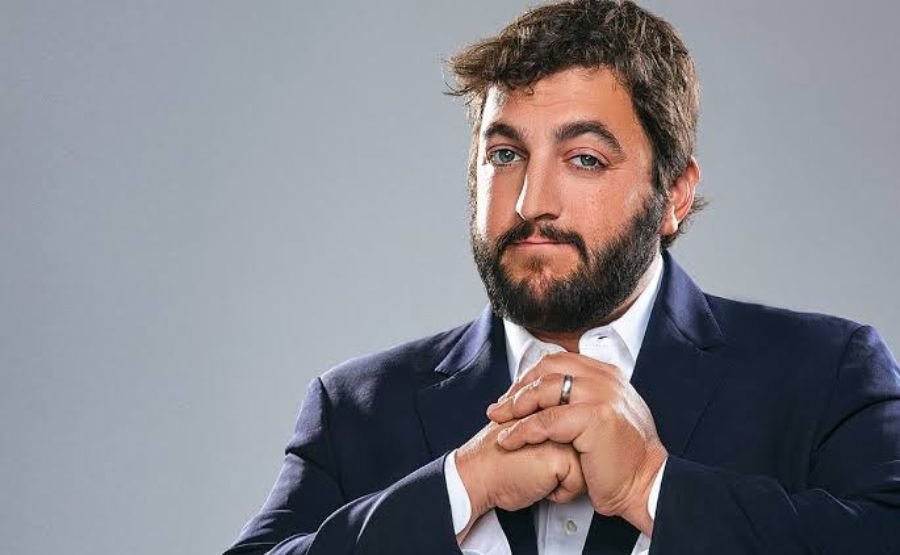
Ben Kovler Net Worth: The Shocking Truth Behind His $79 Million Share Sale
Here’s something most financial journalists quietly skip over when writing about Ben Kovler: the number attached to his name depends entirely on which Ben Kovler you’re looking at. The one in public SEC filings owns roughly $8–9 million in publicly declared GTBIF shares. The one who sold 5.5 million shares in a private transaction in October 2020 — cash received, approximately seventy-nine million dollars — is a different conversation. Neither figure captures what’s actually going on with this man’s money. And almost nobody is bothering to square the two.
Quick Bio
| Category | Detail |
| Full Name | Benjamin Kovler |
| Born | Approx. 1979 (per SEC filing; year of birth listed as 1979) |
| Company | Green Thumb Industries (GTI), RYTHM Inc. |
| Role | Founder, Chairman, and CEO of GTI; Chairman and Interim CEO of RYTHM. |
| Founded GTI | 2014 |
| GTI Revenue (2024) | $1.1 billion |
| GTBIF Stock Peak | ~39(2021);current~7 |
| Declared Public Holdings | ~$8–10M (GTBIF shares, as of mid-2026) |
| Major Share Sale | Oct 2020: 5.5M shares for ~$79M USD |
| Education | BA Pomona College; MBA University of Chicago |
| Family Background | Jim Beam heir (via Harry Blum); father = former Chicago Bulls owner |
| Net Worth Estimates | Range: $7M (conservative) to $1.5B (fantasy) |
What the Celebrity Bio Sites Are Getting Hilariously Wrong
Let me be direct. Multiple websites — the ones you find on page two of Google when you’re searching someone’s net worth at midnight — claim Ben Kovler is worth $1.5 billion. Some say $100 million. Others peg it at $7 million based solely on his declared share holdings.
The $1.5 billion figure appears to have been laundered from a confusion with other cannabis billionaires, or just invented wholesale. It also sometimes attributes Kovler’s role to Brown-Forman Corporation, which is a completely different company. One site — and I’m not naming it because it doesn’t deserve the traffic — confidently states he studied Computer Science at the University of Illinois. He studied philosophy, politics, and economics at Pomona College. Then he earned an MBA from the University of Chicago. Those are not the same thing as computer science.
So why does it matter? Because these sites rank. People find them. And the result is that when you search “Ben Kovler net worth,” you get a cloud of numbers that span three orders of magnitude, with no sourcing for any of them.
Here’s what we actually know. His publicly filed share stake in GTBIF is around one million shares as of late 2024. At recent prices of $7–8, that’s roughly $8–9 million in declared public holdings. But that’s just what he holds now, after several years of selling. The man cashed out a meaningful portion of his position at or near the peak. That’s a very different biography.
See also “David Iacono Net Worth: Nobody Knows How Much the Jurassic World Star Is Really Worth“
The Blum-Kovler Dynasty: Prohibition Money Didn’t Go Anywhere
This is the part that every polite cannabis industry profile breezes past in a sentence or two. Let’s sit with it.
Ben Kovler’s great-great-grandfather Harry Blum — and this is documented — was chairman of Jim Beam Distilling Company. After Prohibition ended in 1933, Jim Beam himself needed capital to restart the distillery. Harry Blum and the Chicago-based Blum family provided it. The National Brokerage Company, the Blum family vehicle, funded the relaunch. Blum served as chairman until 1967, when he sold the company to American Tobacco.
In 1967. Think about that. This isn’t ancient history for the Kovler family. It’s grandfather-era money. The kind of wealth that buys you an office view from the John Hancock Center and a minority stake in the Chicago Bulls.
That stake was Ben’s father, Jonathan Kovler’s play. Jonathan bought into the Bulls ownership consortium in 1972, at age twenty-five, when a group including George Steinbrenner and Lester Crown pooled their money to buy the team. Jonathan Kovler was the public face of that ownership for thirteen years. He was the guy fans blamed when the Bulls were bad, and the guy who reportedly rejected an attendance clause Michael Jordan requested in his contract — quote, “He’d better put people in the seats.”
Then Jerry Reinsdorf came in and bought controlling interest. Jonathan Kovler’s era ended.
Ben Kovler grew up watching his father navigate the politics of owning a sports franchise, the complexities of family wealth preservation, and the long shadow of a Prohibition-era liquor empire. When he decided to enter cannabis, he reportedly pitched his father by saying: “We’ve done this before. Let’s do it again.”
His father was skeptical. But the parallel is almost too clean. Regulated vice product, newly legal, massive pent-up demand, enormous regulatory complexity that favors big capitalized players who can survive the early chaos. Jim Beam after 1933. Green Thumb after 2014. Same story, different substance.

2014: The Right Bet, Made at Exactly the Right Moment
Here’s the actual founding story. In 2013, Illinois Governor Pat Quinn signed the state’s medical cannabis program into law. Kovler was working in the Chicago public equity world at the time. He’d spent years building Invest For Kids, the annual hedge fund investor conference he co-founded in 2009, which funnels all proceeds to Chicago youth organizations. That enterprise had given him deep relationships with portfolio managers and family offices.
He saw the Illinois program launch, understood the regulatory framework from his finance background, and recognized something most of his peers missed: this wasn’t going to be a cottage industry. The structure of state-licensed cannabis was going to produce a few large winners and a lot of also-rans. The licensing caps, the capital requirements, the compliance overhead — all of it systematically excluded underfunded competitors.
GTI was founded in 2014. The first thing Kovler did that most early cannabis operators didn’t: he thought about it like a consumer packaged goods company, not a farm. He built brands. RYTHM. Dogwalkers. Beboe. Incredibles. Things you’d put on a shelf next to products you already trusted.
The company listed on the Canadian Securities Exchange in June 2018 — because U.S. cannabis companies can’t list on NYSE or Nasdaq as long as cannabis remains federally illegal. The stock closed its first day at around C$8.95. That number is doing a lot of work in hindsight.
The Peak, the Crash, and the $79 Million Question
In February 2021, GTBIF stock was trading around 35-39. Green Thumb was being called one of the most professionally run multi-state operators in the country. Revenue was growing at triple digits. Analysts were putting price targets north of $50.
But here’s what’s interesting — and what most coverage doesn’t flag. Kovler had already sold his largest single block of shares months earlier. In October 2020, when the stock was trading near its 52-week high, an LLC he controlled sold 5.5 million subordinate voting shares at C$19.25 to an undisclosed institutional buyer. Private transaction. About $79 million USD changing hands.
In December 2020, the same structure sold another 2.5 million shares, this time at C$27.50. More tens of millions out the door.
These were disclosed. They’re in the public filings. But they rarely appear in the narrative profiles that discuss Kovler’s wealth, which tend to focus only on what he still owns. The share sales are at least as important as the remaining holdings in understanding what kind of money we’re actually talking about.
And then there was the divorce. At some point after earlier bios referred to his “wife Amy,” a marital settlement agreement required Kovler to transfer approximately C$52.5 million worth of shares to his former spouse. He converted 15,000 super-voting shares into 1.5 million subordinate shares, added 20,000 super-voting shares, and gave the combined package as part of the settlement. His voting power dropped from 72.81% to 62.6% of the super-voting share class.
His voting control remained dominant. Because those super-voting shares carry 1,000 votes each. Even at 62.6% of the class, he still effectively is GTI, governance-wise. The stock could be at $1. He’d still run the company.
The ETF War Nobody Expected
In 2025, Ben Kovler did something unusual for a sitting CEO of a billion-dollar company. He went public on X — the platform formerly known as Twitter — and started questioning whether the MSOS cannabis ETF (AdvisorShares Pure US Cannabis ETF) was suppressing his stock price.
Let me give you the timeline. When MSOS launched in 2020, Kovler called GTI’s inclusion in the basket “a win to me.” That was before the ETF went down 84% from its peak, dragging GTI along for a significant part of the ride. MSOS, by 2025, held roughly 10% of GTI’s float and made up about a third of the entire ETF’s holdings. Kovler started asking publicly whether market makers were shorting the underlying GTBIF to hedge their MSOS positions.
The ETF manager, AdvisorShares, pushed back. They said the ETF’s price is just the sum of what it holds — they’re not doing anything to move GTI’s stock. Most professional cannabis investors who were interviewed by Sherwood News agreed: nothing nefarious, but MSOS also isn’t doing you any favors if you can just buy the underlying companies directly.
There’s something almost poignant about the world’s most professionally managed cannabis operator CEO going to war with an ETF on social media. But it also tells you something real: the legal cannabis industry has been in a grind for years now, and nobody who built it is okay with watching the market cap evaporate while revenues keep climbing.
GTI does over $1 billion in revenue. They’re one of the few cannabis companies that actually makes real money. The stock is at $7 as of mid-2026. That combination would make anyone combative.
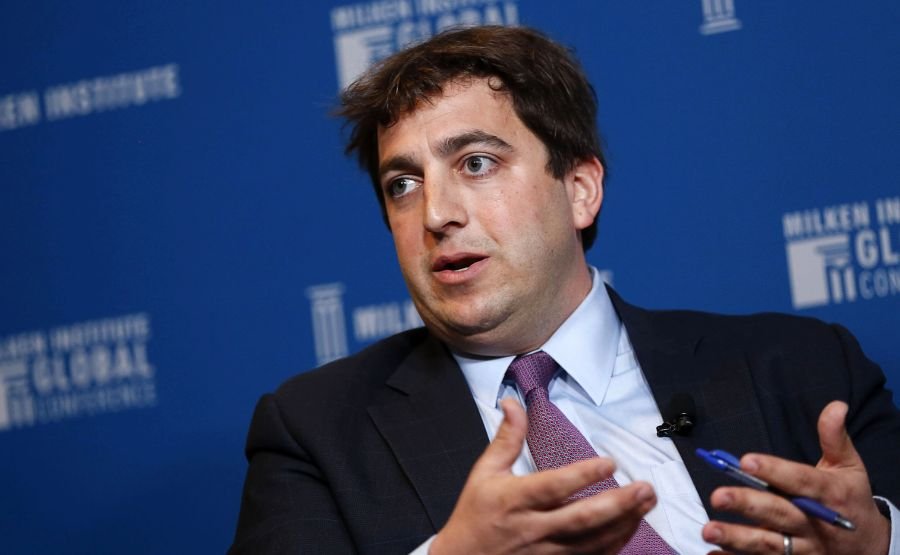
The RYTHM Move and What It Means
In 2025, Green Thumb sold the intellectual property for several of its major brands — RYTHM, Dogwalkers, Beboe, incredibles — to a company called Agrify Corporation for $50 million paid via a convertible note. Agrify then changed its name to RYTHM Inc. and relisted on Nasdaq under the ticker RYM.
Kovler became Chairman and Interim CEO of RYTHM Inc.
Think about what this maneuver accomplishes. The brands are now in a vehicle that can list on Nasdaq, because RYTHM Inc. doesn’t technically touch the plant — it operates in the hemp-derived THC space where federal restrictions are different. The product line (RYTHM beverages, Señorita THC Margaritas) can be sold across state lines. This isn’t a retreat. It’s a pivot toward the regulatory arbitrage that hemp-derived THC creates while federal cannabis rescheduling keeps stalling.
There’s also an interesting side note: Green Thumb apparently approached Boston Beer Company — the Samuel Adams parent — about some kind of deal. The specifics are vague in public reporting. But the fact that Kovler was having conversations with a publicly traded spirits company about his cannabis empire says something about where he thinks the industry is going. Toward integration with established consumer beverage channels. His family’s Jim Beam legacy is turning full circle.
The Philanthropy Question
Invest For Kids runs every year. Since 2009 it has generated over $20 million for Chicago youth organizations. The model is genuinely clever: get the hedge fund world to come to a conference, have portfolio managers pitch their best investment ideas, charge admission, donate everything. It’s the kind of philanthropy that also happens to keep Kovler deeply networked with the Chicago investment community, which is — let’s be honest — also a business asset.
I’m not saying it’s cynical. I think it’s both genuine and strategic simultaneously. That’s how you build durable wealth in a city like Chicago. You run the university committee and the kids’ charity and the business conference, and over time the lines blur in ways that benefit everyone, including you. Kovler serves on the boards of the Providence St. Mel School and the Academy for Global Citizenship. These aren’t vanity affiliations.
But the cannabis-to-philanthropy narrative in his press materials has always felt slightly too clean. A man whose great-great-grandfather helped restart America’s most famous bourbon empire after Prohibition, who now describes himself as “righting some of the wrongs caused by the war on drugs” — that framing is doing a lot of heavy lifting. The people most harmed by the war on drugs are largely not the people who got rich building GTI’s retail footprint.
That’s not unique to Kovler. It’s a structural problem with the entire cannabis industry. But it’s worth naming.
Final Words
Ben Kovler’s net worth is probably somewhere between $100 million and $400 million, when you account for the share sales at the peak, the remaining holdings (both public and through private LLCs), the family wealth he started with, and the divorce settlement that went the other direction. The $8 million in declared GTBIF shares is a floor, not a ceiling. The $1.5 billion is a fantasy someone typed with no sources.
What’s more interesting than the number is the trajectory. He built a billion-dollar company in an industry that is still federally illegal, in a regulatory environment designed to make everything harder, and he did it with real business discipline — brands, retail, cash flow — while most of his peers were burning money on Canadian weed farms. Then he watched the stock crater with the rest of the sector, went to war with an ETF manager online, sold his brand portfolio to a NASDAQ-listed company, and is now running two organizations simultaneously while the federal legalization clock ticks forward at its usual glacial pace.
He’s the Jim Beam heir who bet on the next Prohibition ending. He was right about the market. The timing, and the federal politics, and the stock market haven’t caught up yet. Whether they ever do is the only question that matters for his net worth — and it’s not one anyone can answer.
See also “Christian Stracke Salary: How Much Does Sutton Stracke’s Ex-Husband Really Make at PIMCO?“
FAQs
1. What is Ben Kovler’s net worth?
Genuinely hard to pin down, which is by design. His publicly declared GTBIF share holdings put him around $8–10 million as of mid-2026. But he sold roughly $100+ million in shares from a controlled LLC in 2020 alone, at or near the stock’s all-time high. Factor in private LLC holdings, his family’s generational wealth, and the overall enterprise he built, and we’re realistically talking somewhere in the 100M–400M range. Nobody who claims a specific large number has shown their work.
2. Who is Ben Kovler’s family?
Chicago old money and Chicago old money. His great-great-grandfather Harry Blum was chairman of Jim Beam Distilling Company for years after Prohibition. His father, Jonathan Kovler, was the public face and de facto managing partner of the Chicago Bulls from 1972 to 1985, before Jerry Reinsdorf bought control. Ben grew up wealthy in Chicago with a family that understood both regulated industries and sports franchise politics.
3. When did Ben Kovler found Green Thumb Industries?
2014, the year after Illinois signed its medical cannabis program into law. The timing was deliberate. He was watching public equity markets in Chicago, recognized the regulatory structure would favor capitalized players, and moved early. GTI went public on the Canadian Securities Exchange in June 2018, because U.S. cannabis companies can’t access NYSE or Nasdaq while cannabis is still federally illegal.
4. How much did GTI stock peak at?
Around $39 per share in early 2021. As of mid-2026, it’s trading around $7. The fundamentals — revenue over $1 billion, consistent profitability — didn’t tank. The stock tanked because federal legalization keeps not happening and the sector has been liquidated by retail investors who got tired of waiting.
5. Did Ben Kovler sell shares at the peak?
Yes. An LLC he controlled sold 5.5 million shares in October 2020 for approximately 79millionUSD.Thenanother2.5millionsharesinDecember2020atC27.50. These were private transactions to undisclosed institutional buyers. Both were disclosed in public filings. Neither gets much attention in profile pieces about him.
6. Was Ben Kovler married?
His official GTI bio (at some point) mentioned a wife named Amy and two children. Public filings subsequently disclosed a marital settlement agreement in which he transferred approximately C$52.5 million in shares to his former spouse. This involved converting 15,000 super-voting shares and transferring an additional 20,000 super-voting shares.
7. What is the MSOS ETF controversy?
In 2025, Kovler publicly called out AdvisorShares, which runs the MSOS cannabis ETF (which holds about 10% of GTI’s float), on social media. He was questioning whether market-making activity around MSOS was suppressing his company’s stock price. AdvisorShares denied it. Most cannabis investors who spoke about it in background said they didn’t see anything nefarious, but acknowledged the ETF structure creates dynamics worth scrutinizing. It was a rare instance of a sitting CEO of a public company fighting his own investor base’s largest index product openly online.
8. What is RYTHM Inc.?
In 2025, Green Thumb sold the IP for several of its major brands — RYTHM, Dogwalkers, Beboe, incredibles — to a company previously called Agrify Corporation for $50 million in a convertible note. Agrify renamed itself RYTHM Inc. and trades on Nasdaq as RYM. Kovler became Chairman and Interim CEO. The play is to operate hemp-derived THC products in a regulatory environment where they can reach Nasdaq and cross state lines, bypassing the constraints of federally illegal plant-touching cannabis.
9. What is Invest For Kids?
A hedge fund investor conference Kovler co-founded in 2009. Portfolio managers and family offices attend, pitch their best investment ideas, and all proceeds go to nonprofit organizations serving Chicago youth from disadvantaged communities. Over $20 million raised as of 2026. Also one of the better networking structures you’ll find in Chicago finance, which is probably not a coincidence.
10. What does GTI actually sell?
Cannabis consumer packaged goods across 14+ U.S. states, plus the Rise™ retail dispensary chain (101 locations as of 2024). Brands include RYTHM, Dogwalkers, The Feel Collection, and previously Beboe and incredibles before those IPs moved to RYTHM Inc. It’s a dual model: own the brands and the stores that sell the brands, which gives much better margin capture than just one or the other.
11. Why doesn’t GTI trade on Nasdaq or NYSE?
Because cannabis is still classified as a Schedule I controlled substance under federal law. Any company that grows, processes, or sells cannabis in the U.S. cannot list on a major U.S. exchange under current rules. GTI trades on the Canadian Securities Exchange (CSE) and the OTC market (OTCQX: GTBIF). Kovler has called for U.S. exchanges to grant access to cannabis companies multiple times publicly. It hasn’t happened yet.
Beyond the headlines, discover what’s worth knowing — TheTrendist.


One Comment