
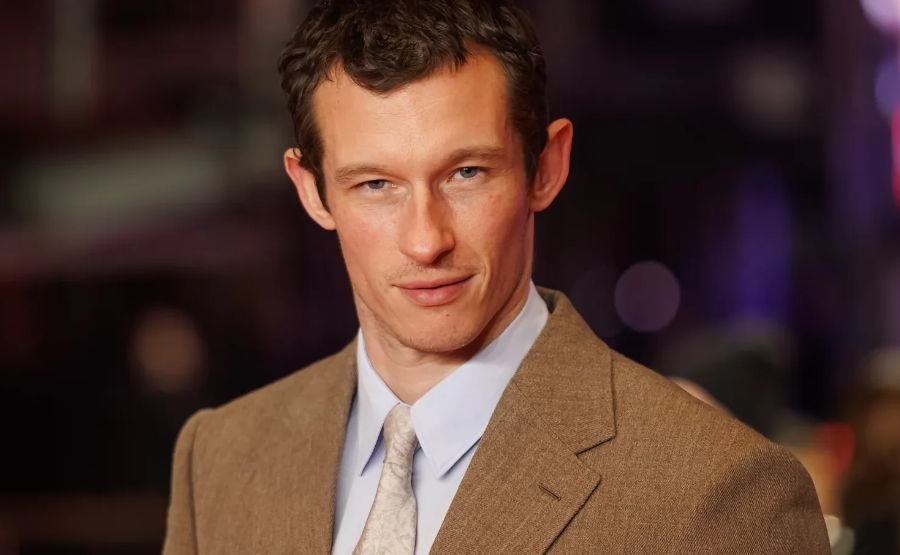
The Man Nobody Talks About Properly: Callum Turner
Here’s the thing they won’t tell you in the fluffy profile pieces: Callum Turner spent roughly half of his twenties — the years he was supposedly building a career — getting high every single day and admits he lost four years of his own life to it. That’s not a minor footnote. That’s the central fact of his story. And somehow, almost every mainstream write-up buries it in a paragraph near the end, sandwiched between talk of Jane Austen and Apple TV+ budgets. We’re going to start there, because if you don’t understand the gap in this man’s timeline, you don’t understand why any of the rest of it matters as much as it does.
Quick Bio
| Detail | Info |
| Full name | Callum Robilliard Turner |
| Born | February 15, 1990, Hammersmith, London |
| Raised | World’s End council estate, Chelsea |
| Mother | Rosemary Turner — nightclub promoter, New Romantic scene |
| Middle name origin | David Robilliard, a poet and his mother’s friend, who died before Turner was born |
| Education | Left school at 16, no drama school, no formal training |
| Pre-acting careers | Semi-pro football (Fisher Athletic FC), model (Burberry, Reebok), retail (Dover Street Market) |
| Breakthrough | Glue (E4, 2014) + Queen and Country (Cannes, 2014) |
| BAFTA | Breakthrough Brit 2014; Best Actor nomination for The Capture (2019) |
| Major franchise | Theseus Scamander — Fantastic Beasts (2018, 2022) |
| Biggest recent role | Maj. John “Bucky” Egan — Masters of the Air (Apple TV+, 2024) |
| Coming up | Neuromancer (Apple TV+, premiering January 22, 2027) |
| Personal | Married Dua Lipa, May 30, 2026, at Old Marylebone Town Hall |
| Bond status | Ruled out by casting director Debbie McWilliams, 2026 |
The Lost Years Nobody Writes About
He said it himself, plainly, in a 2020 interview for The Independent. He smoked weed from age 18 to 26. Every day. Not “I went through a phase.” His words: “I was a real addict. I definitely missed four years of my life.”
Think about what that means on a timeline.
He got his first break in Glue at age 24. By 26, he was in War and Peace. So that eight-year period of addiction was running concurrently with what everyone describes as his “rise.” He was doing films while getting high every day the moment he stepped off set. Not missing takes — he was clear about that — but missing himself. Processing depression and frustration through the only tool he had. And the British weed of the era? He laughed about it in that interview: “It’s not like LA where they ask what you want to do tonight.” Just whatever you get.
This is the detail that changes the shape of his entire story. The working-class-kid-who-made-it narrative usually presents a clean upward line. He wasn’t. It was messy, chemical, quietly desperate. And it took something — compassion for himself, he said, a “determination to change” — to come out the other side.
That matters. And the way most profiles just skip past it is a bit insulting to anyone who’s actually been there.
See also “Richard Fairbank Built His Reputation on Data — Then Couldn’t Detect His Own Breach for Four Months“
Chelsea: The Most Contradictory Postcode in Britain
Everyone mentions that he grew up in Chelsea. Very few explain what that actually means.
The World’s End estate on Edith Grove sits in one of the wealthiest postal districts on Earth. Walk ten minutes in any direction and you hit townhouses worth eight figures. Turner used to cut through The Boltons on his way to primary school — the third-most expensive street in the country at the time, once home to Madonna. Then he’d go home to the fourth floor of a council block.
He put it well: “I was growing up on an estate, single mum, working class, but then I also had all these colourful characters around. It wasn’t about navigating two worlds. There were three, four, five more.”
That detail about multiple worlds — that’s not PR spin. His mother Rosemary was a club promoter in the New Romantic era. So Turner grew up with Steve Strange occasionally living in his house. Gay men from the nightclub scene were essentially surrogate father figures. He could hear the roar of Stamford Bridge from his bedroom window while his walls were covered in life-size cutouts of Marcel Desailly and Dennis Wise.
This is not a standard working-class background. It’s stranger and more specific than that. And it’s probably why he’s never landed as the typical British grit-and-grimace actor. He soaked up something weirder. Something harder to categorise.
The Football Thing Is Real. The Failure Is Also Real.
Before we get to the acting, let’s be honest about the football chapter, because it gets glossed over too.
He left school at 16 to play for Fisher Athletic FC. This was not some casual kickabout. Four training sessions a week, two games, early mornings, the works. He had a genuine belief he could make it. And then he didn’t. His assessment of himself was blunt: “I’m not a professional athlete. Very simple. I was incredibly dedicated, I just wasn’t a footballer.”
That took nine years to fully accept. Nine years. He was still nursing the grief of it, laughing about having “two more years to make it” when he was already a 29-year-old actor being interviewed about Emma.
Here’s why I think this matters: actors who never tried and failed at something else have a certain remove from the characters they play. Turner plays soldiers, working men, people who wanted one thing and had to become something else. The failed footballer is part of that instrument.
He also attributes a lot of his empathy — his ease with different kinds of people — to the football years. Estate kids, nightclub queens, posh Chelsea neighbours: by the time he was 20, he’d already been inside a lot of different rooms. That crosses over into performance in ways that no drama school can manufacture.
Modeling Ruined His Reputation (Temporarily)
Here’s where the industry prejudice got pointed in an odd direction.
When Turner started getting acting work, people weren’t side-eyeing him because he came from a council estate. They were side-eyeing him because he’d been a model. Not Eton, not LAMDA, not six years on stage at the Royal Court. Burberry. Comme des Garçons. Tokyo at 18.
He was explicit about this: “It was the modelling that people had a hang-up over. It wasn’t about where I was from.”
Which, honestly, is a strange kind of discrimination. The assumption being that a good-looking man who modelled for fashion brands can’t have genuine depth. But look at what he was doing during those modeling years — he wasn’t just floating between shoots. He came back at 19, started working at Dover Street Market, signed up for open casting calls, took acting classes on three days of the week while working retail on the other four. He treated his self-taught acting education as seriously as anyone who’d done it properly. More seriously, probably.
He even had a line about this that I keep thinking about. When people told him to go to drama school, he was already getting work. He said the three years he would have spent at drama school, he spent working with John Boorman, Paul McGuigan, Jeremy Saulnier, and Adam Leon. You try arguing with that.
The Quiet Middle Period
Between War and Peace in 2016 and The Capture in 2019, Turner did work that never quite hit the mainstream radar the way it deserved.
There was Victor Frankenstein (2015), which was messy. Tramps (2016), an indie that The Guardian dismissed as “another tired tale of working-class kids and suburban lawns” — arguably unfairly. Green Room (2015), Jeremy Saulnier’s vicious little horror-thriller. The Fantastic Beasts franchise brought him global exposure but cast him as the stiff, morally-upstanding brother to Eddie Redmayne’s lead. Not exactly a gift of a role. He made it work, but Theseus Scamander is not a character designed to show you what someone can really do.
The Capture was different. A BBC surveillance thriller about a British soldier apparently caught on CCTV attacking a woman — a plot hinging on deepfake technology before deepfakes were part of normal conversation. Turner said the character was “someone I know and could have grown up with.” That sense of authentic identification translated. He got his BAFTA nomination.
But even then. Even with the BAFTA nomination. He still wasn’t the name people were landing on when they thought about British leading men. Something wasn’t clicking through to mass audience awareness.

The Role He Almost Didn’t Get
The story of how he landed Masters of the Air is worth telling in full, because it doesn’t quite go the way you’d expect.
He auditioned in September 2020. For the role of Buck Cleven, the part Austin Butler eventually played. For two and a half months, silence. He assumed it was gone.
Then, right before Christmas, another audition call. And just before New Year’s, the phone rang again: “You’re not Clevan. You’re Egan.”
Major John “Bucky” Egan. Wilder, louder, more combustible than Buck — the man who sang into microphones at barracks parties and drank heavily off the clock, who took on the most dangerous missions not from strategy but from something uncontrolled in him. Turner was actually physically wrong for the part — Egan was 5’5″ in real life; Turner is 6’2″. He made a deliberate choice not to minimize himself. Instead, he thought about what Egan’s body would have looked like given 1940s diet and drinking. He got chubby. He ate rubbish. He drank. He listened to Irish music.
That’s a specific, slightly eccentric approach to character work. And it paid off. For the first time, Turner was on a show where his face was everywhere, where the casual viewer who didn’t follow British television had reason to notice him.
What the Dua Lipa Coverage Got Wrong
I want to be careful here, because I genuinely don’t think Turner’s personal life is the story — and the coverage since his relationship with Dua Lipa became public in early 2024 has largely treated him as an accessory to her narrative. That’s probably exactly what he would hate most.
He’s been pretty consistent about one thing for years: privacy. Back in 2020, he explicitly said he didn’t do Instagram, didn’t go to events, and wanted a “low-key life.” The comparison he reached for was Viggo Mortensen and Javier Bardem — actors who are barely known publicly but who have extraordinary careers. That was the template he was trying to build toward.
Then he started dating one of the most photographed women on Earth.
He handles it with evident charm. But the tabloid coverage after their relationship became public was so relentlessly focused on “who is Dua’s new man” that years of solid work got reduced to footnotes. The BAFTA nomination for The Capture becomes a bracket. Masters of the Air becomes context for the premiere party where photographers first caught them together.
It’s reductive in a specific way that happens to working-class actors who don’t have the institutional backing of the drama school circuit — the work doesn’t accumulate cultural weight the same way, so it’s easier to erase.
What the Dua Lipa coverage also obscured: the meet-cute is actually quite charming. He was out with friends at the River Cafe in London. She was there with her dad. The restaurant’s co-founder introduced them. Then — and this is the detail I like — roughly a year later, they’re independently both in Los Angeles, end up at the same dinner, and he walks over and asks what she’s reading. The answer was Trust by Hernán Diaz. That’s either one of history’s great coincidences or fate has very good taste in restaurants.
They married on May 30, 2026, at Old Marylebone Town Hall. Eight people. The real party came later.
He married the woman who sells out stadiums. He also still carries the face of a man who would rather be watching Chelsea FC.
The Bond Funeral and What Comes Next
For about two years, every interview circled back to James Bond. Turner’s answer was always some version of “I’d love to, of course I would.” Polite. Enthusiastic. Not delusional. He knew what it meant — it’s iconic, he said, everyone wants it.
In 2026, casting director Debbie McWilliams publicly closed that door. Turner wasn’t in the conversation. And rather than spiraling or going quiet, he immediately had two things lined up: he’d already wrapped Neuromancer and had a rom-com coming.
Neuromancer is the adaptation of William Gibson’s 1984 novel — the book that invented modern cyberpunk. It took home the Philip K. Dick, Hugo, and Nebula awards. It’s been “unfilmable” for four decades. Turner plays Henry Dorsett Case, a burned-out super-hacker pulling a corporate heist. Ten episodes. Apple TV+. January 22, 2027.
There’s an argument that this is a better role than Bond anyway. Bond is a template. Case is a character with interiority, damage, withdrawal, desperation. For an actor who understands self-destruction from the inside — from his own quiet confession about those missing four years — that tracks.
Final Words
Callum Turner is the kind of actor who would have been a bigger deal sooner if he’d come from the right background and taken the right path. Drama school at RADA, a few seasons at the National, an Oxbridge degree, the right surname. He had none of that. He had a Chelsea council estate, a mum who promoted nightclubs, eight years of weed, failed football dreams, and an instinct for craft that he built himself, quietly, one job at a time.
The industry’s hold-up was never really his background. It was that he didn’t fit the available moulds. Too handsome for the gritty roles. Too working-class-rooted for period dramas. A model, which apparently requires forgiveness. No formal training, which requires constant explanation.
He kept working. He kept picking roles that let him go somewhere specific rather than roles that just kept him visible. The Capture over another franchise entry. It’s safer, boys in the boat. John Egan, a 5’5″ pilot, deliberately physically transformed himself to play.
Now he’s married to Dua Lipa and playing the lead in one of the most anticipated sci-fi adaptations in years. He’ll be on every screen in the world by 2027. And he’ll still, probably, have his Chelsea FC season ticket and no Instagram.
The glow-up is real. The person underneath it doesn’t seem to have changed much.
I find that more interesting than most things.
FAQs
1. Who is Callum Turner?
He’s a British actor, born in 1990, who grew up on a council estate in Chelsea, London. No drama school, no formal training. Started as a model and footballer, became a serious actor by his mid-twenties, and by 2024 was leading an Apple TV+ WWII epic made by Spielberg and Hanks. He’s currently married to Dua Lipa and his next major project is Neuromancer, premiering January 2027.
2. What is Callum Turner’s most famous role?
Depends on who you ask. Masters of the Air (2024) is the one that broke him to mainstream American audiences. The Capture (2019) got him a BAFTA nomination and is arguably his strongest single performance. For franchise recognition, he’s Theseus Scamander in the Fantastic Beasts films, though that’s not where his best work lives.
3. Did Callum Turner go to drama school?
No. That’s kind of the whole point. He taught himself, working from his early twenties alongside directors like John Boorman and Jeremy Saulnier. He’s specifically said that the work he did between 22 and 25 was his version of drama school.
4. Who did Callum Turner date before Dua Lipa?
He was in a long-term relationship with actress Vanessa Kirby from roughly 2015 to early 2020. They met on the set of Queen and Country (2014), where they played siblings. The split was attributed to conflicting schedules and gradually growing apart. Both kept it very private throughout.
5. Why wasn’t Callum Turner cast as James Bond?
No confirmed explanation beyond the 2026 ruling by casting director Debbie McWilliams. He was heavily rumored for years — he said publicly he’d love to play the role — but was ultimately not selected for the new 007 era. He moved straight into Neuromancer afterwards, which isn’t a bad consolation.
6. Does Callum Turner have formal training?
No. This is a recurring point of contention in British acting circles, where drama school is almost assumed as the baseline. Turner navigated that prejudice — alongside the separate prejudice about being a former model — entirely through the quality of work he produced.
7. What was Callum Turner’s admission about drugs?
In a 2020 interview with The Independent, he disclosed that he smoked marijuana daily between ages 18 and 26. He called himself “a real addict” and said he was using it to self-medicate depression and frustration. He said he “missed four years of my life” and attributed his recovery to self-compassion and a determination to stop sleepwalking through his own existence.
8. Where is Callum Turner from exactly?
Born in Hammersmith, raised on the World’s End estate in Chelsea. For context: Chelsea is one of the wealthiest areas in London. The World’s End estate sits in that borough but is council housing. His walk to primary school took him past The Boltons, one of the most expensive streets in the country. That tension — wealth literally all around him, none of it his — shaped everything.
9. What is Callum Turner’s next project?
Neuromancer, the Apple TV+ adaptation of William Gibson’s 1984 cyberpunk novel. He plays Case, a burnt-out hacker. Ten episodes, premiering January 22, 2027. He’s also been linked to a romantic comedy project. It’s been a busy year for someone who allegedly just had the Bond door closed on him.
10. Is Callum Turner actually working class or is that a media narrative?
Both things are true. The working-class background is real and verifiable — council estate, single mum, left school at 16, three jobs to pay rent. The media narrative around it can be overplayed in a way that becomes its own kind of condescension. Turner himself is careful about this. He’s pointed out that the industry’s issue with him was the modelling career, not the background, and he doesn’t perform his origins for journalists.
11. How did Callum Turner and Dua Lipa meet?
At the River Cafe restaurant in London. She was there with her father; he was with friends. The restaurant’s co-founder introduced them. Around a year later, they independently both ended up at a dinner in Los Angeles, he approached her and asked what she was reading (Trust by Hernán Diaz), and that was apparently that. They were photographed kissing in January 2024 and confirmed as a couple publicly not long after. Engaged by the end of 2024. Married May 2026.
Beyond the headlines, discover what’s worth knowing — TheTrendist.



One Comment