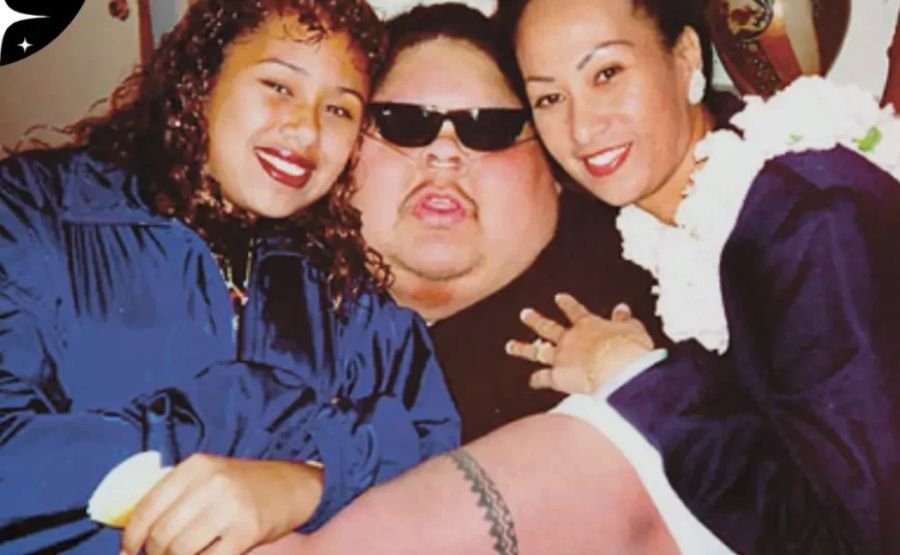
Ceslie-Ann Kamakawiwo’ole: The Untold Story of IZ’s Daughter and the Life Behind the Headlines
The internet’s version of Ceslie-Ann Kamakawiwo’ole goes something like this: daughter of legend, quiet private life, then a criminal episode that makes her “infamous,” then silence. A redemption arc never confirmed, a musical legacy never documented, a life summarized entirely by what her father achieved and what she allegedly did in a parking lot on Ala Wai Boulevard.
That’s an unfinished tale, and it’s delivered with a particular type of lazy contempt that needs to be challenged.
Here’s what gets lost in those thumbnail bios: she was fourteen years old when her father died. Fourteen. The man who was, without exaggeration, the most beloved musician in the history of Hawaii — the man whose funeral brought 10,000 people to the state capitol building, whose coffin lay in state (only the third person in Hawaiian history to receive that honor, and the only one who was never a government official) — that man was her dad. And she was fourteen when she dove into the Pacific Ocean behind the ashes.
Think about what it takes to grow up from that moment. To carry a name that means “the fearless eye, the bold face” when you are a teenager whose father has just become an icon. The rest of us deal with grief in private. She dealt with it while the entire state of Hawaii, and eventually the world, processed their own version of who her father was.
The “infamous daughter” framing ignores everything about that weight.
Quick Bio
| Info | Detail |
| Full birth name | Ceslieanne Wehekealake’alekupuna Ah Lo Kamakawiwo’ole |
| Goes by | Ceslie-Ann “Wehi” Kamakawiwo’ole |
| Born | 1983, Hawaii — exact date not publicly confirmed |
| Father | Israel Ka’ano’i Kamakawiwo’ole (“IZ” / “Bruddah Iz”) — born May 20, 1959; died June 26, 1997 |
| Mother | Marlene Ku’upua Ah Lo Kamakawiwo’ole — hula dancer, later worked in cardiology at Kaiser Permanente |
| Parents married | 1982 — same year uncle Skippy Kamakawiwo’ole died |
| Age at father’s death | 14 years old |
| The funeral | 10,000+ attended at Hawaii State Capitol; IZ only non-politician in history to lie in state there |
| Ash scattering | Mākua Beach, July 12, 1997; Marlene and Ceslie dove into the ocean after the ashes |
| 2015–2016 legal trouble | Caught driving stolen Mercedes SUV, Honolulu; subsequently placed on Hawaii’s Most Wanted list for violating HOPE probation ($20,000 warrant) |
| HOPE probation context | Hawaii’s Opportunity Probation with Enforcement — a community supervision strategy specifically for substance-abusing probationers |
| Name meaning | Kamakawiwo’ole = “the fearless eye, the bold face” in Hawaiian |
What the Name Actually Means
Before anything else, let’s sit with that surname for a second.
Kamakawiwo’ole. “The fearless eye, the bold face.” That’s what it means in Hawaiian. It is not a passive name. It’s a declaration.
And her given name? Ceslieanne Wehekealake’alekupuna Ah Lo. The “Wehi” nickname she goes by is a Hawaiian name that doesn’t translate cleanly — it carries connotations of adornment, something precious worn or displayed. The names her parents gave her suggest they had intentions for her beyond surviving. They wanted her to be something. To carry something.
She’s been carrying her father’s last name in a world that made it famous for reasons she had no control over. Think about what that does to your sense of self, over decades.
See also “The Bella Thornton Nobody Is Actually Writing About (And the One They Keep Inventing Instead)“
The Parents’ World She Was Born Into
Israel and Marlene Kamakawiwo’ole married in 1982. Her mother was a hula dancer. Her father was already deep into the Makaha Sons of Ni’ihau, the group he’d been part of since he was a teenager, playing Hawaiian and Jawaiian music around the islands. The same year they married, his older brother Skippy — his musical partner from childhood, the person Israel had started playing with at age eleven — died.
They married in grief. They built a family while carrying that.
Ceslie was born in 1983. She grew up in a household shaped by music, by Hawaiian cultural identity, by the Hawaiian sovereignty movement that her father was deeply involved in, and by the particular heaviness of that early loss. IZ publicly described being terrified after losing his parents, brother, and sister in the years around his peak fame. He once told producer Jon de Mello: “I was scared when I lost my mother, my father, my brother, my sister.” Those weren’t abstract losses. They were the texture of the family Ceslie grew up inside.
Her mother Marlene worked in the cardiology department at Kaiser Permanente’s Moanalua Medical Center. A hula dancer who trained as a healthcare worker. That combination — cultural tradition meeting practical labor — is pretty much the daily reality of working-class Hawaiian family life. Ceslie’s parents weren’t celebrities living in celebrity bubbles. They were people doing real work while her father happened to also be famous.
The Recording That Made Her Father a Global Figure
Here’s the part of the IZ story that affects Ceslie’s life in ways nobody quite addresses.
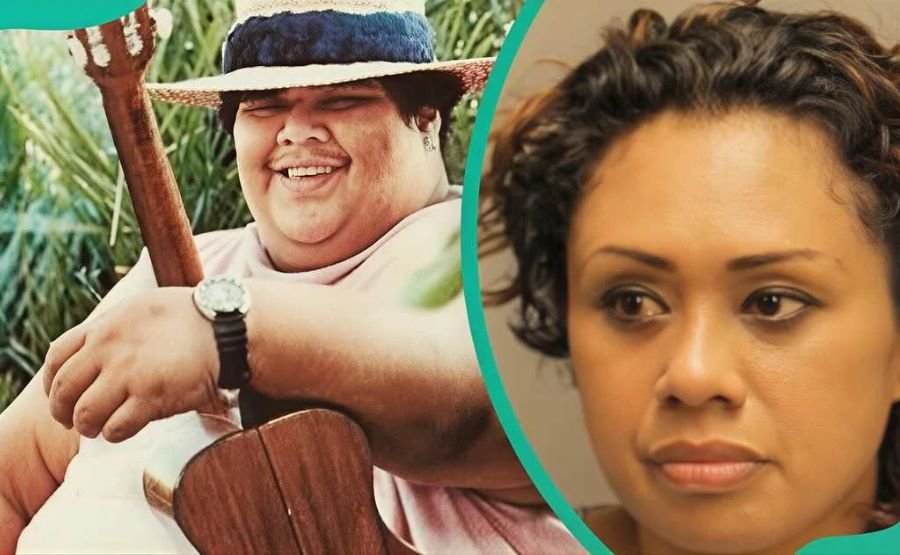
In 1988, a recording engineer named Milan Bertosa got a late-night call. IZ — not yet a solo artist, still primarily known in the islands — called at about 3 am and asked if he could come in. Bertosa, having just finished a frustrating session, said fine. IZ arrived with his ukulele. Two microphones. One take. Fifteen minutes. He recorded “Somewhere Over the Rainbow” and “What a Wonderful World” as a medley, just voice and ukulele.
Bertosa made copies only for IZ himself. The recording sat for five years. In 1993, working on the Facing Future album, Bertosa played the demo for producer Jon de Mello. De Mello heard it and said it needed to be on the album. As is. The original demo. No polish, no production.
Facing Future came out in 1993. The song found its audience gradually — in films, in TV shows, in commercials, in television moments — and IZ died in 1997 before the full global scale of what he’d made was apparent. He was 38. He’d recently been close to 700 pounds and his lungs couldn’t hold the weight.
The posthumous fame was immense. By 2004, the track had reached number 12 on Billboard’s Hot Digital Tracks chart. The YouTube video of the ashes-scattering ceremony — Marlene and Ceslie and thousands of mourners on the beach — has accumulated hundreds of millions of views.
Hundreds of millions of people have watched the moment Ceslie-Ann dove into the Pacific Ocean after her father’s ashes.
She was fourteen. She didn’t consent to becoming a witness in a music video that would be seen by hundreds of millions of people. The footage existed before YouTube existed. It just kept spreading.
Being Fourteen at the State Capitol
Let me be specific about what happened in July 1997, because the content farms summarize it in three sentences and move on.
Israel Ka’ano’i Kamakawiwo’ole died June 26, 1997. The Hawaii State Flag flew at half-staff. Ten thousand people came to the state capitol building, where his koa wood coffin lay in state — an honor given only twice before in Hawaiian history, both times to government officials. He was the only person in Hawaiian history to receive this honor as a private citizen.
Ceslie was 14.
At the age of 14, 10,000 strangers are mourning your father in the most revered public place in your state. Your father’s coffin is in the building where laws get made. The governor ordered the flag to half-staff for your dad.
And then, on July 12, 1997, the family and friends gathered at Mākua Beach. His ashes were scattered on the Pacific Ocean. Marlene went in first. Then Ceslie dove in after her. Then others followed.
That specific image — a 14-year-old girl throwing herself into the ocean after the ashes of a father Hawaii had already claimed as its own — is the most emotionally significant thing ever documented about Ceslie-Ann Kamakawiwo’ole. It’s also the thing the “she became infamous” articles skim past in their rush to get to the criminal record.
The Years Nobody Writes About
Between 1997 and 2015, Ceslie-Ann disappeared from the public record almost completely.
She was a teenager who’d lost her father to the most publicly witnessed death in Hawaii’s modern popular culture history. She grew up. She married — who, nobody has confirmed publicly. She had children — how many, nobody has confirmed publicly. She lived in Hawaii.
That’s it. That’s the documented record of eighteen years.
The content farms fill this gap with invented activist careers and fabricated contributions to Hawaiian music preservation. None of those activities have primary-source citations because none of them are verifiable. One site claims she was a “prominent advocate for Native Hawaiian rights” who ran education and outreach programs — with zero supporting documentation. Another says she used “platforms like Instagram and Facebook” to connect with fans — her personal social media presence is not documented anywhere.
Let’s be honest about what this invented biography is doing: it’s trying to place a tragic figure on a redemption arc she never publicly signed up for. The content farms can’t tolerate the blank space, so they fill it with aspirational biography.
The blank space is actually more honest.
What Actually Happened in 2015 and 2016
On February 25, 2015, a man parked his Mercedes SUV on Ala Wai Boulevard in Honolulu. The next morning, it was gone. He reported it stolen.
That afternoon, police in the Pearl City area located the vehicle parked on Kamalo Street. Surveillance was established. At around 4 pm, a woman was observed getting into the vehicle and driving away.
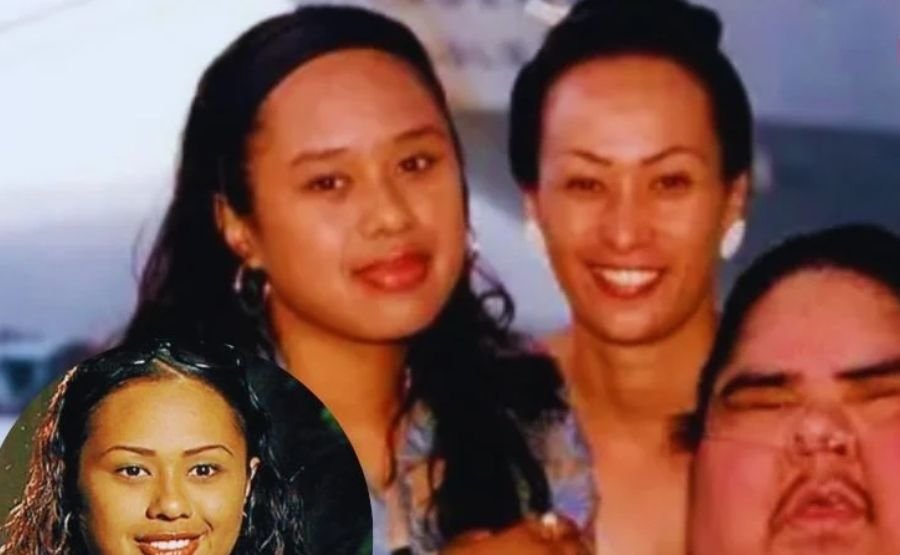
That woman was Ceslie-Ann Kamakawiwo’ole. She was 32 years old.
She was arrested. Subsequently, she appears to have been placed on HOPE probation — Hawaii’s Opportunity Probation with Enforcement, a program specifically designed for substance-abusing probationers with long drug use histories. The program combines swift, certain, but modest sanctions for any violation of probation terms.
The following year, 2016, she violated those terms. A $20,000 warrant was issued. She ended up on Hawaii’s Most Wanted list.
On August 7, 2016, she was arrested after the news channel KHON2 broadcast live footage of her driving the stolen vehicle.
I’m going to say a thing that will bother some people: HOPE probation is specifically designed for people with substance abuse histories. The nature of what she violated — failing to comply with the supervision requirements of a program that exists to help substance-abusing probationers — is the context that most headlines strip away in favor of “daughter of IZ on Most Wanted list.”
She wasn’t a master criminal. She was someone struggling in ways the program she was placed in was designed to address. That doesn’t excuse anything. It does contextualize everything.
The Name Is Still Fearless
Here’s the thing about the “infamous” framing that bugs me most.
The articles that call her “infamous” are written by people for whom the most interesting thing about her is the gap between her father’s legend and her own situation. The higher the father, the more dramatic the fall. That’s the logic.
It’s also a logic that treats her as primarily a narrative device in someone else’s story. She’s famous because her father was IZ. She’s “infamous” because she diverged from the story his legend implies she should have lived.
But her name still means “the fearless eye, the bold face.” Her middle name — Wehi — still means something precious, something adorned. Her parents named her for a different destiny than the one the internet documents. And the thing about being born into a name that heavy, in a family that carried that much grief from the very beginning, is that you don’t get to choose the weight. You just carry it.
She lost her father at 14. She dove into the Pacific Ocean after his ashes. She married someone. She had children. She struggled with something severe enough to land her in HOPE probation. She ended up on a Most Wanted list. She was arrested.
That’s life. Not a cautionary tale. Not an “infamous” footnote. A human life, compressed into bullet points by people who know her father’s name and nothing else about her.
Final Words
I’m going to say something the hagiographic IZ content never quite gets around to: being the child of an icon is its own kind of burden, and it’s one that the icon’s fans are constitutionally unable to acknowledge because it complicates the mythology they need.
IZ became a global symbol of Hawaiian peace, love, and cultural resilience. “Somewhere Over the Rainbow” plays at funerals, weddings, hospitals, hospices, film endings. It’s one of the most emotionally useful songs of the last century. It comforts millions of people who have no idea what it means to be Native Hawaiian, no idea what the sovereignty movement was, no idea that the man who made it died at 38 weighing close to 700 pounds while his lungs gave out.
His daughter was 14 when that happened. Then she grew up in a world where her father’s image was on tote bags and phone cases and “Aloha Spirit” merchandise, and where everyone who encountered her name had a feeling about who her dad was.
And then she ended up on Hawaii’s Most Wanted list at 32.
The story of Ceslie-Ann Kamakawiwo’ole is the story of a real person navigating an impossible inheritance. It’s not a cautionary tale about the sins of the father visiting the daughter, and it’s not an inspirational story about carrying on a legacy. It’s just a life — messy, underdocumented, shaped by grief that came too early and fame that came from outside and never really belonged to her.
Her name means “the fearless eye, the bold face.” She deserves an account of her life that lives up to that. Not a three-paragraph “infamous daughter” summary.
Not yet. But maybe someday.
FAQs
1. Who is Ceslie-Ann Kamakawiwo’ole?
The only child of Israel Ka’ano’i Kamakawiwo’ole — “IZ” or “Bruddah Iz” — the Hawaiian musician best known for his ukulele medley of “Somewhere Over the Rainbow/What a Wonderful World.” Her full birth name is Ceslieanne Wehekealake’alekupuna Ah Lo Kamakawiwo’ole. She was born in 1983, grew up in Hawaii, and was 14 years old when her father died in June 1997.
2. What happened to Ceslie-Ann Kamakawiwo’ole?
She lived privately after her father’s death in 1997. In February 2015, she was caught driving a stolen Mercedes SUV in Honolulu and arrested. She was subsequently placed on HOPE probation — a Hawaii program for substance-abusing probationers — and violated those probation terms. In 2016, a $20,000 warrant was issued and she appeared on Hawaii’s Most Wanted list. She was arrested on August 7, 2016, after news channel KHON2 broadcast footage of her in the stolen vehicle.
3. What is HOPE probation, and why does it matter to Ceslie’s case?
Hawaii’s Opportunity Probation with Enforcement is known as HOPE. It’s a community supervision program specifically designed for probationers with long histories of drug use and substance abuse. The fact that she was placed on HOPE probation, not standard probation, indicates that substance abuse was a central factor in her case — something most “infamous daughter” headlines skip over.
4. Was Ceslie-Ann Kamakawiwo’ole at her father’s funeral?
Yes. She attended IZ’s state funeral at the Hawaii State Capitol, where approximately 10,000 people came to pay their respects. Her father was only the third person in Hawaiian history to have his coffin lie in state at the capitol, and the only non-politician. Two days after the funeral, on July 12, 1997, his ashes were scattered in the Pacific Ocean at Mākua Beach. Ceslie dove into the ocean after the ashes, following her mother Marlene, in what became a documented moment in the posthumous IZ music video seen by hundreds of millions of people.
5. Does Ceslie-Ann Kamakawiwo’ole make music like her father?
There is no verifiable public record of her having a music career. Some content farm articles claim she “carries on her father’s musical legacy” as a “singer and songwriter,” but no albums, recordings, performances, or credits are documented anywhere. If she makes music, she does so privately.
6. What does the name Kamakawiwo’ole mean?
“The fearless eye, the bold face” in Hawaiian. It’s not a passive surname — it carries active connotations of courage and directness. Ceslie’s middle name “Wehi” carries connotations of adornment, something precious. Her parents gave her layered Hawaiian names with significant cultural weight.
7. Who were Ceslie-Ann Kamakawiwo’ole’s parents?
Her father was Israel Ka’ano’i Kamakawiwo’ole, born May 20, 1959, died June 26, 1997 of respiratory failure — caused by his extreme obesity, which at peak reached close to 767 pounds. Her mother is Marlene Ku’upua Ah Lo Kamakawiwo’ole (née Ah Lo), a hula dancer who later worked in the cardiology department at Kaiser Permanente’s Moanalua Medical Center. Her parents married in 1982 — the same year Israel’s older brother and musical partner Skippy Kamakawiwo’ole died.
8. What is the “Somewhere Over the Rainbow” recording, and does it affect Ceslie’s life?
The recording was made in a spontaneous 15-minute session in 1988, when IZ called engineer Milan Bertosa late at night and came in with his ukulele. One take. Two mics. The demo sat for five years before producer Jon de Mello included it on the 1993 album Facing Future. It went on to become one of the most-streamed and most-placed songs in contemporary popular culture. The posthumous music video for the song features footage of the ash-scattering ceremony at Mākua Beach — which means Ceslie, at 14, is documented in a piece of global media viewed by hundreds of millions of people. She had no control over that.
9. Is there information about Ceslie-Ann Kamakawiwo’ole’s husband and children?
Multiple sources confirm she is married and has children, but she has not disclosed her husband’s name, how many children she has, or their ages. This information remains private.
10. What was the significance of IZ’s funeral for Ceslie’s life specifically?
It meant that the most visible, grief-saturated public experience of her life — losing her father at 14 — happened in front of the entire state of Hawaii, and that documentation of the ash-scattering became part of one of the most widely viewed pieces of music video content on the internet. Her grief was not private. It became communal property. Growing up as the child of someone that publicly mourned carries psychological weight that the content farms don’t pause to acknowledge.
11. Why does so much online content about Ceslie-Ann Kamakawiwo’ole contain false information?
Because she’s private enough that there’s very little verified information to work with, but she’s connected to a famous enough name that search traffic makes her worth targeting. AI content generators fill the biographical gaps with invented activist careers, fabricated music credits, and generic “carries on the legacy” phrasing. One site describes her as a “prominent advocate for Native Hawaiian rights” with education programs — none of it is sourced. Another AI-generated piece confusingly turns her father’s death into a story about civil disobedience protests against homelessness. The real record is much thinner, and much more human.
Beyond the headlines, discover what’s worth knowing — TheTrendist.