
Chinua Shakur: The Mysterious Son of Mutulu Shakur and Tupac’s Little-Known Stepbrother
Here’s the actual provocation: Chinua Shakur might be the most thoroughly fabricated person in a family the internet already barely understands. He’s real. He exists. He’s the son of Mutulu Shakur — one of the most historically significant radical figures in post-Civil Rights America — and therefore the stepbrother of Tupac Shakur, which means his name surfaces whenever anyone goes digging into the Shakur family tree. And every time his name surfaces, someone invents a different version of him.
One website — still indexed on Google as of my research — describes “Chinua Shakur” as a celebrated novelist born in Atlanta in 1975 who won the Coretta Scott King Award. This person does not exist. The description appears to be an AI content generator that encountered the name “Chinua” (almost certainly a reference to Nigerian author Chinua Achebe, the name being a tribute across Black radical communities), attached it to “Shakur,” and built a biography out of whole cloth. The actual Chinua Shakur — Mutulu’s son, Tupac’s stepbrother, identified in multiple credible sources as a rapper — has almost no documented public footprint beyond his family connections.
That gap between the invented version and the real one is the whole story.
Quick Bio
| Detail | Information |
| Full name | Chinua Shakur |
| Father | Mutulu Shakur (born Jeral Wayne Williams, August 8, 1950; d. 2023) |
| Mother | Makini Shakur (née Hearn) |
| Parents’ marriage | 1977 (divorced ~1999-2010; sources conflict on exact year) |
| Relationship to Tupac | Stepbrother (through Mutulu’s marriage to Afeni, then later Makini) |
| Siblings | Mopreme Shakur (rapper, Thug Life), Nzingha Shakur, Ayize Jama-Everett (author) |
| Half-sibling | Sekyiwa Shakur (via Mutulu and Afeni) |
| Identified occupation | Rapper (multiple sources; no discography publicly documented) |
| Privacy level | Extremely high — no confirmed social media, no interviews |
| Biggest internet fabrication | Atlanta novelist, Coretta Scott King Award winner (entirely invented) |
| What’s actually confirmed | Member of the Shakur family; son of Mutulu; stepbrother of Tupac |
The Father You Have to Understand First
You cannot understand anything about Chinua Shakur without first understanding who Mutulu Shakur was. And most people — even those who know the Tupac story well — only have half the picture on Mutulu.
Mutulu Shakur, born Jeral Wayne Williams in 1950, was not a background figure. He was a central actor in the Black Liberation movement’s most intense phase. He ran an acupuncture clinic in Harlem — the Lincoln Detox Center — that treated heroin addiction using acupuncture methods, which was revolutionary in the 1970s. He was affiliated with the Black Liberation Army. He helped orchestrate the 1979 prison escape of Assata Shakur from the Clinton Correctional Facility in New Jersey. He was involved in the 1981 Brinks robbery in Rockland County, New York, in which two police officers and a security guard were killed.
He was listed among the Ten Most Wanted by the FBI. He was captured in 1986. He received a sixty-year federal prison sentence.
Chinua Shakur was born into this. His father went to federal prison when Chinua was approximately six or seven years old, depending on which birth year you trust — and the sources genuinely conflict here. He grew up with a father behind bars, inside a family that was under FBI surveillance for years, in a household shaped by movement politics, sacrifice, and state violence.
The name Chinua itself is almost certainly a tribute to Chinua Achebe, the Nigerian author of Things Fall Apart — standard naming practice within the Black radical intellectual tradition of the 1970s, where children were given names honoring African freedom figures, revolutionaries, and intellectuals. Mopreme. Nzingha. Sekyiwa. Ayize. These are not random names. They are deliberate political and cultural statements from parents who saw naming as an act of connection.
The Siblings Who Are Easier to Find
The Shakur sibling situation is genuinely complicated, and most internet sources make it worse by getting the relationships wrong. So let’s lay it out clearly, because understanding where Chinua fits requires understanding the whole family structure.
Mutulu Shakur had a first marriage (or committed relationship) with Sharan Harding, with whom he had Mopreme Shakur — born Maurice Williams Shakur in 1967. Mopreme is the oldest, the one who rapped with Tupac in Thug Life, the one who appears in photographs at industry events and has given interviews. He has the most public presence of the Mutulu-side siblings.
Then Mutulu married Afeni Shakur in 1975 — yes, the same Afeni who was Tupac’s mother. Their marriage produced Sekyiwa Shakur in 1975. They divorced in 1982.
Then Mutulu married Makini Shakur (née Hearn) in 1977 — yes, there is an overlap here, and the sources genuinely do not resolve this cleanly. Some list the Makini marriage as beginning in 1982; others say 1977. Wikipedia’s most detailed entry says 1977, which creates a complicated picture. Chinua and Nzingha are Makini’s children with Mutulu.
Ayize Shakur — now known as Ayize Jama-Everett, an author who has published a speculative fiction trilogy — is also one of Mutulu’s children, though the specific mother is listed differently across sources.
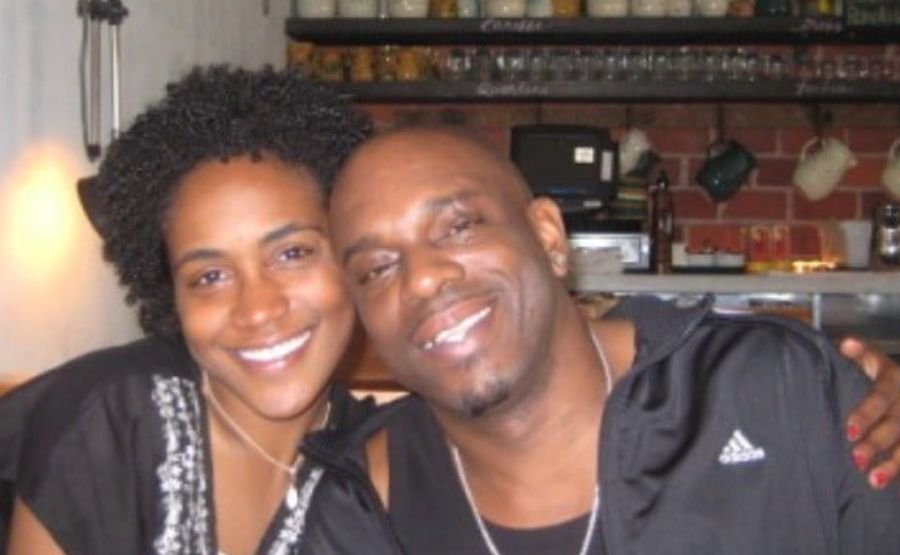
Chinua sits in the middle of this extended network. He is Mopreme’s half-brother. He is Sekyiwa’s half-brother. He was Tupac’s stepbrother, though the nature and closeness of that relationship is not publicly documented in any detail — Tupac was much more visibly close to Mopreme, with whom he recorded.
What “Identified as a Rapper” Actually Means
Multiple credible celebrity genealogy and biography sources describe Chinua Shakur as a rapper. Sportskeeda, Legit.ng, and Hollywood Life all identify him this way. The identification is consistent enough across separate sources that it seems likely to reflect something real.
What doesn’t exist: any album, any single, any verified stage name, any interview, any concert footage, any streaming profile. Nothing that would let you actually listen to the music if it exists.
His brother Mopreme has an extensive documented career — Thug Life’s Thug Life: Volume 1, appearances on All Eyez On Me, The Don Killuminati, solo projects, interviews. His half-brother Ayize is a published novelist with an accessible bibliography. His father Mutulu appeared in the documentary Tupac: Resurrection and wrote a “Thug Life Handbook” with Tupac.
Chinua has apparently made music, and apparently has not made it publicly enough to leave traces that have survived content aggregation. That’s not unusual for someone who didn’t sign to a label or build a streaming presence, but it does mean the “rapper” identification hangs out there without any supporting evidence a listener can access.
The Atlanta Novelist Who Doesn’t Exist
I want to spend real time on this, because it’s the starkest example I’ve encountered of content generation creating a completely false biographical record for someone real.
A site on the .com domain (dev.quintessa.com) has a detailed article claiming Chinua Shakur is a “celebrated author and activist” born in Atlanta, Georgia on April 14, 1975. It describes his literary career beginning with “short stories and poetry” and “evolving into full-length novels.” It says he won the Coretta Scott King Award. It says he lives in Atlanta with his partner and two children.
None of this is true. The American Library Association gives African American writers and artists the Coretta Scott King Award every year. If someone named Chinua Shakur had won it, there would be a documented record. There isn’t. No novel, no short story collection, no literary presence of any kind is associated with this name.
What happened is identifiable. The name “Chinua” is strongly associated with literary achievement — Chinua Achebe is one of the most celebrated authors of the twentieth century. The name “Shakur” triggers the family associations. An AI content generator combined these associations with a standard “notable author and activist” biography template and produced something that looks like journalism and contains zero journalism.
The same article links to other fabricated content about Tupac’s family and has photos that are mislabeled. It is, in short, a monument to what happens when an algorithm encounters a real name, finds almost no real information, and fills the vacuum with plausible-sounding text.
The fact that this article ranks — or ranked — in search results means that people searching “Chinua Shakur” are finding a person who doesn’t exist in Atlanta, winning awards they never won, while the actual Chinua Shakur goes quietly undocumented.
The Father’s Death and What It Meant
Mutulu Shakur was released from federal prison on compassionate grounds in November 2022, after serving thirty-seven years. He was ill — multiple myeloma, bone marrow cancer. He died on February 15, 2023, in Los Angeles. He was seventy-two years old.
His death generated significant coverage in Black press, radical press, and hip-hop media. The New York Times covered it. The Nation covered it. The coverage remembered him as a revolutionary, a healer, a convicted man who never renounced his politics, who wrote extensively from prison about acupuncture, about justice, about his son Tupac.
What’s not in that coverage, in any article I found: Chinua Shakur. The loss of a parent who was incarcerated when you were a child, who you may have only seen over the phone and in visiting rooms for thirty years, who was momentarily released before passing away—that is a personal tale. It stayed private.
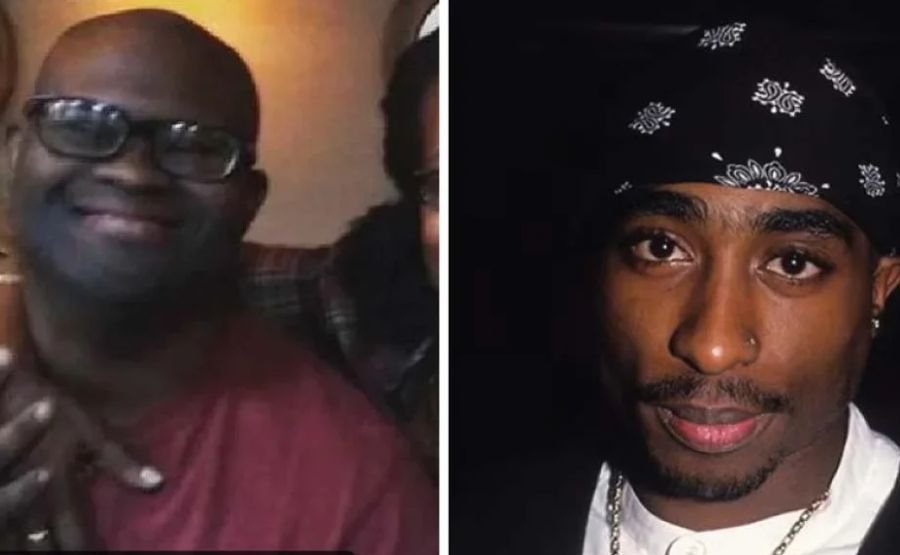
Mopreme appeared in coverage. Sekyiwa has been visible in Tupac estate matters. Ayize Jama-Everett has his own public profile as an author. Chinua was not quoted, not photographed, not identified in any mainstream or independent coverage of Mutulu’s death.
The Shakur Name as Identity and Burden
Here’s the thing that gets underappreciated when people discuss the Shakur extended family. These are not people who chose celebrities. They were born into or married into a tradition of radical political commitment, and the name they carry became famous through Tupac’s music, but the people who built that name — Mutulu, Afeni, Mopreme, Assata — were doing something different from entertainment.
Chinua Shakur bears that name without having chosen its weight. His father chose it for himself: Jeral Wayne Williams became Mutulu Shakur as a political and cultural declaration. Chinua was born Shakur. He didn’t take on the name; it was given to him.
The question of what you do with a name that carries that much history — when you’re not Tupac, not a figure who can process the weight of it through music and charisma and mass appeal — is genuinely difficult. Mopreme processed it through continued music-making and by publicly honoring Tupac’s memory. Ayize processed it through fiction. Sekyiwa processed it through the foundation work and estate management.
Chinua, apparently, processed it privately.
Final Words
Chinua Shakur is a real person who has successfully maintained privacy in an information environment that invents people from scratch when it can’t find them. His father was a figure of historical significance. His stepbrother was one of the most famous artists of the twentieth century. He grew up in a household shaped by radical politics, federal surveillance, prison visits, and a commitment to Black liberation that preceded his birth.
He is also, as far as any publicly available record shows, someone who has chosen not to perform any of that for an audience. The rapper identification suggests he makes music. The absence of any documented discography suggests he makes it on his own terms.
The invented version of him — Atlanta novelist, award winner, public intellectual — is more legible to the internet’s content ecosystem. It fits a template. It answers the implicit question “what would a Shakur who wasn’t Tupac be doing?” with a culturally coherent answer. But it’s fiction.
The real answer, apparently, is: something quieter. Something private. Something that hasn’t left enough of a trail for the algorithm to find and hasn’t inspired him to explain himself.
Given everything his family went through — the surveillance, the prison years, the constant public scrutiny of a name that became a commodity — I find the choice to stay quiet completely coherent. Maybe even admirable.
FAQs
1. Who is Chinua Shakur?
Chinua Shakur is the son of Mutulu Shakur — the Black Liberation Army activist and convicted Brinks robber who served nearly four decades in federal prison — and Makini Shakur (née Hearn). He is therefore the stepbrother of Tupac Shakur, through Mutulu’s earlier marriage to Afeni Shakur. Multiple sources identify him as a rapper, though no documented discography exists publicly.
2. How is Chinua Shakur related to Tupac?
He is Tupac’s stepbrother. Mutulu Shakur was first married to Afeni (Tupac’s mother) in 1975, then later to Makini, with whom he had Chinua and Nzingha. So Tupac and Chinua share Mutulu as a father figure, though they had different mothers and somewhat different family circumstances.
3. Is the story about Chinua Shakur being an Atlanta novelist true?
No. This appears to be entirely fabricated AI-generated content on at least one website. There is no documented novel, no Coretta Scott King Award, no literary career associated with Chinua Shakur. The name “Chinua” likely triggered an AI generator’s association with Chinua Achebe, the Nigerian novelist, and it built a biography around that association.
4. Who are Chinua Shakur’s siblings?
His siblings through Mutulu include: Mopreme Shakur (rapper, Thug Life member), Nzingha Shakur (his full sibling through Makini), and Ayize Jama-Everett (author of The Liminal People trilogy). His half-sibling is Sekyiwa Shakur (via Mutulu and Afeni). Through Tupac’s side of the family, there are additional half-siblings from other relationships.
5. Is Chinua Shakur the same person as Napoleon/Mutah Beale?
No. Mutah Beale (Napoleon) is a completely different person — he was a rapper with the Outlawz, an Irvington, New Jersey native whose parents were murdered when he was three. He was a close friend and collaborator of Tupac’s but is not a member of the Shakur biological or step family. Some poorly researched sources have mixed these figures up.
6. What is Chinua Shakur’s rap career?
Identified as a rapper in multiple sources including Sportskeeda, Legit.ng, and Hollywood Life. No specific albums, stage names, or discography have been publicly documented. His brother Mopreme had an extensive career; Chinua’s, if it exists publicly, has not been documented in the English-language press.
7. What happened to Chinua Shakur’s father Mutulu?
Mutulu Shakur was released from federal prison on compassionate medical grounds in November 2022 after serving nearly four decades for his conviction related to the 1981 Brinks robbery. He had been diagnosed with multiple myeloma. He died on February 15, 2023, in Los Angeles at age seventy-two.
8. Did Chinua Shakur know Tupac well?
Unknown. Tupac’s closest Mutulu-side sibling relationship was with Mopreme, who rapped with him in Thug Life and the Outlawz. The relationship between Tupac and Chinua isn’t documented in any interview or memoir that I could find. Given that Mutulu went to prison in 1986 and the family was dispersed, the sibling relationships were likely complicated.
9. Where is Chinua Shakur now?
Unknown. He maintains a level of privacy that makes location, current activity, and personal life completely undocumented. No social media has been identified, no public appearances noted in any source.
10. Why does the internet have so little accurate information about Chinua Shakur?
Because he has apparently chosen not to be public, and the internet handles that choice by inventing content to fill the gap. When a real person leaves almost no digital footprint, content farms generate fake biographies to capture search traffic. The result is multiple incompatible invented “Chinua Shakurs” and very little verifiable fact.
11. Is Chinua Shakur the same as Ayize Shakur/Ayize Jama-Everett?
No. These are two separate siblings. Ayize Jama-Everett is a published speculative fiction author, formerly known as Ayize Shakur, who has given interviews and has a documented bibliography. Chinua is a different sibling, also a son of Mutulu Shakur, without Ayize’s public profile.
Beyond the headlines, discover what’s worth knowing — TheTrendist.



One Comment