Kimmie Weeks: The Boy Who Defied a Warlord and Changed Liberia Forever
Here’s the story you’ve probably heard: a boy survives a war, almost dies, makes a vow, changes the world. Clean. Inspiring. Easily digestible on 20 million bags of Cool Ranch Doritos — and yes, that sentence is real, and it tells you something important.
But let me push on that for a second.
Kimmie Weeks is one of the most genuinely remarkable people you’ve never thought seriously about. The world gave him fifteen minutes of spotlight around 2008, applauded, and moved on. CNN did a profile. MTV Canada showed up. A few universities handed out honorary degrees. And then? The messy, complicated, ongoing work of actually rebuilding a broken country mostly happened out of frame, away from the Western media cycle that had already moved on to the next feel-good story.
You were handed a myth. What’s underneath it is more interesting.
Quick Bio
| Info | Detail |
| Full name | Kimmie L. Weeks |
| Born | December 6, 1981, Monrovia, Liberia |
| Family background | Connected to prominent Americo-Liberian Weeks family (disputed depth of privilege) |
| War experience | Nearly died of cholera age 10; briefly declared dead in refugee camp |
| Key act at 17 | Published report exposing Charles Taylor’s child soldier recruitment; fled assassination attempts |
| Education | B.A. Amherst College; M.S. University of Pennsylvania; Honorary Doctorate, Amherst (2011); Law degree, University of Liberia |
| Major org | Youth Action International (YAI), founded early 2000s from Amherst |
| Current focus | Hope Farm (sustainable agriculture, Liberia); Integrum Scientific |
| Awards | Golden Brick Award (2007); Humane Order of African Redemption; MLK Peace Medal; 2013 World’s Children’s Prize |
| Controversy | “Too many Weeks in government” — Liberian press and Senate pushback on family appointments |
| Pop culture note | Bio appeared on 20 million bags of Cool Ranch Doritos |
Before the Vow, There Was a Pile of Dead Bodies
Most coverage of Kimmie Weeks starts around age 14 or 15, at the moment he becomes photogenic enough to be a story. That’s a cheat.
Start here instead: 1990. A nine-year-old kid and his mother flee their home in Monrovia as rebels close in on the capital. They end up in a makeshift refugee camp. No clean water, no medicine, no food that isn’t poisoned by circumstance. Kimmie contracts cholera. Then yellow jaundice. Then chickenpox. All three, stacking on a child’s body without medical care.
He deteriorates so badly he’s placed on a pile with the dead.
His mother refuses to accept it. She drags him back. He survives.
That’s the moment everyone cites as the origin of his life’s mission — the vow he reportedly made that night to dedicate himself to children. But let’s be honest about something: that kind of near-death experience doesn’t automatically produce a child rights activist. It produces trauma. What converted that trauma into action was something harder to quantify — some internal architecture that most children, even remarkable ones, don’t have.
He was ten. He started organizing. That part isn’t a myth. By age thirteen he’d co-founded Voice of the Future, Liberia’s first child advocacy organization. At fifteen, he launched the Children’s Disarmament Campaign and worked alongside UNICEF to help lobby the release of an estimated 20,000 child soldiers. Think about what that means practically — a fifteen-year-old was attending political meetings, meeting factional leaders, negotiating.
Not a symbol. An actual actor.
See also “Marcel Young: The Untold Story of Dr. Dre’s Private Son“
The Report That Could Have Gotten Him Killed
The moment that defines Kimmie Weeks in history — the one journalists love to compress into a single anecdote — happened in late 1997. He was seventeen.
Charles Taylor had just won the Liberian presidency in that eerie election where people voted for him partially out of fear of what he’d do if they didn’t. Taylor was powerful. Taylor was dangerous. People who crossed him disappeared.
Kimmie wrote a report anyway.
He had investigated and documented Taylor’s government recruiting children as soldiers, preparing them as mercenaries for violence in neighboring Sierra Leone. December 1997 saw the publication of the report. It made headlines across Liberia. Within weeks, soldiers appeared at his office looking for him. They didn’t know, apparently, how young he was. Kimmie was literally standing in the room while they asked where Kimmie Weeks was.
He says Charles Taylor himself, during an earlier confrontation Kimmie sought out personally — and this is the detail that makes my head spin, that a teenager walked into a war criminal’s office voluntarily — told him directly: “If you do anything about this, you are at risk of disappearing, do you understand?”
Kimmie said he understood and left.
Then he published the report anyway.
By January 1998 he was being hunted. He spent three weeks moving between safe houses, then crossed the border into Ivory Coast by car. A friend helped arrange it. Six months later the US Embassy got him out. He was granted political asylum.
Seventeen years old. Being hunted by a head of state.
I keep turning this over. The bravery isn’t the inspiring part — plenty of people do brave things in extremis. What’s almost unsettling is the deliberateness. He knew what was at stake. He walked into Taylor’s office. He published. He didn’t stumble into heroism; he chose it with eyes open.

Amherst, YAI, and the Part the Feel-Good Stories Leave Out
Here’s where the narrative gets tidied up in ways that deserve scrutiny.
The standard version: Kimmie arrives in America as a refugee, enrolls at Amherst College (Massachusetts), and founded Youth Action International while still a student. A scrappy organization born from nothing. Pure grassroots.
There’s a thread that deserves pulling here.
The Weeks family in Liberia is not nobody. His father’s family includes prominent Americo-Liberian figures — Rocheforte Weeks served as the first Liberian president of the University of Liberia. The Weeks name, in the context of Liberian elite history, carries weight. In an editorial calling for “no more Weeks appointments,” Front Page Africa, one of Liberia’s most reputable independent newspapers, listed four members of the same extended family occupying concurrent senior government positions: Milton Weeks as governor of the Central Bank, Ophelia Weeks as president of the University of Liberia, Angelique Weeks as chair of the telecom authority, and Kimmie as chairman of the Liberia Water & Sewer Corporation.
A front-page editorial explicitly calling it a family affair.
Now, does any of this undercut what Kimmie did as a teenager? No. Not even slightly. And his supporters pushed back, saying the Doritos kid who grew up in Paynesville Central market wasn’t born to privilege in any meaningful way. One front-page piece flatly states: “Nobody should tell you that Kimmie Weeks was born wealthy.”
But the “refugee arrives with nothing” framing requires some nuance. He was a refugee — genuinely. The danger was genuine. And the family has enough political history in Liberia that the word “connections” is not irrelevant. Holding both things simultaneously doesn’t diminish the courage. It just makes the story more complete.
The Gap Years Nobody Talks About
Here’s a strange thing about Kimmie Weeks’s public timeline. Between roughly 2010 and 2022 — about twelve years — the trail of mainstream international coverage essentially goes cold. The awards dried up. The CNN profiles stopped. The Brick Award was 2007. The honorary Amherst doctorate was 2011. After that, what?
He was doing things, obviously. As chairman of the Liberia Water & Sewer Corporation since 2012, he worked to provide 800,000 Liberians in Monrovia with clean water—possibly the most useful, unglamorous, and significant task of his life. No one in the Western press cared about water infrastructure. Corporate communications for telecom companies, which he did for both Cellcom and Orange Liberia. A senatorial run where he pledged to donate his entire salary — an audacious move in a country where lawmakers earn tens of thousands of dollars while average citizens struggle to eat.
He didn’t win that Senate race.
Think about it this way: the international nonprofit-industrial complex needs heroes with clean narratives. Child soldiers, dramatic escape, inspiring speech, degree from elite American college. That arc fits a template. “Man spends years improving water infrastructure in post-conflict Monrovia while managing corporate telecom relationships” does not.
The gap years aren’t absence of work. They’re the unsexy work that actually matters, stripped of the machinery that makes Western audiences feel good.
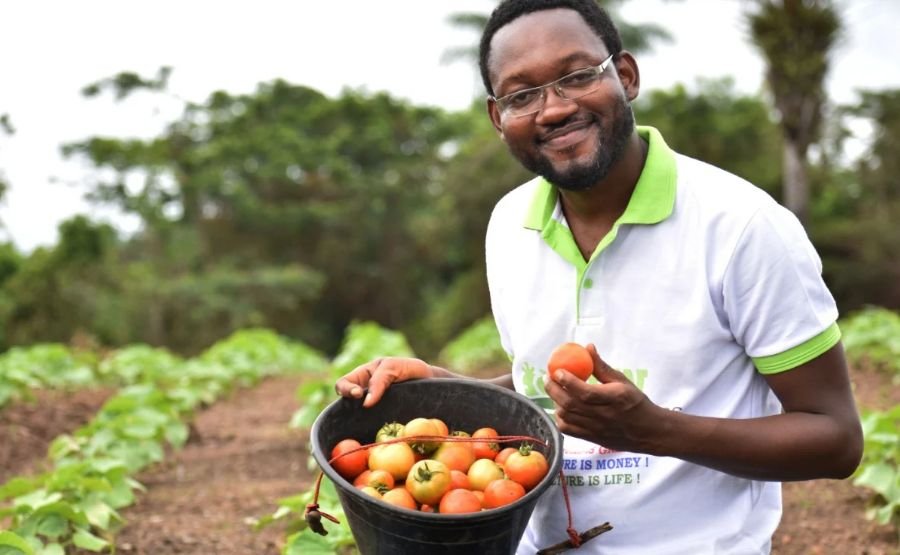
The Pivot to Agriculture
By 2024, Kimmie Weeks’s public persona had shifted again. He was posting on LinkedIn about sustainable agriculture. He’d founded the Hope Farm. He was serving as Senior Director of Africa Operations for Integrum Scientific. He was at the NEXUS Summit in New York in June 2024, on stage alongside Selena Gomez and a Saudi princess.
I’m going to be real about what that juxtaposition does to me. It sits slightly uneasy. Not because the cause isn’t right — Kimmie has consistently argued, with genuine supporting evidence, that agriculture is the real path out of poverty for Liberia and West Africa. He’s not wrong. The World Bank’s 2024 data shows Liberia’s agricultural sector driving 3.4% of the country’s economic growth. The argument has teeth.
But the NEXUS Summit is a philanthropy-meets-celebrity circuit. It’s where the global elite performs concern for global problems. And Kimmie Weeks walking those halls in 2024 occupies a different position in the ecosystem than the seventeen-year-old sleeping in different safe houses every night to avoid assassination.
That’s not a condemnation. People evolve. Contexts change. He earned his seat at that table through genuine sacrifice, not branding. But it’s worth noting that the celebrity-activism circuit has a way of absorbing sharp edges, making even genuine firebrands more palatable, more sellable.
I don’t know if that’s happened here. I’m watching.
The Liberian Law Degree Nobody Mentions
Here’s a detail that rarely shows up in the Western press write-ups: Kimmie Weeks eventually earned a law degree from the University of Liberia.
This matters. He posted about it himself as a “long-held dream.” Not another degree from an American elite institution, not another credential that plays in the Western fundraising circuit. A law degree from a Liberian university, earned while he was already internationally celebrated. That’s someone embedding himself in his country’s actual institutional fabric. It signals something about where his loyalty to Liberia sits — not just as inspiration-export, but as a participant in the country’s legal and civic structures.
It’s the kind of detail that gets dropped from profiles because it doesn’t fit the Western template for what an African activist-hero looks like.
The Numbers Problem
Youth Action International claims to have impacted more than one million lives across six post-war African countries since 2005. Earlier versions of the website said 200,000. Then 500,000. By 2024, the number was over a million.
I’m not saying those numbers are fabricated. Nonprofit impact metrics are notoriously difficult to standardize. What “impacted” means varies enormously by measure. But the numbers’ steady upward march across website versions is worth noting simply because every major activist organization does this, and it’s always worth asking: what does the accounting look like?
I couldn’t find independent audits, which doesn’t mean they don’t exist. It means they’re not prominent. For an organization running education and health programs across multiple countries, more transparency would build credibility — not just among skeptical bloggers but among institutional donors.
This is a gentle push, not an accusation. The work is real. The impact is real. The optics of ever-rising round numbers are just something any serious organization needs to address.
What the Cool Ranch Doritos Moment Really Means
I keep coming back to the Doritos thing. Kimmie’s bio appeared on 20 million bags of Cool Ranch Doritos. That fact is presented as a fun trivia item in nearly every profile — “FUN FACT!” as some sites literally label it. It gets treated as proof of reach, of celebrity, of cultural penetration.
But here’s what it actually is: a snack food corporation licensed the image of a Black African activist-refugee to move products in Western markets. The humanitarian crisis that produced Kimmie Weeks got repackaged as a bag of chips.
I’m not sure Kimmie is bothered by that. Maybe he saw it as a distribution opportunity for the message. Maybe it brought YAI real donations. Fine. But no one in the breathless coverage ever pauses to interrogate what it means that this is the form “recognition” takes.
A child who nearly died in a refugee camp, who stared down a genocidal president, who sacrificed years of his life to rebuild something for his people — and the cultural artifact that certifies his importance in the West is a snack food partnership.
That’s not Kimmie Weeks’s failure. It’s ours.
Final Words
Here’s where I land after all of this.
Kimmie Weeks is the real thing. The child activism, the near-death, the report, the flight from Taylor’s soldiers, the return to Liberia, the decade of unglamorous infrastructure work — it’s real. It holds up. There’s no hoax here, no fabricated biography. The courage at seventeen is the kind that history books should record and mostly don’t, because the context is West Africa and not somewhere the West decided to care about long-term.
But the Kimmie Weeks that got famous — the Doritos version, the TED-adjacent inspirational circuit version — was always a simplification. A man turned into a parable. The family political entanglements, the questions about organizational accountability, the strange middle chapter of corporate telecom work, the transition to agriculture that may or may not be the right next phase — all of that is part of who he is, and all of it got cropped out of the frame.
If you want the real story, it’s messier. A young man from a family with complicated privilege who nevertheless did something extraordinary and unambiguously brave. A person who rebuilt himself multiple times in contexts that would have broken most. Someone now in his forties navigating whether to be a symbol or an operator, and probably struggling with that tension the way anyone would.
He deserves a fuller portrait than a snack food biography. He earned it.
FAQs
1. Who exactly is Kimmie Weeks?
He’s a Liberian human rights activist born in 1981, best known for exposing Charles Taylor’s child soldier program at age seventeen and founding Youth Action International, a nonprofit supporting war-affected children across Africa.
2. Is Kimmie Weeks still alive and active?
Yes. As of 2024 he was speaking at events like the NEXUS Summit, running the Hope Farm agricultural initiative, and serving as Senior Director of Africa Operations for Integrum Scientific.
3. Did Charles Taylor really try to have Kimmie Weeks killed?
Multiple independent sources — including Amherst College journalism, the Front Page Africa newspaper, and international human rights organizations — corroborate that the Taylor government sought to eliminate Weeks after his 1997/98 child soldier report. He was granted US political asylum on those grounds.
4. What is Youth Action International and how is it funded?
YAI is a nonprofit founded while Weeks was at Amherst College, now headquartered in Traverse City, Michigan. It runs programs in Liberia, Sierra Leone, and Uganda. The organization claims to have benefited over one million people, though specific funding sources and independent financial audits aren’t prominently published.
5. What’s the Weeks family political controversy in Liberia about?
During the Sirleaf presidency, multiple members of the extended Weeks family held simultaneous senior government positions — Kimmie at the Water & Sewer Corporation, Milton Weeks as Central Bank Governor, Ophelia Weeks as University of Liberia president, and Angelique Weeks in telecom regulation. Liberian media called it out directly as a family affair.
6. Why did Kimmie Weeks appear on Doritos bags?
Around 2007–2008, as part of promotional awareness campaigns tied to his Brick Award, his photo and bio appeared on some 20 million bags of Cool Ranch Doritos in North America. It was a Frito-Lay tie-in. Whether it materially helped his work is unclear.
7. Did Kimmie Weeks win the Senate election in Liberia?
No. He ran for the Montserrado County senatorial seat and did not win. He had pledged to donate his full legislative salary to community projects if elected.
8. What’s the Hope Farm?
It’s an agricultural initiative Kimmie founded to promote sustainable farming in Liberia. He’s been publicly arguing that agriculture — not aid dependency — is the real path to economic stability in post-conflict West Africa.
9. Was Kimmie Weeks actually poor growing up?
This is contested. His supporters explicitly state he grew up in Paynesville’s Central Market, not in privilege. His father’s family, however, has historical ties to the Americo-Liberian establishment — one ancestor was the first Liberian president of the University of Liberia. War leveled many class distinctions; his personal hardship during the conflict appears genuine.
10. What awards has he won?
The 2007 Golden Brick Award, Liberia’s Humane Order of African Redemption (Knight Grand Commander), the MLK Peace Medal, the 1998 Goodwill Games Medal for heroism, and an honorary doctorate from Amherst College in 2011, making him the youngest person in the school’s history to receive one.
11. What’s Kimmie Weeks doing now in 2025/2026?
Agriculture advocacy through Hope Farm, ongoing work with Youth Action International, and his corporate role with Integrum Scientific. He earned his law degree from the University of Liberia — a milestone he described as a long-held personal dream. He’s increasingly focused on Liberia-specific solutions rather than the international speaking circuit.
Beyond the headlines, discover what’s worth knowing — TheTrendist.