
Julianna Farrait Was Not a Bystander. And She Was Never Miss Puerto Rico. Let’s Be Precise.
The version of Julianna Farrait that most people carry in their heads comes from a Ridley Scott film. And that version is wrong in ways that actually matter — not just the title they gave her (Miss Puerto Rico, which she was not — she was a homecoming queen, a different thing entirely), but in the larger distortion of making her passive, decorative, and supportive. She was none of those things. She was an active participant in one of the most brutal drug operations in American history. And then, at seventy years old, long after Frank Lucas had supposedly retired, she was still at it — getting arrested in a Puerto Rican hotel room for attempting to sell two kilograms of cocaine.
Let’s talk about the real woman.
Quick Bio
| Detail | Info |
| Full name | Julianna Farrait-Rodriguez (also Julie Farrait, Julie Lucas) |
| Born | 1941, Puerto Rico |
| Title | Homecoming queen — NOT Miss Puerto Rico (the film lied about this) |
| Married Frank Lucas | 1967 |
| Met Frank | On a flight from Puerto Rico to the United States, early 1960s |
| First arrest | January 28, 1975 — DEA/NYPD raid on Teaneck, NJ home; threw suitcases of cash out bathroom window |
| First sentence | 6 months (Frank got 70 years, reduced through cooperation) |
| Second arrest | May 2010 — attempted to sell 2 kg of cocaine at hotel in Isla Verde, Puerto Rico |
| Second sentence | 5 years, sentenced February 2012 by Judge Laura Taylor Swain, Manhattan federal court |
| Age at second arrest | Approximately 68–70 |
| Released | ~2017 |
| Children | Daughter Francine Lucas-Sinclair (b. ~1972); helped raise Frank’s other children |
| Film portrayal | Character named “Eva,” played by Lymari Nadal in American Gangster (2007) |
| Frank Lucas died | May 30, 2019, age 88 |
| Current status | Lives privately; no public appearances since release |
The Woman Who Threw Cash Out a Bathroom Window
Start there. Not with the chinchilla coat. Not with the beauty queen title.
Start with January 28, 1975. The Drug Enforcement Administration and the New York Police Department are coming through the doors of the house in Teaneck, New Jersey. Frank Lucas, according to his own account, had something like $11 million in cash stashed in the attic at various points in those years. DEA agents would seize $584,000 that day — what was visible and accessible. A significant amount reportedly wasn’t.
Julianna, according to multiple sources, grabbed suitcases full of cash and threw them out the bathroom window during the raid. That’s not a passive wife standing aside. That’s someone who knew exactly what was at stake, understood the operation intimately, and reacted in real time to protect the money. She got caught doing it and received six months for obstruction.
Six months, while her husband negotiated a cooperation deal that eventually shaved his 70-year sentence down to time served. They put the whole family in witness protection. Their daughter Francine, who was barely three years old, went to Puerto Rico with Julianna’s family. And Julianna — the woman who was throwing cash out windows — served six months.
I’m not judging the disparity. I’m noting it exists and nobody really interrogates it.
She Met Frank on a Plane. The Film Changed That Too.
The way the meeting story gets told varies. But the most consistent version: she was on a flight from Puerto Rico to the United States in the early 1960s. Frank Lucas spotted her. He was already building his reputation in Harlem’s drug trade, working his way up from under the influence of Bumpy Johnson. She was a homecoming queen from Puerto Rico with, according to one source, a relatively well-off family background.
They were, by all accounts, drawn to each other immediately. Frank has talked about her in terms that suggest genuine feeling — not just the transactional relationships that defined most of his criminal world. They married in 1967. Their one child together, Francine, wouldn’t come until years later.
What the film gets wrong — besides calling her Miss Puerto Rico — is the overall dynamic. American Gangster frames Eva as the beautiful steadying presence. Supportive. Elegant. There at the right moments, loyal throughout. The real relationship was more volatile, more equal in terms of criminal participation, and ultimately more interesting. She wasn’t a stabilizing force. She was a full partner who understood the business and made choices accordingly.
The Coat. The Hat. The Ali Fight.
Here’s where the mythology runs ahead of the facts.
In January 1971, Frank Lucas attended the Muhammad Ali vs. Joe Frazier fight at Madison Square Garden in a floor-length chinchilla coat and matching hat. The coat allegedly cost $100,000. The hat ran another $25,000. He was ringside. He was visible. And according to him, that visibility — being photographed, recognized, noticed at that level of spectacle — was one of the things that put law enforcement’s crosshairs on his operation.
“I left that fight a marked man,” he wrote in his autobiography.
The film gives Julianna credit for buying or gifting the coat. Whether that’s accurate is murkier — Frank’s own accounts of the coat’s origins shift over the years. But in the public imagination, thanks to American Gangster, the chinchilla coat is as much her story as his. The woman behind the conspicuous consumption. The one who might have triggered the beginning of the end.
Whether she actually gave him the coat isn’t something that can be verified cleanly. What can be said is that she was fully embedded in a life that included exactly that kind of spectacle — and she presumably knew it.
The Years Between: Separation, Puerto Rico, and Silence
Here’s a period that almost no article examines properly.
After 1975, after the six months in prison, after Frank entered witness protection and started cooperating with federal prosecutors and Julianna’s own family took Francine to Puerto Rico — what happened to their marriage?
The answer is: it largely dissolved for years. She moved back to Puerto Rico. He was released in 1981, bounced through various situations, was arrested again in 1984 for drug dealing, and served another seven years before being released in 1991. The couple reportedly reconciled around 2006 — which means there’s approximately a 20-to-25-year gap where they were apart, living separate lives, with Francine ping-ponging between households.
Nobody writes about those years. What did Julianna Farrait do between the mid-1970s and 2006? What did she live on? Who did she know? What version of her former life, if any, stayed active during that long quiet period? The record is genuinely empty. And that emptiness is exactly where the AI sites fill in with fabrications — giving her an acting career, a nonprofit, a redemption arc. None of it is documented.
What we know is the next documented moment: 2009, when federal agents in New York began quietly surveilling her.
At Seventy Years Old, She Was Still at It
This is the detail that gets underplayed in every profile. Not just that she was arrested again in 2010 — but the specific circumstances of it. She was approximately 68 to 70 years old. Her husband Frank was 80. They had reconciled, moved back to New Jersey, and by all public appearances were living quietly as the elderly widowers of a criminal era everyone else was nostalgic about.
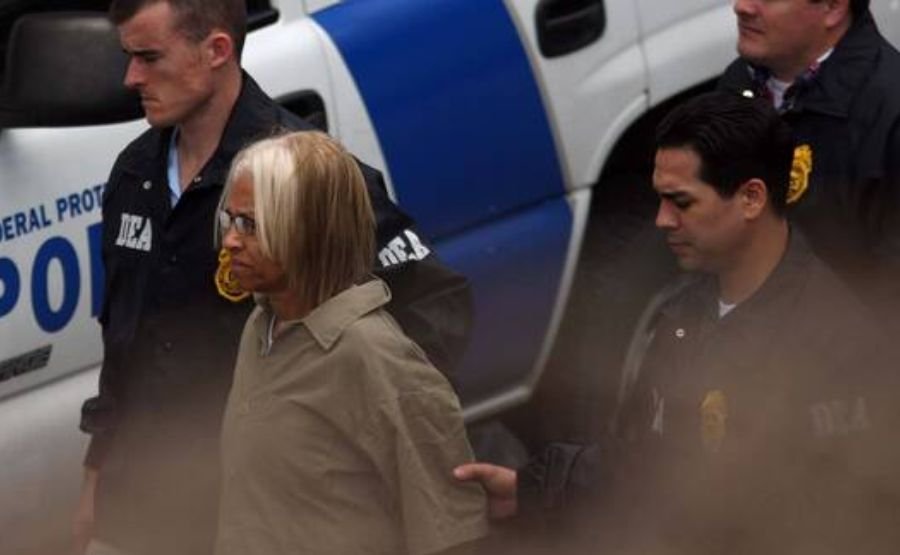
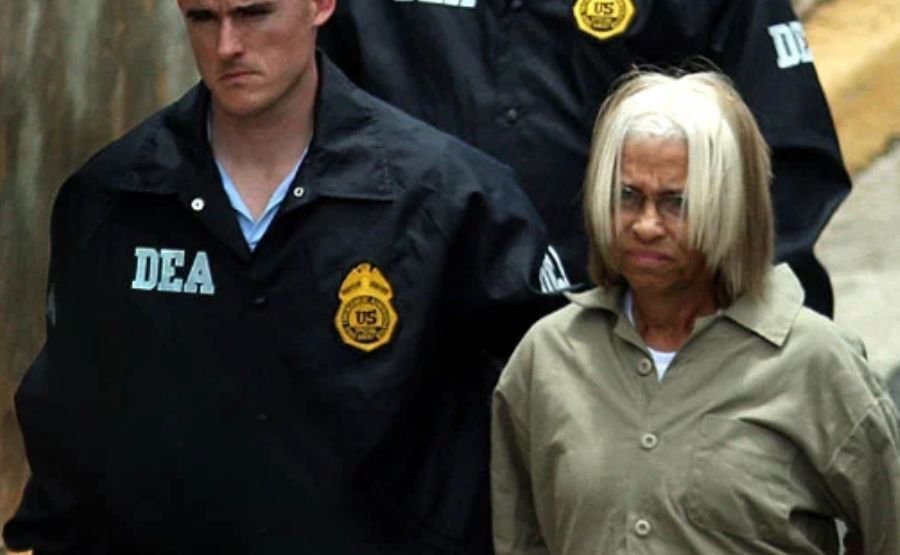
Federal agents had been watching her since February 2009. That’s over a year of surveillance before they made the arrest. On May 19, 2010, Julianna allegedly spoke to an informant by phone and told him she had two kilograms of cocaine in Puerto Rico. She also mentioned that another party had eight kilograms available for buyers. The next day, she showed up at a hotel in the Isla Verde district of San Juan. DEA agents were waiting.
The AP photograph from that arrest — Julianna being escorted by agents toward the federal building in San Juan — is stark. She doesn’t look broken. She looks like a woman who has been through this before.
At her sentencing in February 2012, she asked Judge Laura Taylor Swain for “mercy and compassion” so she could care for Frank, who was then eighty-one years old and in declining health. The judge sentenced her to five years.
Let’s be honest about what this moment contains. She is in her late sixties or early seventies. She has already done federal prison time. Her husband is eighty-one and ailing. She asked a federal judge to let her go home and take care of him. The judge said no, five years. And she served most or all of it — estimated release around 2017.
Frank died in 2019.
She was not there to watch it happen naturally, together. She was in federal custody for most of his final years.
The Film, the Premiere, and the Panic Attacks
When American Gangster premiered in 2007, Julianna Farrait attended. She didn’t announce herself. She moved through the room anonymously, deliberately unrecognized.
“I’m a very shy woman,” she said later. “I have never liked a lot of fuss. Even at the premiere of American Gangster, I made myself unknown because I did not want people to know who I was, because I suffer from panic attacks.”
That quote does something unexpected. The person who threw suitcases of cash out a bathroom window during a federal raid also suffers from panic attacks and deliberately went unrecognized at the premiere of the film inspired by her life. Both of those things are true simultaneously. Human beings contain these contradictions.
The film called her Miss Puerto Rico. She was a homecoming queen. The distinction isn’t trivial — Miss Puerto Rico is a nationally competed beauty crown; homecoming queen is a school election. The film was reaching for a certain glamour of origin story. The truth is humbler and arguably more interesting: she was just a woman from Puerto Rico who got on a plane and met a drug lord who fell for her.
What Her Daughter Built
One detail the AI sites get right, occasionally: Francine Lucas-Sinclair, Julianna and Frank’s daughter, founded Yellow Brick Roads, a nonprofit organization that supports children whose parents are imprisoned.
Think about what that means as a biographical fact. Francine was three years old when the 1975 raid happened. She grew up in Puerto Rico with her maternal grandparents while her parents were incarcerated or estranged. She then watched her mother go back to prison in 2012. And she built a nonprofit that tries to help other children navigate exactly that disruption.
That’s the generational cost of this life, rendered in institutional form.
Final Words
Julianna Farrait is not a glamour story. She’s not a redemption story either, though the “mercy and compassion” plea at sentencing invited that framing. She’s a woman who made repeated, knowing decisions to participate in serious crime over decades, who served prison time more than once, and who at the end of her husband’s life was not able to be with him because she was doing federal time for a drug deal she was conducting at age seventy.
The American Gangster version — supportive, elegant, slightly tragic — misses the agency. She made choices. Some of those choices destroyed things and some of them reflected genuine loyalty or love or commitment to a life she chose when she was young and mostly kept choosing thereafter.
I find myself less interested in judging those choices than in understanding what kept her in that orbit so long. What does it mean that after everything — the 1975 raid, the separation, the years in Puerto Rico, the reconciliation — she was still getting arrested for cocaine deals when she was old enough to be someone’s grandmother?
I don’t have a clean answer. I’m not sure anyone does. What I know is that the real Julianna Farrait is more complicated, more active, and more troubling than anything Hollywood put on screen.
FAQs
1. Who is Julianna Farrait?
She is the widow of Harlem drug lord Frank Lucas, one of the most significant heroin traffickers in American history during the 1970s. She was born in 1941 in Puerto Rico, married Lucas in 1967, participated in aspects of his criminal enterprise, was arrested twice on drug charges decades apart, and now lives privately following Frank’s death in 2019.
2. Was Julianna Farrait Miss Puerto Rico?
No. The 2007 film American Gangster incorrectly portrayed her as Miss Puerto Rico. She was actually a homecoming queen — a title won in a school election, not a nationally competed beauty pageant. Multiple credible sources confirm this distinction.
3. How did Julianna Farrait meet Frank Lucas?
She met Frank on a flight from Puerto Rico to the United States in the early 1960s. They married in 1967 after several years together.
4. What happened during the 1975 raid?
On January 28, 1975, the DEA and NYPD raided the Lucas home in Teaneck, New Jersey, seizing over $584,000 in cash. Julianna allegedly threw suitcases of cash out the bathroom window during the raid. Frank was sentenced to 70 years (later drastically reduced after he became a government informant); Julianna received six months for her obstruction.
5. Why was Julianna Farrait arrested in 2010?
Federal agents had been surveilling her since February 2009. In May 2010, she allegedly arranged to sell two kilograms of cocaine to an informant at a hotel in the Isla Verde area of Puerto Rico. DEA agents arrested her after she arrived for the meeting. She was approximately 68–70 years old at the time.
6. What was Julianna Farrait’s sentence in 2012?
Manhattan federal judge Laura Taylor Swain sentenced her to five years in prison in February 2012. At the sentencing, Julianna asked for “mercy and compassion” so she could care for Frank, who was eighty-one and in poor health. The request was denied.
7. Who played Julianna Farrait in American Gangster?
Puerto Rican actress Lymari Nadal played the character based on Julianna, renamed “Eva” in the film. Julianna attended the 2007 premiere but deliberately avoided being recognized, citing panic attacks and her private nature.
8. Did Julianna Farrait and Frank Lucas stay married?
They were married in 1967 but separated after the 1975 arrests, with Julianna returning to Puerto Rico for many years. They reconciled around 2006 and resumed living together in New Jersey until her 2010 arrest. Frank died in 2019 while she was reportedly living quietly after her release approximately in 2017.
9. What is Julianna Farrait doing now?
She has made no public appearances since her release from prison around 2017. Following Frank Lucas’s death on May 30, 2019, she continues to live privately. She has not given interviews or sought any public profile.
10. Who is Francine Lucas-Sinclair?
She is the daughter of Frank Lucas and Julianna Farrait. Born around 1972, she was approximately three years old during the 1975 raid and was subsequently raised by Julianna’s family in Puerto Rico. She founded Yellow Brick Roads, a nonprofit organization supporting children whose parents are incarcerated — a mission directly shaped by her own childhood experience.
11. Why is Julianna Farrait’s story significant beyond the Frank Lucas connection?
Because she represents a fully active participant who has been systematically reduced to a supporting character in someone else’s story. She made criminal choices over decades, across multiple generations, and into old age — and her motivations, her own perspective, and her interior life remain almost entirely undocumented because she has declined to share them publicly. The real story of Julianna Farrait is almost entirely unlived on the page.
Beyond the headlines, discover what’s worth knowing — TheTrendist.




One Comment