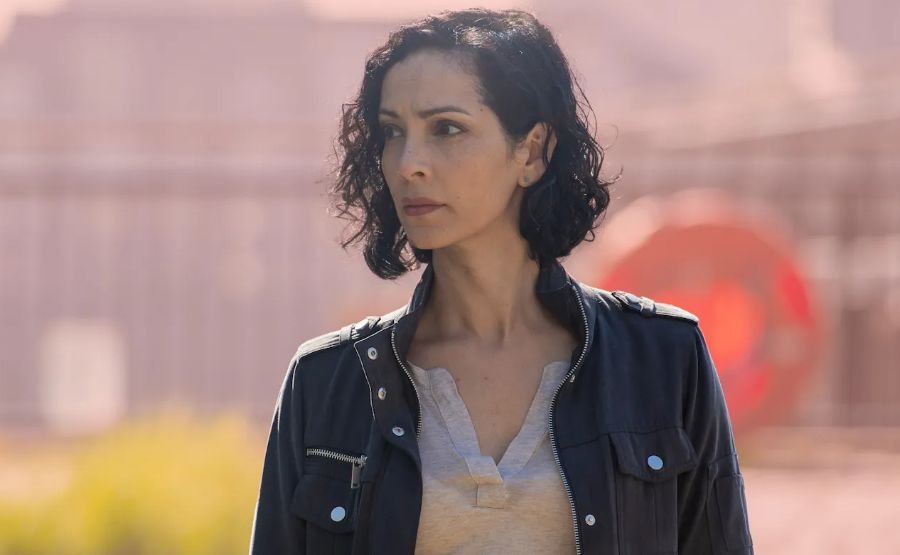
Sonita Henry Doesn’t Need Your Discovery Arc
Here’s the thing that always bothers me about how people talk about Sonita Henry: they act like she’s only just arrived.
She hasn’t. She’s been here — quietly accumulating one of the most interesting, quietly subversive careers in contemporary British-American television — for nearly thirty years. The “sudden discovery” narrative that started circulating when Silo hit Apple TV+ in 2023, and ramped up again after Deadpool & Wolverine in 2024? It’s a lazy story. And it obscures something much more interesting about how she actually built this career.
So let’s not do that. Let’s actually look at it.
Quick Bio
| Detail | Info |
| Born | 23 January 1977, Dover, Kent, England |
| Background | English father of Scottish descent; Guyanese-Nepalese mother |
| Training | Herbert Berghof Studios, New York (approx. 5 years) |
| Debut | The Fifth Element (1997) — hand-picked by Luc Besson |
| Breakthrough | Olympus (Syfy/Spike, 2015) — first main TV role, as Medea |
| Notable roles | Kelvin Doctor (Star Trek, 2009); DS Priya Shamsie (The Chelsea Detective, 2022); Mabel Martin (Black Cake, 2023); Regina Jackson (Silo, 2023) |
| Voice work | Ellie Langford, Dead Space 2 and Dead Space 3 |
| Latest | Detective Khan, Wild Cherry (2025); Mrs. Chipman, Deadpool & Wolverine (2024) |
| IMDb rating | Active since 1997 — over 45 acting credits |
The Movie Where It All Quietly Began
Luc Besson hand-picked her. Take a moment to consider that.
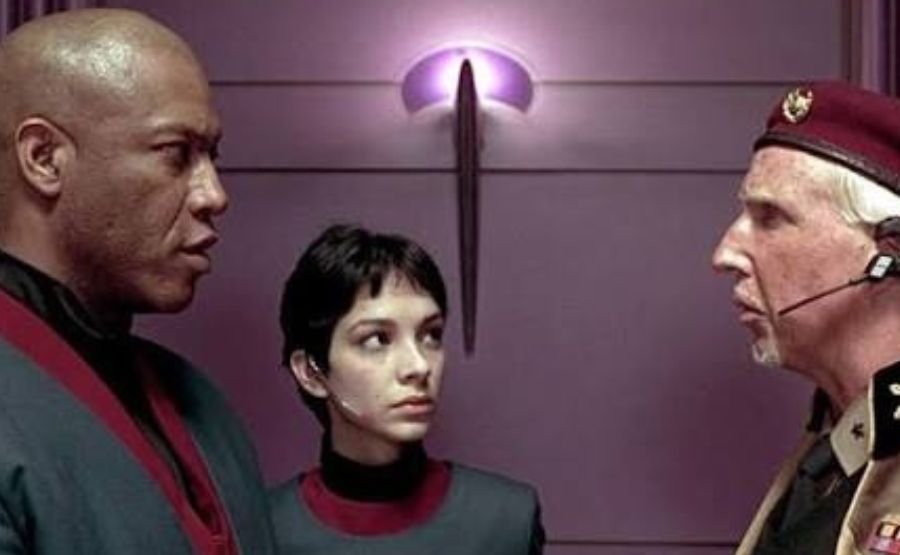
We’re talking about 1996. A young mixed-heritage woman from Dover — a port town in Kent, not exactly the epicentre of the British acting establishment — lands a role in one of the most visually extravagant science fiction films of the decade. Besson cast her as the President’s Aide in The Fifth Element, opposite Bruce Willis, Gary Oldman, and the completely unhinged spectacle of Chris Tucker at his peak.
She’s in the room when the President of Earth is making decisions. And she was nineteen when they filmed it.
Consider what that does. Not in the way people imagine — not as a launching pad, because the industry doesn’t work that way for women who look like Sonita Henry in the late 1990s. But as a signal. A signal to herself that she belonged at that table. That she could hold her own in a room full of the biggest names in mainstream cinema and not blink.
She moved to New York after that. Five years at the Herbert Berghof Studios — a serious conservatory, not some weekend workshop — and then the move to Los Angeles. Grinding. Appearing on NCIS, Cold Case, Law and Order: LA. The kind of work that keeps you visible but never quite lets you become a name.
See also “Fenix Flexin: Biography, Age, Career, Net Worth, and Personal Life“
The Gap That Nobody Talks About
Here’s what strikes me about her timeline: there’s a stretch between The Fifth Element (1997) and Olympus (2015) where she’s consistently working — Chuck, Young Dracula, NCIS, Star Trek (2009), Doctor Who (2013) — but never landing the role that cements her. Eighteen years of sustained, disciplined work without a defining moment.
Let’s be honest about what that usually means for a woman of mixed South American and British heritage. It often means being cast as an “exotic” background, or being told you’re not quite right for this or that — too ethnic for one thing, not ethnic enough for another. She talked around this. In a 2015 interview with The Mary Sue, she mentioned navigating Hollywood as a woman while discussing Olympus, and the YVR Screen Scene podcast description of her career origins mentions her “navigating ethnic ambiguity and a sometimes unfriendly industry.” That phrase — ethnic ambiguity — says a lot in very few words.
She never built a PR narrative around struggle. And maybe that’s why the mainstream press didn’t know how to frame her story until the last few years.
Delivering James T. Kirk (And Nobody Knowing Her Name)
The 2009 J.J. Abrams Star Trek reboot. It opens on chaos — a Romulan ship attacking the USS Kelvin, explosions, George Kirk sacrificing himself, and amid all that grief and destruction, a baby being born. James Tiberius Kirk enters the universe screaming.
Sonita Henry is the doctor who catches him.
That is the film’s central emotional theme. The scene that tells you everything about what this franchise is — sacrifice, birth, hope colliding with catastrophe. And she’s right there. Central to it. Her face is one of the first things the audience sees that carries warmth.
The film earned over $257 million worldwide. It launched a new franchise era. Chris Pine became a star. And Sonita Henry’s name — credited as “Kelvin Doctor” — appeared well down the cast list.
I’m not pointing this out to suggest wrongdoing. Ensemble films are what they are. But it’s a useful data point. She was being trusted with key emotional moments in major studio productions, and the industry’s organizational logic — the part of it that decides who becomes a “name” — kept not catching up.
Medea, and Why Genre TV Has Been Her Real Home
When Olympus premiered on Syfy in 2015, it was Sonita Henry’s first proper main television role. Not a guest slot. Not a recurring character with five episodes. Thirteen episodes as Medea — sorceress, antihero, the most complicated woman in any room she walks into.
She’s talked about why she gravitates toward genre work. “The roles that are written for women in sci-fi are so much stronger, I personally feel,” she said in that 2015 Mary Sue interview. That’s not just promotional talk. When you look at her career arc — Star Trek, Doctor Who, Krypton, Olympus, Silo, Dead Space (voice) — there’s a clear pattern of her choosing, and being chosen for, worlds where women can be complex, dangerous, morally grey, and authoritative.
British procedural television, which forms the other pillar of her work, operates by similar logic. Luther, Father Brown, Midsomer Murders. It’s a significant message that women authors must be capable.
Olympus was cancelled after one season. That’s the frustrating footnote. It ran on Syfy’s graveyard schedule — Thursdays at 11pm — and never found the audience it deserved. But the work was there. Anyone who watched it knew it.
Dead Space and the Voice That Carries a Franchise
Here’s something the celebrity bio sites consistently miss or bury in a bullet point: she played Ellie Langford in EA Games’ Dead Space 2 and Dead Space 3. Fully voiced, motion-captured character — one of the toughest, most memorable women in the Dead Space franchise. A character who survives things that would make most video game protagonists crumble.
Voice and motion capture work in gaming is demanding in ways that translate directly from stage and screen training — sustained emotional delivery, physicality mapped to motion technology, no second camera to cover a weak moment. The gaming press covered the franchise extensively. Sonita Henry’s name rarely appeared in those articles.
She was doing this in parallel with her screen career. Building multiple lanes simultaneously. That’s not an accident — that’s someone who understands that a career in this industry has to be constructed from multiple angles.
The Chelsea Detective: Finally, a Lead Role Written for Her
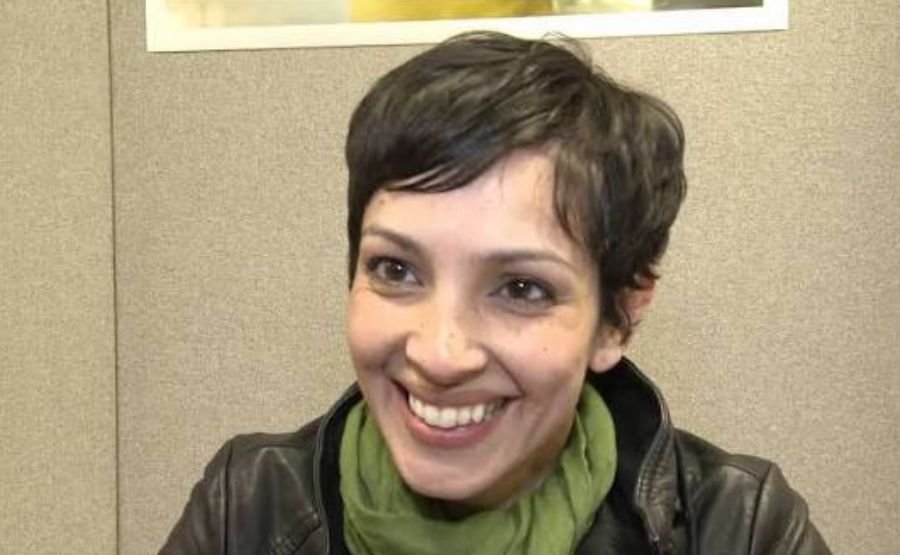
By the time The Chelsea Detective started filming for Acorn TV in 2022 — twenty-five years into her career — Sonita Henry finally got a sustained lead role that put her at the centre of a narrative, not orbiting it.
DS Priya Shamsie. She described the role in an interview with BritishTV.com as standing out because it wasn’t just procedural detective work — it was a character going through major life upheaval as a new mother, figuring out who she is post-child, in a neighbourhood where wealth and inequality sit right next to each other. “People tell you when you have a kid, your life changes, but until you have a child, you really don’t realize how much your life changes,” she told the interviewer.
What she didn’t say explicitly, but what the Independent on Saturday’s coverage gets close to: playing a woman of colour in Chelsea — genuinely affluent, genuinely expert, genuinely complicated — is a different kind of statement than it might appear. Chelsea is a very specific zip code in the British cultural imagination. It’s not where Priya Shamsie is “supposed to be” according to a lot of old script templates.
Henry plays her as someone who simply belongs there. No explanation required.
Black Cake and the Oprah Machine
In 2022, it was announced that she’d joined Black Cake on Hulu — produced by Oprah Winfrey’s Harpo Films, showrun by Marissa Jo Cerar, based on Charmaine Wilkerson’s bestselling novel. The show was described as a family drama wrapped in a murder mystery, spanning Jamaica, Italy, Scotland, England, and California.
She played Mabel Martin, a celebrated food expert with a quiet, apparently settled life that gets completely dismantled. According to the show’s own narrative, Mabel was conceived via rape and given up for adoption — a character carrying enormous weight, passing as one thing while being another. A character whose whole existence is a secret layered on top of other secrets.
A reviewer at The Wrap wrote that she “demands attention in every frame in which she appears.” That’s a specific kind of compliment — not about stealing scenes, but about a gravitational quality. About the sense that you can’t look away.
Black Cake was cancelled after one season in September 2024. The showrunner had pitched three seasons. That stings a little, honestly. The show was doing something genuinely layered with the Caribbean diaspora, and the ensemble — including Adrian Warren and Ashley Thomas — deserved more runway.
Silo and the Scene That Got People Talking
One episode. One scene, essentially. And it ignited more conversation than some actors generate in an entire season.
In Silo Episode 6 (“The Relic”), Regina Jackson — Sonita Henry’s character — sits across from Rebecca Ferguson’s Juliette and delivers information she’s been terrified to give anyone. She’s been an informant. She gave people’s names to the man who controls everything in the Silo. She did it to protect her mother. And George, the man she loved, was one of the people she named.
She turns on a table fan so they can speak without being heard by the bugs in the walls. The scene is quiet and devastating. The fan is a masterclass in environmental storytelling.
Critics and viewers noted the scene specifically. The character appears only once. But the specificity of what Henry does — the fear, the guilt, the defiant grief about George moving on to Juliette — landed with enough force that people started looking up her other work.
This is what I mean about the “discovery” narrative being misleading. The work was always this caliber. The platform just finally matched it.
Dover, Kent to J.J. Abrams to Oprah: The Actual Trajectory
Let’s lay the map out. She was born in Dover. Went to Girls’ Grammar School and South Kent College — she was a grammar school girl, which in the British educational hierarchy means academically sharp, means she tested into a better system than most. Local paper Kent Online ran a piece in 2009: “Former Dover schoolgirl plays doctor who delivers James T Kirk.” That’s where she was in the public eye when Star Trek came out.
The journey from there involved driving across America at some point in her early career — reportedly with only a 45-minute driving test behind her, which is either incredibly brave or a very good story, or both. New York. HB Studios. Los Angeles. The grind of American episodic television in the 2000s. Then back to British productions. Then Vancouver for Olympus and Krypton. Then London for The Chelsea Detective. Hulu for Black Cake. Apple TV+ for Silo.
The geographical spread is part of it. She hasn’t anchored herself to one market, one genre, or one ecosystem. That gives her an unusual range of available work. It also means she’s harder to categorize — and the entertainment industry, bluntly, prefers to categorize.
The Quiet Contradiction at the Heart of Her Public Persona
I keep returning to this tension. She’s clearly a deliberate, thoughtful person about her craft. Every interview — the Chelsea Detective ones, the Olympus ones, the podcast appearances — shows someone who thinks analytically about character, about the industry, about the specific challenges of being a woman navigating genre television.
But her public persona is almost studiously non-dramatic. No tabloid moments. No public feuds. No carefully managed revelation moments. Her Instagram, by all accounts, gives glimpses of being a mother without being a parenting brand. She’s kept her personal life — relationship status included — genuinely private in an era when the algorithm rewards exposure.
This might be the most interesting thing about her. She’s played characters defined by secrets — Mabel Martin concealing her origins, Regina Jackson concealing her informant past, Medea concealing her actual power. And in her own life, she simply keeps things quiet. Not mysterious. Not playing games. Just private.
It reads, to me, as someone who figured out very early that the public performance of a life and the actual living of one are different projects. She chose to keep them separate.
Final Words
I’ll be straight with you. The standard celebrity bio narrative — the plucky girl from small-town England who got discovered and made it big — is too neat and too false for Sonita Henry’s actual career.
What she actually did is harder and more interesting. She trained seriously. She worked consistently without catching the wave at the right moment for two decades. She built parallel income and creative streams through gaming and voice work. She took roles in mid-budget genre productions that the prestige critics ignored. She moved between continents and markets without committing to a single identity.
And then, in her mid-to-late forties, the platform finally caught up with the craft. Silo gave her one episode and she made it count. Black Cake gave her five episodes opposite a top-tier ensemble and a reviewers’ consensus that she was the most captivating person on screen.
She’s now in a Marvel movie. She has a five-episode arc on Wild Cherry in 2025. The Chelsea Detective returns for another season. The trajectory is real, and it’s earned.
What I resist is the framing that she’s somehow new. She’s not new. She’s visible now. Those are different things, and the difference matters — because if you only tell the visibility story, you miss the thirty years of quiet, serious work that made the visibility possible.
FAQs
1. How old is Sonita Henry?
She was born on 23 January 1977, making her 48 years old as of early 2025. A lot of the clickbait sites have her birth year wrong — some say 1980, 1981, 1985, even 1992. Ignore them. The sourced date is 1977.
2. Where is Sonita Henry from?
Dover, Kent, in the southeast of England. She went to school there before eventually relocating to New York for acting training, then Los Angeles, and has worked across the UK and North America since.
3. What is Sonita Henry’s ethnicity?
Her father is English of Scottish descent; her mother is Guyanese-Nepalese. So she’s a mix of British (Scottish/English), Guyanese, and Nepalese heritage. She’s spoken about navigating “ethnic ambiguity” in an industry that likes to put people in boxes — which tracks if you look at the breadth of characters she’s played across racial and ethnic lines.
4. Was Sonita Henry really in The Fifth Element?
Yes, genuinely. She played the President’s Aide and was, by her own account relayed on the Syfy profile, personally selected by Luc Besson for the role. She was around 19 when it was shot.
5. What role did she play in Star Trek (2009)?
The Kelvin Doctor — the unnamed Starfleet physician who helps deliver James T. Kirk during the film’s opening sequence on the USS Kelvin. Emotionally central, career-credit-wise uncelebrated. That’s the story.
6. Who does she play in Silo?
Regina Jackson, a woman who appears in Episode 6 of Season 1 (“The Relic”). She was once in a relationship with George Wilkins and served as an informant to the Silo’s shadowy power structure to protect her family. The fan-turns-on scene became one of the most-discussed moments of the season.
7. Is Sonita Henry married?
She’s never publicly confirmed a marriage or current partnership. She has been open about being a mother through references in interviews, but keeps the specifics of her family life private. Speculation on gossip sites about whether she’s “single” is just that — speculation.
8. What is Sonita Henry’s role in Black Cake?
Mabel Martin — a successful food expert who discovers that her apparently settled life rests on a foundation of family secrets, including the fact that she was born from an assault and given up for adoption by the show’s central character, Covey. It’s a five-episode recurring role in Season 1 of the Hulu drama.
9. Did she actually appear in Wolverine and Deadpool?
Yes — as Mrs. Chipman. It’s a cameo-level role in a film absolutely packed with them, but it puts her in the MCU, which is a very different kind of industry currency than she’s carried before.
10. What is the Dead Space connection?
She was the voice and motion-capture performer for Ellie Langford in EA Games’ Dead Space 2 and Dead Space 3 — a major character in the franchise, not background talent. If you played those games, you know the voice. Most gaming press didn’t track her name for the role.
11. Why isn’t Sonita Henry more famous?
That’s the right question and there’s no single answer. She spent the early part of her career in supporting and guest roles in American television when the industry wasn’t giving roles like hers to women who looked like her. She gravitated toward genre work that critics under-covered. She’s kept a low personal profile in an era that rewards strategic exposure. All of that compounded. But watch the trajectory since 2022 — it’s changed significantly, and it looks like it’ll keep changing.
Beyond the headlines, discover what’s worth knowing — TheTrendist.