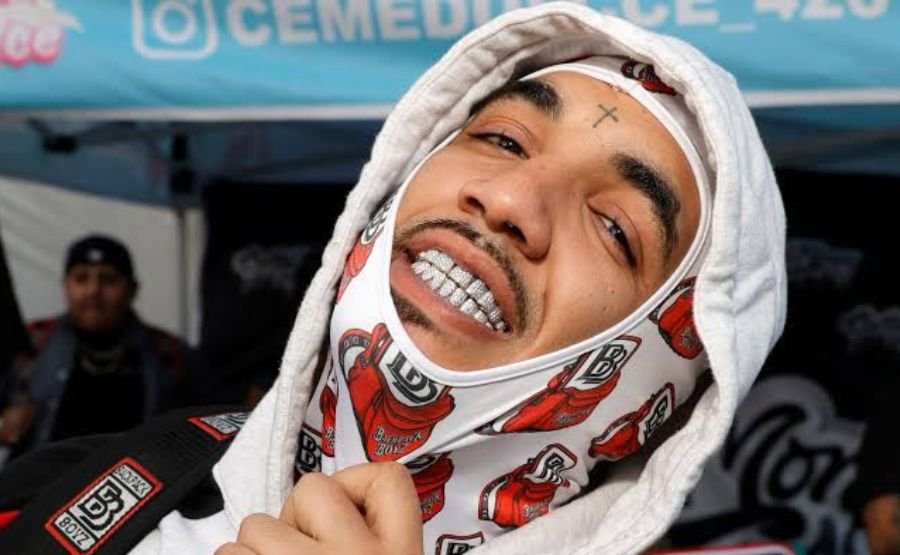
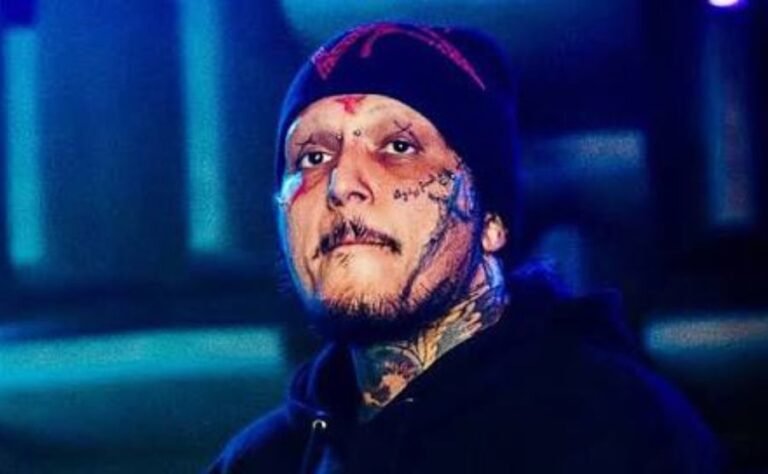
Fenix Flexin: Biography, Age, Career, Net Worth, and Personal Life
Here’s the version of Fenix Flexin’s story that nobody’s really telling: he didn’t get famous because the industry found him. He got famous because he built something from nothing in East Hollywood with a couple of cans of paint and a MySpace page, and then spent years trying to figure out whether that original version of himself was still worth being.
That’s a messier story than “Shoreline Mafia rapper goes solo.” It’s also way more interesting.
And now — as of 2026 — he’s at the center of the biggest AI music controversy the rap world has seen. The kid who came up spraying tags on freshly built condos is now accused of manufacturing his biggest chart hit using a software nobody had even heard of six months ago.
Let’s actually dig into all of it.
Quick Bio
| Detail | Info |
| Real Name | Fenixomar Rypinski |
| Born | October 11, 1995 |
| Origin | Los Angeles, California |
| Group | Shoreline Mafia (2016–2020, 2023–present) |
| Co-founder with | OhGeesy (met via MySpace doing graffiti, 2012) |
| Label | Empire (solo); Atlantic Records (Shoreline Mafia) |
| Debut Group Project | ShorelineDoThatShit (Nov 2017) |
| Solo Breakout | “10 Toes” (2021) |
| Group Reunion Single | “Heat Stick” (May 2024) — first Billboard Hot 100 entry for Shoreline Mafia |
| 2026 Controversy | “Rubberz” — accused of being AI-generated using Treblo; Fenix eventually admitted AI involvement after weeks of denial |
| Other Ventures | Burnt Company LA (clothing and skate brand, founded 2021) |
| Legal Trouble | Arrested July 2024, Burbank — possession of Alprazolam without prescription |
| Kids | Two children |
Before He Was “The Guy Who Left Shoreline,” He Was Just Some Kid With a Can
- Two teenagers from Los Angeles find each other on MySpace because of graffiti. Not music — graffiti. Fenix Rypinski and Alejandro Carranza (who’d become OhGeesy) weren’t sitting around dreaming of record deals. They were running around the city in the dark, tagging walls, hitting strip malls and whatever blank surfaces the sprawl of East Hollywood offered up.
This matters. People keep framing Shoreline Mafia’s story as a rap origin story, but it’s really a street art origin story with rapping as a side effect. OhGeesy was making beats. Fenix heard them. And according to the official version of events: “Then Fenix heard it and he was like, ‘I’m trying to make music too!'” When they recorded a single song together, everything came together.
That’s an unusually clean “how we started” story and I’ll be honest — I find those a little suspicious. But multiple sources, from Atlantic Records press materials to independent venue bios, all repeat the same basic arc. So fine. Probably true.
Rob Vicious and Master Kato came in later. The group officially called itself Shoreline Mafia and started releasing music as a full four-piece in 2016. By 2017 they dropped ShorelineDoThatShit, a mixtape that was deliberately janky, filmed in freshly built and graffiti-covered condos near East Hollywood. Noisey called their early work “rollicking, slithering, and in their creation, laughably janky and blatantly illegal.” That’s almost a compliment.
“Musty” — produced by Ron-Ron — became the song that turned heads. Raw production, a beat that slides around the room, Fenix’s staccato delivery sitting right next to OhGeesy’s more melodic hooks. RIAA platinum. No radio support. No playlist placement. Just the internet deciding this was the sound of LA summertime.
Then “Bands” went double platinum. “Nun Major” went platinum. They were on the Rolling Loud stage. They were in Noisey features. Atlantic came calling and reissued ShorelineDoThatShit in 2018. The four kids from the graffiti crew were suddenly a real, documented act with platinum plaques and sold-out headlining tours.
The Exit That Nobody Fully Explained
April 2020. A Twitter post. Fenix says he’s leaving Shoreline Mafia after their next album drops.
The internet went chaotic for about 48 hours. After the release of Mafia Bidness, which reached number 27 on the Billboard 200 and included Future and Wiz Khalifa, the group sort of… fell apart. The other members didn’t really coalesce into something. OhGeesy went solo. Rob Vicious made some noise independently. Master Kato continued on. But Shoreline as a four-piece was done.
The official reason given by both Fenix and OhGeesy: “lack of unity in the group’s creative vision.” And honestly — that’s every breakup reason for every group ever. What does it actually mean?
Here’s what I think happened, and let me be clear this is reading between the lines: Fenix wanted to be himself, not a quarter of something. His solo cuts on Mafia Bidness — “Hoe Sh*t,” “Change Ya Life” — got real attention. He had a lifestyle brand in the works. He wanted to be Fenix Flexin the entity, not just the guy with the fast delivery who wasn’t OhGeesy.
And OhGeesy, for his part, has talked in interviews about the group limiting his own artistic growth. Both were outgrowing the four-person format at the same time. It wasn’t necessarily beef — but it also wasn’t as clean and peaceful as the PR language made it sound. You don’t leave a platinum rap group because you’re vibing perfectly.
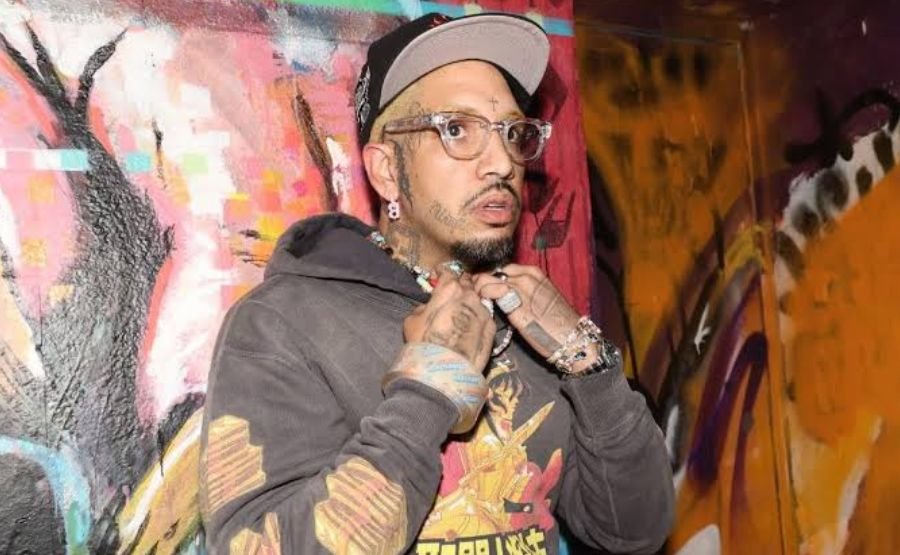
The Solo Years Nobody Talks About
Here’s the part of Fenix’s story that gets glossed over constantly: the three-year stretch where he was just a solo guy grinding without the Shoreline name.
- “For Me,” his debut solo single, is released. He launches Burnt Company LA — a clothing and skateboarding shop that ties together music, skate culture, and streetwear. He’s building an actual brand identity. He releases “10 Toes” and it racks up millions of streams, establishing him as a real solo voice.
But notice: nobody’s writing major features about him. His top listener locations on Spotify are Mexico City and Guadalajara, before Los Angeles. His core audience is ride-or-die from the Shoreline days. He’s releasing Fenix Flexin Vol. 1, then Vol. 2 in 2022, then Vol. 3 in late 2023. Three mixtapes in three years. That’s a work rate most people don’t maintain.
Think about it. He left one of the most successful West Coast rap groups of the late 2010s at the exact moment the world stopped going to concerts because of a pandemic. He launched a solo career in the quiet. He made his skate brand work in the background. He wasn’t all over the blogs. He was just… in the lab.
There’s something slightly admirable about that. But it also raises a question that the puff pieces never ask: was this the creative independence he wanted, or was it the reality of discovering that “Shoreline Mafia” had been the bigger draw than any individual member?
I’m not saying his solo output is weak — “10 Toes” is legitimately good, the Vol. The series has moments that hit hard. But there’s a gap between “Fenix Flexin went solo to express himself” and “Fenix Flexin had a quiet three years and then quietly drifted back toward the name that launched him.” Both things can be true simultaneously.
The Reunion That Actually Made Sense
October 6, 2023. Hollywood Palladium. Fenix and OhGeesy share a stage for the first time since 2020 and the crowd absolutely loses it.
Then in May 2024, “Heat Stick” dropped. First Shoreline Mafia release in four years. The group’s debut on the Billboard Hot 100, peaking at number 97. Which is funny, right? They had double-platinum singles before and never charted on the Hot 100. Then as a reunion act they finally crack it.
The two of them are now officially Shoreline Mafia as a duo. Rob Vicious and Master Kato are not part of the reunion. That’s a whole other thing nobody asks about. The “family” framing of the press materials always used has gotten significantly smaller.
What the reunion actually represents is two guys who realized, pretty clearly, that the Shoreline Mafia name is worth more than either of their solo names. That’s not cynical — it’s practical. You built something real with someone. You both drifted. The drift didn’t work out the way either of you hoped. You come back to the thing that works.
OhGeesy has said in interviews that Shoreline came together through “skateboarding and graffiti” — back to the roots, back to where they started. The 2025 album Back in Bidness followed. Then the 2026 EP Bidness Is Boomin. They’re on a roll.
Which is why the next chapter is so disruptive.
The Xanax Stop and the Arrest That Barely Made Headlines
Let’s take a detour to Burbank, July 26, 2024. 6:15 PM.
Fenix is a passenger in a car. Cops pull it over on a routine traffic stop. When officers approach, they observe Alprazolam — a brand-name Xanax — in his possession. No valid prescription. He gets booked at the Burbank Jail.
This got a TMZ article and then basically disappeared. Which is either good fortune or a sign that legal trouble isn’t the career-ender it used to be. Xanax without a prescription is a misdemeanor-level offense in most California scenarios, not a felony. Nobody’s done a big think-piece on what it means for his music.
But I’ll note the timing: he was arrested in July 2024, just a couple months after the big Shoreline reunion and the release of “Heat Stick.” The comeback energy was building, and then this happened. He presumably handled it legally and moved on, because the music kept coming.

“Rubberz”: The Oddest Scandal in His Career
Now we get to 2026. And this is where the Fenix Flexin story gets genuinely weird.
June 2026. He drops “Rubberz.” A synth-pop track. Very 80s. Very British-sounding — and I mean that literally. The vocalist sounds like someone who grew up listening to The Smiths rather than Three 6 Mafia. Fenix is known for nasal West Coast trap delivery. This song sounds like a completely different human being.
It climbs to #58 on the Billboard Hot 100. Thirty-five million-plus Spotify streams. People love it.
Then someone notices the song file that Fenix had posted a snippet of earlier. The file name contains “Sonauto” — the former name of an AI music generation platform. Said platform rebranded to Treblo exactly two days before “Rubberz” was released.
Let me say that again because it’s almost poetic in how suspicious it is. Two days before the song drops, the AI platform it was allegedly made with quietly changes its name.
Producer Medasin posts a viral breakdown. He runs Treblo prompts. He generates tracks with eerily similar sonic signatures to “Rubberz.” WIRED’s Dexter Thomas does the same experiment and gets uncomfortably close to recreating the song using AI prompts. Treblo then releases its own detection tool, runs “Rubberz” through it, and classifies the song as “very likely” made with their software. The company with the most to gain from saying nothing is the one that says: yeah, that’s probably ours.
Timbaland defends Fenix publicly. Which, given Timbaland’s well-documented enthusiasm for AI in music, helps nobody. If anything it’s the defense that confirms the suspicion.
Fenix’s response? He posts a Pro Tools session video showing the song’s stems laid out as “proof” of hand-built production. Medasin immediately points out that any AI-generated track can be split into stems using a free tool. Fenix then deletes the video.
That deletion was the real tell. You don’t delete a video that proves your innocence.
After weeks of increasingly uncomfortable denials — including a flat-out “No AI on it” and claims he “freestyled” the lyrics — Fenix eventually walked it back. His semi-admission: “never said I didn’t use AI, i said it had nun to do w recording process.”
That’s technically a distinction. It’s also the kind of sentence you construct when you’re trying to not lie while also not telling the full truth. His “No AI on it” interview answer makes that framing almost impossible to maintain, but he’s committed to it.
The broader question — and this is genuinely worth thinking about — is whether it even matters. AI is a tool. Auto-Tune is a tool. Samples are a tool. Where exactly is the line? If he generated a sonic palette with AI and then performed over it, is that different from using a sample? The music industry doesn’t have a clean answer, and the IFPI releasing a rushed set of “guiding principles” in the wake of this controversy proves they’re scrambling.
But here’s what I keep coming back to: the denial. Lying, not the use of AI. Or the near-lying. Or the careful deflection. Pick your word.
He said “No AI on it.” He claimed he freestyled it. He posted “evidence” and deleted it. He spent weeks making fans who believed in him feel stupid for pushing back. That’s not a creative choice to use a new tool. That’s a reputation management decision that went sideways.
What He Actually Is, Under All of It
Fenix Flexin is a guy who built his entire identity on authenticity. Tagging walls. Making music with his friends in East Hollywood. A skate brand that connects to his actual lifestyle, not just his marketing. He’s been consistent — almost stubbornly so — in his West Coast trap lane for nearly a decade.
And then in 2026, he or someone around him decided to chase a different kind of hit. A synth-pop single in a fake British accent. A complete stylistic left turn. And it worked, commercially. It really worked. Thirty-five million streams is not nothing.
But it worked partly because nobody knew it was AI. “Rubberz” was praised as this unexpected artistic development—the tough LA rapper attempting something completely different. That framing was, at minimum, incomplete.
He has two kids. He runs a skate brand. He came back to make music with his best friend from the graffiti days. He put in years of real work as a solo act when nobody was paying much attention. That portion of the narrative is true.
The “Rubberz” chapter doesn’t erase any of that. But it does add something new to the file. There’s now a version of Fenix Flexin who, when given the option between honesty and chart position, chose the chart.
Maybe the music industry pressure is enough to explain that. Maybe he panicked. I’m honestly not sure how I’d handle it either if I was watching a song climb the Hot 100 in real time and knew the moment I admitted AI involvement it might get pulled from the charts. The incentive structure here is genuinely broken.
But you asked me what I thought, so: the lie was a mistake. Not the AI.
Final Words
Fenix Flexin is more interesting than either his fans or his critics want to admit. He’s not just the guy who left the Shoreline Mafia and flamed out. He’s also not just the trap rapper making solid West Coast tapes for a dedicated fanbase. He’s somebody navigating real questions about identity, legacy, and what it means to chase relevance in 2026 when the tools have gotten very, very strange.
The “Rubberz” controversy isn’t the end of anything — it’s probably a chapter in a story that’s still being written. He and OhGeesy are still putting out music. The Shoreline Mafia name still carries real weight. He’s got a skate brand that connects to who he actually is.
But I’d be lying if I said the denial didn’t bother me. Not the AI use. The denial.
That’s the part worth watching as his career continues. Is “Rubberz” a blip, or the beginning of a new version of Fenix Flexin who chases streams wherever they go, even when the path requires a little deliberate fog? We’ll see.
FAQs
1. What is Fenix Flexin’s real name?
Fenixomar Rypinski. The “Fenix” part is basically his real first name, which is unusual enough that the stage name practically writes itself.
2. Where is Fenix Flexin from?
Los Angeles, California. More specifically, East Hollywood — which matters because the neighborhood’s vibe (skate culture, graffiti, strip malls, late-night club scenes) directly shaped Shoreline Mafia’s entire aesthetic.
3. Why did Fenix Flexin leave the Shoreline Mafia?
The official version is “creative differences” and a desire to go solo. The more honest read is that both Fenix and OhGeesy had outgrown the four-man format at the same time — both wanted individual creative control. No serious beef was ever publicly confirmed, and the 2023 reunion suggests it wasn’t a scorched-earth exit.
4. Did Fenix Flexin come back to Shoreline Mafia?
Yes. He and OhGeesy performed together at the Hollywood Palladium in October 2023, and officially reunited as a duo in May 2024 when they released “Heat Stick.” Rob Vicious and Master Kato are not part of this version of the group.
5. What happened with Fenix Flexin’s arrest?
He was arrested in Burbank on July 26, 2024, after a traffic stop. Officers found Alprazolam (Xanax) in his possession without a valid prescription. He was booked at Burbank Jail. There’s been no major public update on the outcome, which typically suggests it was resolved without serious conviction.
6. Is Fenix Flexin’s “Rubberz” really AI-generated?
He eventually admitted AI was involved after weeks of denial. Producer Medasin published a detailed investigation claiming the song was made using Treblo (an AI music platform formerly called Sonauto). Treblo’s own detection tool classified the song as “very likely” generated by their software. Fenix’s evolving response went from “No AI on it” to “never said I didn’t use AI” — which most people interpreted as a confirmation dressed up as a technicality.
7. What is Burnt Company LA?
Fenix launched Burnt Company LA in 2021 — a clothing and skateboarding company that reflects his longstanding ties to skate culture. It’s not just merch. He set up an actual skate team and put genuine effort into building it as a brand. His favorite skater is reportedly Antwuan Dixon, if that tells you anything about his taste.
8. Did Shoreline Mafia ever hit the Billboard Hot 100?
Ironically, no — not until 2024 when Fenix and OhGeesy reunited and dropped “Heat Stick,” which hit #97. During their original platinum-selling run, none of their singles charted on the Hot 100, despite “Bands” going double platinum. The system is weird.
9. What’s Fenix Flexin’s best solo song?
Subjective, but “10 Toes” is the most-cited answer by people who followed his solo run. It’s the most complete version of what he was trying to do without the Shoreline framework — direct, confident, LA-rooted. If you want to understand who he is outside the group context, start there.
10. How did Fenix Flexin and OhGeesy meet?
They found each other on MySpace in 2012 through mutual interest in graffiti, while both were still in high school. OhGeesy was already making music; Fenix heard it and wanted in. One recorded song together confirmed the chemistry. That’s the verified story across multiple sources.
11. What happens to “Rubberz” now that the AI thing is confirmed?
That’s genuinely unsettled. The IFPI released new guidance on AI-assisted tracks and chart eligibility right around the time the controversy peaked. Billboard hasn’t officially pulled the chart position as of the time of writing. The music industry is navigating this in real time, and Fenix’s song — for better or worse — became the test case that everybody’s watching.
Beyond the headlines, discover what’s worth knowing — TheTrendist.
2 Comments