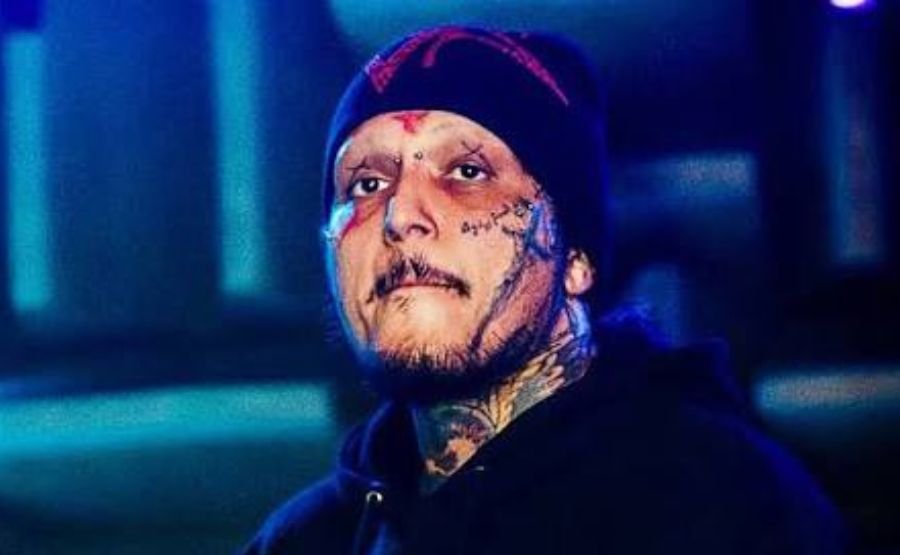
SosMula Age: How Old Is the City Morgue Star Really? The 1988 vs. 1994 Mystery
Here’s something that gets zero coverage in every breathless City Morgue retrospective written by people who discovered them in 2021: the man at the center of one of underground rap’s most explosive rise-and-burn stories doesn’t have a confirmed birth year. Not even close. And when a journalist directly asked him his age, he said “300 years old” — and that’s the most honest answer he’s ever given on the subject.
Think about that for a second. In an era where every rapper’s Wikipedia page has their exact hour of birth and blood type, Vinicius Sosa built a character so impenetrable that a fundamental biographical fact — when was this man born — is still genuinely contested. Contested not by tabloids making things up, but by fan archives, census sleuths, and music databases that can’t reconcile a six-year gap between two birth years floating in the same internet ecosystem.
That’s not an accident. That’s a man who came up in the Wilson Projects on 105th street, who was in and out of jail before his rap career even existed, and who understands instinctively that the less you give people to pin on you, the freer you are. It’s one of the most underground-coded things about him. And everyone’s too busy writing about the chainsaw sounds in his music to notice.
Quick Bio
| Detail | Info |
| Real Name | Vinicius Sosa |
| Stage Names | SosMula, Sleezy, Sos Money (early) |
| Claimed Birth Date | April 19, 1994 |
| Disputed Birth Date | April 19, 1988 (per archived fan research) |
| Age as of 2026 | Either 32 (if 1994) or 38 (if 1988) |
| Birthplace | São Paulo, Brazil (favelas) |
| Raised | Spanish Harlem / Upper East Side, New York City |
| Group | City Morgue (with ZillaKami) — 2017–2024 |
| Streams | 1.5+ billion (City Morgue + solo) |
| Solo Label | Limosa Nostra / Atlantic Records |
The Birth Year That Broke the Internet’s Brain
Let’s be honest about what’s actually going on here. Most celebrity bio sites just parrot whatever number they find first. So you get CelebsMoney calling him 32 (born 1994), while multiple archival fan-maintained databases — including the detailed Last.fm biography that’s been curated by people who’ve actually tracked his early career — explicitly state he was born in 1988 and that “all the evidence” points to that year. That’s not a rounding error. That’s a six-year gulf.
Where does 1994 come from? Probably from SosMula himself, or people in his immediate orbit. Famous Birthdays, which generally sources from the artist’s side, lists April 19, 1994. Last.fm’s header — the automated field — says 1994 and lists his age as 31. On the same page, however, you will see the following sentence when you scroll down to the written biography: “Vinicius Sosa was born on April 19, 1988 in the favelas of São Paulo where he was given a rude introduction to the world.” The website. Same page. Two different birth years.
This is what happens when an artist from a community where paperwork was never the priority meets an internet that demands clean data. The internet tries to resolve the contradiction, picks one, and just runs with it. Neither option is verified. Neither has documentary backup available to the public.
And then there’s SosMula’s answer in XXL Magazine’s “The Break” feature — one of the only major print interviews he’s sat for. The journalist asked his age alongside ZillaKami’s. ZillaKami answered normally. SosMula said: “300 years old.” A joke, obviously. But also a studied non-answer from someone who clearly knows the question is loaded, and has decided that deflection with absurdity is the right move.
He’s not wrong. Why correct the record when the mystery costs you nothing?
See also “Kristin Batalucco Age: The Truth Behind the Woman the Internet Keeps Getting Wrong“
Born in a Favela, Raised in a Projects
Here’s what is confirmed, more or less. Vinicius Sosa was born in São Paulo, Brazil. The favela origin comes up in interviews he’s given — he’s referenced it himself. His mother was (and apparently still is) a tattoo artist based in New York City, and she’s the one who apparently shaped his musical taste early: rap, R&B of the ’90s, metal, hardcore. That combination explains a lot about why City Morgue sounds the way it does. You’re not making “Shinners 13” if your mom was playing pop radio.
There’s minor inconsistency about when exactly he got to the United States. The qobuz.com biography says he moved to the US “at the age of eight.” The Last.fm detailed biography says he “immigrated to America in 1990 at the age of two.” If he was born in 1988, arriving in 1990 at two years old makes perfect mathematical sense. If he was born in 1994, that timeline falls apart entirely. Draw your own conclusions.
What’s consistent across sources: he ended up in Manhattan. Specifically the Upper East Side, specifically Spanish Harlem, specifically the Stanley Isaacs Houses — a NYCHA development on East 93rd Street. This is where his sound calcified. The “dexterous slant-rhyme style of NYC rappers fused with the fiery spirit of Spanish Harlem,” as one biographer put it. That’s genuinely good writing about what Mula’s flow actually is: faster and more nasal than ZillaKami’s, more street-coded, more influenced by New York battle rap than by the Long Island rock-adjacent sound ZillaKami brought to the table.
The Battle Rap Years Nobody Talks About
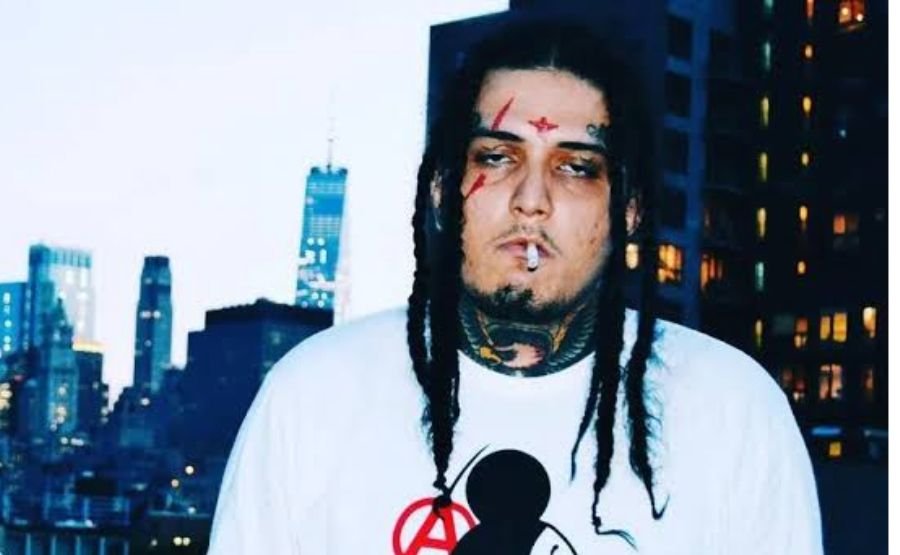
By 2005 — and this is where the 1988 birth year starts making more narrative sense than 1994 — SosMula was deeply embedded in the battle rap scene on 105th Street in the Wilson Projects. Not performing. Battling. That’s where a rapper named 1 Shot Dealz noticed him and the two started collaborating.
If he was born in 1994, he’d have been eleven years old in 2005. Battle-rapping in the projects at eleven is possible but extraordinarily rare. If he was born in 1988, he’d have been seventeen. That’s exactly the age when a scrappy kid from Spanish Harlem gets taken seriously on a block corner for the first time.
From 2005 to 2010, he was constantly in and out of jail. Drugs. Guns. Gang life. He’s spoken about this openly in press materials: “I’ve been in and out of jail for drugs, guns, and gang life. I wasn’t the greatest criminal.” That self-deprecating line is doing a lot of work. He’s not glorifying it. He’s contextualizing it as the thing that kept delaying the career he actually wanted.
From 2011 to 2015 he released music — in what he’s described as a typical early 2010s trap style — mostly with 1 Shot Dealz. Then in mid-2015 he got locked up again. He wasn’t released until August 2016.
The Prison-to-Paradigm-Shift Pipeline
Here’s where City Morgue’s origin story gets interesting in a way most retrospectives skip.
While Vinicius was incarcerated, his mother’s tattoo parlor in Brooklyn was where a guy named Righteous P was working. SosMula’s mom apparently told Righteous P her son was a rapper. Righteous P — part of the same underground New York scene that included a young ZillaKami — effectively became a bridge. When Sosa got out of prison in August 2016, he moved to Brooklyn almost immediately, and Righteous P took him under his wing.
For a brief, strange moment, the unit wasn’t just SosMula and ZillaKami. It was a three-man crew called Scum Squad, and the third member was a then-unknown rapper going by Tekashi69 — now known globally as 6ix9ine. ZillaKami had previously ghostwritten for 6ix9ine in the underground scene, allegedly penned some of his earliest tracks, and there’s a well-documented falling out when 6ix9ine refused to pay royalties. There was also an incident where ZillaKami posted footage of 6ix9ine in a sexual situation with a girl he claimed was thirteen — the first time 6ix9ine’s 2015 guilty plea to a child sexual performance charge became public knowledge in the rap world.
After 6ix9ine was pushed out of the crew dynamic, City Morgue was formalized: SosMula, ZillaKami, producer Thraxx. The Scum Squad chapter is largely whitewashed from the canonical City Morgue story. You won’t find it prominently in press kits or AMG bios. But it happened. It’s documented in fan archives and Wikipedia footnotes, and it tells you something important: these weren’t guys who materialized out of nowhere as an aesthetic project. They were products of a very specific, very messy New York underground moment.
“Shinners 13” and the Shock Debut
June 28, 2017. That’s when City Morgue uploaded “Shinners 13,” and nothing in underground rap sounded quite like it for the next six months. Heavy guitar-driven production from Thraxx running underneath lyrics that were part trap braggadocio and part horror-film confession. The music video — rampant drug use, firearms, imagery you couldn’t really describe to someone who hadn’t seen it — got passed around like a document of something illegal.
WorldStarHipHop posted it. SoundCloud plays stacked. The comment sections on those early tracks were half-genuine fans and half-people who’d clearly stumbled in from the wrong corner of the internet and couldn’t look away.
What most mainstream write-ups on City Morgue get wrong is the framing. They describe the duo as “adopting metal/punk influences.” That’s backwards. SosMula’s mother had been playing Metallica, Slayer, and hardcore bands alongside Nas and Jay-Z in their apartment for years. ZillaKami grew up on Long Island where rock was the ambient noise of adolescence. The metal wasn’t a costume they put on for shock value. It was the sonic vocabulary they already had. Trap was the architecture they built into it.
The ZillaKami Dynamic, Explained Honestly
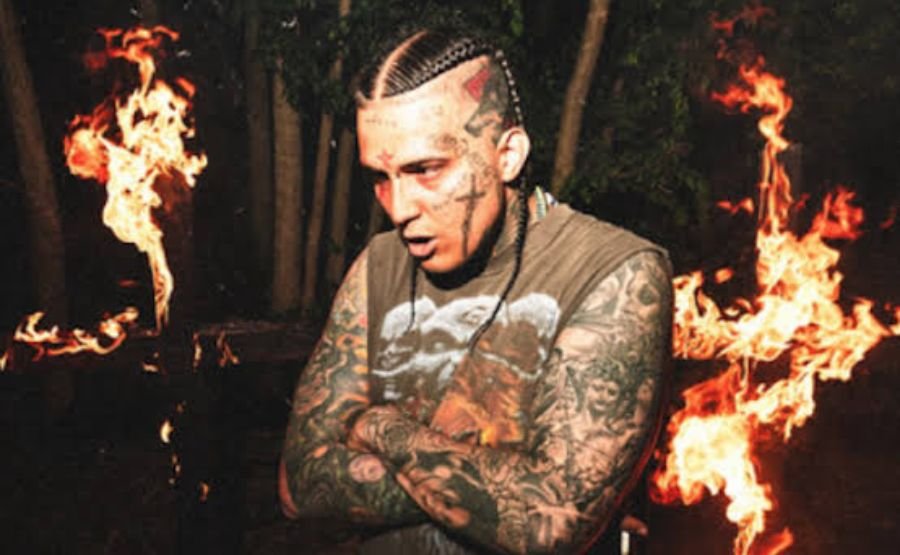
Let me be clear about something the fan community sometimes gets wrong. SosMula isn’t “the other guy.” He’s the one who gives City Morgue its street credibility. ZillaKami brought the aesthetic chaos, the rock-adjacent ear, the Long Island kid-who-discovered-punk energy. SosMula brought up what happens when you actually grow up in New York public housing and spend years in and out of the criminal justice system. The contrast is what made the duo work.
Their voices aren’t interchangeable. ZillaKami’s delivery is more raw and howling. SosMula’s flow is faster, more technically precise, rooted in New York’s battle rap tradition. On “The Balloons” from Vol. 2, you can hear him purposefully moving into a more melodic place — a side that the shock-value coverage nearly never discusses.
ZillaKami eventually announced in June 2022 that their next summer tour would likely be the last City Morgue tour. Both of them had already gone solo by then — ZillaKami with DOG BOY in September 2021, SosMula with 13 Songs 2 Die 2 the same year. City Morgue released My Bloody America in September 2023 as their official final project. The duo formally ended in 2024.
The Solo Career Nobody Expected to Be This Interesting
Here’s the thing. When a duo breaks up, usually one person emerges and one person recedes into “remember when?” territory. That didn’t happen here. SosMula has arguably become more interesting post-City Morgue than he was during it.
His 2024 solo album KAMP KRYSTL LAKE — released February 16, 2024 through Limosa Nostra and Atlantic Records, with Ricky Hil (son of Tommy Hilfiger, no, seriously) as a creative and label partner — is a different animal than anything City Morgue ever released. The Lex Luger production on tracks like “SPIN KLASS (FITNESS FOR OPPS)” hits differently when it’s not anchored to the duo format. He dropped a deluxe KRAKK PAKK edition for Halloween 2024 that included a cover of Marilyn Manson’s interpretation of “Sweet Dreams” that is, genuinely, not bad.
SLEEZ RELIGION followed in September 2024. City Morgue is over. The Sleezy era is apparently just beginning.
He’s also been consistent about something that gets lost in the noise: he has a daughter. He’s spoken briefly about friends who died, about music being the thing that saved him when the alternative was worse. The horror iconography, the Russian goalie mask logo with his face tattoos, the chainsaw aesthetic — all of it is a frame for something more biographical than people give him credit for.
What the Age Mystery Actually Means
You might be wondering why the birth year thing matters. Let me tell you why it’s actually important.
If SosMula was born in 1988 and was on the battle rap scene in 2005 at 17, then locked up through much of 2005–2016, then got out and built one of the biggest underground careers of the late 2010s in a matter of months — that’s one story. It’s the story of a man who lost a decade to the system and then compressed everything into a sprint. He’d be 38 right now. He’s been doing this longer than anyone realizes.
If he was born in 1994, the timeline doesn’t fully cohere. Battle rapping at 11, incarcerated repeatedly through your teens, a decade of hustle and music before City Morgue — it’s possible, but it stretches credulity.
The 1988 version feels truer to the music. It feels truer to the person who describes himself as having watched his friends die. There’s a weight to his verses that doesn’t read like someone in their mid-twenties performing in darkness. It reads like someone who has actually spent years staring at it.
But SosMula clearly wants to be 32. So fine. He’s 32. He’s also, apparently, 300 years old. Both answers tell you more than a birth certificate would.
Final Words
The internet wants to put a number on SosMula’s age so it can put him in a box. Underground-rap-rising-star box if he’s 32. Veteran-who-came-up-the-hard-way box if he’s 38. Neither box really works for a Brazilian kid raised in Harlem projects by a tattoo artist mom who played him Nas and Slayer simultaneously, who was rapping in jail yards and then turned it into a duo with 1.5 billion streams without any radio play or cosign from the culture’s gatekeepers.
The age question is almost a proxy for a bigger question: what kind of artist is SosMula, and does he fit the narrative arcs we’ve built for underground rap? He doesn’t. He never did. City Morgue was weird from the jump, and it worked specifically because it was. His solo career is even weirder, and it’s working too.
He’s been doing this since before most of his fan base was in high school. The number attached to that might be 1988 or 1994. Either way, the answer is: longer than you think.
See also “Sandra Otterson Age: How Old Is the Internet Pioneer Today?“
FAQs
1. How old is SosMula?
Officially, he claimed April 19, 1994, which would make him 32 in 2026. But documented fan research and archival sources point strongly to 1988 as his actual birth year, which would put him at 38. He’s never confirmed either on record with any supporting documentation. In a 2019 XXL feature, when asked his age directly, he said “300 years old.” Make of that what you will.
2. What is SosMula’s real name?
Vinicius Sosa. He’s gone by Vinny Sosa on the streets, Sos Money early in his rap career, and eventually SosMula — a name he’s described as both his life and his identity, not just a stage persona.
3. Where was SosMula born?
São Paulo, Brazil, in the favelas. He moved to the United States as a young child (either age 2 or age 8, depending on which source you trust) and grew up in the Stanley Isaacs Houses in East Harlem / Spanish Harlem, New York City.
4. Why did City Morgue break up?
They didn’t have a dramatic blowup. Both SosMula and ZillaKami have been releasing solo music since 2021. ZillaKami publicly stated in 2022 the next tour would likely be their last. My Bloody America in September 2023 was explicitly their farewell album. They simply moved on. The split seems mutual, and both have stayed active as soloists.
5. What is SosMula doing now?
Full solo mode. His 2024 album KAMP KRYSTL LAKE came out via Limosa Nostra and Atlantic Records, in partnership with Ricky Hil. SLEEZ RELIGION followed in September 2024. He went on the KILLA SEASON TOUR in early 2026 with Ricky Hil. He’s also been doing fashion and design alongside the music — his Russian goalie mask logo and merch operation are a significant part of his brand identity.
6. What genre is SosMula?
Trap metal and hardcore hip-hop primarily, though those labels flatten it. He’s got battle-rap DNA, New York boom-bap cadence, metal production aesthetics, and more melodic tendencies than his City Morgue era suggested. His solo work leans harder into emo rap and atmospheric stuff while keeping the aggression.
7. Was SosMula in jail?
Multiple times, yes. He’s spoken openly about it. Drugs, guns, gang life — his words. He was in and out between 2005 and 2010, then incarcerated again from roughly mid-2015 until August 2016. When he got out in 2016, City Morgue’s formation was essentially immediate. Prison didn’t end his career. It’s part of why the career hit as hard as it did.
8. Did SosMula know 6ix9ine?
Yes. Before City Morgue, there was briefly a three-man crew called Scum Squad that included SosMula, ZillaKami, and 6ix9ine. ZillaKami had written for 6ix9ine in the underground scene, and the split was messy — ZillaKami publicly posted footage that brought attention to 6ix9ine’s prior guilty plea involving a minor. After 6ix9ine was effectively expelled from the crew dynamic, City Morgue became official.
9. How many streams does SosMula have?
Over 1.5 billion, counting his work as part of City Morgue. That’s an enormous number for an artist who never had mainstream radio play, never appeared on a major pop crossover, and never did the algorithmic-playlist-submission grind that defines most streaming success today. It happened through genuine word-of-mouth and cult following.
10. Is SosMula Brazilian?
Born in São Paulo, yes. He immigrated to the US as a young child and grew up in New York. His press materials describe him as “Brazilian American.” His mom is a tattoo artist in New York who shaped his musical taste significantly — rap, R&B, and metal/hardcore were apparently household sounds throughout his childhood.
11. What’s the deal with SosMula’s face tattoos and the goalie mask logo?
He has significant facial tattoos, which are part of his visual identity. His logo is a Russian goalie mask incorporating his face tattoos — a reference to horror iconography and the specific look he’s cultivated. It’s the same visual language as the rest of his work: violence aestheticized, street life rendered in horror-movie costume. Whether it’s art or armor probably depends on which day you ask him.
Beyond the headlines, discover what’s worth knowing — TheTrendist.
One Comment