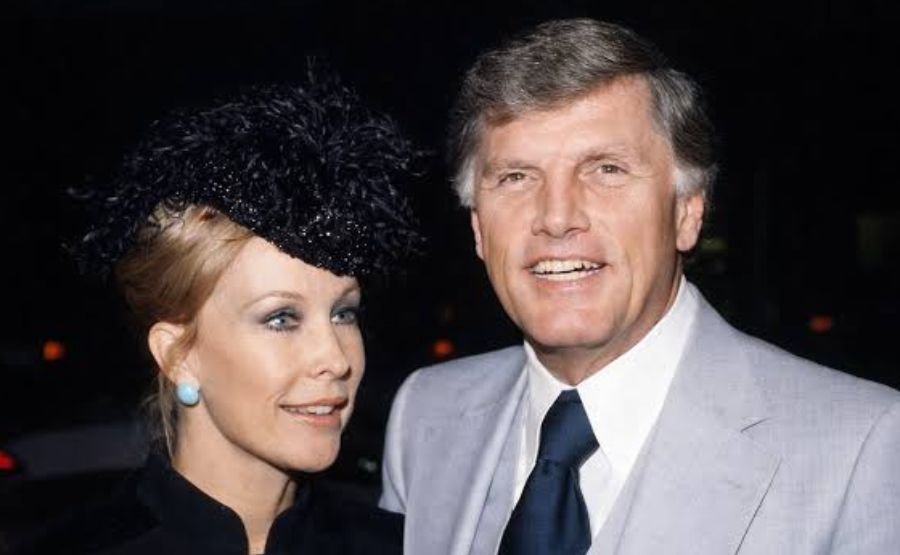
Charles Donald Fegert: The Man Who Married Barbara Eden and Vanished from the Spotlight
Here’s the thing about Charles Donald Fegert that most people searching his name don’t realize until they start actually digging: he wasn’t a Hollywood guy. He was never a Hollywood guy. He worked as an ad sales representative for the Sun-Times and Daily News in Chicago, briefly became close to Barbara Eden in the late 1970s, married her in 1977, returned to Chicago after six years and a divorce, and passed away there in 2002 with virtually no public record.
That’s the actual story. Not the inspirational biography the content farms invented. Not the community development pioneer who was “born January 1, 1970” (he was born in 1930, which would make that date comically impossible). Not the education reformer. A Chicago media executive with three marriages, a coast guard stint, and a brief uncomfortable collision with Hollywood. That’s it. And somehow even that modest true story is more interesting than what the internet replaced it with.
Quick Bio
| Category | Detail |
| Full Name | Charles Donald Fegert |
| Born | November 8, 1930, Chicago, Illinois |
| Died | 2002, Chicago, Illinois; aged 72 (peacefully in his sleep) |
| Career | Chicago Sun-Times salesman → Chicago Daily News vice president of advertising and marketing; WLS Radio |
| Early Life | Worked in mills; served in the U.S. Coast Guard |
| Marriages | Three marriages, three divorces |
| Known Wives | Trish Althaus; Barbara Eden; one unidentified third |
| Children | Sons Michael and Chip; daughter Lisa; seven grandchildren |
| Marriage to Barbara Eden | September 3, 1977 — 1982/1983 |
| Children with Eden | None |
| Eden’s Other Husbands | Michael Ansara (1958–1974); Jon Eicholtz (1991–present) |
He was born, died, and was never allowed to leave Chicago
He was raised in Chicago during a period when the city truly produced goods. The mills weren’t metaphorical — he worked in them, early on, before the Coast Guard took him, before the newspaper industry pulled him in. This American CV from the middle of the 20th century shows you exactly what kind of man he was, but it doesn’t make the social media version of someone’s life because it lacks glitter.
You work in the mills. You serve your country. When you return, you discover something you excel at, in Fegert’s instance, selling newspaper ad space. In the 1950s and 60s, Chicago remained a newspaper city in the sense that the term truly had meaning. The Sun-Times, the Daily News, the Tribune, WLS radio. These were the information infrastructure of the third-largest city in America and the advertising that ran through them was serious money.
Fegert climbed. From salesperson to store advertiser to Sun Times advertising manager. Then over to the Daily News as vice president of advertising and marketing. That’s not a minor job. Prior to its demise in 1978, the Chicago Daily News was a truly important American daily with Pulitzer Prizes, overseas bureaus, and a whole machinery. Managing the commercial engine of a major metropolitan newspaper in a major American metropolis was part of being its vice president of advertising.
He was good at his job. The trajectory makes that much evident. What his colleagues thought of him, what his actual day-to-day professional personality was like — the record doesn’t preserve that. He left no memoir. No business press profiles from the era have surfaced in any search. He was, in the way that many competent mid-century professionals were, invisible in the way the work itself demanded.
See also “Molly Elizabeth Brolin: The Brolin Family Secret the Internet Keeps Getting Wrong“
The Two Marriages Before Barbara
Let’s be honest about something the hagiographic bio sites all avoid: Charles Donald Fegert arrived at his marriage to Barbara Eden having already failed at marriage twice.
Trish Althaus was one of the prior wives. The name of the third marriage — which came after Eden — is not documented in any source I could find. But three marriages and three divorces is a biographical fact worth sitting with, not because it’s damning but because it’s honest. This man had a history of rough endings and dedicated beginnings. He wasn’t someone who stumbled into one bad relationship. He kept trying, kept marrying, kept finding that the thing he was building didn’t hold.
He had children from those earlier relationships. Sons Michael and Chip. A daughter named Lisa. By the time of his death, he had seven grandkids. That’s not an absent father — the grandchildren alone suggest decades of sustained family involvement. Whatever went wrong in the marriages didn’t sever the thread to his kids.
When he first met Barbara Eden, he was in his middle to late forties. A Chicago newspaper man with two failed marriages already behind him. She was coming out of her own wreckage — her marriage to Michael Ansara, the actor best known for playing Cochise in the TV series Broken Arrow, had ended in 1974 after sixteen years. Eden was in her mid-forties too, and grieving the loss of a long marriage in a way she’s spoken about with unusual candor in interviews over the years.
Two middle-aged people, each with complicated histories. That’s the setup for the marriage that the internet describes as a love story but which the facts suggest was something messier and more human.
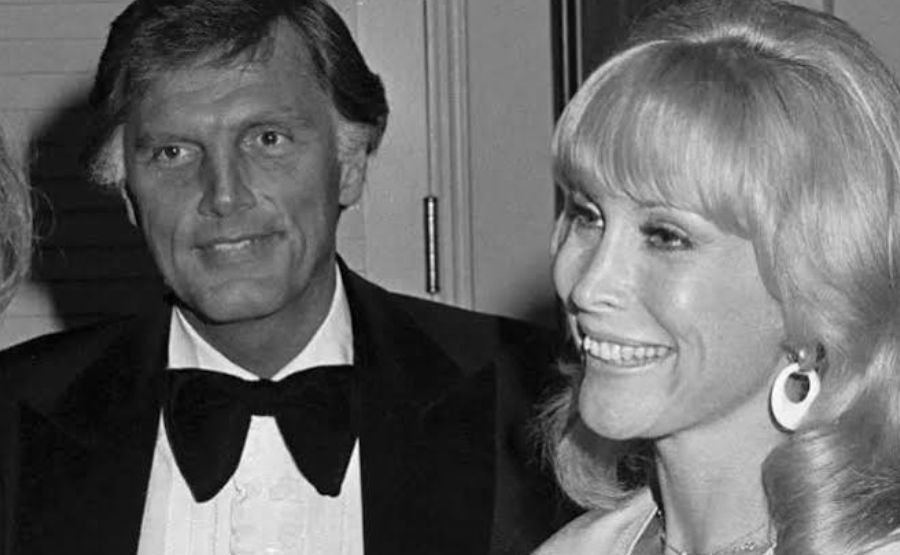
What Chicago Had That Hollywood Didn’t
The cultural tension is the narrative that some sources hint at but none thoroughly explore. Fegert wasn’t in the entertainment industry. He had never worked in the entertainment business before. He sold advertising in newspapers and radio in the Midwest. When he married Barbara Eden in September 1977, he married one of the most recognizable women in America.
Think about what that meant, practically. I Dream of Jeannie had finished its original run in 1970, but by the late 1970s Eden was still a genuine television star — appearing in specials, variety shows, guest spots, the whole circuit. She wasn’t just famous. She was that kind of famous: the nostalgic, beloved, American household-name famous that carries more social weight in certain rooms than any current-moment celebrity could.
And Fegert was a Chicago ad executive who had never lived in that world.
Some sources suggest he had moments of insecurity despite his professional success. That’s credible and you don’t need to be a psychologist to understand it. You walk into rooms where your wife is the person everyone wants to talk to, where your own professional identity — which in Chicago was real and substantial — means nothing because the currency is different. He was used to being someone who mattered in his own ecosystem. He wasn’t a part of Hollywood, which has its own hierarchies and is a whole separate environment.
There’s also the geography problem. He was a Chicago man. His life, his network, his professional relationships were all rooted in Chicago. Barbara Eden’s career required her to be in Los Angeles. They tried to navigate that split, apparently without success. The marriage lasted roughly six years. By 1982 they were separated. The divorce was finalized around 1983.
No dramatic story on the public record explains the end. There has been no public altercation, scandal, or tabloid publicity. It seems to have been two people who discovered the fit wasn’t right, separated, and moved on.
What Happened After the Divorce
This is where the trail gets genuinely thin.
Fegert returned to Chicago. That much is clear — he died there in 2002, meaning the last nineteen years of his life were spent in the city that had always been his. There is no record of his professional activities during those years in any of the sources I could find. The Chicago Daily News had folded in 1978 — closing down while he was still in his advertising career, which must have been a significant professional disruption. Where he went after that, what other media or advertising work he did through the 1980s and 1990s, isn’t recorded.
He apparently married a third time after Eden. That marriage also ended in divorce, based on the consistent claim that he had “three marriages and three divorces.” No name, no date, no context for that third relationship appears anywhere.
One source mentions real estate investment as a side interest. Another notes that he “invested in various business projects.” These are the kinds of filler phrases that bio sites use when they have nothing to report — they could mean anything from a modest savings portfolio to active deal-making. The truth is probably somewhere ordinary. A man in his fifties and sixties, back in Chicago, perhaps doing some consulting, managing whatever assets he’d built, watching the grandchildren grow.
He died peacefully in his sleep in Chicago in 2002. That’s a good death, practically speaking. He was seventy-two. He went to a familiar city in his own bed. The year 2002 carries one particularly heavy shadow if you know the Barbara Eden story: her son Matthew Ansara, from her marriage to Michael Ansara, died of a drug overdose in 2001. She has publicly expressed her intense grief over Matthew’s passing. Fegert died one year after Matthew. Whatever contact, if any, existed between them at that point isn’t documented.
The Barbara Eden Connection and Why It Defined His Legacy
Whether it’s fair or not, Charles Donald Fegert’s marriage is almost the only reason he is remembered. That’s the brutal math of celebrity adjacency.
He worked for decades in a demanding profession, rose to vice president level in a major American newspaper at a time when that meant something, raised three kids from earlier relationships, and built a life substantial enough to leave seven grandchildren behind. Nobody looks for any of that. The search term is always some variation of “Barbara Eden second husband” or “Charles Fegert who was he.”
Barbara Eden has spoken about him in subsequent interviews without apparent rancor. She described the relationship respectfully, acknowledged it didn’t work, and moved on. That’s actually a form of dignity that plenty of divorced couples don’t manage. She married Jon Eicholtz, an architect, in 1991, and that marriage has lasted — they’re still together, which by Hollywood standards is practically a geological event.
Eicholtz, interestingly, is also not a show business man. He’s a real estate developer and architect. Barbara Eden apparently learned something from the Fegert years about what kind of partnership actually works for her: someone who has their own substantial non-entertainment world, who isn’t navigating their identity through her fame. Fegert fit that profile in theory — the Chicago newspaper world was his domain, not hers. In practice, the geography and the culture proved incompatible.
The third husband found a way to make it work that the second didn’t. Whether that’s a reflection of Eicholtz, or of Eden herself having changed, or of both of them being two decades older and wiser when they met, the record doesn’t answer definitively.
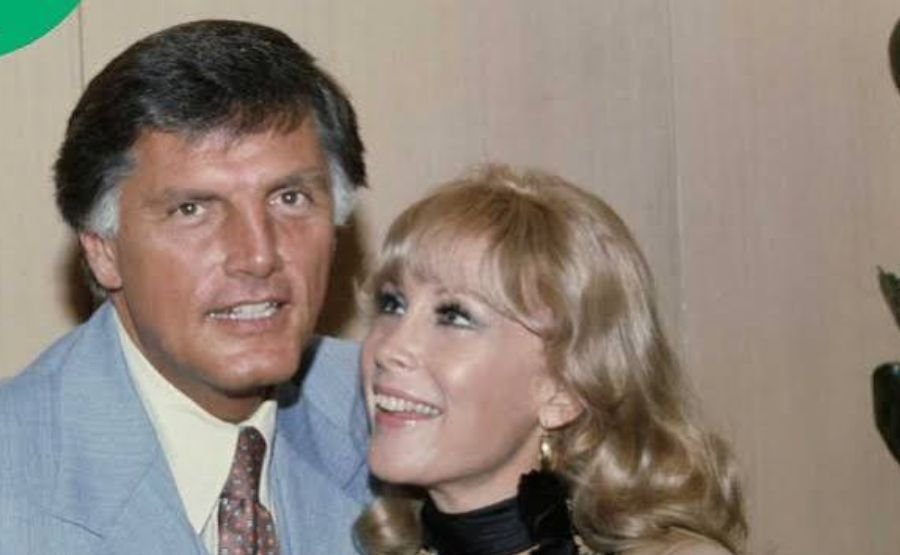
The Content Farm Problem
I have to say something directly about what you find when you search Charles Donald Fegert’s name. The search results are a disaster.
Multiple sites confidently state he was born January 1, 1970 — meaning he’d have been seven years old when he married Barbara Eden in 1977. One site describes him as an education reformer making “remarkable contributions to society” in community development. He has a profession in industries unrelated to newspaper advertising, according to another. A third uses a photo that appears to be from a completely different era with no context or attribution.
The birth year discrepancy alone spans forty years across sources. The actual man — born 1930, died 2002, newspaper advertising VP — is more documented in his death than in these “biographies.” An obituary notice or similar death record is where the November 8, 1930 birth date comes from, along with the specific detail that he “died peacefully in his sleep in Chicago in 2002 at the age of 72.” That math is internally consistent. The 1970 birth date from the AI sites is not.
This happens with anyone who is famous only by proximity and deceased. The content farm can’t interview them. There are no press materials to draw from. So the generators fill in plausible-sounding professional descriptions and life events, and the copied errors propagate.
What’s left is an actual person being replaced by a composite fiction. Charles Donald Fegert — the real one — wasn’t an education pioneer. He wasn’t born in 1970. He was a Midwestern newspaper man who married a television star, found the worlds incompatible, and returned to Chicago to live out the rest of his life in relative anonymity. That’s a real human life. It deserves to be described accurately even if it isn’t glamorous.
Final Words
Charles Donald Fegert is interesting precisely because his story resists the celebrity-adjacent narrative that’s usually imposed on people like him. He has a profession in industries unrelated to newspaper advertising, according to another. He wasn’t a villain who damaged a beloved actress. He was a competent professional from a different world who tried to merge his life with someone from a radically different one, couldn’t make it work, and went back to where he came from.
That’s an adult story. A real one. And it happens to be situated inside a famous person’s biography as a chapter that doesn’t quite fit the overall arc — which is why it’s always told as a footnote and never as its own thing.
He had three kids, seven grandchildren, a solid career in Chicago media, three marriages that didn’t survive, and a quiet death in the city that was always his. The fact that he also spent six years married to Jeannie from I Dream of Jeannie is genuinely the least interesting thing about him, and also the only reason anyone writes about him.
I find something almost worth admiring in that. He didn’t leverage the connection. Didn’t write a book. Didn’t give interviews positioning himself. Just went home to Chicago and lived. In the attention economy, that reads like stubbornness. In human terms, it might just be dignity.
FAQs
1. Who was Charles Donald Fegert?
A Chicago-based advertising and media executive, born November 8, 1930, who worked as a salesman at the Chicago Sun-Times and rose to VP of Advertising and Marketing at the Chicago Daily News. He also had involvement with WLS radio. He’s known primarily as Barbara Eden’s second husband, which is somewhat ironic given his actual professional substance.
2. When was Barbara Eden married to Charles Donald Fegert?
September 3, 1977. They separated around 1982 and the divorce was finalized in 1983 — sources vary slightly on the exact end date, but it was approximately six years together.
3. Did Charles Fegert and Barbara Eden have children together?
No. They didn’t have any children together. Fegert had children from his prior marriages — sons Michael and Chip, and a daughter named Lisa — and seven grandchildren at the time of his death.
4. How many times was Charles Fegert married?
Three times, with three divorces. The confirmed names are Trish Althaus as one prior wife and Barbara Eden as his second marriage. The third marriage — apparently after Eden — is referenced in sources but the wife’s name is not publicly documented.
5. What was Charles Fegert’s career?
He began his career in the mills of Chicago and served in the United States. Coast Guard, then entered the newspaper advertising industry. He worked his way up at the Chicago Sun-Times from salesman to advertising management roles, then became Vice President of Advertising and Marketing at the Chicago Daily News. He also had work connected to WLS radio.
6. When did Charles Donald Fegert die?
In 2002, in Chicago, Illinois. He was 72 years old. According to multiple sources, he died peacefully in his sleep. He outlived Barbara Eden’s son Matthew Ansara, who died of a drug overdose in 2001, by roughly a year.
7. Was Charles Donald Fegert born in 1970?
No. He would have been seven years old when he married Barbara Eden in 1977, despite the claims of several AI-generated biographical websites that he was born on January 1, 1970. The actual birth year, consistent with obituary-adjacent records and multiple credible sources, is 1930. He died in 2002 at age 72, which confirms the 1930 birth year.
8. Is Barbara Eden still married?
Yes. Her third husband, Jon Eicholtz, is a real estate developer and architect. They married in 1991 and remain together — making their marriage over thirty years long as of 2026, which by any standard is remarkable, especially given Eden’s two prior divorces.
9. How did Barbara Eden speak about Charles Fegert after their divorce?
Respectfully and without apparent bitterness, in the limited instances where she’s mentioned him. She has been more outspoken about the tragedy of her son Matthew’s death in 2001 and the anguish of her first marriage’s dissolution. Fegert, the second marriage, tends to be referenced briefly and without drama.
10. What happened to the Chicago Daily News?
It closed in 1978, the year Fegert married Barbara Eden and while he was vice president of marketing and advertising. The paper’s closure was part of a broader consolidation of Chicago’s newspaper market. What Fegert did professionally after the Daily News shut down is not documented in any source I could find.
11. Why is there so much wrong information about Charles Donald Fegert online?
Because he’s a deceased private person who is famous only by association with a celebrity, which is exactly the profile that AI-generated content farms exploit most aggressively. Without a living subject to correct the record, without press materials or interviews, the generators fill gaps with plausible-sounding fiction. Multiple sites give birth forty years apart. One calls him an education reformer. Another invents an entirely different career. Finding the genuine man—a Chicago newspaper executive who was born in 1930 and passed away in 2002—requires actual study, and the content farm approach is designed to evade true inquiry.
Beyond the headlines, discover what’s worth knowing — TheTrendist.



One Comment