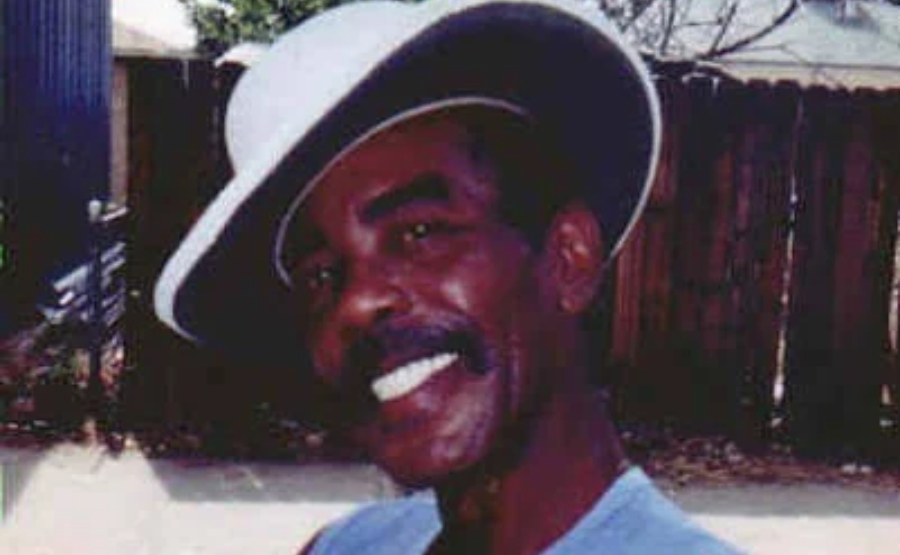
Nobody Talks About Charles Wayne Hendricks Without Talking About His Father. That’s the Problem — and the Point.
His mother was one of the most electrifying R&B voices of the 1950s and 60s. His father was called a genius by Rolling Stone, Quincy Jones, and basically everyone who mattered. Ray Charles said about Margie Hendrix — Charles Wayne’s mother — that Aretha Franklin, Gladys Knight, and Etta James were all “bad,” but Margie “will scare you to death” on any given night.
Charles Wayne Hendricks entered the world as the only child of two extraordinary, damaged, combustible people. And then, while he was still a child, his mother died broke and possibly of a heroin overdose. His father was famous and largely absent. And Charles Wayne disappeared almost entirely from the public record.
The internet, unable to tolerate that, invented at least five different Charles Wayne Hendrickses. Educator. Botanist. Spark plug inventor. Black media pioneer. All fake. All confidently described in AI-generated articles that have nothing to do with the actual person.
The real Charles Wayne Hendricks lived a life shaped by two legends’ wreckage. That’s worth understanding properly.
Quick Bio
| Detail | Info |
| Full name | Charles Wayne Hendricks |
| Born | October 1, 1959, New York City |
| Father | Ray Charles (Ray Charles Robinson, born September 23, 1930; died June 10, 2004) |
| Mother | Margie Hendrix (born March 13, 1935, Register, Georgia; died July 14, 1973, New York City, age 38) |
| Only child of | Both Ray Charles AND Margie Hendrix — their sole child together |
| Half-siblings | 11 — Ray Charles had 12 children total from 9–10 different women |
| Mother’s cause of death | Disputed — most sources: heroin overdose; no autopsy performed; some say car crash or cancer |
| Father’s estate | $75M; each of 12 children received $500,000 trust; bulk went to Ray Charles Foundation |
| Estate lawsuit | Foundation sued 7 of 12 children for claiming song copyrights; Foundation won |
| Reported death | 2013, at age 54 (cited by some sources; not universally confirmed) |
| Reported spouse | Marlene Hendricks (single source; limited confirmation) |
| Wikipedia page | Does not exist |
| Career | Largely undocumented |
The Parents: What Charles Wayne Was Born Into
To understand the son, you have to understand what the parents were to each other. And it’s not pretty.
Ray Charles and Margie Hendrix had what people diplomatically call a complicated relationship. She was the foremost voice of the Raelettes — the backing group he assembled, trained, and controlled. He called her the most frightening singer he’d ever seen, putting her ahead of Aretha, Gladys, and Etta James in his private ranking. That’s a very specific kind of superlative coming from a man who worked alongside some of the greatest vocalists of the 20th century.
She got pregnant. He was married to Della Beatrice Howard, the woman he’d been with since 1955. When Margie gave birth to Charles Wayne in October 1959, she demanded Ray leave Della and marry her. He refused. He stayed with Della for another seven more years. Margie stayed in the Raelettes for another four, which means she kept singing for and with the man who had fathered her child and refused to commit to her. Think about what that daily professional dynamic must have looked like.
The song “Hit the Road Jack” — the 1961 hit about a woman throwing out a no-good man — was shaped, at least in spirit, by that volatile dynamic. This is probably not a coincidence.
Fired, Broke, Gone
Around 1963 or 1964, there was a final confrontation. Details vary by source. The broad outline: Ray fired Margie from the Raelettes. She had already been battling addiction — alcohol and heroin both. She tried to launch a solo career. It didn’t happen. She made some records for Ray’s Tangerine label. They went nowhere.
By the early 1970s, Margie Hendrix was no longer active in music. Multiple sources describe her as nearly penniless around the time of her death. On July 14, 1973, she died in New York City. She was 38 years old.
No autopsy was performed. That’s an important fact that often gets glossed over. Without an autopsy, the cause of death is genuinely uncertain. Most sources conclude heroin overdose based on circumstantial evidence and context. Other accounts suggest a car crash, or cancer. None of it can be verified to a clinical certainty because nobody did the procedure that would have answered the question.
Charles Wayne Hendricks was thirteen years old.

His Father, From a Distance
Ray Charles acknowledged Charles Wayne. He was legally and biologically recognized as Ray’s son. That’s the floor of what we know about the paternal relationship.
The ceiling is much harder to find.
Ray Charles had 12 children from roughly 9 to 10 different women. His second wife Della gave him three sons. Other women gave him daughters and sons scattered across the 1950s through the 1980s. He was, by all accounts, genuinely difficult to access as a father — his touring schedule, his heroin addiction (which he kicked in 1965), and his general preference for the company he chose over the families he’d created made him emotionally distant from most of his children.
In his autobiography “Brother Ray,” published in 1978, Charles said he knew having children outside his marriage was wrong. He didn’t stop. He also said he thought he was better suited to loving women than to being a devoted daily parent. He was, at least, honest about it.
For Charles Wayne specifically — whose mother had been fired by Ray, had spent a decade addicted and struggling, and had died when Charles Wayne was a teenager — the father-son dynamic would have been almost impossibly weighted. Whatever conversation they had, if they had them, isn’t part of any public record.
The 2002 Meeting and the Money
In December 2002, with Ray Charles already in declining health, he arranged a meeting with all twelve of his children at a hotel near Los Angeles International Airport. He disclosed his illness. He told them what they would inherit: $500,000 each, paid in trust over five years after his death. The bulk of the estimated $75 million estate — including copyrights to his songs, his masters, his image rights — would go to the Ray Charles Foundation, dedicated to helping the hearing-impaired and underprivileged youth.
The children signed agreements waiving further claims.
Ray Charles died on June 10, 2004, of liver disease. He was 73.
Then the lawsuits started.
By 2012, the Ray Charles Foundation had sued seven of the twelve children for attempting to assert copyright claims on Ray’s songs — using a provision of copyright law that allows songwriters’ heirs to recapture rights after a certain period. The Foundation argued the children had already waived all such claims in exchange for the $500,000 trusts. The children countered that they’d been essentially squeezed — that Ray’s longtime manager Joe Adams had a stranglehold on the estate that excluded the family. The Foundation won.
Whether Charles Wayne was among the seven sued or among the five not named isn’t definitively established in the public record I’ve found.
What the Internet Made of Him
Let me be blunt about what’s out there.
There is an article claiming Charles Wayne Hendricks was “the creator of the spark plug” born in Ohio in 1860. There is another describing him as a pioneer of Black American broadcast journalism whose “work was a quiet revolution in every broadcast booth.” A third calls him a “renowned educator” who developed “integrated curriculum” frameworks. A fourth describes a “groundbreaking botanist.”
None of these people are the sons of Ray Charles and Margie Hendrix. They are either completely fictional composite figures invented by AI content mills, or they are conflations with entirely different real people who share the name.
The real Charles Wayne Hendricks had no significant public career that any legitimate source documents. Several credible sources describe him only as “a businessman” — which is either accurate shorthand or polite filler for “we don’t actually know.” His life between his mother’s 1973 death and his own reported 2013 death is essentially undocumented in any accessible public record.
That blank space generated a content farm ecosystem. The less the real person left behind, the more the machines were invented.
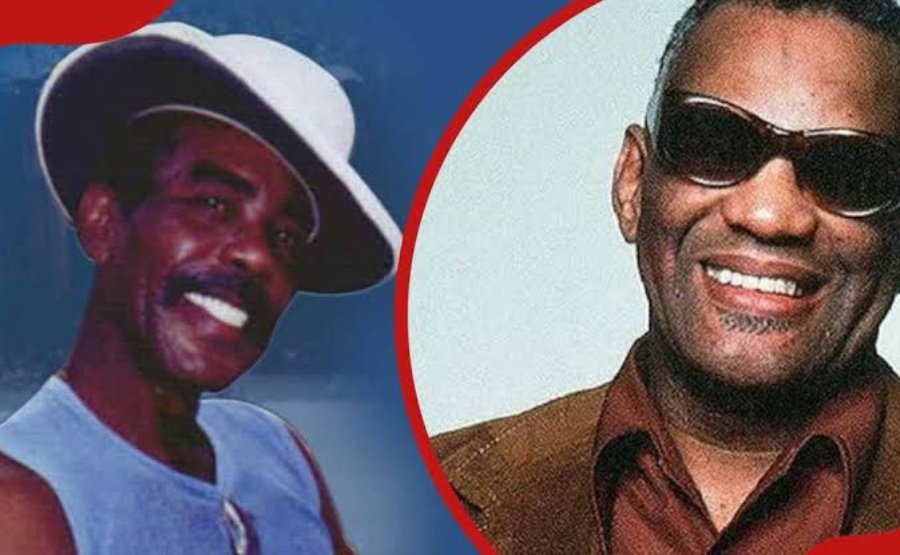
The Death That May or May Not Have Happened
Here is the central uncertainty at the core of this story.
Multiple sources report that Charles Wayne Hendricks died in 2013 at age 54. The city celeb biography is specific: “Died: 2013.” Other sources list him as still alive. One site wrote explicitly that “Charles Wayne Hendricks cause of death” searches are actually people confusing him with his mother’s death — meaning the writer of that article believed he was still alive at time of writing.
I’m not going to manufacture false certainty where none exists. If he died in 2013, he outlived his mother by 40 years and his father by 9, carrying the specific weight of being the only child of two people who destroyed each other slowly in the music industry. If he’s still alive, he has managed something genuinely remarkable: complete privacy in an era when privacy is nearly impossible for the children of icons.
Either way, the public record on him is thin to the point of translucency.
Final Words
Charles Wayne Hendricks deserved better than what he got, and what he got was determined before he could speak.
He was born to a woman who gave everything she had to a man who gave her a child and a pink slip and nothing resembling the future she wanted. He lost her at thirteen in circumstances that still aren’t entirely clear. He inherited from his father, decades later, half a million dollars paid in installments — a sum that reads like both generosity and dismissal when you know the estate was worth seventy-five times that amount.
The internet, sensing a name with traction and a genuine absence of information, manufactured a dozen different men and called them him. A spark plug inventor. An educator. A journalist. A botanist. None of them are real. The real person was the child of a specific heartbreak that played out in the R&B industry of the 1950s and 60s, where one person’s genius got to be named and celebrated and the other person’s genius burned itself out in relative obscurity while being told it wasn’t enough.
Margie Hendrix was described by Ray Charles as the most frightening singer he’d ever heard. She died at 38, almost penniless, while her son was still a child. That’s the inheritance Charles Wayne actually received before the trust documents were ever signed.
FAQ
1. Who is Charles Wayne Hendricks?
Charles Wayne Hendricks is the son of legendary musician Ray Charles and Margie Hendrix, one of the founding members of the Raelettes (Ray Charles’ backing vocal group). Born October 1, 1959 in New York City, he is the only child of both his mother and father together. He has eleven half-siblings through Ray Charles’ other relationships.
2. Who was Margie Hendrix?
Margie Hendrix was an American R&B and blues singer, born in Register, Georgia in 1935. She was the most prominent early member of the Raelettes. Ray Charles said she could “scare you to death” — placing her ahead of Aretha Franklin, Gladys Knight, and Etta James in his private ranking. She and Ray Charles had a long, volatile personal relationship that ended badly. She was fired from the Raelettes around 1963-1964 and died in New York City on July 14, 1973, at age 38. No autopsy was performed; most accounts attribute her death to a heroin overdose, though car crash and cancer have also been cited.
3. Did Ray Charles acknowledge Charles Wayne Hendricks as his son?
Yes. Charles Wayne was legally and biologically recognized as Ray Charles’ son and was included in the estate. However, the emotional relationship between Ray Charles and most of his children — particularly those from outside his marriages — was described as distant.
4. How much did Charles Wayne Hendricks inherit from Ray Charles?
The same as each of the other eleven children: a $500,000 trust, to be paid out over five years after Ray’s death in 2004. The bulk of Ray’s estimated $75 million estate went to the Ray Charles Foundation.
5. Is Charles Wayne Hendricks dead?
Some sources report his death in 2013 at age 54. Other sources suggest he is or was still living. No officially documented cause of death or obituary has been widely circulated in credible publications.
6. Was Charles Wayne Hendricks involved in the estate lawsuits?
The Ray Charles Foundation sued seven of Ray’s twelve children for attempting to assert copyright claims on Ray’s songs in contravention of estate agreements. Whether Charles Wayne was among the seven sued or the five not named is not definitively established in available public records.
7. Was “Hit the Road Jack” about Margie Hendrix?
The volatile relationship between Ray Charles and Margie Hendrix is frequently cited as contextual inspiration for the song’s mood, though it was written by Percy Mayfield. The dynamic of a woman telling a man who’s no good to leave resonates with what we know of their actual relationship, but it wasn’t written specifically about Margie.
8. Who were Charles Wayne’s siblings?
Charles Wayne’s eleven half-siblings include Ray Charles Robinson Jr. (son of Della Robinson), Robert Robinson (son of Della Robinson), Sheila Raye Charles, Raenee Robinson, and others. Ray Charles fathered children with nine to ten different women between approximately 1950 and 1987.
9. Does Charles Wayne Hendricks have a Wikipedia page?
No. As of available records, there is no Wikipedia page dedicated to him.
10. What career did Charles Wayne Hendricks have?
His career is largely undocumented in credible sources. Some descriptions list him as a “businessman,” which may be accurate or may simply be placeholder language. Multiple AI-generated articles falsely attribute entirely fictional careers to him — including spark plug inventor, educator, botanist, and broadcast journalist. None of these are documented by any credible source.
11. Why is there so much false information about Charles Wayne Hendricks online?
Because he maintained an essentially private life with minimal documented public activity, his name generates search traffic due to his famous parents while almost no real information exists. AI content mills filled that vacuum with fabricated biographies, sometimes invented from scratch and sometimes by confusing him with entirely different people who share the name.
Beyond the headlines, discover what’s worth knowing — TheTrendist.