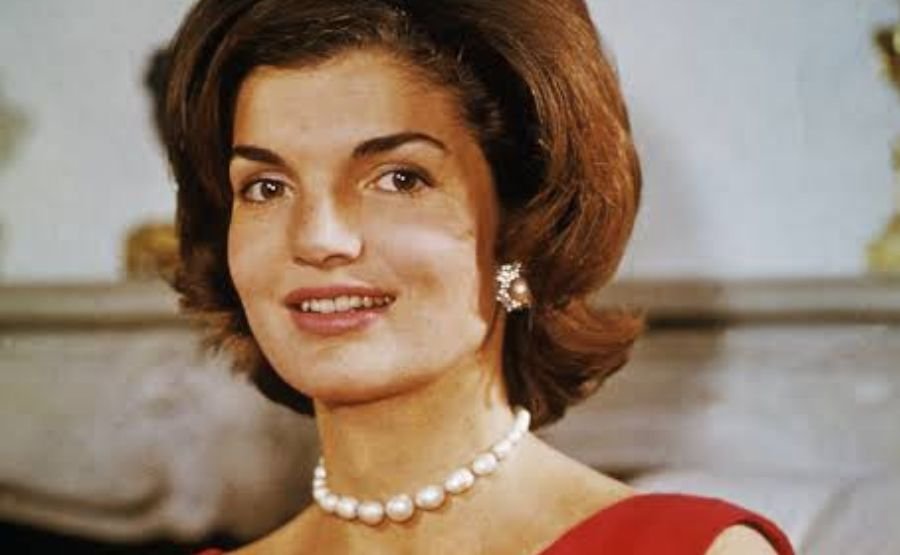
Jacqueline Kennedy Onassis: The Woman Who Built the Camelot Myth and Escaped It
Let’s start with the thing almost nobody says plainly: Jacqueline Kennedy Onassis was one of the most skilled image managers in American history. The Camelot narrative — the one that turned JFK’s presidency into a romantic legend and installed her permanently at the center of American mythology — she didn’t passively receive that story. She constructed it. Within one week of her husband’s assassination, she sat with journalist Theodore White and handed him the lines. The candlelight. The music at bedtime. “Don’t let it be forgotten, that once there was a spot, for one brief shining moment, that was known as Camelot.” She engineered the posthumous presidency of a man who had, by most accounts, treated her badly for years. And then she spent three decades trying to live a real life outside the myth she’d built.
That tension — between the image she manufactured and the person underneath it — is the actual story of Jackie Kennedy Onassis. Most articles never get there.
Quick Bio
| Detail | Info |
| Born | July 28, 1929, Southampton, New York |
| Died | May 19, 1994, New York City (non-Hodgkin’s lymphoma, age 64) |
| Education | Vassar College; Sorbonne; George Washington University (BA, French Literature, 1951) |
| Early career | Inquiring Camera Girl, Washington Times-Herald (1952); won — then declined — Vogue Prix de Paris internship (1951) |
| First marriage | John F. Kennedy, September 12, 1953; widowed November 22, 1963 |
| Second marriage | Aristotle Onassis, October 20, 1968; widowed March 15, 1975 |
| Children | Caroline Kennedy (b. 1957); John F. Kennedy Jr. (b. 1960); Patrick Bouvier Kennedy (died 2 days after birth, 1963); an earlier miscarriage |
| Post-marriage career | Editor, Viking Press (1975); Senior Editor, Doubleday (early 1980s–1994) |
| Languages | French, Italian, Spanish, Polish |
| The voice | The famous breathy whisper was an affectation, confirmed by multiple biographers |
The Voice Was Fake — And That Tells You Everything
Before we go anywhere else, let’s deal with the voice. That famous breathless whisper. Multiple biographers — Sarah Bradford among them — have confirmed it was an affectation. Not her natural speaking voice. A cultivated performance. Something she put on.
Now you might say: so what? Lots of people adopt a persona. True. But when the most recognizable element of your public identity is a constructed performance, when the very sound of your voice is a costume you put on in the morning, it says something about the relationship between the public self and the private one.
And Jackie had thought very clearly about this distinction. She told a former lover at some point — documented in J. Randy Taraborrelli’s biography — “I have three lives: public, private, and secret.” Three lives. Not two. Three.
The public Jackie was the voice, the pillbox hat, the composure at the funeral, the White House tour. The private Jackie was the working editor, the preservation activist, the woman who judo-flipped a photographer outside a screening of I Am Curious (Yellow) — an X-rated Swedish film — in 1969. The secret Jackie? That’s the one the biographers keep digging at and can’t quite reach.
See also “Jeffrey Manchester: The Real Story of the Roofman Who Hid in Toys R Us“
The Vogue Essay Contest — And The Walk Away
In 1951, the Vogue Prix de Paris received 1,279 entries. Twenty-two-year-old Jacqueline Bouvier won the first prize for her essay in which she listed Baudelaire, Wilde, and Diaghilev as the three historical figures she would have most preferred to have known. The prize was a paid internship at Vogue in Paris and New York. Her mother, Janet Auchincloss, reportedly persuaded her not to take it, fearing she’d stay in Paris and never come back.
On her first day, she declined it. Walked away from it.
This detail is important because it tells you something that everything afterward confirms: Jackie was surrounded by people who thought they knew what was best for her, and she spent most of her life navigating that pressure with strategic compliance and private resistance.
She went into newspaper photography instead. The Inquiring Camera Girl at the Washington Times-Herald in 1952 — she had a regular column where she photographed strangers and asked them one question. She was good at it. She was always going to be good at anything that required watching people carefully and translating what she saw into something presentable.
The Camelot Engineering — Which Nobody Calls What It Is
Let’s linger on what actually happened in the week after Dallas.
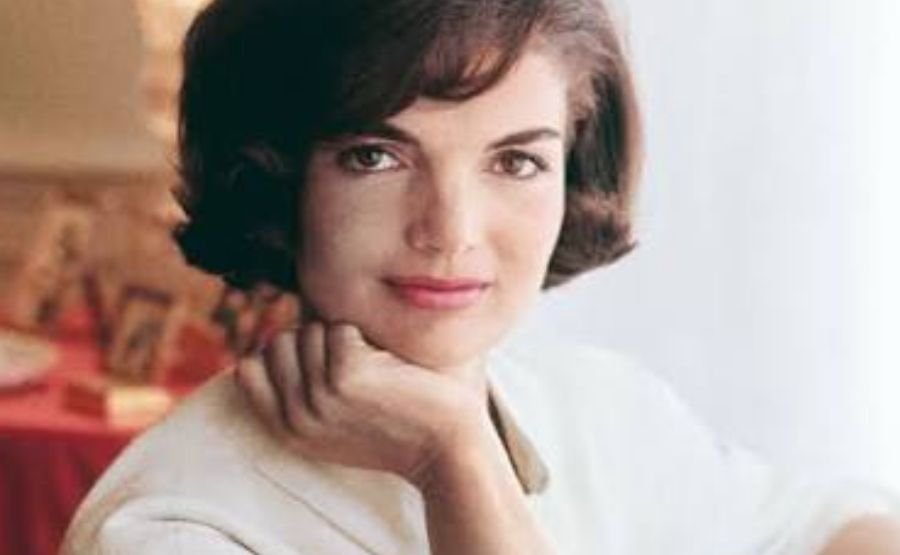
JFK was killed November 22, 1963. Jackie requested that journalist Theodore White come to Hyannis Port. She sat with him and, in an interview that Life magazine then used, she gave him the Camelot framing wholesale. She wanted it described. She said JFK would play the cast recording before bed. She handed White the headline and the metaphor. At midnight the night of the interview, she called him to remind him to include the word “Camelot” in the piece.
Let me be clear about what I’m not saying. I’m not saying she was cynical. She was in genuine grief. She had just witnessed her husband’s murder from a distance of twelve inches. Her trauma was real. But grief doesn’t require a specific historical mythology, and she chose to build one — deliberately, carefully, immediately.
She later called her public image “a cartoon that had little to do with her life.” The tension in that statement is everything. She built the cartoon. She then had to live alongside it for thirty years. The biographies that frame her as a passive victim of image-making are getting the causality backwards.
What The Kennedy Marriage Actually Was
Let’s be honest about the years between 1953 and 1963. Jack Kennedy’s infidelities were legion, documented, and largely known to Jackie during the marriage. Multiple accounts confirm she was aware. Multiple accounts describe her as having her own close friendships and relationships that provided the emotional sustenance her marriage didn’t.
He was absent. He was charming and unavailable in the way that a certain type of man is charming specifically because of his unavailability. She made the best of it. She used the White House years to build something genuinely hers — the restoration project, the cultural programming, the Emmy Award she received for the 1962 televised tour. She turned the role of decorative political spouse into something with actual institutional weight.
But she was also, to use the phrase Sarah Bradford’s biography doesn’t quite use but gestures toward, paying a significant personal price. The miscarriage. The stillbirth of Arabella in 1956. The death of Patrick two days after his birth in August 1963. Three months later, Dallas.
She wrote once about the White House years: she described herself as having been like “a moth” fluttering around the periphery of power. Not a woman at the center of something. A moth.
Onassis — The Decision Everyone Judged And Nobody Understood
The marriage to Aristotle Onassis in October 1968 is still the moment people used to dismiss Jackie Kennedy. It felt, to a public that had canonized her as the widow in black, like a betrayal. Like she’d sold the myth for Greek islands and a bank account.
Here’s what the record shows. She was thirty-nine years old. She had two living children. She had survived things most people cannot imagine. She was exhausted, she was rich but not independently wealthy enough to feel fully free, and the Kennedy family was still actively controlling aspects of her life and movements.
Onassis was sixty-two, physically unimpressive, reportedly crude in ways that shocked people around her, previously involved with Maria Callas, and in possession of enormous independent wealth. He was also, critically, not American. Not subject to the Kennedy machine. Not embedded in the political apparatus that had consumed her for a decade.
She later said she chose him partly because he could provide security for her children. She negotiated the prenuptial agreement herself, in detail, reportedly. She was not swept away. She was making a transaction with open eyes. That transaction turned bad — Onassis resumed his relationship with Callas, his son Alexander died, he became resentful and cruel, they were allegedly going to divorce when he died in 1975.
The biographers who frame this as Jackie making a terrible romantic mistake are missing the point. It wasn’t primarily a romantic decision.
The Judo Flip And The X-Rated Movie
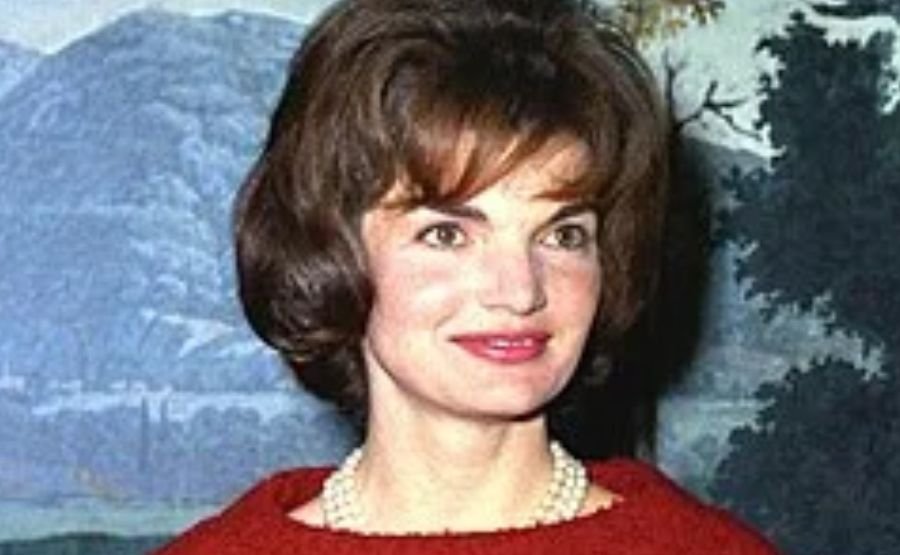
On October 5, 1969, Jacqueline Onassis attended a screening of I Am Curious (Yellow) — a Swedish film that had been banned in several US states for its explicit sexual content — in New York City. As she was exiting, Daily News photographer Mel Finkelstein was photographing her. She walked up to him and without warning executed a judo flip, sending him to the pavement.
Finkelstein, to his credit, assessed the situation accurately: “That girl can handle herself.” He did not pursue legal action. Jackie later claimed he slipped.
She saw the X-rated film. She did the judo flip. She claimed the man slipped. This is the same person the history books describe as graceful, composed, and the embodiment of dignified restraint.
Then there’s Ron Galella. For years this photographer trailed her constantly — outside her apartment, on bicycles through Central Park, on vacation in Greece. In 1972, he didn’t just harass her. He sued her first — for $1.3 million, claiming her Secret Service detail was impeding his work. She countersued. She won. He was ordered to stay 25 feet from her at all times, later increased to 75 feet after he violated it.
She didn’t endure Galella. She fought him in court and won, twice. There’s a version of this woman that was iron underneath the pastel.
What She Actually Spent Her Real Life Doing
After Onassis died in March 1975, Jackie was forty-five years old and twice widowed. The public waited, I suspect, for her to disappear into grief and philanthropy and the role of senior Kennedy widow.
She got a job instead.
Viking Press first, as a consulting editor. She resigned after they purchased a Jeffrey Archer novel — Shall We Tell the President? — whose plot involved an assassination attempt on a fictional President Ted Kennedy. She said she couldn’t be associated with it. Then Doubleday, where she became a Senior Editor and worked until six weeks before she died.
She edited over a hundred books in her Doubleday years. Michael Jackson’s Moonwalk. Joseph Campbell’s works. Books on dance, architecture, mythology, history. She followed her actual interests — which had always been literature, the arts, visual culture — not the interests assigned to her by the role of political widow.
Ms magazine ran a cover photo of her in 1979 with the headline “Why Does This Woman Work?” She answered in the story: she said women weren’t supposed to work if they had families, and she thought that was wrong. Women should, of course, work if they so choose.
In 1979. In Ms. Not quite the passive icon, is she.
She also saved Grand Central Terminal. When the developers planned to demolish it the way they’d demolished the original Penn Station in 1963, she threw herself into the preservation fight, testified, organized, and went to Washington. The Supreme Court ruled in 1978 that New York City’s landmarks law was constitutional. Grand Central stands. She made that happen.
The Maurice Tempelsman Question
For the last decade of her life, Jackie shared her Fifth Avenue apartment with Maurice Tempelsman — a Belgian-born diamond dealer who was still technically married to someone else. The arrangement was discreet. The relationship was real. She was apparently happy in a way that hadn’t been true for most of her adult life.
The biographers who get it right note that this wasn’t “Jackie finds love at last” — it was quieter and more complicated than that. He managed her investments, provided genuine companionship, and represented a kind of private life that was, finally, genuinely private. No Kennedy machine. No paparazzi orders. No Camelot obligation.
She died on May 19, 1994, at sixty-four, from non-Hodgkin’s lymphoma diagnosed only four months earlier. Tempelsman was with her.
One detail that deserves more attention: some researchers have noted that the chemicals she was exposed to in the immediate aftermath of the Kennedy assassination may have had long-term carcinogenic effects. This has never been confirmed as the cause of her cancer, and I’m not going to overstate it. But it’s been noted. The disease that killed her may be the last entry in a chain of damage that began in Dallas on November 22, 1963.
Final Words
Jacqueline Kennedy Onassis was a genuinely intelligent woman who spent the first half of her adult life constructing and performing a version of herself that served other people’s needs, and who spent the second half dismantling that performance to find out what was underneath it.
The voice was fake. The Camelot myth was engineered. The Onassis marriage was calculated. And none of those facts make her less interesting — they make her more interesting, because they suggest a mind that was always working, always managing, always thinking two moves ahead of the room she was in.
The public memory has frozen her in the pink suit. In the composure at the funeral. In the White House tour voice. All of which she constructed. The real person — the one who won the Vogue contest and walked away from it, who saw the Swedish X-rated film, who fought a stalker in court and judo-flipped his colleague, who edited more than a hundred books and saved a train station — is harder to commodify and therefore less remembered.
She once described her public image as “a cartoon that had little to do with her life.” I believe she was telling the truth. I also think she drew the cartoon herself, which makes the statement considerably more complicated.
See also “Justin Cassotta: The Untold Story of Taylor Dooley’s Ex-Husband and Their Family“
FAQs
1. Did Jackie Kennedy really engineer the Camelot myth?
Yes. Within a week of JFK’s assassination, she invited Theodore White to Hyannis Port and specifically provided the Camelot framing, including reminding him at midnight to include the word in the piece. She was in genuine grief — but also making a deliberate historical choice about how her husband’s presidency would be remembered.
2. Was Jackie Kennedy’s voice real?
No. The famous breathy whisper was an affectation, confirmed by multiple biographers including Sarah Bradford. Her natural voice was different. This isn’t a trivial detail — when the most recognizable aspect of your public persona is a performance, it tells you a great deal about the relationship between the public self and the private one.
3. Did Jackie Kennedy really judo-flip a photographer?
Yes. On October 5, 1969, she flipped Daily News photographer Mel Finkelstein outside a New York City screening of I Am Curious (Yellow), an X-rated Swedish film. Jackie claimed he slipped. He did not press charges. In his opinion, “That girl can handle herself.”
4. Why did Jackie marry Aristotle Onassis?
Multiple factors are documented. She wanted security for her children, financial independence from the Kennedy family, and to extricate herself from American political life. Onassis was not American, not entangled in the Kennedy machine, and enormously wealthy. She negotiated her prenuptial agreement herself, in detail. This wasn’t a romantic sweep — it was a strategic decision made with open eyes.
5. What did Jackie Kennedy do after Onassis died?
She became a working editor. Viking Press first (where she resigned over a Jeffrey Archer novel with an assassination plot involving Ted Kennedy), then Doubleday, where she worked as Senior Editor until six weeks before her death. She edited over a hundred books, including Michael Jackson’s Moonwalk. She also played a central role in saving Grand Central Terminal from demolition.
6. What was Jackie Kennedy’s relationship with Maurice Tempelsman?
For approximately the last decade of her life, Tempelsman — a Belgian-born diamond dealer who was still married to his wife — moved into her Fifth Avenue apartment and was her companion until her death. The arrangement was discreet. By most accounts she was genuinely happy during this period. He was present when she died in May 1994.
7. What caused Jackie Kennedy’s death?
Non-Hodgkin’s lymphoma, diagnosed in January 1994 — only four months before she died at age 64 on May 19, 1994. Some researchers have noted that chemicals she was potentially exposed to in the aftermath of the Kennedy assassination may have had long-term carcinogenic relevance, though this has never been confirmed as a cause.
8. Who were Jackie Kennedy’s children?
Caroline Kennedy, born 1957, who went on to become a diplomat and author. John F. Kennedy Jr., born 1960, who died in a 1999 plane crash. She also had a miscarriage and Arabella (stillborn 1956), and lost Patrick Bouvier Kennedy two days after his birth in August 1963 — three months before Dallas.
9. Why did Jackie resign from Viking Press?
Viking purchased Jeffrey Archer’s novel Shall We Tell the President?, which featured a fictional assassination plot against a character who was President Ted Kennedy. She said she could not be professionally associated with it. She resigned and moved to Doubleday.
10. Did Jackie Kennedy have any career before she was First Lady?
Yes. She won the 1951 Vogue Prix de Paris essay competition — out of 1,279 entrants — but turned down the internship, reportedly at her mother’s urging. In 1952 she worked as the Inquiring Camera Girl for the Washington Times-Herald, a photojournalist column where she asked passersby questions and photographed them. She spoke French, Italian, Spanish, and Polish. Her actual interests were always literature, the arts, and architecture.
11. How did Jackie Kennedy save Grand Central Terminal?
When developers planned to demolish Grand Central the same way the original Penn Station had been razed in 1963, Jackie became actively involved in the preservation campaign. She testified, organized, attended events, and traveled to Washington. The legal battle culminated in a 1978 Supreme Court decision upholding New York City’s landmarks preservation law. The terminal stands. She was not a decorative figurehead in this fight — she was doing the actual work.
Beyond the headlines, discover what’s worth knowing — TheTrendist.