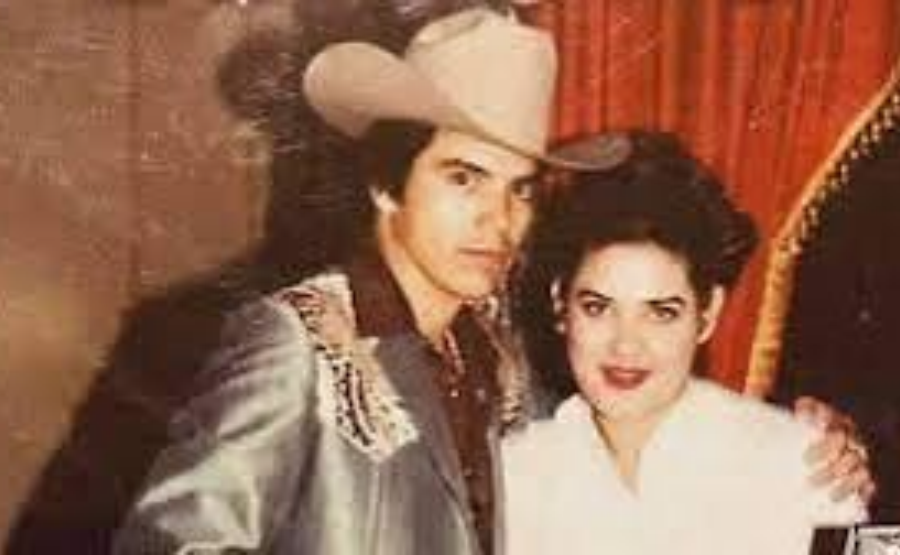
Marisela Vallejos Felix Is Not the Woman Most Articles Claim She Is. And that’s on the Internet, not her.
Search her name right now. Go ahead. Half the results will tell you she’s a murdered activist from Chihuahua. Another quarter will describe her as the wife of a man who died in 2004. One site will say she’s a Vietnamese pop star. Another will describe her as a “rising star in Mexican entertainment.” The correct version — a quiet woman from Mexicali who married a corrido singer with a violent past, raised two children in Southern California, buried her husband at 28, buried her son at 40, waited thirty-four years to become an American citizen and called it “liberation” — exists in fragments, scattered across sources that mostly just want to talk about Chalino.
Let’s try to tell her actual story for once.
Quick Bio
| Detail | Info |
| Full name | Marisela Vallejos Felix |
| Born | Around 1963–1966, Mexicali, Baja California, Mexico |
| Parents | Gabriel Sánchez, Ramona Hernandez |
| Pre-marriage work | Seamstress in a California garment factory |
| Met Chalino | May 1983, through his cousins Rosalba and Juana, Los Angeles |
| Married | 1984, Los Angeles (she was already pregnant) |
| Husband murdered | May 16, 1992, Culiacán, Sinaloa (unsolved) |
| Son: Adán | Born April 14, 1984, Torrance, CA; died March 27, 2004, Sinaloa (car accident, age 19) |
| Daughter: Cynthia | Born in LA, alive, lives privately |
| US citizen | 2018—after more than thirty years in the nation |
| Royalties | Receives music royalties from both Chalino’s and Adán’s catalogs |
| Public interviews | Has given select interviews (including with Pepe Garza) about Chalino’s life |
| Remarried? | No confirmed remarriage |
The Name Confusion That the Internet Created
Before anything else, you need to understand what happened to Marisela Vallejos Felix’s identity online.
There is a completely different woman named Marisela Escobedo Ortiz — a human rights activist from Chihuahua who was murdered on the steps of the state government building in 2010 while demanding justice for her murdered daughter. She is a genuinely important historical figure. Multiple AI-generated articles have taken her story — her murder, her activism, her tragedy — and stapled it onto the biography of Marisela Vallejos Felix, Chalino Sánchez‘s widow.
This is not just careless. It’s actively damaging. Both to the truth of who Marisela Vallejos Felix actually is, and to the memory of Marisela Escobedo Ortiz, whose real story — a mother shot in the head in public for refusing to stop asking who killed her daughter — deserves to be told accurately.
So let’s clear the record. Marisela Vallejos Felix is alive. She is Chalino’s widow. She is not a murdered activist. She is not a Vietnamese pop star. She is not the mayor of Tijuana. She is not a medical researcher. She is a woman from Mexicali who has outlived a husband and a son and has spent decades living quietly in the United States with an immigration status that didn’t get resolved until she was in her fifties.
That is the story.
See also “Camelia Kath: The Untold Story of Terry Kath’s Widow, Kiefer Sutherland’s Ex-Wife, and Jeff Lynne’s“
Mexicali to a Garment Factory in California: Before She Was Anyone’s Widow
Marisela Vallejos Felix was born in Mexicali, the border city in Baja California, sometime around the early-to-mid 1960s. That places the city in an interesting context: Mexicali sits directly on the US-Mexico border, twin city to Calexico, California, so porous that the border feels almost incidental to daily life there. She grew up in a working-class household — her parents were Gabriel Sánchez and Ramona Hernandez, and not much else about her early life has made it into any interview she’s given.
She came to California as a young adult and worked in a garment factory as a seamstress. This is a real fact that most articles breeze past in a sentence. But think about what it means. She was undocumented, she was young, she was working in the kind of California sweatshop-adjacent garment industry that employed thousands of immigrant women in the early 1980s. These weren’t glamorous jobs. They were surviving.
Nobody who knows Marisela from this period of her life has been interviewed publicly, as far as I can find. She exists in the historical record at this point essentially as a gap.
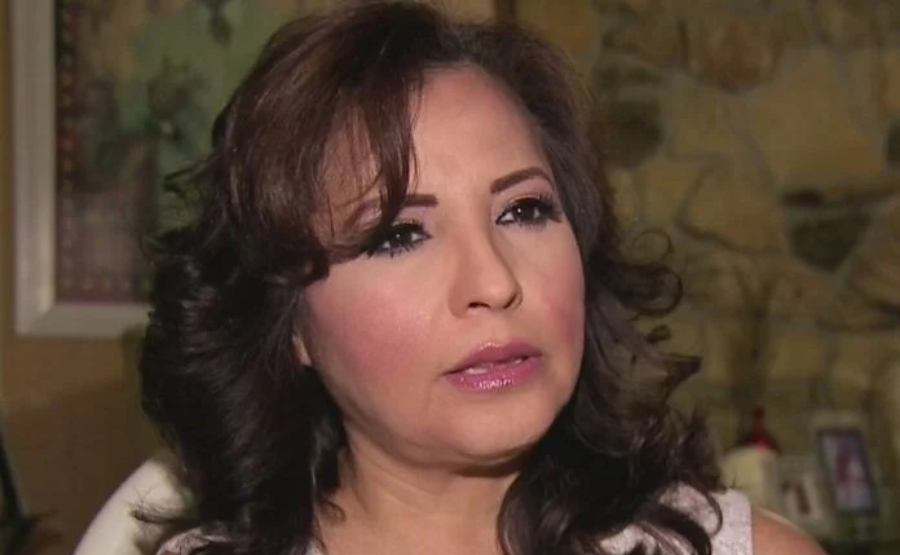
May 1983: A Cousin’s Introduction That Changed Everything
In May 1983, Chalino Sánchez’s cousins — Rosalba and Juana — introduced him to Marisela Vallejos while he was working in Los Angeles. By this point Chalino was already a complicated figure with a violent past that he was trying to outrun. He had killed a man in Sinaloa in 1975 at fifteen, allegedly avenging the rape of his sister. He’d fled to Tijuana, worked in immigrant smuggling with his brother Armando, crossed into the US illegally, worked in Oregon, worked in LA, and was beginning — slowly — to build something resembling a music career by selling cassettes from the trunk of his car and performing corridos at parties.
Marisela was twenty-four when they met. Chalino was twenty-two. Two undocumented workers in Los Angeles, introduced through family, starting a romance the way millions of immigrant relationships begin — slowly, in the margins, without much of a safety net.
By 1984 she was pregnant with their first child and they got married in Los Angeles. It was a small, intimate ceremony. No lavish event — these were people who were undocumented, who worked manual jobs, who didn’t have much. Adán Santos Sánchez Vallejo was born on April 14, 1984 in Torrance, California — a US citizen by birth, which his parents were not.
Cynthia came later. The family began building a life in Southern California, threading together the rhythms of immigrant working-class life: work, family, community.
Living With a Legend Before He Was One
Here is something that almost never gets written about: for most of their marriage, Chalino Sánchez was not famous. He was recording cassettes at budget studios and selling them out of cars. He was performing at quinceañeras and flea markets and private parties. He was building something, but it was small and local and underground.
Marisela was there for all of it. The flea market years. The cassette hustle. The gradual word-of-mouth reputation spread through the Southern California Mexican community. She was the one at home in Compton or South Central or wherever they were living that week, raising Adán and Cynthia, working whatever she was working, while her husband spent weekends performing corridos about narcos and outlaws to audiences of people who understood exactly what those songs were really about.
Let me be honest: there’s very little publicly available about what Marisela Vallejos Felix actually thought about her husband’s career in real time. The interviews she’s given came after his death, filtered through grief and legacy. She’s never been positioned as a primary narrator of her own story — she’s always been the supporting figure in someone else’s documentary.
May 16, 1992: The Marriage-Ending Nite
Chalino’s final performance took place on May 15, 1992, at the Salón Bugambilias in Culiacán, Sinaloa. It was his first time performing in his home state, and it was crowded. It was supposed to be the triumphant return of a local legend made famous in California. While he was performing, someone gave him a note. His face changed. He finished the concert.
His body was found near an irrigation canal the next morning. The back of his head has two bullet holes in it. He was thirty-one years old.
Marisela was a widow at somewhere around twenty-eight or twenty-nine years old. She had a seven-year-old daughter and an eight-year-old son. She was undocumented. Her husband’s music — which was about to become enormously famous, posthumously, in a surge of popularity that would make Chalino a cultural icon — had not yet made anyone rich. She had no famous name, no platform, no support structure that I can find any evidence of. She had a garment factory background and two children and a dead husband whose murder is still officially unsolved.
The murder remains unsolved. Think about that. More than thirty years later. There was no formal response regarding who wrote the note, who ordered the hit, or why, and no one was charged or found guilty.
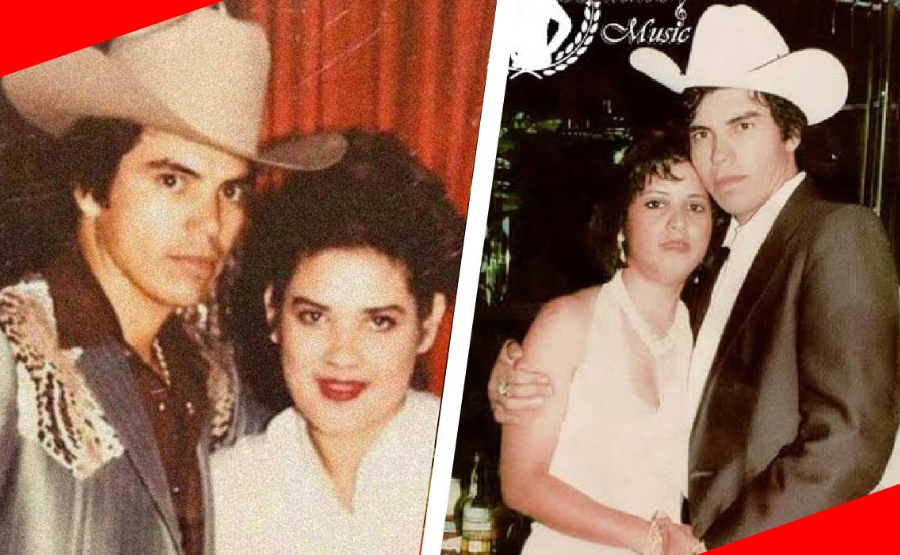
What She Did After: The Silence Years
This is the part of the story that nobody tells because there isn’t much to tell from the outside.
Marisela didn’t write a memoir. She didn’t launch a foundation. She didn’t move to Mexico. She stayed in California, raised her children, and — according to everything I can piece together — largely stayed out of the spotlight while Chalino’s posthumous fame grew into something enormous.
His music, which had sold through cassette networks during his lifetime, became massive in the mid-to-late 1990s and never stopped. The narcocorrido genre he’d pioneered exploded. His face became a symbol on t-shirts and murals and low-riders across the Southwest. His son Adán started recording music in tribute to him while barely a teenager.
Marisela received royalties. That’s documented. She began doing occasional interviews — the one with music producer Pepe Garza is cited in multiple sources — talking about Chalino, who he was in private, how they met, what their life was like. These interviews are the only window we have into her actual personality. She talks about Chalino the way someone talks about a person who was complicated and real and present, not a legend, not an icon.
March 2004: The Second Blow
Adán Sánchez was extraordinary. Born to two undocumented parents in Torrance, California, started performing as a child, released his first album in 1994 when he was ten years old. By the time he was in his late teens he’d recorded nine albums, he was on Spanish-language radio across the US and Mexico, and he had developed his own persona — romantic, well-dressed, deliberate — distinct from his father’s rawer aesthetic while still built on the corrido tradition Chalino had pioneered.
On March 20, 2004, Adán performed at the Kodak Theatre in Los Angeles. He became the youngest headliner and the first Regional-Mexican artist to sell out that venue. His mother watched him make history.
Seven days later, on March 27, he was traveling on a promotional road trip through Sinaloa — his father’s home state, the same state that had swallowed his father twelve years earlier — when his car lost control and rolled. Two other passengers were injured. Adán Sánchez was killed. He was nineteen years old.
15,000 people lined the streets of Norwalk, California for his funeral. Marisela buried her second family member in twelve years. Her only son. The one who had carried his father’s name professionally, who had called album after album a tribute to the man he barely remembered. Gone on a rural road in Sinaloa.
2018: “I Felt Liberated”
In 2018, Marisela Vallejos Felix became a United States citizen. She had lived in this country for over thirty years at that point — most of her adult life — without that legal status. After receiving it, she remarked, “I felt liberated and I feel like now I can express myself.”
That sentence deserves to sit by itself.
Thirty-plus years of living in this country without full legal status. Raising two children who were US citizens while she was not. Watching her husband get murdered and her son die in a car accident, both on Mexican soil, while she remained in legal limbo in the country where she’d built her life. And when she finally got that citizenship, the word she used was liberated.
I don’t want to over-read that sentence. But it’s specific. Not “relieved” or “happy” or “proud.” Liberated. The way you describe the end of something that had been constraining you for decades.
Final Words
Described as a political activist, a Vietnamese pop star, a murdered woman, a medical researcher, and a rising actress, Marisela Vallejos Felix is one of those people who has been continuously processed by the internet’s need to produce content. Despite all of this, she has remained virtually undetectable as a real person.
The real version is harder. A seamstress from Mexicali who married a man with a violent past and watched him build a legend out of cassette tapes and raw charisma. Who raised two children in Southern California without legal status for over three decades. Who outlived a husband and a son, both taken by different kinds of violence, both in the same Mexican state. Who received royalties from their music and gave occasional interviews to keep their memories alive. Who, in her forties, finally obtained the legal certificate stating that she was a citizen of the nation in which she had spent her whole adult life and referred to it as emancipation.
That’s not a narrative of triumph in any conventional sense. It’s just a life, measured in losses and quiet endurance, in royalty checks and anniversary interviews, in a daughter named Cynthia who has also mostly chosen invisibility.
The internet wanted a more dramatic story. Marisela Vallejos Felix seems to have decided a long time ago that she didn’t owe anyone one.
FAQs
1. Who is Marisela Vallejos Felix?
She’s the widow of Chalino Sánchez, the narcocorrido singer and songwriter who became a posthumous icon of Regional Mexican music. She was born in Mexicali, Baja California, Mexico, and has lived in the United States since the early 1980s. She is also the mother of Adán Sánchez, a singer who died at nineteen in 2004.
2. Is Marisela Vallejos Felix still alive?
Yes. She is alive and lives privately in the United States. She became a US citizen in 2018 and has given occasional interviews about Chalino’s life and legacy.
3. Is Marisela Vallejos Felix the same as Marisela Escobedo Ortiz?
No. These are two completely different people. Marisela Escobedo Ortiz was a human rights activist from Ciudad Juárez who was murdered in 2010 while protesting her daughter’s unsolved killing. Many AI-generated sites wrongly blend their stories. Marisela Vallejos Felix is Chalino Sánchez’s widow — a different person entirely.
4. How did Marisela Vallejos Felix meet Chalino Sánchez?
They met in May 1983 in Los Angeles through Chalino’s cousins, Rosalba and Juana Sánchez. She was twenty-four; he was twenty-two. They married in 1984 — Marisela was already pregnant with their son Adán when they wed.
5. What happened to Chalino Sánchez?
He was murdered on May 16, 1992, in Culiacán, Sinaloa, Mexico, after a performance at the Salón Bugambilias. He was abducted, and his body was found near an irrigation canal with two bullet holes in his head. The murder has never officially been solved.
6. What happened to their son Adán Sánchez?
Adán Chalino Sánchez, born April 14, 1984 in Torrance, California, followed his father’s career in corrido music. He had become a significant artist by his late teens. One week after headlining the Kodak Theatre in LA — the first Regional-Mexican artist to sell it out — he was killed in a car accident on a promotional road trip through Sinaloa on March 27, 2004. He was nineteen years old. Approximately 15,000 mourners attended his funeral in Norwalk, California.
7. Does Marisela Vallejos Felix receive royalties from Chalino’s music?
Yes. Multiple sources confirm she receives royalties from her late husband’s music catalog. She also receives royalties from Adán’s music.
8. Did Marisela Vallejos Felix remarry?
No confirmed remarriage exists in any public record. Since Chalino’s passing in 1992, she has had a secluded life.
9. What did Marisela say about becoming a US citizen?
She stated, “I felt liberated and I feel like now I can express myself,” upon obtaining US citizenship in 2018, following more than thirty years of living in the nation without it.
10. What is Cynthia Sánchez Vallejo doing now?
Cynthia, Marisela and Chalino’s daughter, is alive and maintains a very private life. She has not pursued a music career and rarely appears publicly.
11. Why does so much misinformation exist about Marisela Vallejos Felix?
Because her actual story has very little public documentation — no memoir, no sustained media profile, and limited interviews. AI content mills filled that information gap by confusing her with other people, particularly Marisela Escobedo Ortiz, and by inventing biographical details wholesale. The result is a search landscape full of confident, detailed, completely false information about who she is.
Beyond the headlines, discover what’s worth knowing — TheTrendist.


One Comment