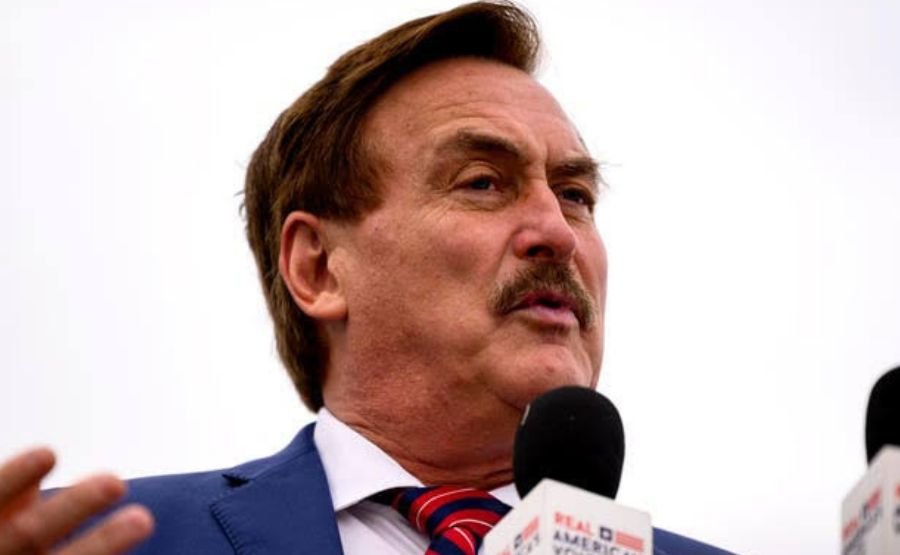
The Most Honest Thing About Mike Lindell Net Worth Is That Nobody Actually Knows It — Including Him
You want a number. The internet is full of them: $300 million, $174 million, $50 million, $5 million, $0. Pick your preferred narrative and there’s an estimate waiting for you. Every single one of those figures was published by a supposedly credible source in the last three years.
Here’s the truth: Mike Lindell’s personal finances are so entangled with MyPillow, so distorted by private corporate structures, self-reported claims, legal fights, and a man with a documented history of dramatic storytelling, that anyone giving you a confident number is guessing. Including, possibly, Mike.
But the direction of the story? That’s not contested. And it’s genuinely remarkable.
Quick Bio
| Detail | Info |
| Full name | Michael James Lindell |
| Born | June 28, 1961, Mankato, Minnesota |
| Education | University of Minnesota — dropped out |
| Founded MyPillow | 2004 (while still addicted to crack cocaine) |
| Got clean | January 2009 |
| MyPillow peak revenue | ~$280–300 million/year (~2016–2017) |
| Lindell’s peak net worth estimate | $200–300 million |
| Revenue lost from retailer cancellations | ~$100 million+ (per Lindell himself) |
| Borrowed to keep MyPillow afloat | $10 million (March 2023, self-reported) |
| Sold Chaska mansion for | $945,000 (December 2022) |
| “Prove Mike Wrong” challenge | $5 million — he lost, refused to pay, courts ordered payment anyway |
| Dominion lawsuit against him | $1.3 billion defamation |
| Lindell’s own April 2025 claim | “I have $10,000 to my name” |
| CelebrityNetWorth as of June 2025 | $0 |
| MyPillow status | Still operating; primarily direct-to-consumer |
The Crack-Addicted Inventor Who Built $300 Million From Scratch
Before we get to the collapse, let’s be honest about what Mike Lindell actually built. Because the story of his rise is genuinely extraordinary, and people forget that when they’re busy tracking the fall.
He spent most of the 1980s and 1990s in a crack cocaine spiral. Gambling debts. Lost his house. Blew through marriages. Started MyPillow in 2004 — still actively using crack, running on very little sleep, pitching pillows at the Minnesota State Fair and out of the trunk of his car. He got clean in January 2009. By then he’d already built something. He was simply unable to perceive it fully just yet.
The infomercial years turned everything. Lindell’s face was suddenly on television for hours a day, on Fox News in particular — that specific demographic who watches cable TV at 2 AM and actually picks up the phone. By around 2016, MyPillow was doing an estimated $280 to $300 million in annual revenue. Lindell had sold over 50 million pillows. He employed around 1,600 people in Minnesota.
Think about that number from inside the story. A man who lost his house to crack addiction in the 1990s, built a company from his garage, and fifteen years later is running a quarter-billion-dollar business. The “From Crack Addict to CEO” headline practically writes itself — and Lindell wrote it himself, in a book, embracing the narrative completely.
His net worth by that peak is consistently estimated at $200 to $300 million. The Chaska, Minnesota mansion he bought in 2016 for $745,000 wasn’t ostentatious by CEO standards. He also had private jets. He was, by any reasonable accounting, genuinely wealthy.
See also “Rapper Nicki Minaj Net Worth: Is the $150 Million Fortune Really Accurate?“
January 2021: The Bet That Changed Everything
Here’s where the net worth story actually gets complicated in a way most finance bloggers miss.
After January 6, 2021, the major retailers started dropping MyPillow products. Bed Bath & Beyond. Costco. Kohl’s. Wayfair. Eventually around 150 retailers in total. Lindell himself told the Star Tribune this was “a massive, massive cancellation.” He put the revenue hit at over $100 million in annual sales.
That’s not a rounding error. That’s roughly a third of his entire business, gone.
Now — and here’s where you have to think carefully — Lindell’s own description of events frames this as “cancel culture” targeting him for political speech. The counterargument is that these were straightforward business decisions by retailers who calculated that association with his claims was more commercially damaging than the revenue. Both framings can be partly right.
What matters for the net worth question is: the business went from $280 million in annual revenue to something significantly lower, at exactly the moment Lindell was also about to start spending tens of millions on election-related legal fights and advocacy work.

The “Prove Mike Wrong” Challenge: The Most Expensive Own Goal in Recent Memory
I need to slow down on this one because it’s genuinely astounding.
In August 2021, Lindell held a “Cyber Symposium” in Sioux Falls, South Dakota. He claimed he had data — “packet captures” — that proved China interfered in the 2020 election. He offered $5 million to anyone who could prove the data was not valid election data.
Robert Zeidman, a 63-year-old software engineer and Trump voter in 2016 and 2020, took him up on it. Zeidman examined the data. He determined it was random characters — not election data of any kind. He asked for $5 million.
Lindell refused to pay.
An arbitration panel reviewed the case for three days in January 2023, heard sworn testimony from both Lindell and Zeidman, and unanimously ordered Lindell to pay the $5 million within 30 days.
He still refused.
In February 2024, a federal judge upheld the arbitration award, plus interest. Lindell appealed. Lost all his lawyers in that specific case. At one point was essentially unrepresented. Finally, in June 2025, courts affirmed the judgment with penalties.
Let’s be honest about what this sequence tells you. He offered $5 million publicly, in front of an audience, because he was certain his data was real. The data was not real. He then fought the legal consequences for four years rather than pay the $5 million, which cost him — in legal fees, in reputational damage, in time — far more than $5 million would have.
The $10,000 Claim and What It Actually Means
At a court hearing in April 2025, Mike Lindell stated: “I have $10,000 to my name.”
The instinct is to dismiss this as theater, or a legal strategy to appear judgment-proof. And honestly? That instinct isn’t completely wrong. Lindell is a man who understands the value of a dramatic statement. He told everyone who would listen that Fox News and its ilk were conducting “cancel culture” on him — which coincidentally also drove his direct-sales customer base to feel they were supporting a cause by buying pillows.
Dominion’s own lawsuit paperwork reportedly stated that “Lindell has increased MyPillow sales by 30-40% and continues duping people into redirecting their election-like outrage into pillow purchases.” That’s the opposing counsel’s framing, but it contains a real observation: for a period, his notoriety was a business asset with his specific customer base.
Here’s what we actually know: he sold his Chaska mansion in December 2022 for $945,000. He confirmed he borrowed $10 million in 2022 to keep MyPillow operating. He said “selling assets and borrowing money personally to stay liquid.” On several occasions, his attorneys specifically dropped him because he was unable to pay them. He ran for RNC Chair in January 2023 and received four votes out of 167 cast.
None of this is the picture of a man with $174 million in assets.
But “$10,000 to my name” strains credulity too. MyPillow is still operating. It still sells through Menards, Ace Hardware, and online channels. He personally still has brand value — his face is still moving direct-to-consumer products through his remaining audience. Corporate assets, real property, intellectual property all exist in private structures that make personal net worth calculations nearly impossible from the outside.
Where MyPillow Actually Stands
The operational picture at MyPillow is a lot more interesting than the “it’s dead” suggests.
Yes: they auctioned off over 800 pieces of surplus equipment. Yes: they subleased manufacturing space. Yes: they lost most of their retail shelf presence. This is all documented by the Star Tribune in Minnesota, which has covered this company closely.
But also: Lindell specifically said that if the box stores returned, they could get the capacity back “if needed, but we don’t need that.” The company has deliberately pivoted to direct-to-consumer — which has lower volume but higher margins. He still employs around 1,600 people in Minnesota, or did as of his own statements.
The Dominion lawsuit was still outstanding as of mid-2025 — $1.3 billion in claimed damages. That’s the sword hanging over all of this. Fox News paid $787.5 million to settle a defamation case with Dominion. That’s the benchmark. Lindell has dramatically fewer assets than Fox Corporation. How that case ultimately resolves will do more to define his final net worth than any estimate anyone can publish today.
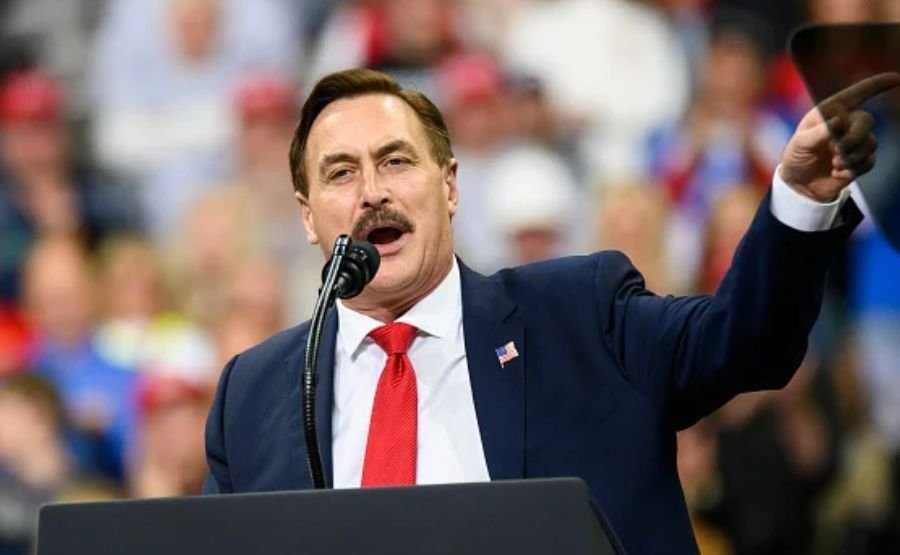
The Contradiction Nobody Addresses
Here’s the thing that I keep coming back to when I look at this story.
The standard narrative is: Mike Lindell blew up his business for politics. But there’s another reading. He spent $25 to $50 million of his own money on election-related causes. He took on legal fights he couldn’t win and almost certainly can’t afford. He lost $100+ million in retail revenue and didn’t pivot away from the position that caused it.
The cynical reading says this is ego, delusion, or calculated martyrdom for his base.
But there’s also a version where a man who genuinely believes he witnessed massive fraud spent everything he’d built trying to prove it. The specific detail that Robert Zeidman was a Trump voter who approached the challenge in good faith — and Lindell still can’t process that he lost the bet — suggests something deeper than just political positioning.
Whether that’s admirable or catastrophic probably depends on who you voted for. But it’s a more interesting character study than either “cynical grifter” or “heroic truth-teller,” which are the only two options his audience usually offers.
Final Words
Mike Lindell’s net worth in 2025 is, best estimate, somewhere between “much less than he claims” and “legitimately approaching zero in terms of accessible liquid assets.” The $0 figure from CelebrityNetWorth is probably in the vicinity of accurate for liquid personal wealth, while ignoring the real but encumbered business assets that still exist.
What’s certain is this: a man who built a quarter-billion-dollar fortune from a garage and a crack addiction in fifteen years managed to spend most of it in four, on a cause he couldn’t prove and a legal fight he couldn’t win. That’s either the most expensive act of conviction in recent American business history, or the most expensive vanity project, depending on your priors.
The pillows are still for sale. The lawsuits are still pending. The lawyers have quit. The number, whatever it actually is, keeps moving — and almost certainly keeps moving in one direction.
FAQs
1. How much will Mike Lindell be worth in 2025?
Genuinely unclear, and anyone giving you a confident number is guessing. CelebrityNetWorth lists $0 as of June 2025. International Business Times has estimated $174 million. His own courtroom statement in April 2025 was “I have $10,000 to my name.” The honest answer is: somewhere between “much diminished from his $200-300 million peak” and potentially close to zero in accessible personal assets.
2. At his highest point, what was Mike Lindell’s net worth?
At his financial height around 2016-2017, most credible estimates placed his net worth at $200 to $300 million, built almost entirely on MyPillow’s success. The company was generating estimated annual revenue of $280 to $300 million at that point.
3. How much money did Mike Lindell lose?
He’s acknowledged losing over $100 million in annual MyPillow revenue from retailer cancellations. He reported borrowing $10 million to keep MyPillow operating in 2022. He sold his Chaska, Minnesota mansion for $945,000 in late 2022. He’s started spending $25 to $50 million of personal money on election-related causes. The total damage, including legal fees and business losses, almost certainly exceeds $150 million.
4. Why did retailers stop selling MyPillow?
About 150 stores, including Bed Bath & Beyond, Costco, Kohl’s, and Wayfair, removed MyPillow from their shelves after January 6, 2021, and Lindell’s ongoing promotion of 2020 election fraud allegations. Lindell characterized it as “cancel culture.” Retailers characterized it as straightforward business decisions.
5. What is the difficulty to “Prove Mike Wrong”?
In August 2021, Lindell offered $5 million to anyone who could prove his alleged election fraud data was not from the 2020 election. Software engineer Robert Zeidman (a Trump voter) showed the data was random characters unrelated to any election. An arbitration panel ordered Lindell to pay. He refused. Courts upheld the $5 million judgment in February 2024 and affirmed additional penalties.
6. Is Dominion still suing Mike Lindell?
As of mid-2025, Dominion Voting Systems’ $1.3 billion defamation lawsuit against Lindell was still in process. Dominion settled with Fox News for $787.5 million. The Lindell case’s outcome will be the single biggest determinant of his ultimate financial situation.
7. Does Mike Lindell still own MyPillow?
Yes. The company is still operating, primarily through direct-to-consumer channels and some remaining retail partners like Menards and Ace Hardware. They auctioned surplus equipment and subleased manufacturing space in 2022-2023 while shifting the business model.
8. Did Mike Lindell declare bankruptcy?
As of mid-2025, no bankruptcy filing has been publicly reported for Lindell personally or for MyPillow, Inc.
9. How did Mike Lindell make his money originally?
He founded MyPillow in 2004, initially selling at the Minnesota State Fair and through his car. He expanded to infomercials — particularly on Fox News — which built enormous brand recognition with a specific demographic of cable TV viewers. The company grew to generate hundreds of millions in annual revenue by the mid-2010s.
10. What happened to Mike Lindell’s houses?
He sold his Chaska, Minnesota mansion in December 2022 for $945,000 — having listed it for $1.1 million — reportedly to raise cash. He’d purchased it in 2016 for $745,000.
11. What does Mike Lindell say about his own finances?
He’s been publicly inconsistent. He’s described spending $25 to $50 million of personal money on election causes. He told the Star Tribune he was “selling assets and borrowing money personally to stay liquid.” In an April 2025 court hearing, he stated he had $10,000 to his name. Whether that last figure is literal or a legal tactic remains debated.
Beyond the headlines, discover what’s worth knowing — TheTrendist.




One Comment