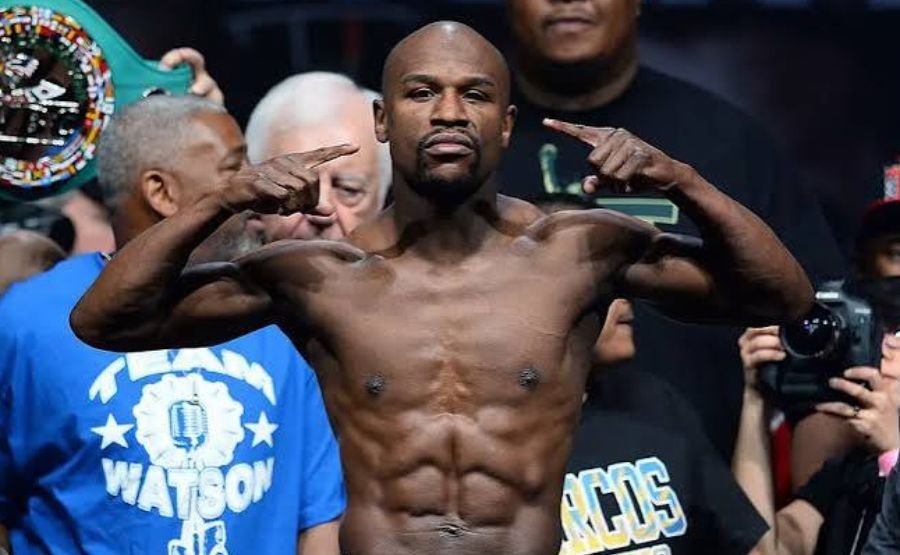
Mayweather Net Worth: The $1.2 Billion Fortune That May Not Exist Anymore
Here’s what nobody writing about Floyd Mayweather’s net worth wants to say directly: the guy who called himself “Money” for twenty-plus years, who flashed hundred-million-dollar checks at press conferences, who withdrew $100,000 in cash from Bank of America every single afternoon like it was an errand — that man is now suing his former manager for allegedly stealing $340 million, took out a $54 million loan at 9% interest using his homes and his jet and his Las Vegas strip club as collateral, and recently stopped paying rent on a Midtown Manhattan luxury apartment. None of this is a rumor. It’s in court filings.
The net worth number you see everywhere — somewhere between $400 million and $1.5 billion depending on which site you land on — is based almost entirely on what Mayweather made, not what he has. Those are very different calculations. And the gap between them tells you everything.
Quick Bio
| Category | Detail |
| Full Name | Floyd Joy Mayweather Jr. |
| Career Record | 50-0 (27 KOs) |
| Estimated Total Career Earnings | $1.1–1.2 billion (over 21 years) |
| Biggest Single Payday | ~$250–300M (vs. Manny Pacquiao, 2015) |
| Second Biggest | ~$275–300M (vs. Conor McGregor, 2017) |
| Most Cited Net Worth | $400–500 million (Celebrity Net Worth, others) |
| IRS Tax Lien (2017) | $22.2 million unpaid from 2015 earnings |
| Ongoing Lawsuits Filed | $340M (vs. Showtime), $175M (vs. Rechnitz), $100M (vs. Business Insider) |
| Loans Taken (2024–2025) | $54M+ at ~9% interest, multiple properties as collateral |
| Estimated Monthly Spending | ~$3 million (per independent analysis) |
The Billion-Dollar Illusion
Let me give you the number that actually matters. Over a 21-year career, Floyd Mayweather earned, by most credible estimates, somewhere between $1.1 billion and $1.2 billion in fight purses. That is real. That is documented. The fight against Pacquiao alone generated $600 million in total revenue, and Mayweather’s cut was around $250 million. McGregor generated similar numbers. These aren’t disputed.
What’s disputed — what nobody really wants to examine closely — is where that money went.
His own lawsuit against Showtime answers part of the question. He’s alleging $340 million of his career earnings was diverted, without his knowledge, through hidden accounts controlled by his longtime adviser Al Haymon. That’s nearly a third of everything he ever made, according to Mayweather himself. Showtime called the claims “baseless.” But Mayweather filed in California court. That’s not a social media beef.
Then you have the spending. The tell-all book from Tasha Robinson-White, who worked with him for twelve years, described daily $100,000 cash withdrawals. An $18 million watch. A gambling year estimated to have cost him $100 million in losses. A period in 2008 when he got scammed out of $15 million by a con artist promising billion-dollar returns from a Canadian investment, then had $7 million in cash and jewelry stolen from his home four months later. By some accounting, those events wiped out everything he’d earned up to that point.
He came back from retirement because he had to.
See also “Kim Rivers Net Worth: The Truth Behind the $500 Million Cannabis Fortune“
Grand Rapids Roots and the Poverty Nobody Mentions
Here’s something the “Money” brand actively buries: Floyd Mayweather grew up poor. Not comfortable-but-modest poor. Actually poor. Grand Rapids, Michigan, the kind of childhood where the lights get cut off and you know exactly what it means to not have things.
His father Floyd Sr. boxed. His uncles Jeff and Roger boxed. The Mayweathers were a boxing family in the way that some families are coal-mining families — because it’s what you do when options are narrow. Floyd Sr. was a fighter himself, managed briefly by Sugar Ray Leonard’s people, with a real career that got derailed.
The son watched all of it. Watched the boxing money come and watch it evaporate. And then built his entire identity around never being broken again — the cash stacks on Instagram, the $100 million check waved at a Conor McGregor press conference, the nickname itself. “Money” isn’t a flex, exactly. It’s a trauma response dressed as a flex. That’s my read, anyway. You can disagree.
What’s interesting is that the pattern has repeated. Floyd Sr. reportedly warned his son that the spending was going to catch up with him. “Look at all the millionaires who go broke,” the elder Mayweather said, not long before the Pacquiao fight when the younger was about to earn another nine-figure sum. His own father was raising the alarm.
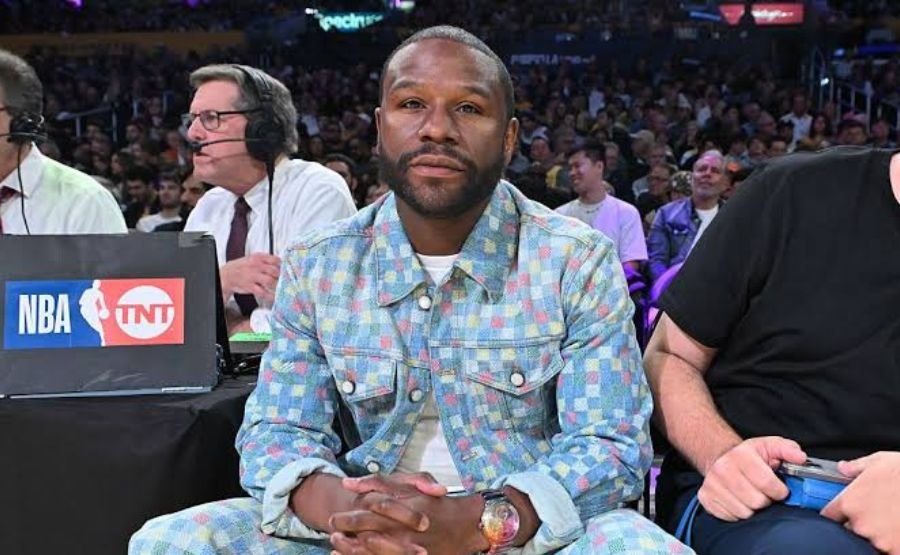
The Tax Pattern Nobody Takes Seriously Enough
The IRS story gets treated as a minor footnote. It’s not.
Before 2017, Mayweather had already paid $15.5 million in back taxes covering 2001, 2003 through 2007, and 2009 — but only after the IRS filed liens against him each time. This wasn’t a one-off mistake. This was a recurring pattern. The agency even sent a levy notice in 2009 to Nevada boxing regulators, ordering $5.6 million in unpaid taxes deducted directly from Mayweather’s purse. They backed off only after he agreed to pay.
Then in 2017, during the McGregor fight promotion, the IRS filed a $22.2 million lien for his 2015 taxes — the year he earned $200+ million fighting Pacquiao. The man made more than most countries’ GDP that year and filed in tax court claiming he didn’t have the cash on hand to cover it. His lawyer went on record saying Mayweather was making a “business decision” to defer payment until the McGregor fight paid out.
There was also a separate $7 million lien from 2010. His team disputed that one. The IRS’s track record with Mayweather suggested otherwise.
By 2025, a fresh $7.3 million IRS lien had appeared for taxes tied to 2018 and 2023.
The pattern is consistent. The money comes in enormous quantities. The taxes don’t get paid until force is applied. This is not the behavior of someone sitting comfortably on a $500 million net worth who simply got administrative details wrong.
The 2024–2025 Unraveling
Business Insider published an investigation. Then Mayweather sued them for $100 million and called it defamation. His lawyer said he was not “experiencing financial strain.” Then more filings emerged.
Here’s what the documents show, not what the lawyers say. Mayweather took out $54 million in loans from a specialty lender named Don Hankey in 2024, using 14 residential homes, his strip club, and his private jet as collateral. Interest rate: roughly 9%. That’s not how you manage wealth. That’s how you raise cash when the alternative is worse.
A commercial building he bought for $3.6 million in Las Vegas in 2024 was sold at auction — to its previous owner — in early 2025. He’s been sued by multiple jewelers for unpaid bills, including a $1.375 million suit from AJ’s Jewelry over 26 watches and 15 chains, with bounced checks cited in the complaint. He allegedly rented a 4,629-square-foot duplex at the Baccarat Hotel in Midtown Manhattan starting in late 2024, paid on time for a few months, then stopped paying rent in July 2025.
His own lawsuit against a different manager, Jone Rechnitz, filed in 2025, alleges $175 million was siphoned away through another elaborate scheme. And a court authorized repossession of some of his luxury cars to settle a separate debt.
Two different managers, allegedly stealing hundreds of millions. The Showtime lawsuit and the Rechnitz lawsuit together claim over $500 million gone. Either Floyd Mayweather has the worst luck with managers in the history of American sports, or something more complicated is going on. Maybe both.
What the $402 Million Real Estate Claim Was Actually About
For a brief moment, Mayweather appeared to post on Instagram that he’d invested $402 million in Manhattan commercial real estate. This got picked up. It seemed like validation of the billionaire narrative.
Business Insider investigated it. The math didn’t hold. The properties in question — when you look at typical transaction sizes in that market, and what Mayweather was actually involved in — suggested something closer to a short-term or partial involvement that got presented as full ownership. This is what led to the defamation suit. Mayweather says Business Insider refused to review documentation he provided. Business Insider published what their reporting found.
The lawsuit was ultimately settled, with both sides handling their own legal costs. That’s not how a $100 million defamation case usually ends.
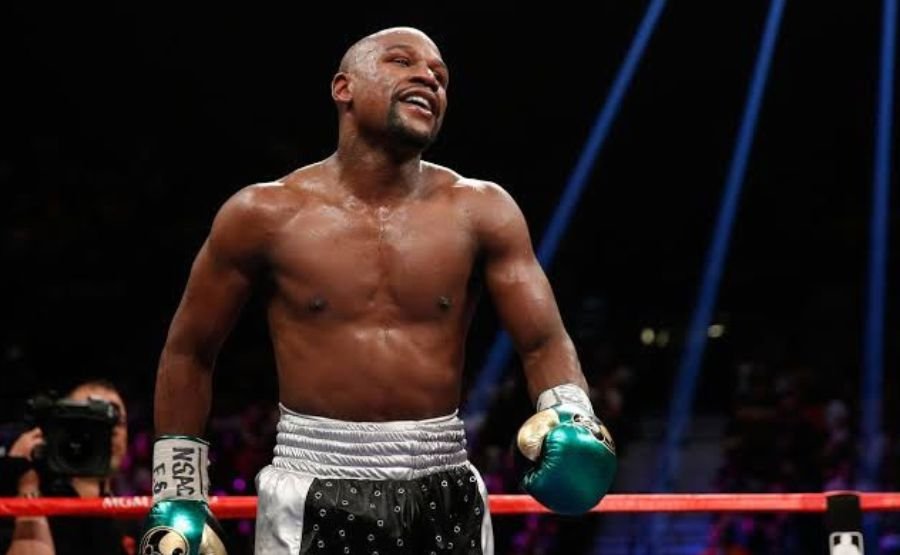
The Exhibition Fight Economy
Since his 2017 retirement — his actual last professional fight, against McGregor — Mayweather has stayed in the ring through exhibitions. Logan Paul. Deji. Various overseas shows. These pay, but not at the Pacquiao-McGregor scale. These aren’t $200 million paydays. They’re closer to $10–30 million depending on the market, the PPV numbers, and the deal structure.
He’s been reported as exploring a Pacquiao rematch through Netflix. He’s connected to various international boxing projects. All of which strongly suggests the income tap hasn’t stopped but is running at a fraction of its peak pressure.
Meanwhile, expenses haven’t slowed proportionally. Estimated monthly spend of $3 million means $36 million a year out the door. Even if exhibitions bring in $50–60 million a year gross, taxes and costs eat that fast.
What His Net Worth Probably Actually Is
Let me be direct about this, because the range from $400 million to $1.5 billion isn’t useful to anyone.
He made $1.1–1.2 billion gross in fight purses. Taxes on fight income for a high earner in Nevada run roughly 37% federal plus additional state and local. So call it 40% out the door over a career — that’s $440–480 million gone to taxes alone, at minimum, assuming everything was paid on time (it wasn’t, but eventually it got paid). That leaves $700 million.
Then factor in management fees. Standard is 10–15% off the top. If Haymon really did take 10% over a decade of major fights, that’s another $100+ million. Then factor in the lifestyle — the tell-all book suggests he was burning through $30–50 million a year at peak spending. Over twenty years of professional boxing, that’s up to $1 billion in outflows from lifestyle alone if the most aggressive estimates are right.
The $340 million Showtime lawsuit. The $15 million scam. The $7 million theft. The taxes paid late with penalties.
You do that math and $400 million starts looking optimistic. You do that math and $500 million feels like public relations.
The honest answer is probably somewhere between $150 million and $300 million in net assets, heavily tied up in real estate that’s increasingly leveraged, cars that courts are authorizing to be repossessed, and businesses with disputed ownership and management.
That’s not broken. But it’s a very different picture than “Money” Mayweather has spent two decades constructing.
Final Words
Floyd Mayweather is probably the most financially interesting athlete in American history, and not in the way he wants to be. He made more money than almost any sportsperson who ever lived. He also spent it, or had it spent for him, or lost it to the government repeatedly through his own tax avoidance cycles, at a scale that might genuinely threaten what remains.
The net worth figure that gets published — $400 million, $500 million, sometimes absurdly $1.5 billion — is essentially faith-based arithmetic. It starts from what he earned and assumes everything is still there. The lawsuits, the loans, the IRS, the jewelers, the landlords, the car creditors, and his own financial managers say otherwise.
What he built is real. That 50-0 record is real. The Pacquiao fight money was real. But “Money” Mayweather, as an ongoing financial reality? That’s become genuinely uncertain in ways that the brand works very hard to obscure.
And he’s suing people who point that out. Which is, in its own way, a data point.
FAQs
1. What is Floyd Mayweather’s net worth in 2025/2026?
Most major outlets cite $400–500 million. Celebrity Net Worth says $560 million. Some clickbait sites say 1.5billion.Noneofthesefigurescanbeindependentlyverified.Basedoncareerearningsof~1.2 billion minus documented taxes, management fees, gambling losses, lifestyle spending, and alleged fraud, a realistic figure is probably closer to $150–300 million in net assets — and that’s before the recent mortgage and loan situation fully plays out.
2. How much did Mayweather make from the McGregor fight?
His guaranteed share was approximately $100 million. After PPV receipts from 4.3 million buys and $600+ million in total revenue, his total take is estimated at $275–300 million, making it the largest single-fight payout in boxing history at the time, narrowly edging the Pacquiao fight.
3. Is Floyd Mayweather actually going broke?
“Going broke” is the wrong phrase. He’s not destitute and likely never will be. But the financial picture since retirement is genuinely messy — mortgages taken out on previously unencumbered homes, a $54 million high-interest loan, IRS liens, jewelers suing for unpaid accounts, a landlord claiming unpaid Manhattan rent, and two separate lawsuits alleging hundreds of millions stolen by managers. None of that suggests a man comfortably sitting on $500 million.
4. What is the Showtime lawsuit about?
In 2025, Mayweather filed a $340 million lawsuit against Showtime and former Showtime Sports president Stephen Espinoza. He alleges that his longtime adviser Al Haymon — not named as a defendant — diverted $340 million of his $1.2 billion in career earnings into hidden accounts, and that Showtime enabled and assisted this scheme. Showtime called the claims baseless. The case was ongoing at the time of writing.
5. Did Mayweather really owe the IRS $22 million?
Yes, confirmed by a federal tax lien filed in 2017 for taxes owed on his 2015 income — the year he made $200+ million fighting Pacquiao. He filed in tax court claiming he lacked sufficient liquidity to pay immediately, and asked for a reprieve until after the McGregor fight. His attorney said he “always pays his taxes.” He has a pattern dating back to 2001 of paying taxes late, only after the IRS filed liens or levy notices.
6. Why does Floyd Mayweather gamble so much?
That’s genuinely between him and his therapist. What’s documented: he plays blackjack at $100,000 per hand, posts winning bet receipts on social media (never the losses), and has been estimated to have lost $50–100 million to gambling in various periods since retirement. His own team has said he has a gambling problem. He denies it.
7. What did the Business Insider investigation find?
The outlet examined Mayweather’s post-boxing financial life and found that various high-profile real estate claims didn’t align with public records, that he’d taken out high-interest loans on properties he’d previously described as owned outright, and that he faced multiple creditor disputes. Mayweather sued for $100 million in defamation. The case settled with both sides paying their own costs.
8. How much does Floyd Mayweather spend per month?
Independent financial analyst Spencer Cornelia estimated approximately $3 million per month, based on known assets and lifestyle documentation. If accurate, that’s $36 million annually — a pace that quickly erodes even a large fortune without significant incoming revenue to offset it.
9. What happened with the $15 million scam?
In 2008, someone convinced Mayweather that a Canadian investment would turn $15 million into $5 billion “within a few months.” He wired the money. The investment was fraudulent. Shortly after, thieves broke into his Las Vegas home and stole $7 million in cash and jewelry. Per his former assistant’s account, those two events combined with taxes and lifestyle costs essentially erased all earnings up to that point.
10. Does Mayweather own Mayweather Promotions?
Yes. He founded it to control his own promotional destiny and cut out the traditional promoter model. The company has promoted his fights and managed other boxers. It’s also been involved in its own legal disputes — including a $122.6 million lawsuit against PAC Entertainment over a failed Dubai event, and a $3 million default judgment to a Nigerian media company for a missed appearance.
11. Will Floyd Mayweather fight again professionally?
At 47, a return to professional boxing seems increasingly unlikely, though never impossible given his financial picture. He continues to participate in exhibition matches internationally. A Pacquiao rematch on Netflix has been rumored. If you’re asking whether economics might push him toward a real fight again — based on recent news, it wouldn’t be the most surprising thing in the world.
Beyond the headlines, discover what’s worth knowing — TheTrendist.





4 Comments