
Lemuel Plummer Net Worth: How Much Is the Zeus Network Founder Worth?
Here’s the thing about Lemuel Plummer’s net worth that nobody wants to say out loud: the number you find depends entirely on which website found you first. Five million dollars. Fifty million. A hundred and fifty million. He himself posted a screenshot to social media showing Google throwing around figures from $5 million all the way to $500 million — and laughed about it. That’s not a sign of transparency. That’s a sign that the financial reality of Zeus Network‘s CEO is so deliberately opaque that even the internet has given up trying to calculate it and just started making things up.
So let’s try to do this honestly. Which, fair warning, is going to be messier than any clickbait headline promised you.
Quick Bio
| Detail | Info |
| Full Name | Lemuel Olenn Plummer |
| Born | April 10, 1986, Detroit, Michigan |
| Education | Full Sail University — BFA, Entertainment Business |
| Primary Company | Zeus Network (Co-Founder, President & CEO, est. July 2018) |
| Earlier Company | L. Plummer Media (est. ~2012) |
| Estimated Net Worth | $5M–$10M (credible range); wilder claims reach $150M+ |
| Notable Shows Produced | Preachers of LA, Preachers of Detroit, The Mo’Nique Show, Joseline’s Cabaret, Baddies franchise |
| Partner (2026) | Scotlynd Ryan (Zeus Baddies star, expecting a girl as of late 2025) |
| Legal Controversies | Allegations from DeStorm Power, Joseline Hernandez, Jadynn Brown — all denied |
| Philanthropy | Plummer Foundation (underserved youth in Detroit) |
The Myth vs. The Grind
Most people discover Lemuel Plummer through one of his shows — maybe Joseline’s Cabaret, maybe the Baddies franchise — and immediately file him under “reality TV guy who got lucky.” That framing is both easy and wrong.
The actual story starts in Detroit, where his parents owned not one but three local television stations. Consider the implications for a child growing up. While most children are playing Nintendo, Plummer is watching editors cut tape and producers pitch segments. By the time he graduated high school he already knew this world from the inside. It wasn’t a passion he discovered in his twenties. It was the air he breathed.
He enrolled at Full Sail University in Orlando — a school that gets dismissed by traditionalists but has a very specific, industry-focused entertainment business program. He came out of it knowing production. Not theory. Not the film-studies version of Hollywood. The actual mechanics of how a show gets made, sold, and aired.
And then, at 22 years old — some sources say 20, but let’s go with what’s most consistent — he walked into BET with a pitch and walked out with a first-look deal worth hundreds of thousands of dollars. Not an internship. Not a development meeting. A deal. His brother and sister-in-law’s couch to executive producer in one move. The entertainment industry doesn’t usually work that way. This part of the story is real and deserves more credit than it gets.
See also “Joe Rogan Net Worth: How a Podcast Started for Free Became a $200 Million Empire“
The Years People Skip Over
Between that BET deal and the Zeus launch, there’s a decade of work that basically nobody talks about. That decade is the whole point.
He produced The Mo’Nique Show and The Family Crews for BET. He executive produced Mary Mary for WE tv and The Sheards for BET. He co-created Music Moguls, the BET docu-series following Birdman, Damon Dash, Snoop Dogg, and Jermaine Dupri. He worked on a project with Viola Davis and Julius Tennon’s JuVee Productions on a TV One limited series called Two Sides of the Truth — a prestige-adjacent true crime show about law enforcement and the Black community. That’s not nothing. That’s a producer building credibility and relationships across nearly every major Black-audience cable network that existed.
The crown jewel of that era was the Preachers franchise. Preachers of LA came first, co-created under L. Plummer Media for Oxygen Network. And here’s the part that almost never shows up in articles about Zeus: the pitch for that show created a bidding war. Seven different networks made offers. Seven. That’s a producer who understood what audiences wanted before those audiences could articulate it themselves.
So when Plummer says he felt “controlled” by the network system and wanted something bigger, you have to take that seriously. This wasn’t a guy with one lucky show dreaming about a streaming empire. This was someone with a legitimate track record who got tired of handing his best ideas to companies that owned everything he created.

Zeus: A Buggy Start Nobody Remembers
The origin story of Zeus gets told very cleanly in interviews. Lemuel Plummer, the savvy Detroit producer, teams up with social media royalty — King Bach, Amanda Cerny, DeStorm Power — and launches a revolutionary streaming platform in July 2018.
The actual launch was rough. The Verge described the initial Zeus experience as “buggy.” The influencer angle felt uncertain. The first shows — featuring personalities like Lil Tay and Don Benjamin — weren’t exactly appointment viewing. And here’s the thing DeStorm Power would later claim publicly: in those early days, Plummer ran out of money. Not metaphorically. He allegedly called Power, told him the money was gone, and Power says he personally invested over $130,000 of his own cash to keep the thing alive.
Plummer has denied the specific framing of these claims. There’s active litigation. So I’m not telling you who’s right. But I am telling you that the “genius founder built it all himself” narrative that gets repeated has some serious holes in it, and those holes matter when you’re trying to calculate what the network is actually worth and who’s genuinely benefiting from it.
What we do know is that by 2020, something clicked. The pandemic hit, people were stuck home, and Zeus found its audience with Joseline’s Cabaret. The Baddies franchise followed. The content formula — unfiltered reality, no network notes, fast production cycles, strong personalities — worked precisely because no legacy cable channel would have approved any of it. That’s the genius that’s real and undeniable: Plummer recognized that the gatekeepers weren’t protecting quality. They were protecting comfort.
Viacom and VH1 noticed. They sent cease-and-desist letters. The fact that Zeus’s biggest hits look like a more chaotic, independent version of what VH1 used to air wasn’t coincidence. It was a strategy.
The Number You Actually Came Here For
Okay. Let’s talk about money.
The most credible independent estimates place Lemuel Plummer’s net worth somewhere in the $5–10 million range. That figure comes from sources that actually do the math: his executive stake in a private streaming company, his production credits, his L. Plummer Media operation. The $5 million number pops up consistently across outlets that aren’t just repeating each other’s guesses.
The $50 million figure shows up frequently too, driven by Zeus Network’s growth narrative. And the $150 million claim — which appeared on Gigwise and a few other places — is almost certainly fantasy math, the kind that happens when you back-calculate from subscriber counts and assume every dollar flows cleanly to the CEO’s personal net worth.
Here’s the inconvenient reality. Zeus is a private LLC. There are no public filings. Sensor Tower’s app-store data suggests Zeus was generating somewhere around $7 million monthly in US iOS revenue alone at certain points, which would imply substantial annual revenue — potentially $40–50 million range when you include Android, web subscriptions, and advertising. But “the company makes $50 million” and “the CEO is worth $50 million” are completely different statements. Running a streaming platform is expensive. Content costs money. Operations cost money. Legal fees — and Zeus has had no shortage of those — cost serious money.
If Zeus is generating $40–50 million in annual revenue and spending most of it on production and operations, Plummer’s personal take could be a fraction of what the top-line number suggests. The richest-seeming business owners in media often have surprisingly modest personal liquidity relative to their company’s gross receipts. That’s a basic fact about private companies that the net worth speculation industry conveniently ignores every time.
The Part That Gets Complicated
I’ll be honest about this portion because it is buried or covered in so much disclaimer language in every mainstream story that it becomes meaningless.
Lemuel Plummer is facing serious, accumulating allegations from multiple directions — and they follow a pattern.
DeStorm Power’s public accusations — detailed in a nine-minute video with documents — alleged that the original co-founders (Power, King Bach, Amanda Cerny) were effectively cut out of Zeus’s financial success while continuing to receive K1 tax documents indicating millions in income they claim they never actually received. Power additionally raised claims of sexual assault based on a former assistant’s account. Plummer promised to address the accusations “head-on,” called them lies, noted Zeus was already in litigation with Power, and then… went mostly quiet on the specifics.
Then in April 2026, Joseline Hernandez — who built much of Zeus’s subscriber base almost single-handedly — went nuclear on social media. She accused Plummer of withholding payments because she was launching her own platform (Why Are You Here TV), threatened legal action, claimed trafficking, mentioned death threats during her pregnancy, and announced she was organizing a class-action lawsuit with at least five women. Plummer fired back on Instagram, denied the trafficking and threat claims categorically, and accused Joseline of years of verbal abuse toward his staff. He called the timing convenient — a contract dispute dressed up as a moral crusade.
And then, separately, Jadynn Brown — a Baddies Gone Wild cast member — filed a civil lawsuit in Los Angeles County Superior Court accusing Plummer of sexual coercion and harassment between 2023 and 2025, alleging he leveraged casting decisions to pressure her. Plummer denied those allegations too, characterizing Brown as a friend who turned litigious after not being selected for a second season.
Plummer has denied everything. The cases are ongoing or in dispute. I’m not a court and I’m not rendering a verdict. What I will say is this: three separate people from three different situations making similar-pattern allegations — about power, access, and financial control — is something you don’t just file under “haters.” Whether the allegations ultimately prove true or false in court, the picture they paint of how Zeus actually operates deserves scrutiny that the typical “inspiring Black entrepreneur” profiles skip entirely.
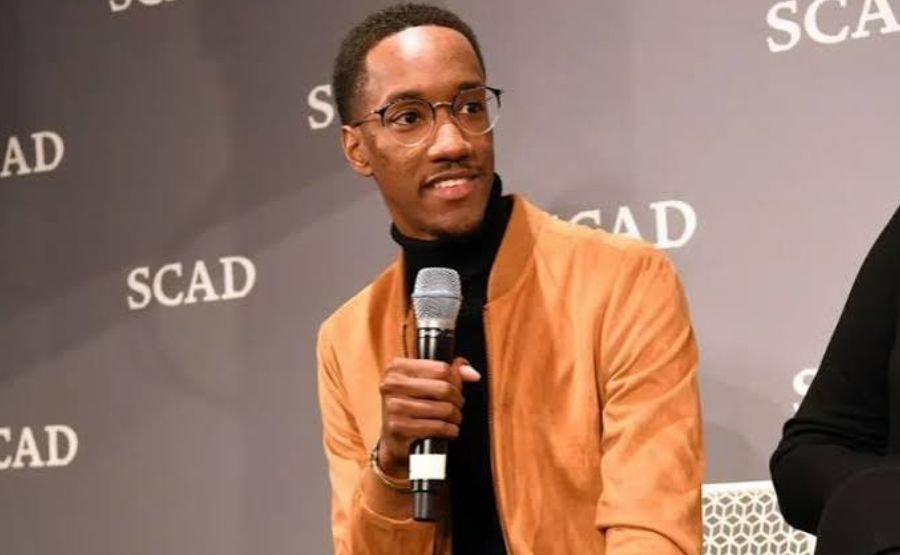
The Thing About the “Ratchet Network” Denial
In an August 2022 interview with AfroTech, Plummer sat down and felt the need to make a statement that stuck with me: “We’re not a ratchet network.”
Think about what it means that a CEO has to say that sentence in a serious interview. He wasn’t wrong to push back — the criticism that Zeus was exploiting working-class Black talent for viral drama was real and worth engaging. He made valid points about giving creators ownership stakes and telling stories mainstream networks wouldn’t touch.
But the defensive crouch in that interview tells you something. Plummer knows exactly how his network is perceived by a segment of the Black professional class. He knows it creates a dissonance with the “building a Black media empire” narrative he understandably prefers. And he’s been navigating that tension every single year since Joseline first walked into a cabaret and handed him his biggest hit.
The man built something genuinely significant. A subscription streaming service that started from scratch in 2018 and actually survived. That’s not easy. Most fail. The fact that it generated the kind of drama that threatens to engulf him is, to some extent, a function of the content strategy that made it work in the first place.
The Personal Side, Which Is Also Complicated Now
For years, Plummer was linked to Janeisha John — Miss US Virgin Islands Universe 2010, an accomplished producer in her own right who worked at Zeus. That relationship appears to have ended at some point, though coverage of its conclusion is sparse. The internet quietly moved on.
In November 2025, Plummer revealed via gender reveal that he and Scotlynd Ryan — a cast member from his own Zeus Baddies — are expecting a daughter together. A CEO having a child with one of the stars on his network is the kind of thing that would generate enormous scrutiny in a traditional corporate environment. In the Zeus universe, it barely registered as unusual. Which probably says something about the culture he’s built.
His sister Loriel Plummer serves as director of charitable giving for the Plummer Foundation, the Detroit-focused nonprofit he founded. The foundation is real. The mentorship and youth support work is real. It gets mentioned in every bio and then immediately dropped for the drama. I’ll note that his parents owning television stations and his nephew-or-brother dynamic with the industry goes a long way toward explaining both his ambitions and his management style.
Final Words
Lemuel Plummer built something. Full stop. A kid from Detroit, son of local TV station owners, who by his mid-twenties was executive producing for every major Black-audience cable network — and by his early thirties had launched an independent streaming service that actually works. That’s a real achievement and it deserves to be said clearly.
The net worth? Somewhere in the $5–15 million realistic range, probably. The $150 million claims are internet noise. Zeus makes real money but private companies eat real money too, and there is absolutely nothing public to verify the ceiling.
The controversies? They matter. Not because I’m assuming guilt — courts exist for a reason — but because the pattern is too consistent to wave away. Multiple people, from business partners to talent to employees’ circles, telling versions of the same story about control, money, and access. That’s something a real examination of this man’s career can’t skip.
The “Black media mogul who defied Hollywood” narrative is real. The “unimpeachable success story” version is propaganda. The truth, as always, lives somewhere in the uncomfortable middle — and that’s where Lemuel Plummer’s actual story is worth telling.
See also “Milana Vayntrub Net Worth: How the AT&T Lily Built Her $4 Million Fortune“
FAQs
1. What is Lemuel Plummer’s net worth in 2026?
Most credible estimates land between $5–10 million. Figures like $50M or $150M floating around online are speculative at best and fabricated at worst. Zeus is a private company with no public financials.
2. How did Lemuel Plummer make his money?
Primarily through Zeus Network, which he co-founded in 2018 and continues to run as CEO. Before that, nearly a decade of executive producing at BET, Oxygen, WE tv, and TV One through his company L. Plummer Media.
3. Who really founded Zeus Network?
Technically, four people: Plummer, DeStorm Power, King Bach, and Amanda Cerny. Plummer is the president and CEO and majority owner. The three social media personalities brought built-in audiences to the launch. How much financial credit and equity they actually retained is something courts are still sorting through.
4. Is Zeus Network profitable?
There’s no public confirmation, but third-party app data suggests significant subscription revenue — potentially tens of millions annually. Whether the company is operationally profitable after content costs and legal exposure is unknown.
5. What is the Joseline Hernandez vs. Lemuel Plummer situation?
In April 2026, Joseline Hernandez — the star of Joseline’s Cabaret on Zeus — publicly accused Plummer of withholding her payments, threatening her during her pregnancy, and other serious misconduct. She announced plans for a class-action lawsuit. Plummer denied all claims and said the dispute is fundamentally a contract issue.
6. What did DeStorm Power accuse Lemuel Plummer of?
In a detailed public video, Power accused Plummer of cutting out early investors from Zeus’s profits while issuing tax documents (K1s) showing income they claim they never actually received. Power also raised a sexual assault allegation based on a former assistant’s account. Plummer denied the claims and said they’re in litigation.
7. Who is Lemuel Plummer’s partner?
As of late 2025, he and Scotlynd Ryan — who appeared on the Baddies franchise on his own network — announced they’re expecting a daughter together.
8. Where did Lemuel Plummer grow up?
Detroit, Michigan. His parents owned three local television stations. He absorbed the business from childhood onward. This background is a genuinely significant factor in why he could do at 22 what most producers can’t do at 35.
9. What did Lemuel Plummer do before Zeus?
He produced The Mo’Nique Show, The Family Crews, Mary Mary, The Sheards, Music Moguls, Preachers of LA, Preachers of Detroit, and Preachers of Atlanta, among other shows. The Preachers franchise sparked a seven-network bidding war.
10. Did Lemuel Plummer attend college?
Yes. Full Sail University in Winter Park, Florida, where he earned a Bachelor of Fine Arts in Entertainment Business. Not Harvard. Not USC. But the education was applied and direct, and he built on it fast.
11. Is Lemuel Plummer a billionaire?
No. Not even close to what the evidence supports. The “billion” figure floats around because a podcast he appeared on used hyperbolic title language. His actual net worth, whatever it is, operates on a very different scale. Anyone telling you otherwise is either guessing wildly or selling you something.
Beyond the headlines, discover what’s worth knowing — TheTrendist.





2 Comments