
Gwendolyn Lee Byrd: The Daughter Who Raised Her Sisters While Tammy Wynette Became a Legend
Before you say anything: yes, this article is about a private person. Gwendolyn Lee Byrd has spent sixty-plus years actively refusing to be a public one. However, I believe that the typical celebrity-child profiles totally miss something about that decision—about the texture of it, about what it required to make it and maintain making it.
Most pieces about Gwen Byrd spend three paragraphs on her birth year, one paragraph on the lawsuit, and then pivot to talking about Tammy Wynette for 800 words. That’s a choice. I’m making a different one.
Because the Gwen Byrd story isn’t a footnote to her mother’s story. In a lot of ways, it runs parallel to it — and in some ways, it’s more interesting.
Quick Bio
| Info | Detail |
| Full name | Gwendolyn Lee Byrd |
| Born | April 15, 1961 (most credible sources); some sites incorrectly say 1962 |
| Birth weight | Approximately 2 pounds — premature |
| Parents | Euple Byrd and Virginia Wynette Pugh’s character Tammy Wynette |
| Siblings | Jacquelyn “Jackie” Faye Byrd (b. 1962), Tina Denise Byrd (b. 1965), Tamala Georgette Jones (b. 1970, half-sister by George Jones) |
| Known adult surname | Nicholas (married name; confirmed in court documents) |
| Lawsuit | One of four daughters who filed $50M wrongful death suit against George Richey and Dr. Wallis Marsh (1999); settled confidentially |
| Inheritance | Received essentially nothing from Tammy Wynette’s estate; daughters reportedly received $5,000 each per Georgette Jones’s account |
| Public profile | Purposefully secretive, barely active on social media, and steers clear of the media |
| Key descriptions | Tammy Wynette: Tragic Country Queen by Jimmy McDonough – “Gwen was mama.” Gwen was essentially in charge. |
| Source books | Cited in Georgette Jones’s The Three of Us: Growing Up With Tammy and George and McDonough’s biography |
She Came Into the World at Two Pounds and Never Stopped Holding Things Together
Here’s where I want to start, and you might find it strange. Not with Tammy Wynette’s career, not with the lawsuit, not with “the fascinating daughter of a country music icon.” With this: a child delivered at about two pounds to a 19-year-old mother who lives on her grandparents’ Mississippi farm in a leaking old cabin with no indoor plumbing, no power, and no plan.
That’s where Gwen Byrd begins.
Her mother was Virginia Wynette Pugh, not yet Tammy Wynette, not yet anything except a teenager married to a construction worker named Euple Byrd who could barely hold a job. The cabin had no running water. The marriage was already wobbling. And into this arrangement arrives a premature infant who weighs less than a large bag of sugar.
She lived. More than that — she thrived, eventually. But the circumstances of her arrival matter because they establish something about what this family was actually like before the rhinestones showed up.
See also “Neal McDonough Son: The Story Behind His Two Sons and Their Unique Names“
The Aspect No One Considers: She Raised Her Sisters
Let me put a number in front of you. Gwen Byrd was roughly five years old when her mother packed the three daughters into a car and drove to Nashville in January 1966. Tammy was twenty-three. She had no contract, no guaranteed income, no place to live. Just ambition and three small children and a city full of recording studios that weren’t interested in female country singers.
Five years old.
And here’s what the biographies establish, almost in passing: from fairly early on, Gwen became the one holding it together. Jimmy McDonough’s exhaustively reported biography Tammy Wynette: Tragic Country Queen — the definitive account of the family, one that pull-quotes extensively from people who were actually there — describes Gwen flatly: “Gwen was mama. Gwen pretty much ruled the roost.”
Think about what that means in practice. Tammy Wynette became one of the biggest country stars of the late 1960s and 1970s. That means tours. Recording sessions. Television appearances. Awards shows. Three marriages in quick succession — Don Chapel in 1967, George Jones in 1969 — and all the domestic upheaval that came with each one.
Gwen was seven when the Don Chapel marriage happened. Eight when Tammy married George Jones. Eleven when Georgette was born. Fourteen when Tammy and George Jones divorced.
Her half-sister Georgette, in her own memoir The Three of Us: Growing Up With Tammy and George, describes Gwen as a “parental figure” for the younger sisters. Her words: “Gwen, throughout my life you have been the ‘big sister’ who could look at things objectively and rationally.”
Even when Georgette was forty, Gwen still called her “Squirt.”
You get an image from this. A child who needed to be dependable since there was no other place in the home where dependability was guaranteed. A kid who grew up knowing how to read a room and de-escalate a situation because if she didn’t, no one would.
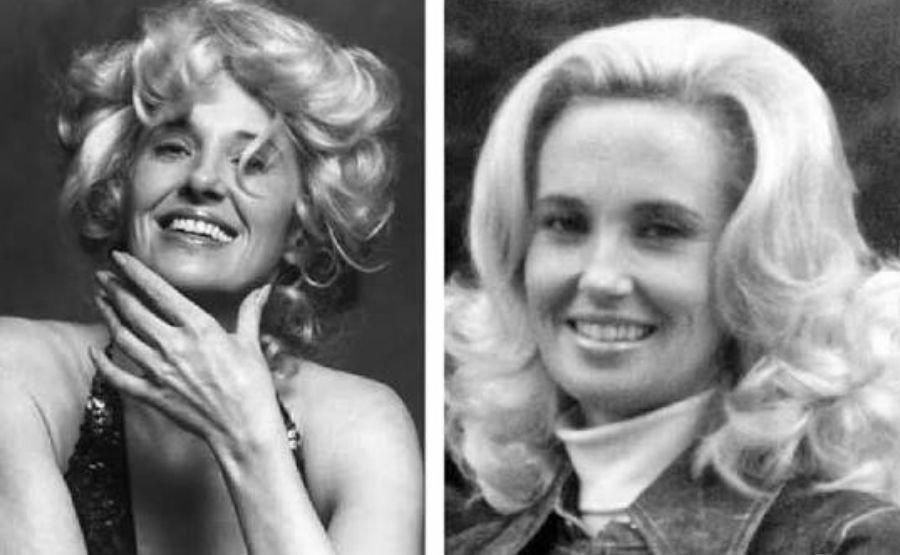
The Euple Byrd Problem, and What It Did to the First Five Years
People ask what happened to Euple Byrd. The honest answer is: not much, and that was the problem. He was a construction worker who moved the family constantly following sporadic job opportunities — Mississippi, Alabama, Tennessee — without ever settling into anything stable.
Tammy divorced him around 1964 to 1966 (sources vary slightly). She was pregnant with Tina, their third daughter, when she left. She moved with the three girls to the Elyton Village housing project in Birmingham, Alabama. She worked at the Midfield Beauty Salon and sang for customers between appointments. She was earning almost nothing.
Gwen was three or four years old. This is the environment in which she learned what family stability actually looked like — meaning she learned by its absence.
Euple Byrd himself largely disappeared from the picture. He was killed in a car crash in 1996, two years before Tammy died. He never became a presence in his daughters’ later lives in any documented way. There are no warm reunion stories, no “my father actually came around eventually” anecdotes. He’s a blank in the record, which is its own kind of statement.
What Growing Up Tammy Wynette’s Daughter Actually Meant
Let me be real about something. The romantic version of growing up with a famous mother is access, glamour, backstage passes, tour buses, and that warm feeling of watching someone you love doing what they were born to do.
The realistic version — at least according to multiple sources, including McDonough’s biography and Georgette’s book — was more complicated. Tammy Wynette loved her daughters. That’s not in question. But love and presence are different things, and sustained presence requires stability that Tammy’s life didn’t always have.
By the time the early hit records came — “Apartment #9” in late 1966, then “I Don’t Wanna Play House” and its Grammy in 1967, then “D-I-V-O-R-C-E,” then “Stand By Your Man” in 1968 — Tammy Wynette had become a genuine phenomenon. That’s fast. The ascent from housing project beautician to Grammy winner in about two years is genuinely staggering. And the speed of it meant the children’s lives got reorganized around a career that was suddenly enormous.
Gwen was seven, Jackie five, and Tina just a toddler when Tammy’s star was fully ascendant. George Jones moved in. The touring intensified. The household had money now — actual money, which it hadn’t before — but money didn’t solve the question of who was watching the kids when their mother was on a tour bus in Georgia.
The answer, more often than anyone’s article will just come out and say, was each other. And mostly Gwen.
The George Richey Years, and What They Did to This Family
Here’s where I want to be careful, because there are allegations and then there are established facts, and they’re not the same thing.
What is established: Tammy Wynette married George Richey (born George Baker Richardson) in 1978. He became her manager. Georgette Jones, in her memoir, claims Richey was abusive toward Tammy. Jackie Daly, another of the sisters, has claimed that Tammy told her the infamous 1978 “kidnapping” incident — in which Tammy claimed a masked stranger abducted her from a Nashville shopping center and beat her — was actually fabricated to cover up bruises from Richey.
What is also established: the daughters — Gwen included, now in her late teens and twenties during the Richey years — found themselves increasingly cut off from their mother. Georgette claims in her book that Richey worked to isolate Tammy from her children and close friends. The daughters have described not being able to reach Tammy on the phone.
What is further established by court filings: after Tammy died in April 1998 at age 55, George Richey inherited effectively everything. He controlled the estate. According to Georgette’s later account to Dr. Drew, the four daughters each received $5,000 — out of an estate that included substantial real estate, intellectual property rights, and two life insurance policies worth a million dollars each. The yellow notepads on which Tammy allegedly wrote instructions leaving significantly more to her daughters were never found.
Gwen Byrd — by now Gwen Nicholas, married — was in her late thirties when her mother died. She had spent her entire life as the responsible one, the one who held things together. And the estate left her, practically speaking, nothing.

The Lawsuit, the Exhumation, the Settlement
In April 1999, three of the four daughters — Tina Jones, Jackie Daly, and Georgette Smith — filed a $50 million wrongful death lawsuit against George Richey and Tammy’s Pittsburgh-based physician Dr. Wallis Marsh. Gwen Nicholas, the eldest, was part of the case as well. The suit alleged that Richey helped administer medications that contributed to Tammy’s death, and that Dr. Marsh mismanaged her care.
Richey’s response was to request that Tammy’s body be exhumed for an autopsy. The daughters agreed to remove Richey from the lawsuit after he made this offer. In April 1999, Tammy Wynette’s body was taken from Woodlawn Memorial Park in Nashville and examined. Nashville Medical Examiner Bruce Levy ultimately ruled that she died of natural causes — cardiac arrhythmia brought on by complications from chronic blood clotting conditions.
The lawsuit against Dr. Marsh and the pharmacy Care Solutions of Nashville continued. By 2002, both had been resolved by confidential out-of-court settlement. Terms were never disclosed.
What the daughters got out of it financially is not known. What they lost — years of legal battle, the public spectacle of their mother’s body being dug up, the intimate grief of all of it playing out in the press — is harder to quantify.
And then: silence. Gwen Nicholas returned to her private life and has largely stayed there.
The Tombstone Fight, and What It Reveals
I want to spend a moment on something that happened in 2012 and get almost no coverage. Tammy Wynette’s name on her burial crypt at Woodlawn Cross Mausoleum was changed. From “Tammy Wynette” to “Virginia W. Richardson” — Richardson being George Richey’s original surname.
The daughters were furious. They hadn’t wanted this. They had apparently agreed to a temporary name change for legal reasons during a dispute over intellectual property rights, expecting it to revert to “Virginia Wynette Pugh” if it changed at all. Instead it became the name of a husband they believed had wronged their mother.
By 2014, after significant public pressure and a campaign by the daughters asking fans to support restoring their mother’s name, it was changed back.
This episode tells you something about how the daughters’ relationship to their mother’s legacy has gone. They’ve been fighting — for her name, for their inheritance, for the basic truth of who she was — while the estate changed hands and the licensing deals got made and the television series got produced. There’s a version of this story where the daughters are difficult, litigious, bitter. There’s another version where they’re just people who watched their mother be erased, gradually, by the man who outlived her and controlled what she left behind.
Gwen has mostly let the others be the public face of that fight. Which is consistent with what she’s always done — show up when it matters, then step back.
The Contradiction at the Center of This Story
Here’s what I keep coming back to. The articles about Gwendolyn Lee Byrd describe her choosing privacy as though it’s passive. As though she simply opted out. But staying out of public life when you’re the daughter of someone as famous as Tammy Wynette requires active maintenance. It takes work.
She was born premature into poverty, raised herself and her sisters while her mother became a legend, watched a man she believed abused her mother inherit everything her mother built, fought through years of litigation, lost whatever inheritance Tammy had intended for her — and then just… went home.
She posts occasional photos on social media. Every now and then, she takes part in activities that pay tribute to her mother. The obituary-style databases have her listed as “Gwen Nicholas,” suggesting she’s had a life with a spouse, probably children. The record is almost entirely silent on the specifics.
That’s either resignation or tranquility, or there’s something in between that I can’t quite put my finger on. Maybe all three at once.
Final Words
I want to be honest: there isn’t enough on the record about Gwen Byrd’s adult life to write the definitive piece about it. She made sure of that. What there is enough on is the context — the family she came from, the role she played in it, the things that happened to her, the choices she made afterward.
And what strikes me, looking at all of it, is that the story you’d expect — damaged woman, tragic daughter, bitter survivor — isn’t quite what the available evidence suggests. The people who knew her describe someone grounded. Someone who could look at things “objectively and rationally,” in Georgette’s phrase. Someone who chose not to write a book or do a TV interview or use her mother’s legacy as a commercial platform.
In a family that has seen more than its share of chaos — the poverty, the marriages, the addiction, the isolation, the suspicious death, the estate fight, the exhumation, the lawsuit, the name on the tombstone — Gwen Byrd appears to have been, consistently, the one who didn’t spin out.
That’s not nothing. That’s actually, in its own quiet way, quite a lot.
She was mama. She ruled the roost. And then she went home.
FAQs
1. Who is Gwendolyn Lee Byrd?
She is the oldest daughter of Tammy Wynette, a celebrity in the country music industry, and Euple Byrd, her first husband. Born on April 15, 1961, she was described by family members and biographers as the de facto mother figure for her younger siblings during Tammy’s years of touring and performing.
2. When was Gwendolyn Lee Byrd born?
Most credible sources list April 15, 1961. A handful of unreliable sites say 1962, but this appears to be an error. The AmoMama profile, which cites primary book sources, confirms 1961, and she’s consistently described as the eldest of the three Byrd daughters.
3. What is Gwendolyn Lee Byrd doing now?
She lives privately under her married name, Gwen Nicholas. She occasionally participates in events honoring her mother’s legacy and reportedly uses social media minimally. No public career or high-profile activities have been documented.
4. Did Gwendolyn Lee Byrd receive any inheritance from Tammy Wynette?
Essentially no. George Richey, Tammy’s fifth husband, inherited control of the estate. Georgette Jones later claimed the daughters each received approximately $5,000 despite Tammy having apparently intended to leave them significantly more. Handwritten notes detailing Tammy’s wishes for her daughters were never found.
5. Was Gwendolyn Lee Byrd part of the wrongful death lawsuit?
Yes. She is listed in legal documents as “Gwen Nicholas” among the four daughters who pursued a $50 million wrongful death suit against George Richey and Dr. Wallis Marsh in 1999. Richey was eventually dropped from the suit; the case against Dr. Marsh was settled confidentially.
6. Why is Gwendolyn Lee Byrd called “mama” in the biographies?
After conducting in-depth interviews for Tammy Wynette: Tragic Country Queen, biographer Jimmy McDonough claims that Gwen took up the job of caregiver for her younger sisters at a young age while Tammy pursued her profession. “Gwen was mama,” they said. According to that investigation, “Gwen pretty much ruled the roost.” In her own story, Georgette Jones, her sister, attests to this.
7. What happened to Tammy Wynette’s tombstone?
For unclear legal reasons, the name on Tammy’s burial vault was altered in 2012 from “Tammy Wynette” to “Virginia W. Richardson” (Richardson being George Richey’s real surname). The daughters actively advocated for the restoration of the name and voiced their strong objections. By 2014, after fan pressure, it was changed back to Tammy Wynette.
8. Who is Euple Byrd, Gwen’s father?
Euple Byrd was a construction worker from Mississippi whom Tammy married at seventeen, about a month before her high school graduation. He was frequently unemployed, moved the family repeatedly, and was unsupportive of Tammy’s musical ambitions. They divorced around 1964–1966. He was killed in a car crash in 1996.
9. How many siblings does Gwendolyn Lee Byrd have?
Three: Jacquelyn Faye “Jackie” Byrd Daly (born 1962), Tina Denise Byrd (born 1965) — both from the Euple Byrd marriage — and Tamala Georgette Jones (born 1970), her half-sister from Tammy’s marriage to George Jones.
10. What do Tammy Wynette’s daughters say about George Richey?
Several daughters have publicly accused Richey of being controlling and abusive toward their mother, isolating her from family and friends. Jackie Daly and Georgette Jones have both claimed that Tammy told them the 1978 “kidnapping” incident was staged to conceal bruises from Richey. Richey denied all accusations. He died in 2010.
11. Was Gwendolyn Lee Byrd born premature?
Yes. Multiple sources, including the AmoMama profile based on family books and photographs, confirm she was born at approximately two pounds. Her survival was actually in jeopardy since premature birth care was much less developed in 1961 than it is now.
Beyond the headlines, discover what’s worth knowing — TheTrendist.





One Comment