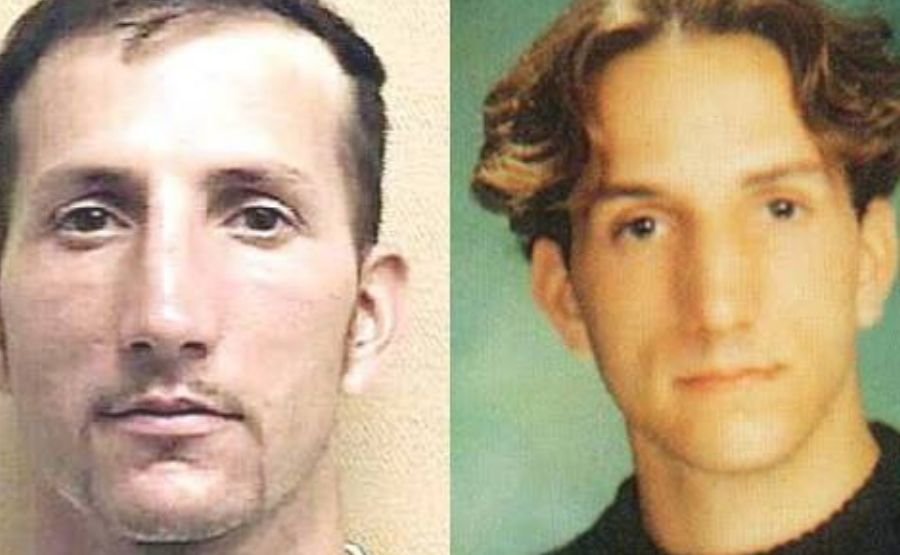
Jeffrey Manchester: The Real Story of the Roofman Who Hid in Toys R Us
Here’s what the feel-good crime story arc keeps glossing over: a man who never physically hurt a single person is going to spend most of his adult life behind bars, and the sentence was designed that way on purpose.
Jeffrey Manchester will be sixty-five years old when he walks out of Central Prison in Raleigh, North Carolina, assuming he keeps his head down for the next decade. He’s already spent nine years in solitary. He’s been incarcerated for over two decades. And he received a sentence that many attorneys at the time deemed obscene for the offense that set it all off: robbing fast-food restaurants with a gun that he subsequently conceded couldn’t even shoot.
But let’s also not pretend he was innocent. Because that’s the other lazy framing. And the truth is messier, stranger, and genuinely more interesting than either narrative.
Quick Bio
| Detail | Info |
| Full name | Jeffrey Allen Manchester |
| Born | November 12, 1971, Sacramento, California |
| Raised | Rancho Cordova, California |
| Military service | U.S. Army Reserve, rose to sergeant |
| Robbery spree | Approx. November 1998 – May 2000, 40–60 locations, 9+ states |
| Arrested | May 20, 2000, Gaston County, NC |
| First sentence | 45 years (armed robbery + 8 kidnapping counts) |
| Prison escape | June 15, 2004, Brown Creek Correctional Institution |
| Fugitive period | June 2004 – January 5, 2005 |
| Hiding location | Circuit City and Toys R Us, Charlotte, North Carolina |
| Alias used | John Zorn |
| Recaptured | January 5, 2005, Leigh Moore’s apartment |
| Second sentence | Additional ~40 years (concurrent) |
| Failed escapes | 2009 (2.5 years solitary), 2017 (9 years solitary) |
| Expected release | December 4, 2036 |
| Current location | Central Prison, Raleigh, NC |
Before the Rooftop, There Was a Regular Guy
Born in Sacramento in 1971. Grew up in Rancho Cordova, the kind of California suburb that doesn’t produce headlines. Joined the Army after graduating from high school. Became a sergeant. Trained reservists. Had a steady paycheck, a wife, kids, a whole life.
Here’s the thing people skim past: when he started robbing McDonald’s in November 1998, he was still on active Army Reserve duty in Concord, California. The robberies tracked with his deployment schedule. When he was stationed on the West Coast, investigators were getting calls from California and Oregon. When he traveled East for annual training exercises, the pattern moved East. A California detective spent two years on this case and eventually figured it out: the robbery locations followed this one guy’s military calendar.
Manchester himself told WBTV about it recently. “I served in the US Army as a sergeant. I was working at a reserve unit in Concord, California, training reservists. I was making plenty of money. I just wanted more.”
That line should bother you more than it does. He wasn’t desperate. He wasn’t destitute. He was divorced, yes, and he said he wanted to support his kids, and I think that was at least partly true — but the Army was paying him a salary. He’d also previously worked at McDonald’s, which meant he understood the layout, knew the rhythms of the restaurant, knew exactly how a shift worked.
He used his military training to case targets, plan escape routes, and execute what police at the time called some of the most professionally organized restaurant robberies they’d ever seen.
See also “Selma Blair: The Untold Story Behind Her MS Battle, Hollywood Career, and Life’s Biggest Challenges“
The Method: Why Everyone Kept Calling Him Polite
Let’s get specific about what he actually did.
He would drill or cut through the roof of a restaurant — usually a McDonald’s — late at night. Then he’d wait inside, sometimes for hours, until the morning shift arrived. When employees came in, he’d emerge, hold them at gunpoint, direct them to open the safe, then usher them into the walk-in freezer. He’d tell them to grab their coats first. If someone didn’t have a coat, he offered his own.
Then he’d leave, and he’d call the police himself to make sure the employees were released.
Think about what that means. He’s a man holding a .22 caliber rifle — which he later admitted was broken and couldn’t fire — apologizing to minimum-wage workers for robbing their employer and making sure they don’t get too cold while they wait to be rescued.
Victims consistently described him as “nice.” One Sacramento County detective described him as having a “coast-to-coast reputation as the most courteous thief in the nation.” That’s a real quote from the Sacramento Bee.
But let’s be honest about the other side of this. Whatever his demeanor, he pointed a nonfunctional gun at probably sixty-something people over two years. “When looking back, I could still see the people’s faces when I was robbing them, and it haunts me,” he told WBTV from prison. “I felt it was a victimless crime… But over the years looking back, no, it wasn’t a victimless crime. I hurt those people emotionally.”
He got to that understanding eventually. It took a couple of decades in a cell.

The Sentence That Broke the Math
He was caught on May 20, 2000 — the day he made his first and only significant tactical error, robbing two McDonald’s in the same day, in two adjacent towns, in North Carolina. Gastonia in the early morning. Belmont five hours later. By the time the Belmont robbery went out on dispatch, investigators were already looking for a pattern.
One million dollars was the amount of his bond.
Here’s the part the movie dramatizes but doesn’t fully explain: Manchester only went to trial for those two North Carolina robberies. Not forty or sixty, just two. But the judge had a creative tool: each employee he locked in the walk-in freezer counted as a separate kidnapping charge. Eight employees across two restaurants meant eight counts of first-degree kidnapping. At 180 months per count, that’s 1,440 months total, or 45 years.
For two robberies. Where nobody got hurt.
He turned down a plea deal that would have given him 15 to 22 years.
I’ll let you sit with that for a moment. He said no to a deal that would have freed him by his early forties. His lawyer at the time cited the disproportion. The German newspaper commentary I came across while researching this piece put it bluntly: why does someone like Manchester serve decades while far more dangerous people accumulate obscene wealth without consequence? It’s a fair question.
The answer is: this is how North Carolina’s structured sentencing worked in 2000, and the kidnapping enhancement was specifically designed to turn every robbery-with-confinement into a decade-long sentence. Manchester wasn’t some outlier victim of an unusual judge. He entered a machine designed specifically for him.
Inside Brown Creek: Four Years of Planning One Day
Manchester didn’t stay put. He tried to escape from every prison they put him in before Brown Creek. Every single one. He was repeatedly transferred, most likely as a result of this, until he was placed in Polkton, North Carolina’s Brown Creek Correctional Institution.
At Brown Creek, he played the model prisoner. He got assigned to the metal shop, where inmates made bed frames and playground equipment. Over four years, he quietly studied the truck delivery schedule. He built a custom plywood platform, spray-painted it black, and found the right moment.
On June 15, 2004, he gripped onto the undercarriage of a delivery truck and rode it through the gate. He was the first person to ever get out of Brown Creek.
He hitchhiked to Charlotte.
The press release from the North Carolina Department of Correction dated September 16, 2004 is still live online. It mentions they were appearing on America’s Most Wanted that Saturday. By that point he had been gone for three months and nobody had found him.
Since he resided at a Toys R Us.
The Absurdity Was Real: Life Inside the Store
I want to say this clearly: the Toys R Us story is not embellished for the movie. It happened.
Manchester drilled into the Toys R Us roof on Charlotte’s Independence Boulevard. He built a hidden room inside. He set it up with posters, a baby mattress, an inflatable chair, and photos of his family. He ate baby food and candy from the shelves. He discovered the store manager’s office keys and used them to gain entry to the roof.
He informed WBTV that he could see the Charlotte skyline from the roof.
“It was my own private playground. Nobody can touch me up there,” he said. “I will work out. I would play music on my tiny Sony Discman. I would either sit there and observe the skyline or think about what I would need for the next day.”
He didn’t come out until July 4, 2004. In order to grab a newspaper, he rode a bike from the store to a grocery store. A stranger asked if he knew him. He panicked, rode back, and spent another month in hiding.
What the movie does skip: he also briefly moved into an abandoned Circuit City next door when things got too hot after the Toys R Us robbery. Living in a Circuit City in late 2004 somehow feels even more specifically American than the Toys R Us. RIP to both stores.

The Church Part Is Where It Gets Complicated
Manchester could see the Crossroads Presbyterian Church from his rooftop. One Sunday, dressed in his best clothes, he walked in — intending to sit quietly in the back pew, feel something, and leave without talking to anyone.
He entered via the incorrect door and became disoriented. He was discovered and taken to the main congregation by a woman.
“My whole intention of going there was to actually just sit in the back pews and get some that feel good Jesus vibes,” WBTV reported. “I did not expect to actually meet anybody.”
He introduced himself as John Zorn. He started attending regularly. He became close to the pastor, Ron Smith — who, Manchester noted with a wink, had a poster of The Great Escape in his office. He started dating Leigh Moore, a single mother and parishioner.
“I did love her,” he said simply.
And then he robbed the Toys R Us on December 26, 2004 — the store where he was living — because he needed cash. He blew it on the second attempt, two employees escaped, police searched the building, found no one. But a week later, when he went back for the photos of his family, he left a thumbprint. His prints were in the system. The evening news carried his mugshot.
Members of Crossroads Presbyterian recognized him. They called the police. Detectives went to Leigh Moore and told her the man she thought was “John Zorn” was actually Jeffrey Manchester. Her first reaction, reportedly, was denial: “That’s not Jeff Manchester, that’s John Zorn.” She helped set up his capture anyway.
He showed up at her apartment with flowers on January 5, 2005 — her birthday. The SWAT team was waiting.
He claims he has no ill will against her. “I betrayed her confidence and her trust,” he admitted to WBTV. “She forgave me.”
The pastor forgave him too.
A movie he hasn’t seen and a nickname he despises
Director Derek Cianfrance (Blue Valentine, The Place Beyond the Pines) spent four-plus years speaking with Manchester by phone from prison — over 400 hours of conversation, four days a week at times. He spoke with Manchester’s mother, his brother, the arresting officers, the judge who sentenced him, the pastor, Leigh Moore. He rebuilt a Toys R Us from scratch to shoot the film. He cast the actual truck driver who unwittingly drove Manchester out of Brown Creek.
Manchester initially objected to Channing Tatum. Too handsome, too Hollywood. They talked to him about it. Manchester told people Tatum reminded him of himself in certain ways.
As of the film’s October 2025 release, Manchester had seen clips and the poster but not the finished movie.
Here’s the thing Cianfrance said in an interview that I keep coming back to: at around the 200-hour mark of phone calls, he started to wonder if Manchester was playing him. “Is this guy just conning me?” he asked himself. He never fully resolved the question. He made the film anyway.
And Manchester told WBTV he hates being called Roofman. “I don’t want to be known for the bad things I’ve done. I’m ashamed. I don’t want to be known as the rooftop robber. I’d rather not be referred to as the Roofman. I have absolutely no desire to be connected to that. My name is Jeff.”
Final Words
Here’s what I actually think, having spent real time with this story.
Jeffrey Manchester is a genuinely intelligent person who built his entire self-narrative around the belief that he was smarter than everyone around him. He’s said this himself — “I had it in my mind that I was so smart that I can’t possibly get caught.” He said it about the robberies. He mentioned hiding in Charlotte. He mentioned his preparations to flee.
Every time he got caught — and he got caught every single time — it was because that confidence eventually curdled into arrogance. He went back for the family photos. He stayed in Charlotte. He made two more attempts to break out of prison before being sent in solitary confinement for nine years.
The 45-year sentence is genuinely unjust, or at least grossly disproportionate. The kidnapping enhancements for locking McDonald’s employees in walk-in freezers are the kind of statutory overcorrection that makes the American carceral system hard to defend with a straight face. I don’t think you have to be soft on crime to notice that.
And he knew what he was doing was wrong, even when he was doing it. That is more important than most people realize. During the robberies, he expressed regret to the staff. He called the police to free them. He has sat in a cell for 25 years and kept telling interviewers that it was all his fault, no excuses, no externalities.
“The reason I’m in prison right now, it’s all my fault,” he said to WBTV. “I made poor choices. Drug use, peer pressure, gang activity, or any of those other justifications were not the cause.
A man who owns that completely, without hedging, has either made genuine peace with it or is still running the same con. Cianfrance spent 400 hours on the phone and wasn’t sure which. I’ve spent a few days reading everything I could find, and I’m not sure either.
He gets out in 2036. He’ll be 64. To be honest, I have no idea what that looks like.
FAQ
1. Who is Jeffrey Manchester?
A former U.S. Army Reserve sergeant from Sacramento, California, who committed an estimated 40–60 armed robberies — mostly at McDonald’s — between late 1998 and May 2000, entering through the roofs of businesses. He was sentenced to 45 years in prison, escaped in 2004, lived in a Charlotte Toys R Us for six months, and was recaptured in January 2005.
2. Why is Jeffrey Manchester called the Roofman?
His method was to drill or cut through the roof of a restaurant after hours, wait inside until the morning shift arrived, then rob the place. The nickname came from law enforcement and media coverage. He has openly stated that he detests the moniker and would rather be named Jeff.
3. How did Manchester escape from prison?
At Brown Creek Correctional Institution, he spent four years working in the prison’s metal shop. He built a hidden plywood platform, spray-painted it black, attached it to the underside of a delivery truck, and rode it through the prison gates on June 15, 2004. The first person to ever get out of Brown Creek was him.
4. Did Jeffrey Manchester really live in a Toys R Us?
Yes. He drilled through the roof, built a hidden room inside the store, stocked it with food from the shelves (baby food and candy), and lived there from approximately late June 2004 until around December 2004. He also briefly moved into an adjacent Circuit City.
5. How was Manchester finally caught?
A thumbprint left at the Toys R Us crime scene connected to Manchester. His mugshot went out on Charlotte news. Church members who knew him as “John Zorn” recognized him and called the police. Investigators recruited his girlfriend, Leigh Moore, who arranged a meeting. He showed up on January 5, 2005, and was arrested by a SWAT team.
6. What happened to Leigh Wainscott (Moore)?
She was the woman Manchester dated during his fugitive period, unaware of his real identity. After learning he was a wanted fugitive, she cooperated with police. She appears briefly in the Roofman film’s end credits. Director Cianfrance said she spoke warmly about Manchester and their time together.
7. Why was the sentence so long — 45 years for robbery?
The 45-year sentence came largely from kidnapping charges — eight counts, one for each employee Manchester locked in a walk-in freezer across two robberies. Under North Carolina’s structured sentencing, each count carried 180 months. He also turned down a plea deal offering 15–22 years. The robbery itself would have carried a much shorter sentence.
8. Has Jeffrey Manchester seen the movie Roofman?
As of its October 2025 release, he had seen clips and the poster but not the full film. He reportedly liked what he saw. He initially objected to Channing Tatum portraying him because he thought Tatum was too attractive, but came around after speaking with him.
9. Did Manchester cooperate with the film?
Extensively. Director Derek Cianfrance spoke with him for over 400 hours via prison phone calls over roughly four-and-a-half years. The film’s script, narrated by Tatum, reportedly uses some of Manchester’s own words verbatim.
10. When is Jeffrey Manchester getting out of prison?
His expected release date is December 4, 2036, when he would be 64 years old. He has said he has no plans to attempt another escape — after his failed 2017 attempt resulted in nine years in solitary confinement, he described that as “the straw that broke the camel’s back.”
11. What is Jeffrey Manchester doing now in prison?
He’s at Central Prison in Raleigh, North Carolina. He gave his first public interview to WBTV in February 2026. He has expressed regret for what he did, acknowledged that his victims were emotionally harmed despite his courteous manner, and said he no longer thinks in terms of escape.
Beyond the headlines, discover what’s worth knowing — TheTrendist.




One Comment