The Kid Who Didn’t Inherit the Spotlight: What We Actually Know About Ibrahim Chappelle
Here’s the uncomfortable truth the internet doesn’t want to admit: almost everything you think you know about Ibrahim Chappelle was made up.
Not fabricated by some shadowy tabloid conspiracy. Made up algorithmically — churned out by content farms that clone each other’s guesses, slap a confident-sounding headline on top, and collect the clicks. The result is this bizarre parallel biography of a young man who hasn’t said a public word, attributed with birthdays ranging from January 9 to October 12, a hometown that alternates between Yellow Springs and Los Angeles, and a career described variously as stand-up comedian, rapper, actor, and media studies student. Different sites. Same year. All confident. All contradicting each other. None sourced.
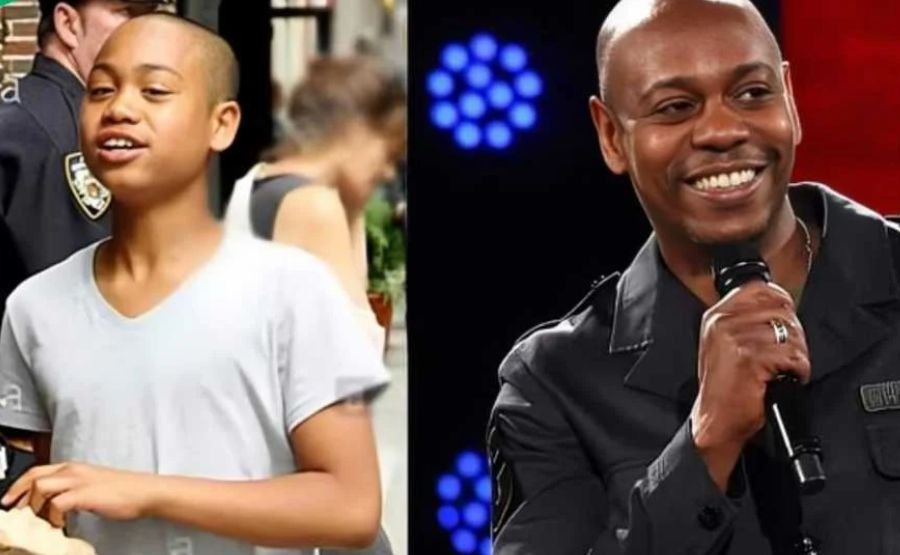
What we actually have on Ibrahim Chappelle is this: a kid born in 2003 to one of the most deliberately private celebrity families in America, raised on a farm in rural Ohio, who publicly appeared exactly once that anyone has documented — in 2019, at his father’s Kennedy Center Mark Twain Prize ceremony. That’s it. That’s the file.
Everything else is speculation dressed up as biography.
Quick Bio
| Detail | Info |
| Full name | Ibrahim Chappelle |
| Birth year | 2003 (exact date disputed across sources) |
| Birth place | Yellow Springs, Ohio |
| Parents | Dave Chappelle (father), Elaine Mendoza Erfe (mother) |
| Siblings | Sulayman (older brother), Sanaa (younger sister) |
| Heritage | African-American and Filipino descent |
| Religion | Raised Muslim (father’s faith); mother is Christian |
| Known public appearances | 2019 Kennedy Center Mark Twain Prize ceremony |
| Social media presence | None verified |
| Career | Unknown / private |
| Education | Reportedly attended private school; details unconfirmed |
The Man Who Doesn’t Want You Knowing About His Kids
You can’t really talk about Ibrahim without talking about Dave’s decision. And that decision started falling into place around 2005, when Dave walked away from $50 million and a TV empire that was rewriting American comedy. He didn’t go to rehab. He didn’t disappear into bitterness. He went home to Yellow Springs, Ohio — the same small town where his father, a college professor, had raised him part-time — and he stayed.
He bought a 65-acre farm. He married Elaine, a Filipino-American woman from Brooklyn who had been quietly managing pieces of his career behind the scenes. And together they made a rule, whether they stated it explicitly or not: the kids stay out of it.
Think about what that actually costs you. One of the most well-known comedians in existence is Dave Chappelle. Netflix paid him $60 million for a single special. He could have put his kids in commercials, in cameos, in joint interviews. He didn’t. He sent them to school in Yellow Springs and let them live normal Ohio kid lives. That’s not accidental. That’s a philosophy.
And Ibrahim, born into that philosophy in 2003, is its product.
See also “Yasmin Abdallah: The Fashion Powerhouse Behind the Name Nobody Connected to Rufus Sewell“
The Kevin Hart Story Is the Only Real Window We Have
In 2017, Dave released The Age of Spin on Netflix. It’s remembered mostly for its Bill Cosby section. But there’s this other story in it — smaller, funnier, and quietly devastating in the way only real parenting moments can be.
Dave’s kid — he eventually confirmed it was Ibrahim — came bursting into the house wanting $250 to see Kevin Hart perform. Dave took him. At the show, Ibrahim was convulsing with laughter. Slapping his knee. Losing his mind over Kevin Hart’s jokes. And Dave, a man who has made stadiums of people convulsed with laughter, sat next to his son feeling vaguely… competitive.
That’s the part people miss. It’s not just a cute celebrity-kid anecdote. Dave said he sat there thinking, “Uh… I do this too.” Mild bruising to the father’s ego. Following that, Ibrahim allegedly shoved past his well-known father when Kevin Hart asked them to dinner backstage and said, “Actually, Mr. Hart, we haven’t eaten for several hours.” Ibrahim didn’t seem to be embarrassed.
He didn’t say “My dad is Dave Chappelle.” He said they were hungry.
That detail tells you something. The kid isn’t performing humility. He just… is humble. Or comfortable. Or both. He was raised in a house where fame wasn’t the currency of respect. His dad walked away from the biggest deal in comedy history before Ibrahim was old enough to remember it.
The Birthdate Problem Is Actually Interesting
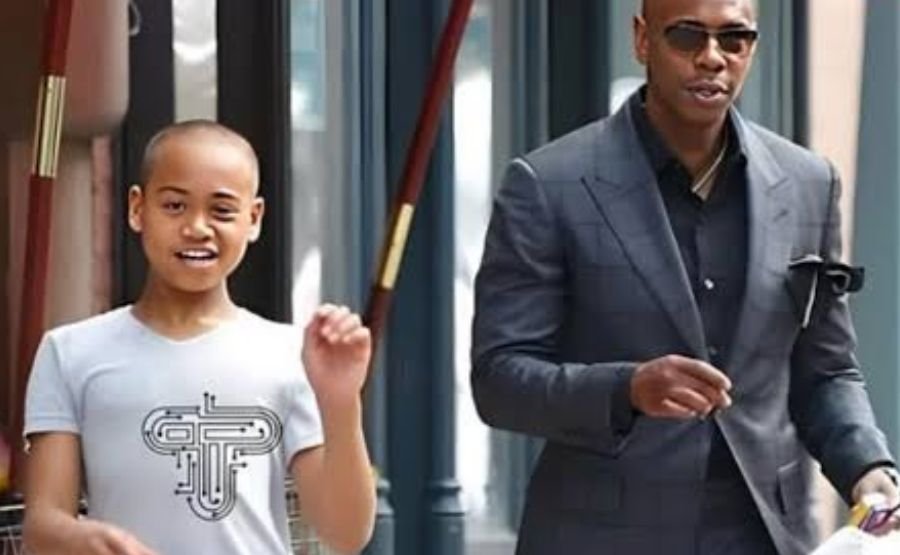
Let’s be honest for a second about the research landscape here. I spent time reading at least sixteen different sources on Ibrahim Chappelle and came away with this completely deranged list of alleged birthdates, all stated with complete confidence:
January 9. January 21. January 28. January 31. March 4. March 11. April 11. October 12.
Eight different birthdates for one person. From the same year. Same kid. Zero of these sources cited anything.
The most consistently cited date — April 11, 2003 — comes from the most referenced outlets and at least tracks with the “Aries” zodiac assignment that one source includes. But honestly? Nobody actually knows. And that’s the point. Dave Chappelle’s family operates with a privacy so complete that basic biographical data is genuinely unavailable, and the internet — which cannot tolerate an empty field — just fills the box with whatever sounds plausible.
This is what actual privacy looks like in 2026. It looks like chaos on the outside because the outside has no idea what it’s talking about.
The Farm as Ideology
Dave has been buying property in Yellow Springs for years. He reportedly owns around 20 properties in the area. He’s opened a comedy club out of a converted fire station. He’s publicly talked about wanting to restore the “cultural and creative economy” that Antioch College — where his grandfather was a professor — helped build before the college declined.
This is not a celebrity who moved to a small town to hide. This is a man rebuilding something. And his kids are growing up inside that project.
Think about what Ibrahim’s childhood actually looked like. Not Hollywood parties. Not industry events. A 65-acre farm in Greene County, Ohio. Approximately 3,500 neighbors. A dad who wandered around downtown Yellow Springs “unbothered and unhurried,” as the AP once described him. A mother who, by most accounts, had no public profile whatsoever and ran the household with a focus on stability.
Dave has said, more than once, that one of his sons went to public school while the other went to private — and that he framed it as “an experiment” to see how the different environments shaped them. He said it like a joke. But also, he’s a man who takes the formation of young people seriously enough to actually test variables. That’s not a bit. That’s a father who thinks.
What the Internet Built Instead
Here’s where I’ll be slightly cynical because it needs saying.
The content around Ibrahim Chappelle is some of the most transparently fabricated celebrity biography I’ve encountered. You have sites — genuine, indexed, apparently functional websites — that describe him as “a talented comedian, musician, and actor.” His “artistic style” is analyzed in detail. His “industry recognition” is discussed. His “aspirations” are unpacked at length.
None of it is sourced. All of it is invented. It reads like someone gave a language model the prompt “write a biography of a celebrity’s son” and pressed go without adding any actual information.
What gets lost in this noise is the genuine story, which is actually more interesting: a young man raised by one of the most complicated, brilliant, controversial figures in American comedy, on a farm in small-town Ohio, with a deliberate wall between himself and the industry his father dominates.
That’s not a story. That’s actually fascinating. It just requires admitting you don’t know most of it.
The Religion Piece Nobody Really Covers
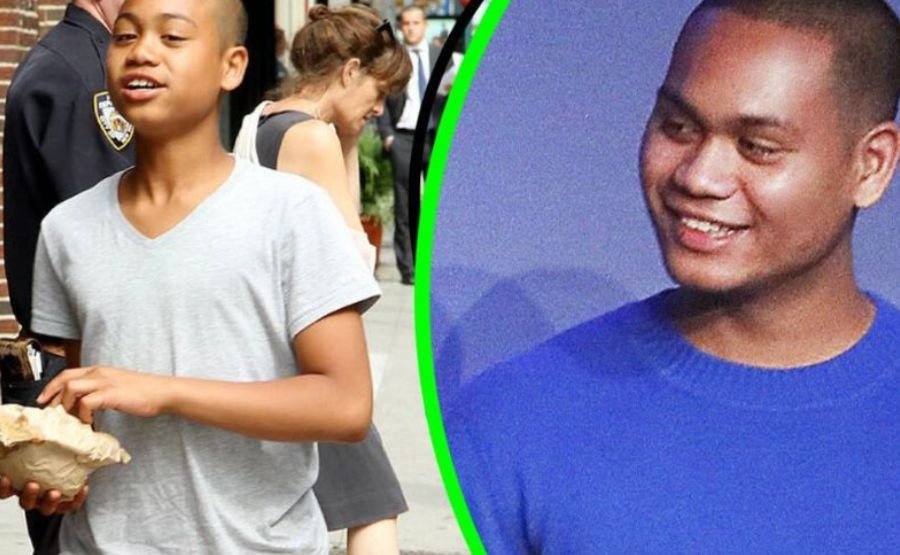
Ibrahim’s name is Arabic. It means Abraham — the same patriarch claimed by Judaism, Christianity, and Islam. His father converted to Islam in 1998, apparently after a conversation at a pizza shop with a Muslim employee when Dave was around 17. The naming of his children — Sulayman, Ibrahim, Sanaa — is clearly intentional and directly connected to that faith.
His mother Elaine, meanwhile, was raised by Filipino-Christian parents and, by some accounts, has maintained her own Christian practice. Their household, in other words, has both traditions present under the same roof.
Nobody in this family has spoken about how that gets navigated day-to-day. Dave has said publicly he doesn’t like talking about his faith because he doesn’t want to become “an example to defame religion.” That’s a specific concern. A thoughtful one.
But it means Ibrahim grew up in a genuinely religiously plural household, in a small Ohio town, with a father who cares deeply about something he won’t weaponize publicly, and a mother from a completely different cultural and spiritual tradition. That shaped him in ways we’re not going to understand from a content farm article.
What Dave Has Actually Said About Ibrahim (Not Much)
Outside the Kevin Hart story — which is the most significant primary source we have on Ibrahim’s personality — Dave has mentioned him in passing. He’s referenced his children collectively while talking about fatherhood reshaping his sense of purpose. In a 2017 CBS This Morning interview, he said fatherhood made him take his professional life more seriously and gave him, as he put it, “more depth.”
He called his eldest son Sulayman “the s—” and “the best” in the Letterman interview. He described his daughter Sanaa as his “twin.” Ibrahim gets the Kevin Hart bit. Which, honestly, is a love language of its own — when a comedian immortalizes your moment in a Netflix special, it means it mattered.
Dave also mentioned, apparently as a joke but probably not entirely, that his sons don’t seem to be headed toward stand-up. He allegedly said Sanaa is the one with the comedian’s instincts.
If that’s true, Ibrahim is carving his own lane. Which is exactly what you’d expect from a kid raised to be his own person.
Final Words
Ibrahim Chappelle will be 22 or 23 years old in 2026. He grew up in a household that functioned as a deliberate experiment in intentional privacy. His father is arguably the most important American stand-up comedian of his generation. His mother built a stable home for three kids in a small Ohio town while staying completely off the cultural radar. His siblings are — from what limited evidence exists — similarly unbothered by fame.
Ibrahim’s story, as it actually exists, is a story about what it means to choose groundedness when you don’t have to. When the alternative was very available. When the industry would have handed you a mic and a profile immediately based solely on your last name.
He hasn’t taken the mic. At least not publicly. That could change tomorrow. But as of right now, he’s a young man in his early twenties whose most documented personality trait is that he thought Kevin Hart was funnier than his dad at a show they attended together.
Honestly? Respect. That takes a certain kind of psychological security that most celebrity kids demonstrably don’t have.
The internet wants to turn him into a rising star, a comedian-in-waiting, a biographical entry. He hasn’t cooperated. And in a media environment that treats privacy as suspicious, that feels like its own kind of statement.
FAQs
1. How old is Ibrahim Chappelle?
Born in 2003, so he’s around 22 or 23 as of 2026. The exact birthdate is genuinely disputed across sources — anywhere from January to October — because Dave Chappelle’s family keeps that information private and no reliable source has confirmed it.
2. What does Ibrahim Chappelle do for a living?
Nobody actually knows. Some sites claim he’s studying media and film, others call him a comedian or musician. None of it is sourced. He has no public career on record.
3. Is Ibrahim Chappelle on social media?
Not publicly. No verified accounts have been identified on any major platform.
4. Is Ibrahim Chappelle the oldest or middle child?
Middle child. Sulayman is older (born around 2001). Sanaa is younger (born around 2009).
5. What religion is Ibrahim Chappelle?
He was raised in a household where his father is Muslim (Dave converted in 1998) and his mother is Christian. He’s generally described as Muslim, following his father’s faith, though he’s never confirmed this himself publicly.
6. What was Ibrahim Chappelle’s one public appearance?
In 2019, he appeared alongside his family at the Kennedy Center in Washington D.C. when Dave received the Mark Twain Prize for American Humor. Photos from that event are among the only verified images of him.
7. Is it true Ibrahim’s favorite comedian is Kevin Hart, not his dad?
Dave Chappelle himself told this story in The Age of Spin (2017). He took Ibrahim to a Kevin Hart show, Ibrahim laughed louder than Dave liked, and then Ibrahim pushed past his dad backstage to tell Hart they were hungry. So — yes, at least as of when Ibrahim was a teenager, Dave’s take was that his son was a bigger Hart fan.
8. What school did Ibrahim Chappelle attend?
Dave joked that Sulayman attended public school while Ibrahim went to private school in what Dave called “an experiment.” No specific school has been publicly named.
9. Where does Ibrahim Chappelle live now?
Presumably still in or around Yellow Springs, Ohio, where the family has lived for roughly two decades, though this hasn’t been confirmed.
10. Is Ibrahim Chappelle going to be a comedian like his dad?
Dave has suggested no, actually. He reportedly said his daughter Sanaa has more of the comedian’s instincts. But Dave says a lot of things in stand-up that blend observation with performance, so hold that loosely.
11. Why don’t we know more about Ibrahim Chappelle?
Because Dave Chappelle made a deliberate decision after leaving Chappelle’s Show to shield his family from public attention, and it worked. Yellow Springs is small, private, and real. His kids grew up outside the machine. The information vacuum you’re seeing is not a mystery to solve — it’s a boundary that holds.
Beyond the headlines, discover what’s worth knowing — TheTrendist.
One Comment