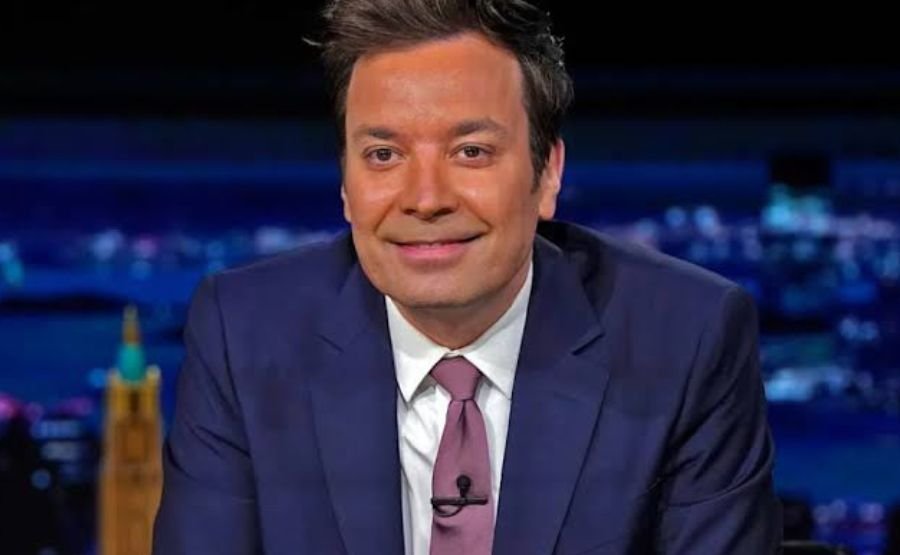
The $70 Million Smile: Why Jimmy Fallon Net Worth Tells You Everything That’s Wrong With How We Value Television
Jimmy Fallon is currently the third-highest-rated host in late-night television. Third, Behind Stephen Colbert. Behind Jimmy Kimmel. A show that lost 41 percent of its viewers between 2018 and 2024, whose ad revenue dropped 35 percent in just two years, and whose number of showrunners in roughly a decade matches what most shows rotate through in three or four times that span. Nine showrunners in nine years isn’t a fact you’ll find in his upbeat NBC bio. But it’s the most honest number on his résumé.
And yet NBC keeps writing him a $16 million annual check and renewing his contract. Most recently through 2028.
That’s what makes the Jimmy Fallon money story interesting. It doesn’t really matter how wealthy he is. It’s about why a network would keep paying that much for declining returns, and whether the warmth and the viral clips and the brand deals can paper over the hollowed-out core of what the Tonight Show has become.
Quick Bio
| Detail | Information |
| Full Name | James Thomas Fallon |
| Born | September 19, 1974 — Brooklyn, NY; raised in Saugerties, NY |
| Net Worth | ~$70 million (Celebrity Net Worth, 2025–2026) |
| Tonight Show Salary | ~$16 million/year |
| Tonight Show Host Since | February 17, 2014 |
| Previous Role | Late Night with Jimmy Fallon (2009–2014) |
| Contract Extended Through | 2028 (renewed 2024) |
| Key Properties | Farmhouse in Sagaponack, New York (purchased for $5.7 million in 2011); NYC Gramercy triplex (listed for $15 million in 2021) |
| Wife | Nancy Juvonen (film producer, married 2007) |
| Production Company | Electric Hot Dog |
| Major Controversy | Rolling Stone “toxic workplace” report, September 2023 |
The Number That Keeps Moving
Let’s get the money stuff out of the way first, because the contradictions are genuinely amusing. Depending on where you read, Jimmy Fallon earns anywhere from $16 million to $60 million a year, and his net worth lands somewhere between $60 million and $70 million depending on which estimate is newer. The $70 million figure comes from Celebrity Net Worth and is probably the most cited. The $60 million figure shows up in slightly older sources.
You want the weird part? If he has been making about $16 million a year since 2014, and previous estimates put his Late Nite salary at about $11 million before that, those figures should have added up to a much higher net worth by now. Add the SNL years, the endorsements, the book deals, the production company. The $70 million figure starts to look like it was calculated once and never seriously updated.
Some of the more outlandish sources I encountered during research claimed he earns $50–60 million annually from NBC. These numbers appear to have been generated by content farms and have no sourcing. The $16 million figure appears consistently in credible places: Variety reporting, Yahoo Finance, multiple TV industry roundups. That’s the floor. It’s plausible that contract renewals pushed it higher — nobody outside NBC and his representatives actually knows — but I’m not repeating $60M-a-year claims without hard sourcing behind them.
What we do know: Forbes reported he pulled $22 million from the Tonight Show in 2020, a number that presumably includes his executive producer fee on top of base hosting salary. That tracks better with what we’d expect from a show still pulling respectable, if declining, ad revenue.
From Saugerties to 30 Rock: The Straight Line That Wasn’t
Here’s the biography piece, but let’s skip the usual format and start with what actually matters.
Jimmy Fallon grew up in Saugerties, a small town in upstate New York’s Hudson Valley. His parents taped SNL for him. As a teenager, according to multiple interviews, he would watch it alone with a six-pack of Pabst Blue Ribbon so nobody could ruin the experience for him. That’s the origin point of everything — a kid in a small town who turned an obsessive relationship with television comedy into a career plan with a single target.
He enrolled at The College of Saint Rose in Albany, studied communications, and dropped out a semester before graduation. Not because he was failing. Because he got a shot at stand-up comedy in New York City and wasn’t going to let a semester of credits stand between him and it. That’s a detail most profiles include as a footnote. It reveals more about him than nearly anything else, in my opinion.
His manager sent demo tapes to SNL producers. He auditioned twice — got rejected the first time in 1997, came back, got cast in 1998. And for six years he was legitimately one of the best things on that show. His celebrity impressions were tight. His Weekend Update runs with Tina Fey were genuinely funny. Depending on your taste, his inability to maintain a straight face during sketching either delighted or infuriated you, but it was clearly alive.
Then he did what SNL alumni do when they’re hot: he tried movies. Taxi (2004). Fever Pitch (2005). Nothing blew up. He admitted in a Vanity Fair interview that he was “probably drinking more than I should have been” during that period, sitting with the uncertainty of a stalled film career. It’s a brief, honest admission that tends to get buried under the relentless geniality of his public persona.
Lorne Michaels, his SNL boss and the closest thing to a godfather figure in American comedy television, handed him the Late Night slot vacated by Conan O’Brien in 2009. And from there the arc is well-documented: Late Night led to the Tonight Show in 2014, Fallon’s opening night was a genuine television event, and for about two years he was the biggest thing in late-night.
The Money Machine That Almost Works
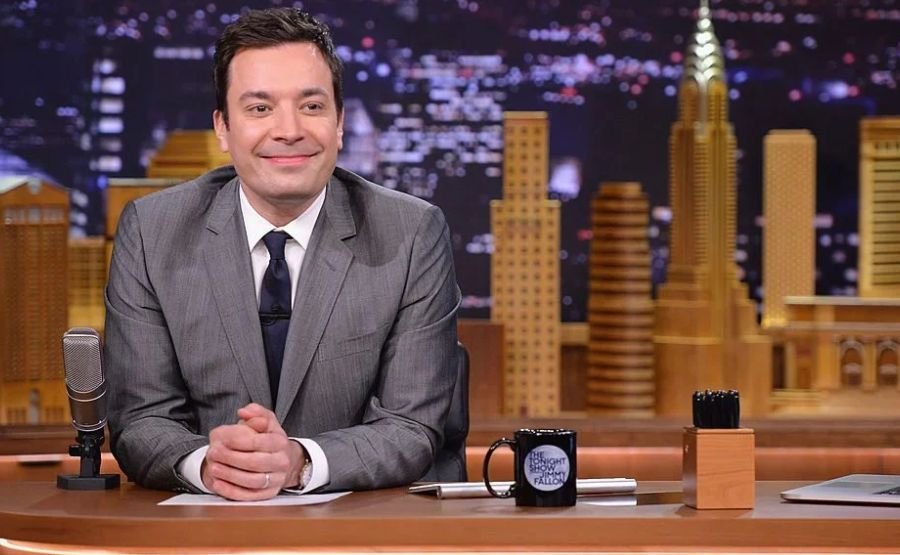
The reason NBC hasn’t fired him despite the ratings decline is worth understanding.
In 2024, The Tonight Show still generated $78.3 million in advertising revenue, according to iSpot TV data — more than any other late-night show. Think about that. The show with the worst ratings in its competitive set is still making the most money. Why? Partly YouTube. Partly virality. Partly the way Fallon’s show has always been structured as a clip-generating machine rather than a prestige broadcast. “Lip Sync Battle” doesn’t need 5 million people watching live. It needs to get shared on TikTok a million times.
The gap with his nearest competitor had narrowed dramatically — from $30 million in 2022 to just $1.7 million in 2024 — which is the more sobering number. The lead is evaporating. But until it’s gone, NBC has a structural reason to keep the formula running.
His production company, Electric Hot Dog, adds another income layer. The revived Password on NBC, which he executive produces and appears on. That’s My Jam, his music-based competition show. And as of autumn 2026, On Brand with Jimmy Fallon, a new reality competition that NBC is explicitly developing as part of a broader strategy to extract more revenue from his brand beyond the Tonight Show.
NBC is essentially building redundancy. If the Tonight Show eventually winds down, there’s a whole enterprise portfolio to transition into. That’s smart on their part. It also happens to keep Fallon financially comfortable regardless of ratings.
The Toxic Workplace Story They’d Rather You Forget
September 2023. Rolling Stone publishes a detailed investigation. Two current and fourteen former Tonight Show employees described conditions that went “far outside the boundaries” of what you’d expect even from a high-pressure television environment.
The phrase you heard everywhere in the reporting: “good Jimmy days and bad Jimmy days.” Staff couldn’t predict which version of their boss would show up. Former employees described the guest dressing rooms as “crying rooms” because that’s where people went to cry. Three former employees said they experienced suicidal ideation while working on the show. Four others entered therapy because of it. Nine showrunners in nine years.
“Nobody told Jimmy, ‘No.’ Everyone, especially showrunners, walked on eggshells,” a former staffer claimed. “You never knew which Jimmy we were going to get.”
Fallon called a Zoom meeting with his staff and apologized. His language was, characteristically, warmer than it was precise. “Sorry if I embarrassed you and your family and friends. I feel so bad I can’t even tell you.” He expressed his desire for the program to be enjoyable and welcoming. NBC issued a corporate non-statement about workplace issues being investigated and action being taken.
And then… it mostly went away. NBC renewed him through 2028 about a year later.
Let’s be honest about what happened here. The investigation painted a picture of a man whose anxiety, insecurity, and erratic behavior had made a lot of people’s professional lives miserable for years. The apology was real but vague. Nobody lost their job over it — or at least nobody publicly did. The institution absorbed the story and moved forward.
The “good Jimmy/bad Jimmy” framing is worth sitting with, because it matches almost exactly what his public persona suggests: a man whose warmth is genuine but whose relationship to pressure is complicated. The guy who cried on air about the Trump interview backlash. The guy who’s been described by NBC insiders as “insanely jealous” of James Corden at various points. The performer whose greatest skill — infectious, spontaneous-seeming joy — apparently has a shadow side that his staff experienced directly.
The Hair Moment That Changed Everything
September 2016. Donald Trump sits in Jimmy Fallon’s chair and lets Fallon muss up his famous hair. The bit gets 5 million YouTube views almost instantly. And then the reviews start coming in.
The criticism was brutal and came from all directions. Late-night contemporaries dunked on him. Twitter went after him. Critics wrote columns. The argument: by playing with Trump’s hair, by humanizing him with a lighthearted game show bit two months before the election, Fallon had abdicated his responsibility as someone with a massive platform.
Fallon’s response over the following years was a case study in how not to manage a public relations crisis. He said nothing for months. Then he said he didn’t mean to humanize Trump, he meant to minimize him. Then he apologized. Then he cried publicly about how devastating the backlash was. Then Trump tweeted at him to “be a man.” Then Fallon said his ratings had nothing to do with Trump.
The ratings very much had something to do with the Trump interview. Not solely — structural decline was already happening across late-night — but the moment cost Fallon with the politically engaged liberal audience he’d been cultivating, without winning him any conservative viewers in exchange. His show’s politics-averse format looked naïve in 2016 in a way it hadn’t in 2014.
Stephen Colbert, explicitly political since day one of his Late Show tenure, overtook him. And never gave back the lead.
Think about it from a business perspective. Fallon built a show around viral moments, celebrity friendship, and positive vibes. That formula depended on the audience wanting to feel good. The moment the audience felt you’d been used — or had used your platform irresponsibly — that goodwill eroded in a way that games and lip-sync battles couldn’t repair.
What $5.7 Million Looks Like in the Hamptons
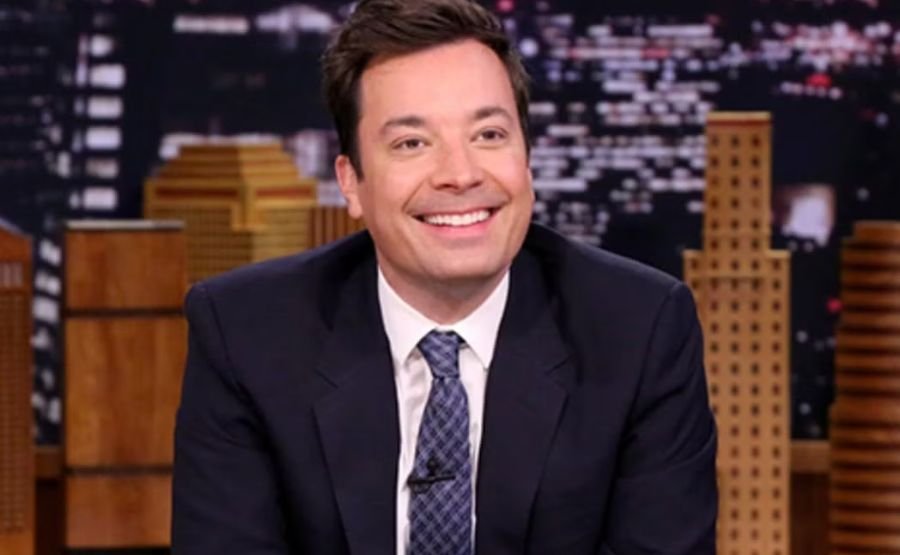
The real estate picture is the most concrete way to understand his actual wealth. In 2011, Fallon bought an 1850s farmhouse in Sagaponack, New York — a town in the Hamptons that ranks as one of the most expensive zip codes in the entire country. The purchase price was around $5.7 million. Given Sagaponack property values, that house is worth multiples of that today.
He also assembled a sprawling penthouse in Gramercy Park, Manhattan, by combining four (eventually five) neighboring apartments into a 4,950-square-foot triplex. Vintage wallpaper sourced from around New York City. A room in a restored turret designed to look like the inside of a tree. A door in the pantry leading to a hidden children’s playroom. Nancy Juvonen, his wife and a genuine tastemaker, decorated the whole thing. They listed it for $15 million in 2021 when they decided to make the Sagaponack property their primary home.
Wife Nancy Juvonen, for what it’s worth, is not just “Jimmy Fallon’s wife.” She’s Drew Barrymore’s producing partner, co-founder of Flower Films, and a legitimate film producer with her own career. Their household income is not simply his TV salary.
Fallon doesn’t appear to be a car guy or a conspicuous spender in the way that some celebrities with his income profile are. The properties are the primary visible wealth indicator. The $70 million figure is plausible when you account for property appreciation, investment, and the compounding effect of years of TV income, but it still feels like it should be higher given the timeline.
Final Words
Jimmy Fallon is genuinely talented. I want to say that clearly because cynicism is easy and this piece has leaned into the complications. He is a skilled impressionist, a natural musician, an instinctive television entertainer who created some of the most-shared late-night moments of the 2010s. The “History of Rap” series with Justin Timberlake. The classroom instruments cover. The genuine warmth he projects with certain guests. That stuff is real.
But the trajectory of the Tonight Show under his leadership reveals something uncomfortable: the viral-clip-factory model has an expiration date, the goodwill of audiences is not unconditional, and the private reality of a workplace environment can contradict the public brand in ways that eventually leak.
He’s made roughly $70 million — maybe more — by being the personification of cheerfulness on American television. He’s built a home in one of the most expensive postcodes in the country, a production empire that extends his brand beyond any single show, and a contract that runs three more years. By any standard, that’s a staggering success.
But he’s also third in ratings, fending off new competition from outside traditional late-night formats entirely, navigating the structural collapse of linear television advertising, and dealing with a 2023 investigation that punctured the happy-family mythology his brand depends on. None of that is fatal. All of it is real.
The smile is worth $70 million. The question is what happens when the smile isn’t enough.
FAQs
1. What is Jimmy Fallon’s net worth in 2026?
Around $70 million, per Celebrity Net Worth. Some sources say $60 million. The spread matters less than the trajectory: he’s been earning $16 million a year for a while now, which should put this number higher unless taxes, property, and lifestyle costs are eating more than commonly assumed.
2. How much does Jimmy Fallon make per year?
His Tonight Show salary is consistently reported at $16 million annually. Forbes reported $22 million in 2020, which likely includes his executive producer fee on top of base salary. Some wildly inflated sources claim $50–60 million; I’d ignore those. The real number is probably somewhere between $16M and $22M depending on the year and what’s included.
3. Why did the Rolling Stone toxic workplace story not cost him his job?
NBC had just renewed him and had the 2028 contract in play. The Tonight Show was still the top ad-revenue generator in its category. Fallon apologized. And frankly, the entertainment industry’s tolerance for this category of behavior — erratic executive behavior that falls short of specific legal violations — is high. The story hurt the brand but didn’t trigger any consequence proportional to what employees described.
4. What happened with the Trump hair moment?
Fallon tousled Trump’s hair on The Tonight Show in September 2016, two months before the election. Critics accused him of humanizing Trump. He lost a significant portion of his politically engaged audience to Colbert almost immediately after and never recovered the ratings lead. He’s apologized multiple times in various ways, and the incident remains the most discussed turning point in his career.
5. Does Jimmy Fallon have a drinking problem?
He admitted himself to “drinking more than I should have been” during his post-SNL film career slump (roughly 2004–2009). The New York Post reported in 2015–2016 that NBC had concerns following a series of injuries. NBC denied a formal drinking problem while confirming conversations about his safety. Nothing concrete has emerged since then, but the subject never fully closed.
6. How did Jimmy Fallon’s ratings change under his hosting?
He debuted as a genuine ratings phenomenon in 2014, dominating the 18-49 demographic. By 2023–24, he’d fallen to third in late-night behind Colbert and Kimmel, losing 41% of his 2018-19 viewership total. Ad revenue dropped 35% from 2022 to 2024. He now averages roughly 1.2 million viewers per night — still significant, but a fraction of early numbers.
7. What does Jimmy Fallon’s wife Nancy Juvonen do?
She’s a film producer and co-founder of Flower Films, the production company she runs with Drew Barrymore. She’s produced films including Charlie’s Angels, 50 First Dates, and Never Been Kissed. She’s also a legitimate business presence in Hollywood in her own right. Their combined household is meaningfully more than his salary alone.
8. What is Jimmy Fallon’s production company?
Electric Hot Dog. That’s My Jam, the resurrected Password, and his more recent reality show On Brand with Jimmy Fallon are just a few of his off-the-desk endeavors that it manages. It’s part of NBC’s strategy to get more revenue from his brand across multiple formats simultaneously.
9. How many showrunners has The Tonight Show had under Fallon?
Nine in roughly nine years, according to Rolling Stone’s 2023 investigation. For context, the high turnover rate was specifically cited as a symptom of the unstable working environment the investigation described.
10. What was Jimmy Fallon’s salary on Late Night before Tonight Show?
Estimates put it around $11 million by the time he left in 2014. One historical source suggests he started Late Night at $5 million and it grew significantly over five years. The Tonight Show represented a significant jump.
11. Is Jimmy Fallon’s contract extended through 2028?
Yes. TVLine confirmed in mid-2024 that he signed an extension keeping him as Tonight Show host through 2028. The announcement came alongside Seth Meyers signing his own extension at NBC Late Night. No salary details were disclosed, though NBC described him as “incredibly talented” in the kind of language you use when you’re also worried.
Beyond the headlines, discover what’s worth knowing — TheTrendist.


One Comment